
On a rainy morning in April 1830, two convicts from Moreton Bay were taken to the Gallows at Sydney gaol. The usual crowd of spectators gathered to watch the events of the morning. Some were morbidly curious to see the condemned men hanged, others to see if there would be any drama before the hanging – a scuffle, a speech, a show of courage or cowardice.
John Hawes, a former soldier who had just been convicted of murder, addressed them:
“Take warning by my fate. But I would sooner be hanged here this morning than return to Moreton bay. Starvation and ill-usage there, have brought me to this untimely end. It is not my natural disposition to commit an inhuman act. I forgive all my oppressors.”
John Hawes, alias Lloyd, on the gallows, April 5th, 1830.
His co-accused, Stephen Smith, did not speak. A rather timid man, he wrote a private letter to a family member, and gave it to a Debtor residing in Sydney Gaol to send for him. To the Debtor, he wrote a covering note:
Gaol Cells, April 5, 1830. “I now write my last words to you; and I thank my God, that I should have such a friend as you have been to me, and I for ever bless you for your kindness, and now hope that my blessed Lord and Saviour will be my friend in heaven. I hope, that you will not forget to send my letter, as I wish my friends to know that I have departed this life. My time is short, I cannot write any more. I am your humble servant, STEPHEN SMITH, Aged 32 years.”
Stephen Smith, covering note to final letter.
Smith did not strike a blow against the victim, but he stood by and did not intervene when on January 9th 1830, Hawes picked a fight with and then killed a young man named James Davis at Moreton Bay. Davis died because John Hawes wanted to be hanged for murder, rather than continue to live at Moreton Bay under cruel overseers and the command of Captain Patrick Logan. James Davis just happened to be the person Hawes picked to kill at that moment.
JOHN HAWES or LLOYD:
John Lloyd from Shropshire had been in the 39th Regiment in Ireland as a teenager. At one point, he wanted to get married, but his superior officers refused. He deserted and stole a watch, earning him exile to Australia in 1826. There he laboured on No. 28 Chain Gang, before absconding and committing a robbery. He was caught at Wallis Plains, and sentenced to 3 years at Moreton Bay on 30th January 1829. By this time, he was 22 years old. In September 1829, he tried absconding, and lasted a month before returning to the misery of the settlement.
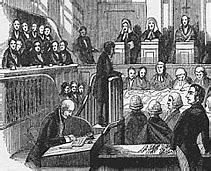
Described by the Sydney Monitor as “was a man of good countenance and frank manners”, Hawes resented the brutality of punishments at Moreton Bay, the lack of food, and the harsh treatment of the working gangs by convict overseers. Mere theft, assault or absconding would not get him out of this life – he decided he had to kill someone in order to get to Sydney and be executed.
In those days, suicide was an unspeakable sin, and even attempting suicide was a serious criminal offence. A suicide could not be buried in consecrated ground, and Hawes wanted to go out in the gallows, with a minister of religion attending to his last moments.
Many things did not occur to John Hawes when he conceived his desperate plan. It did not occur to him to try the unthinkable and help himself of the mortal coil, thus saving the lives of two others. It did not occur to him that killing another suffering convict in order to protest the harshness of overseers was futile, as well as cruel. It did not occur to Hawes that by avoiding suicide, as an executed prisoner he would be buried “outside the fence” of the cemetery (on the edge of a road, in sandy soil, which meant that the remains of the convict dead tended to be disturbed by passing buggies).
STEPHEN SMITH:
Stephen Smith was a shepherd and farmer’s servant from Kent and had a tendency to rob people. This sent him to New South Wales for life in 1825. He was part of a gang of five that robbed the house of Patrick McCannon on 27th September 1828. Of course, they were caught, and every single one of them ended up in Moreton Bay for seven years.
He was working with John Hawes on 9th January and did nothing to stop John Hawes as he picked a fight with James Davis and killed him on the spot. He didn’t intervene in the quarrel, he didn’t try to dissuade Hawes, he didn’t get between the combatants. Reports of the trial in the Sydney Monitor went so far as to suggest that Smith encouraged Hawes to finish the man off.
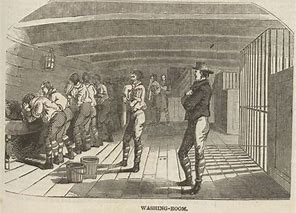
Stephen Smith was miserable from the heat, the overseers’ cruelty and the lack of decent food. It’s possible that he was frozen in fear, it’s possible that he didn’t care much. However, he didn’t consider himself guilty of the crime, and said this at trial, but not very well.
“Smith said he was innocent. We understand he meant to insinuate, that his blow did not kill the sufferer. But no defence was set up by him that he did not “aid abet and comfort” Hawes in his atrocious deed. “
In the end, he went to the gallows with an air of resignation, having first conferred with Clergyman attending him, to see if God might punish him less severely because his crime was not as evil as that of Hawes. I wonder what the poor Clergyman said to that.
JAMES DAVIS:
James Davis was a young stonemason from Herefordshire who earned his ticket to Australia by stealing sheep. He found his way to Moreton Bay via a theft in Windsor and was one year away from a return to Sydney. And proper food. And the possibility of a Ticket of Leave, and a new life. He was only 21, after all.
Davis had always been on very good terms with John Hawes and Stephen Smith. Hawes had a couple of years to go, but Smith was staring down the barrel of six years. They seemed to be good chaps, though. Until 9th January, when Hawes got mouthy and fought him. That’s when the dream of Sydney, some freedom and a new life was taken away.
Sources:
- Australian (Sydney, NSW : 1824 – 1848), Wednesday 7 April 1830, page 3.
- Sydney Gazette and New South Wales Advertiser (NSW: 1803 – 1842), Saturday 10 April 1830, page 2.
- Sydney Monitor (NSW : 1828 – 1838), Wednesday 7 April 1830, page 2.
- STATE ARCHIVES OF QUEENSLAND: Series ID: 5652 Book of Monthly Returns of Prisoners Maintained.
- STATE ARCHIVES OF QUEENSLAND. Series ID: 5653 Chronological Register of Prisoners.
- “The Dead Outside the Fence: Burying executed prisoners in Brisbane, 1830-1913”, Dawson, Christopher, Queensland History Journal, Vol. 20, No. 8, Nov 2008; 351-369.
 Moreton Bay and More