
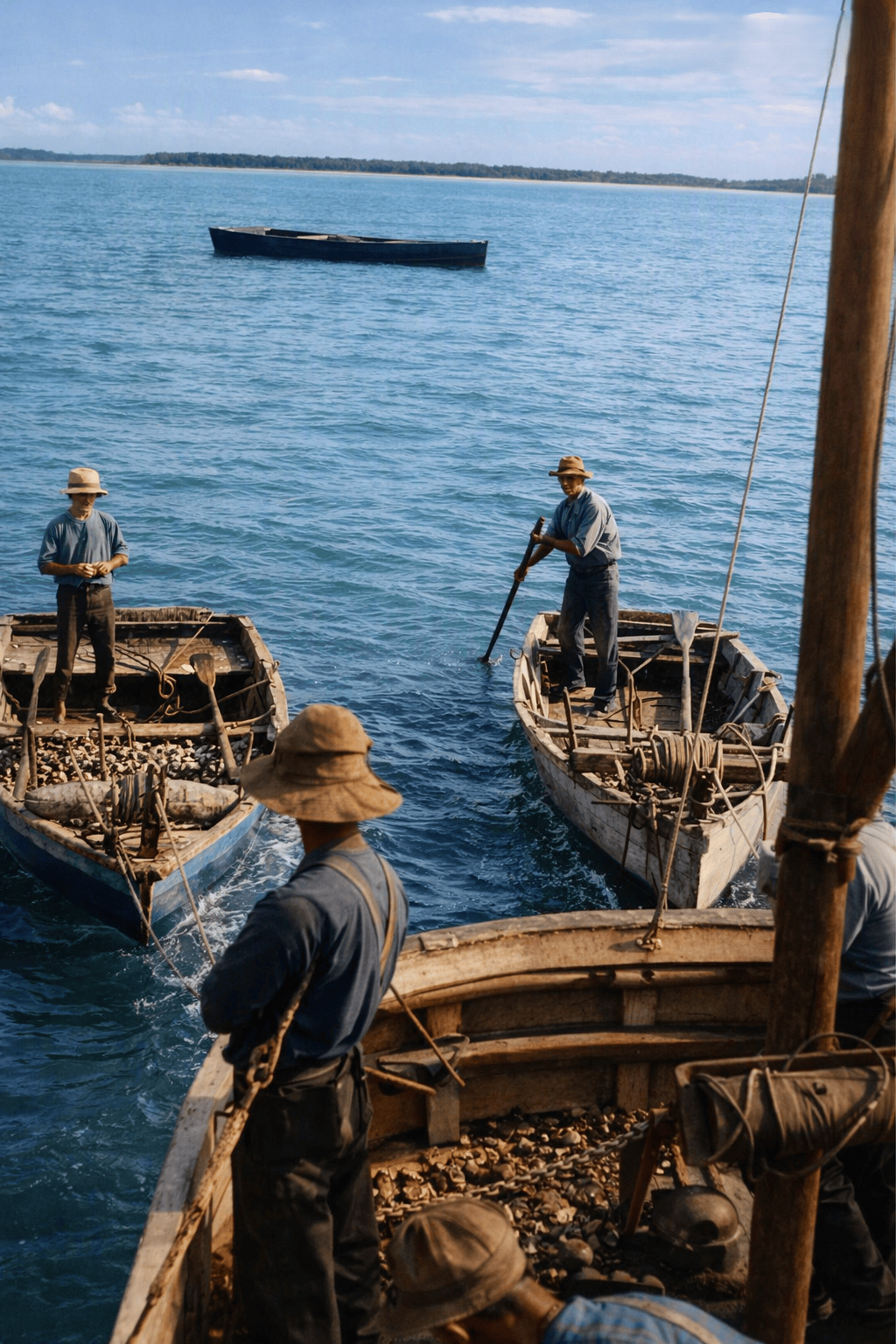
Moreton Bay Pilot, James Hexton. Allow me for a few minutes to draw attention to an old colonial celebrity, the Pilot stationed at Stradbroke Island, the late Mr James Hexton. He’s dead now and has been for some years, having met a sailor’s death in the performance of his duty, meeting his sad fate inContinue reading “The Old Man of the Sea.”
The early days of Caboolture, in colour.
The River. Caboolture in 1841. Towards evening, our direction being still the same, we came to the banks of another river or creek of the same breadth as the Pine River; it was however pretty deep, as it was flood tide. Having crossed it, we went over a tract of rich soil, followed by aContinue reading “The early days of Caboolture, in colour.”
The early days of Gatton, in colour.
The first mention of Gatton as a locality near Moreton Bay comes from a Sydney paper in 1846. “A smart gallop of half an hour brought me to Gatton, Messrs Pitt and Co.’s station, passing which, another half hour gave the dwelling and station of Mr. Pearce to view, on the left bank of theContinue reading “The early days of Gatton, in colour.”
Mr Humby and Mr Humby.
The earliest census returns for Moreton Bay had nearly 1600 people spread out over a vast area that ranged from the Darling Downs to the Logan, Pine River, Ipswich and Brisbane Town. In December 1849, there were two men named Humby in tiny Brisbane Town. Both were English. Both were transported convicts. Both had marriedContinue reading “Mr Humby and Mr Humby.”
The early days of Cunnamulla, in colour.
Deep in the southwest of Queensland, a rich stretch of outback grazing land on the Warrego River came to the attention of pastoralists in the 1860s. Speculators swept in, and leases were taken up throughout the area. The town of Cunnamulla grew from this speculation in the 1880s. The Warrego River is prone to flooding,Continue reading “The early days of Cunnamulla, in colour.”
“Confound Those Dogs!”
A long time ago, in a North Brisbane largely forgotten, a local man lamented the loss of friendships and even a potential romance. What had caused his relationships to founder? Pet dogs. He implored the Editor of the Moreton Bay Free Press to find him a solution. The Editor’s solution, one suspects, would have costContinue reading ““Confound Those Dogs!””
The early days of Nanango, in colour.
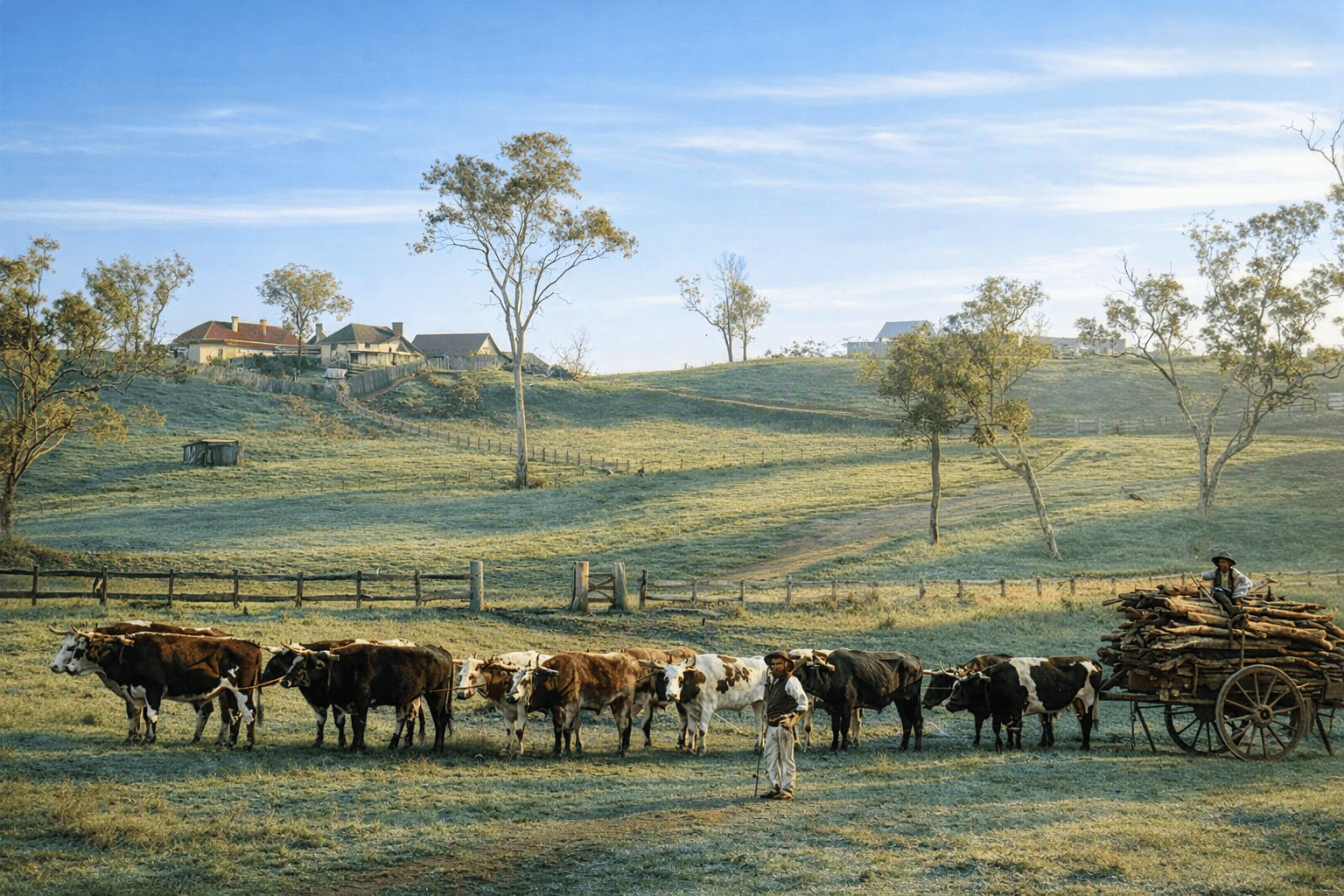
Nanango, a rural town in the South Burnett region, grew from a pub beside a creek in the 1840s to a proper town by the late 19th century. The residents of Nanango are jubilant at the consummation of their desires – railway communication with Maryborough, Brisbane and other ports. Observer and Evening Brisbane Courier, 1911.Continue reading “The early days of Nanango, in colour.”
The early days of Hughenden, in colour.
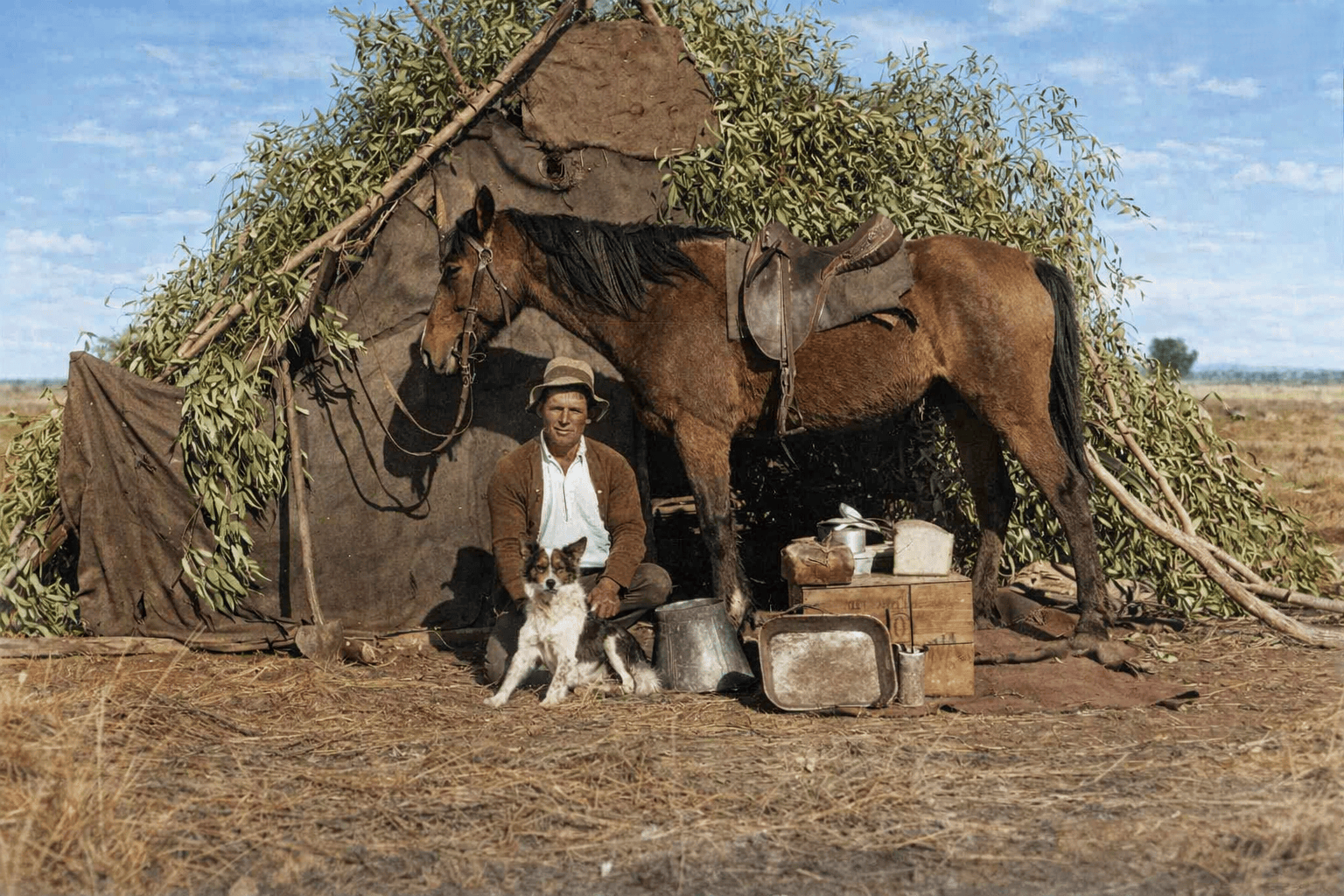
Hughenden, named after the residence of Benjamin Disraeli (because why not?), grew up as a hub for the sheep stations in the area during the late 1800s. The Sheep Stations The Shearers Hughenden and Barcaldine were hubs for striking shearers in the 1891 conflict with landholders over non-union labour. How deeply the strike affected theContinue reading “The early days of Hughenden, in colour.”
The early days of Birdsville, in colour.
Birdsville, near the border with the Northern Territory and South Australia, is famous for its outback race meeting, and its legendary hotel. Both were established almost immediately after the township was set up, and both have continued, indomitably (and riotously) ever since. The town is part of the Simpson’s Desert National Park district, and owesContinue reading “The early days of Birdsville, in colour.”
A grand day for a picnic.
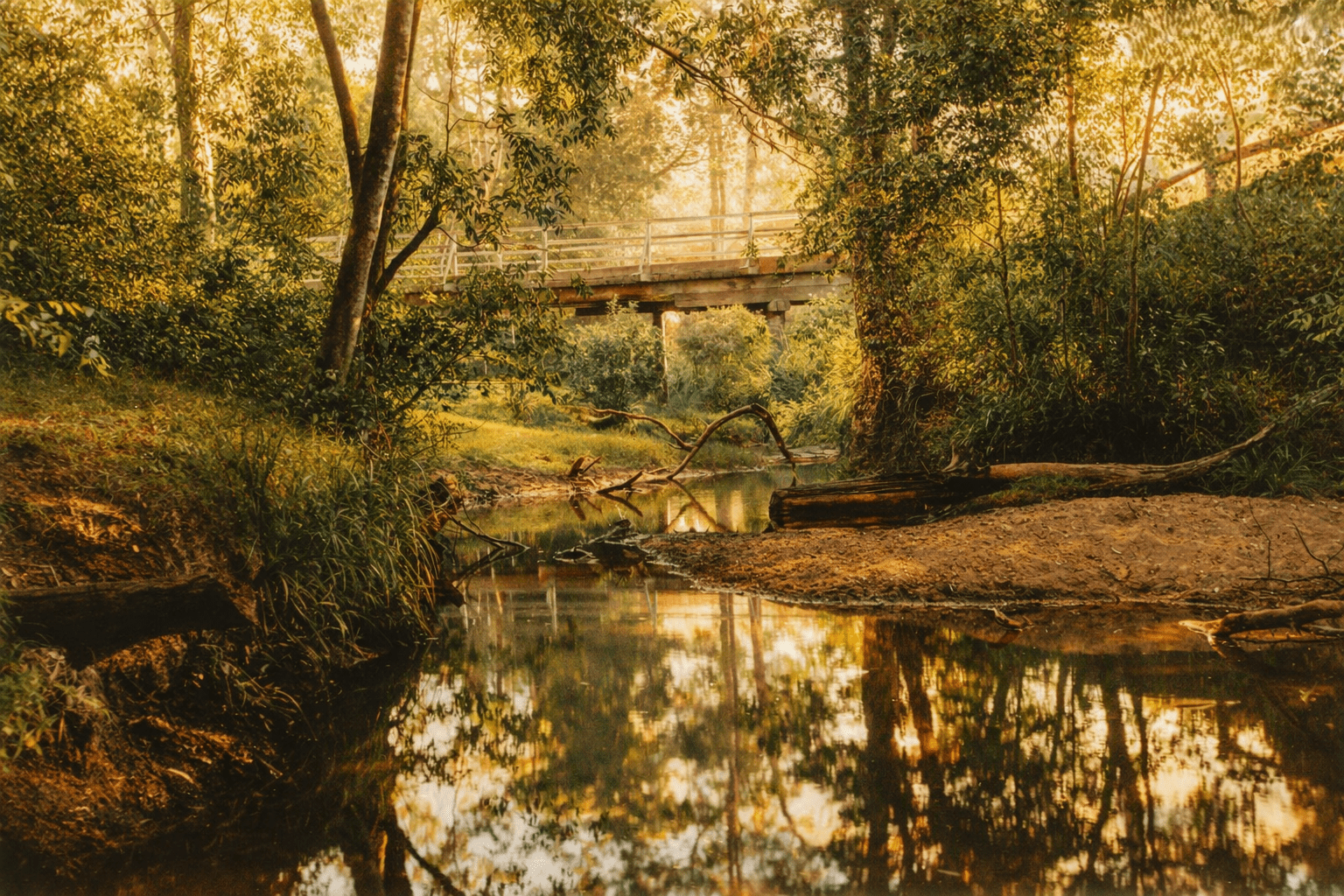
The Formal-Dress-Required Picnic. Clothing and social status have always been closely linked. In the 19th century, that meant being elaborately clothed according to one’s actual or desired station in life. This created some gloriously contrasting images, from an almost Impressionistic moment by the Warrego River to a group of carefully-gowned women enduring the prickly grassesContinue reading “A grand day for a picnic.”

