
1824: Oxley establishes a settlement at Redcliffe
MORETON BAY.
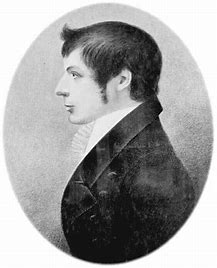
It will be remembered that the brig Amity left this port on the 2d September for the purpose of forming an establishment, under the command of Lieutenant Miller, 40th Regt. in Moreton Bay, at which place she arrived on the 12th. It is intended to have fixed on some of the islands near the head of the Bay, but none being found eligible, the site of a new settlement was marked out on Redcliff Point, near the centre of the Bay; possessing sufficient advantages of wood, water, and soil, for the purposes of the infant establishment. Mr. Oxley, accompanied by Mr. Cunningham, the King’s Botanist, and Lieutenant Butler, of the 40th, proceeded to examine the Brisbane River, discovered by Mr. O. in December last. At that time, it was explored to a distance of between 40 and 50 miles; and the appearance of the country induced Mr. Oxley to hope it would be found navigable to a much greater distance.
The extreme drought appears to have affected that part of the colony equally with this. The river was not fresh nearly 30 miles above the reach where it was drank in December, 1823; and the boats could not proceed above 40 miles beyond the point, to which the river had been ascended at that time; being only a few miles above the spot, where the tide ceases to flow. It appears Mr. O. had been sanguine in his expectation, that this large river was the drain by which the western waters were discharged into the sea; and that opinion has been strengthened by the circumstance of finding in the river, the fresh water fish, which have hitherto been found only in the western rivers. These fish, it seems, are so extremely remarkable, in their form and appearance, that no mistake could arise as to their identity, and they furnish a strong ground as to the probability of the Brisbane communicating with the western waters.
The country was explored a few miles to the west of the point to which the boats had ascended. The mountains had been seen to form a chain to the southward; running from east to west, when they terminated in an apparently low country; and from an eminence near the river, it was distinctly traced, flowing from the west; and no hills were visible between the S. W. and N W. points of the compass. The bed of the river, at the spot which terminated the investigation, was nearly one-fourth of a mile wide; and is, at periods, very heavily flooded, marks being observed between 30 and 40 feet high; but it did not appear to have been visited, by one, for a considerable time.
Large forests, of a new species of araucaria, were found bordering on the upper parts of the river. The lower banks of the river nearer to Moreton Bay, also abound with this timber, which it is hoped may be found conveniently useful, as masts for vessels of every description. It was found of great height and magnitude; and several fine specimens have been brought up in the Amity and are now in the Dockyard. The natives in the vicinity of Moreton Bay are extremely numerous and are judged not to be so savage and ferocious as the more southern tribes. They were shy in visiting the new settlement, and carefully kept their women and children out of view. Their huts are much superior to the temporary dwellings of the natives in this part of the colony. Some of them will hold upwards of 20 people; and are neatly constructed.
The Amity brought up a man of the name of Parsons, who had been wrecked at Moreton Bay, about 20 months ago, the companions of this man were brought up last December: but Parsons, being absent to the North at that time, missed the opportunity of being restored to Society; it appears he had proceeded as far to the North as Harvey’s Bay, where, finding the natives in that quarter not so friendly or attentive to supply his wants, as his first friends in Moreton Bay, he retraced his steps and had returned to the Pumicestone River about a month before the Amity’s arrival, and having found the bottle and letter left for him, he remained in that vicinity in hopes of its being again visited by some vessel; he was the first man observed on the beach, and his sleek plump appearance fully bore out his account of the hospitable and kind manner with which he had been treated ; his account of his residence among these savages is curious, as are also his details respecting their customs and mode of living.
The Amity sailed from Moreton Bay on the 10th of October and passed through the sea by the channel dividing the main land from Moreton Island. This channel has hitherto been considered as impracticable; but the Amity did not meet with the slightest difficulty, the least depth of water being four feet at low water, the channel from three quarters to one mile wide. This new channel is important in many points of view, it shortens the distance to the upper parts of Moreton Bay nearly 80 miles, and a tedious and difficult navigation is avoided; large ships cannot proceed so high as Radcliff Point by the Northern or original entrance, there being at high water scarcely three feet on some of the sand banks; the anchorage within is also much more secure and sheltered from the sea, that soon rises in blowing weather in this extensive bay. The Amity touched at Port Macquarie on her return; that settlement had not been favoured with any of the late rains that have so refreshed this part of the Colony, and consequently suffered much from drought, the wheat crop indeed might be considered as having failed.
Australian (Sydney, NSW: 1824 – 1848), Thursday 21 October 1824, page 3
Image: Britannica.com
 Moreton Bay and More