
A DAY AMONGST THE DOUGHBOYS. (BY OLD TOM.)
On 18 September, 1870, the Brisbane Courier published a guide to Doughboy Creek (now called Bulimba Creek). Old Tom was the nom de plume of Tom Dowse, a former convict, who arrived in Brisbane Town at the time of free settlement and who went on to a successful career as an auctioneer and later, Town Clerk of Brisbane.
Tom Dowse had the gift of story-telling, something that other old citizens of the town, who might have told fascinating tales, lacked. He was also fascinated by his surroundings and the people he met in his long career. (The piece has been edited slightly for clarity and space.)
THE above heading will no doubt cause many of the readers of the Courier to refer back to their early days when the height of boyish happiness was to have a hard dumpling, sopped in pork fat, and to ride on the gate all day, or if a colonial, those days of primitive simplicity, when hominy, doughboys, and water, were presumed to be the daily feed of settlers’ sons and daughters. Now, I have no intention of entering into a disquisition of the nutritious or digestive qualities of those solid luxuries, but merely gratify my gossiping propensities by giving your readers an account of a very pleasant day I lately spent amongst some of my farming friends located in that very interesting locality, Bulimba, or more commonly known as Doughboy Creek.

Steady lads, put the handy little Victoria into the full strength of the ebb; then hurrah for a gossip, as we merrily speed along. Yes, my son, that’s Petrie’s Bight just below the jetty, tho’ between you and me I think the Gas Company got the greatest bite out of the Crown reserve, and I don’t think the remaining bite would choke our friend Bernays and Company ; but let that pass, the very name of Petrie conjures up a thousand old memories, and could I, by any means, draw from the storehouse of the older Mr. Petrie’s memory those explorations and adventures he passed through during his early sojourn in this part of the world, I think I might consider myself a public benefactor were I permitted to give them forth to the public ; let us, however, hope that some colonial Dickens will become possessed of valuable memoranda from the portfolio of old Petrie, and from them weave a Queensland tale founded upon many an interesting fact, that came under the observation of this fine old Scotch gentleman.
Kangaroo Point
Round Kangaroo Point; yes, my boy, I have seen some strange fluctuations in the lives and fortunes of the old residents at the point. That building now used as a soap manufactory by the butchers, Baynes and Darragh, is erected upon the site on which formerly stood the first boiling-down establishment erected in the then district of Moreton Bay. A short time previous to the firm of Evan, Mackenzie and Co. entering on that speculation, under the management of Mr. John Campbell, late of Redbank, sheep and cattle were sold – as the saying is – for an old song ; in fact, in about 1843, I sold a flock of maiden ewes, depasturing at or near Gatton, for two shillings and three-pence per head, but the fortunate discovery made about that time, that sheep if boiled down for their mere skin and fat, would realise to their owners some seven to ten shillings per head, revolutionised these matters, and although at the present it is pleasing to find that the carcase can be utilised in a better form for the sustenance of mankind, yet, it must be re-membered, the pots saved many a struggling squatter from going under.
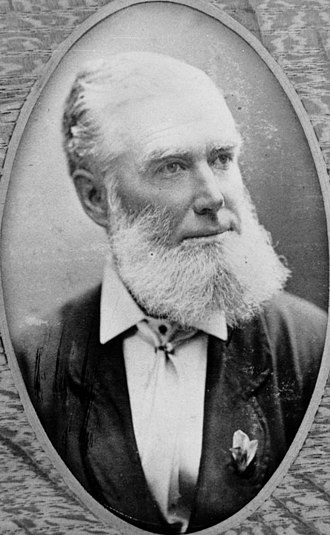
Whose pretty little cottage ornée is that just on the brow of the hill, opposite the soap works? That, my friend, is the dwelling-place of a gentleman, native born. Those of us who recollect Sydney of some forty years ago, well remember the Roberts’, there was none of your Andrew Martin’s about them, upright and down straight, and in every sense of the word men, and if ever I should be called upon to make affidavit whether I know a honest lawyer, I should spot Daniel Foley Roberts (19 February 1834 – 26 July 1889) as the man; Chairman of Committees in the Upper House, with £400 a year. Well, what of that; if £400 per annum is the figure for that service, who had a better claim to it than a thorough colonial like our friend Dan. Long may he live to receive the screw, say I, and many others, if asked the question, would say amen.

Yes, that next place, with the wharf built in front, is the town residence of Mr. George Raff, (1815-1889) one of the first of our Brisbane merchants, a thorough man of business, and possessing many excellent qualities. Yes, I believe he has made a deal of money, and spent it like a merchant prince. No, I never asked or received a favour from him in my life, yet I know many that have occasion to remember with gratitude the kind assistance afforded them by Mr. Raff, and when our petty political asperities have had time to settle down, we shall find George Raff taking front rank with our colonial legislators.

Pull gently past here “Old Tom.” In that mansion resides the present Premier of young Queensland, the Hon. A. H. Palmer (1819-1898). I could say a good many kind things of that gentleman, but my modesty forbids; besides, the censorious world might say I was flattering the Minister for the sake of his patronage. Heaven knows, all I want from him or his colleagues is for them to advise the Governor to the best of their ability, for the general advancement of our common country.

“Shafston,” the present residence of Gilbert Eliott, Esq., (1796 – 30 June 1871) the late Speaker of the House of Assembly, who after filling that office with dignity and credit from the first opening of a Queensland Parliament up to a very recent period, retires full of years and honour, to experience, I trust, that consideration from the hands of his colleagues which will not only mark their tense of his past services, but the estimation in which a honourable career is held by the public at large.
New Farm
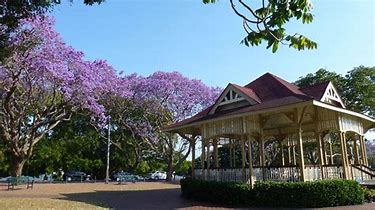
Here we are, at New Farm – a very considerable clearing made by the Government in the old penal times by the utilisation of convict labour. There are some very pretty spots above this clearing, and no doubt the day is not far distant when the prosperous Brisbane tradesman will find it to his advantage to have a bit of New Farm whereon to display his skill in horticulture and his appreciation of useful outdoor exercise. Coupled with this pleasing occupation, the worthy citizen would have the double advantage, of having access to his homestead either by road or river, and I am sure if he is one of those who believe in developing his muscular power, he will be wise in his generation if he takes advantage as frequently as possible of the river route.
Newstead
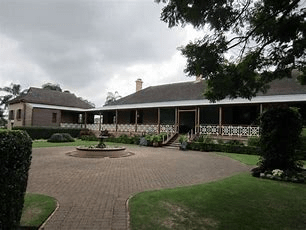
Yes, boy, that’s the residence of a successful Brisbane merchant-the Honourable George Harris, junior partner of the firm of J and G Harris. The Honourable George is colonial bred, sharp at business, and a very good specimen of a go-ahead colonial merchant. I don’t know that this gentleman’s path is entirely strewn with roses , but I know this much, that George Harris, very frequently and much to his credit, endeavours in a quiet manner to improve the pathway of life for other people who have to pass over it. I am sure the Grammar School boys here and in Ipswich would scout the skunk who would dare to say a word to his disparagement their recollections of the little steamer Nowra, and their junketings to and from the metropolis are, I am sure vivid in their memories.


Newstead (Mr Harris’ residence), and built and previously occupied by a kind hearted old salt, John Clement Wickham, Esq , R N , sometime commander of the surveying sloop of war “Beagle,” employed in the north west coast of this island In 1813, Captain Wickham assumed the position of Government Resident at Moreton Bay, having previously retired upon half pay. His conduct as a Christian gentleman and the promotor and encourager of every philanthropic work, endeared him to many a resident in Brisbane of those days, and I have lived to see public servants handsomely rewarded for past services, who did not deserve that recognition one quarter as much as John Clements Wickham, the first Governor of Moreton Bay, between the periods marked by the cessation of penal disabilities and the advent of Separation.
Bulimba

Bulimba, my son, that stretch of the river bank contains the home of some very happy family circles. It would be invidious on my part to select any name from amongst those hard working men us a model example to be set up for the observation of the new chum class of our population, but this much I may say, they, or most of them, found upon their arrival on these shores but little encouragement from the paternal Government of the day, on the contrary, in their endeavours to found a home for themselves and families upon the fertile lands of those districts, were met with persistent opposition, and at last when the land was grudgingly thrown open to purchase, these pioneers farmers had to enter into competition with the Jemmy Gibbons and others who made a trade of land sharking. No homestead clauses in the land regulations of the day gave them encouragement to improve the land, through hard fighting and with many discouragements have this exemplary body of small farmers won themselves a home, and I trust in many instances a competency for their years of old age.

To me, Robert, who has seen this young colony of ours in its transition state, it affords me a fund of real enjoyment to dwell upon the past, and whilst doing so picture to the imagination the future of this sunny land of ours. I have no desire to moralise upon the things past or present, but it often seems to my mind that we old colonists have never fully appreciated the good things God has given us during our lengthened sojourn here; for whilst we have had sufficient for our daily wants, and most of us enjoyed the perfection of health, wo have been too read) to envy what wo have thought the good future of those who migrated to the golden South, and who, if the veil was withdrawn from their inner life, would be found to have fallen far short of that happiness we have credited them with. To me, the bonnie banks of the Brisbane have always filled my mind with thankfulness, and a dependence upon Him who docs all things for the best, and had I the eloquence of a Jordan, or the influence of a Rothschild, willingly would I exercise the one, and expend the other, in bringing the toiling thousands of our fatherland to young Queensland.
Gently, my son, let her slip alongside the wharf. And now, having fulfilled my promise to pull you to Doughboy, and do the twelve miles within the one-thirty, I shall, whilst you moor the boat, ascend the hill to the hospitable home of your father, and in the quiet of the evening, surrounded as we shall be by those endearing faces and forms that constitute the charm of the home circle, gossip over passing events, and when the hour of retiring shall arrive, and your dear old father takes down and opens that book which has been to him, and numberless others, a solace in the bitter hour of calamity, and a source of thanksgiving in the day of gladness and prosperity, we will join, I trust, in that service to our Maker which will more fully teach us the great truths of Christianity.
Murrarie
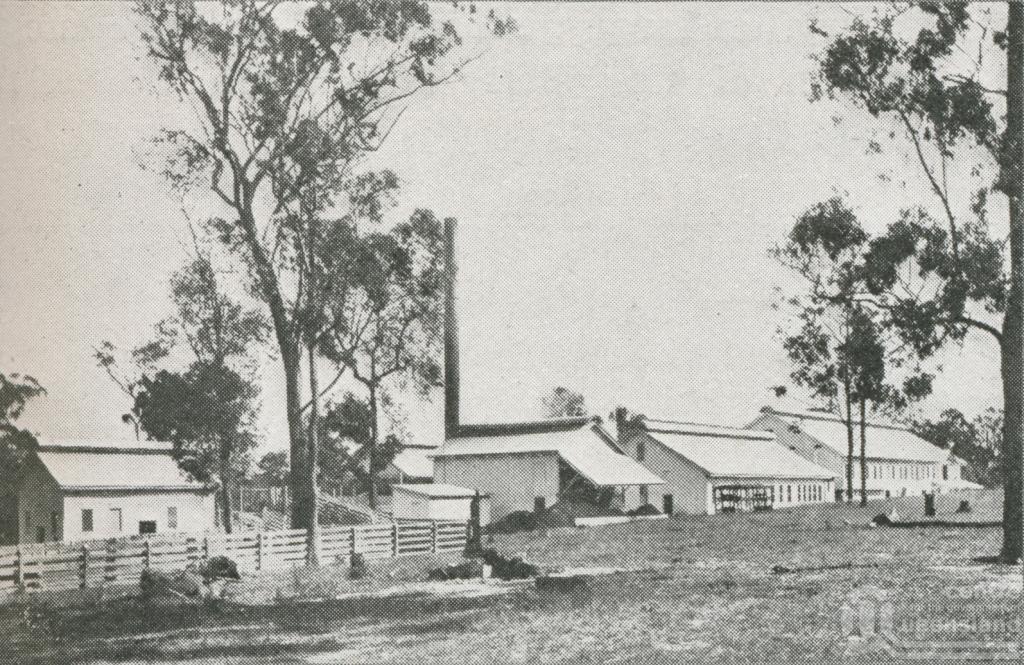
“Good morning, Mr Porter, I am glad to greet you before the sun has displayed his bright face to the expectant earth and again express my thankfulness in being permitted once more to stand upon the beautiful hill of Mooraree, (Murarrie) or Many Waters.” The glistening face of many waters here laughs back the perfumes of the prolific land.
From this elevation the eye takes in an expanse of land and water well worthy the attention of the photographic artist, a scene of rural enchantment! Away landward the smoke is lazily rising from the hearths of the Doughboy yeomanry, who, with cheerful brow and mind content, are busily employed upon their various clearings, intent upon the great aim of life — the acquisition of wealth , and I think that, if a refutation was needed to that used up expression so common not long since, that farming upon a small scale would not pay, I should merely wish to take the unbeliever, not by the beard, but friendly by the hand, to the heights of Mooraree, and from that vantage ground point ono, not ono, nor two, but the whole batch of Doughboy farmers as examples of successful industry.

Doughboy, or Bulimba Creek, is navigable for vessels quite up to the tonnage of any of the vessels that trade between Brisbane and the head of the navigation, to the distance of twenty miles, in fact to the bridge crossing the creek on the road to Lytton. The population in and about the creek is set down at some 300 souls, and the number is daily augmenting, and when the land on its western banks, now in the possession of large holders, is cut up and divided into small farms, an impetus will be given the neighbourhood, very gratifying to those who wish to see a thorough agricultural population settled upon the land. Mr. C. Porter alone has some 800 acres, with a frontage to the creek of some fourteen miles, and were he wise in his generation he would divest himself of the cares of two thirds of it, by placing it within the reach of the embryo farmer.
The district of Tingalpa, in which a portion of Doughboy is situated, extends to the coastland of the bay, the village of Lytton, with the residence of the Custom-house officer in its neighbourhood, lying about four miles north east of the creek. The distance from the New Farm Ferry to Doughboy is about six to seven miles.
I have now done, and if the day spent in bodily and mental enjoyment has been conducive to the amusement of your readers, the pleasure of my trip will be enhanced materially.
Brisbane Courier (Qld.: 1864 – 1933), Wednesday 21 September 1870, page 3
Photos of Newstead House are from the Newstead House site. All others are from Wikipedia.
 Moreton Bay and More
1 Comment