
The 10th prisoner is a shadowy figure in the history of Moreton Bay. He arrived in 1825, sentenced to life by the Sydney Bench for an offence not recorded in the Chronological Register of Prisoners. His record goes on to state that he was 40-year-old cook, of average height and swarthy, born in Naples. He originally received a life sentence (transportation) in Malta in 1815, but the record does not show his initial crime. He did not abscond, and there is no date of return to Sydney. His fate is a barely legible pencilled note that reads “to Sydney for trial.”
One of the reasons he is so hard to find is his name, for which the most common rendition is “Giuseppe Laberbiera”. After some earnest searching, he gradually appears in convict records and newspapers as Joseph Liberbera (or Lana), Laberbera, Luberbearer, Laberberia, Laberbierd, La Barberia and Laberba. He is most often recorded as having been born in Naples, although some records claim that his native place was Palermo.
MUTINY IN MALTA
Giuseppe Laberbiera was sentenced on 21 November 1815 by a Court-Martial at Naples on a charge of mutiny. His entry in the records of the Hulk “Leviathan” and his original Convict Indent, state that the offence was mutiny. His occupation was put down as “spectacle-maker”. The idea a Neapolitan spectacle maker being mutinous at Malta is at first puzzling, but they were interesting times. Napoleon had just been defeated and exiled, exhausted Europeans hoped, for the last time. Malta had become a Crown Colony in 1813, a state of affairs ratified by the Congress of Vienna in 1815. The colony had just survived an outbreak of bubonic plague and was further unsettled by the strict rule of Governor Sir Thomas Maitland.
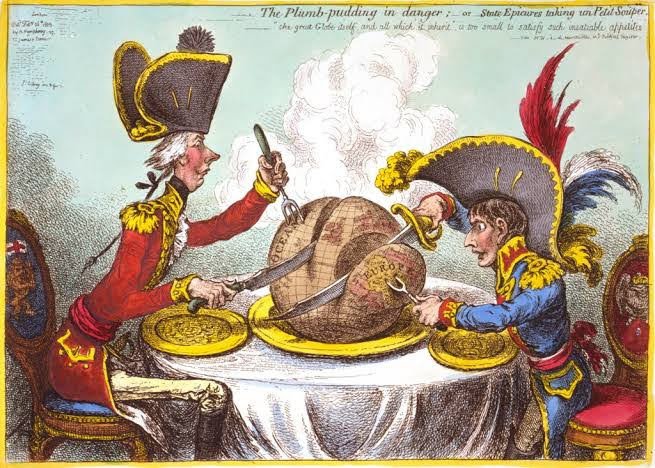
Sicilians and Neapolitans were recruited to join the various Regiments assigned to Malta (Fencibles and Artificers and so on), and it seems likely that Laberbiera was thus employed when he mutinied. If he disliked being ordered around by a group of Englishmen, mutiny was exactly the wrong crime to commit. Laberbiera would be ordered around by English soldiers for the rest of his life.
The convict ship “Elizabeth” arrived in Sydney on 11 October 1816, nearly a year since Laberbiera’s conviction. As Le Barbiere, he was forwarded to Parramatta to be assigned duties. His life in western Sydney was one of steady work and gradually increasing trust and respectability. In 1821, he was a Constable at Liverpool, and entitled to 1 ½ rations, and the following year he was pound-keeper on the Nepean, near Menangle. A pound-keeper did not round up stray domestic pets but was a Police or civic officer responsible for housing and feeding stray livestock in the area. The value of working livestock was great, and the pound-keeper helped ensure that owners could be reunited with their missing stock.
NEW SOUTH WALES
1822 was also the year Laberbiera petitioned the Governor to grant him “any indulgence” as His Excellency would see fit. Added to this petition was the handwritten footnote from his employer, prominent settler William Howe. “I beg leave to recommend the Petitioner to His Excellency the Governor as a strictly honest and sober man who I am sure will make a good use of any indulgence His Excellency may please to bestow on him.”
The index to the Register of Absolute Pardons, 1822 lists “Joseph Laberbierd, former pound-keeper at Menangle.”
CUTTING AND WOUNDING
Giuseppe Laberbiera remained in the employ of William Howe, presumably still carrying out his duties with alacrity, until 12 September 1824. Laberbiera was by this time approaching forty, depending on the source for his date of birth, and had been in the colony nine years. He had become jealous of the flirtatious behaviour taking place between his fellow servants, John Stewart, Mary Joy and Mary Delahunt. At one point, he had watched them chatting, and drew Stewart out to argue with him. During the fight, Laberbiera grasped a knife and stabbed Stewart twice – in the stomach and lungs. He also threatened the two Marys with the knife.
Stewart was so badly injured that he was not expected to survive, but he recovered gradually. The Supreme Court found Laberbiera guilty of feloniously cutting and stabbing and gave him a life sentence to Moreton Bay.
MORETON BAY
Laberbiera was one of the first wave of prisoners to Moreton Bay. His occupation was listed as cook, probably one of the duties he had carried out for Howe. The convict settlement was in the process of being constructed under the watchful eye of Captain Patrick Logan, Commandant. Laberbiera kept out of trouble during Logan’s command at Moreton Bay, having learned about strict governance in Maitland’s Malta. There didn’t seem to be much hope of ever seeing a settled town again, but Laberbiera survived Logan, the dysentery outbreak, and was promoted to an overseer role.
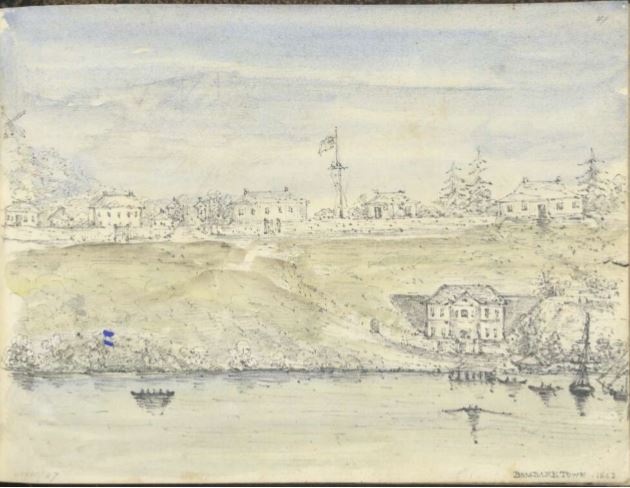
Eight years into his sentence, Laberbiera found himself on the Isabella, on his way to Sydney. It must have felt like a miracle.
The Colonial Secretary wrote tersely to Captain Clunie, now Commandant at Moreton Bay, on October 1st 1833,
“The manifest of the Isabella is herewith transmitted, and also two petitions from the prisoners named in the margin, which having no report or recommendation, would appear to have been forwarded to Sydney without your knowledge.”
Oops. The petitions to stay in Sydney were refused, and Laberbiera and friend (Henry Caulthorpe) found themselves bound once again for the subtropics.
Perhaps it was the taste of something like freedom, so unexpected, and so cruelly taken away. Perhaps it was his age and the prospect of never being free. Perhaps it was George Stephenson taunting him, or perhaps he was by then a short-tempered, murderous bastard, but Giuseppe Laberbiera felt the need to stab and cut again. After lingering for some time, George Stephenson died of his wounds, and Giuseppe Laberbiera was charged with murder, and sent on the first available transport to Sydney to await trial.
MURDER
Commandant Clunie did what had previously been expected of an officer in command of Moreton Bay, and sent the prisoners who witnessed the attack to Sydney to give evidence. Assistant Surgeon Murray, he advised the Colonial Secretary, would be on the first ship once he could be relieved. That was normally the drill.
The Colonial Secretary had other ideas.
“I am directed by His Excellency to acquaint you that in consequence of the opinion expressed by you that there would be much perjury in the case from some Prisoners having a considerable time after the Act was committed, persuaded Laberbiera that they could prove the deceased attacked him first and that he only acted in self-defence, which prisoners he has accordingly summoned to give Evidence and the probable chance therefore of his acquittal if brought to Trial in Sydney. His Excellency has thought it advisable to direct his immediate removal to the Settlement at Norfolk Island to which place he has been sent with an intimation to the Commandant of his character and conduct and instructions to keep him in irons and under a vigilant Watch. The Witnesses mentioned in your letter of the 24 January last as forwarded to Sydney to attend the Trial of Laberbiera are returned to Moreton Bay by the present opportunity.”
Patrick Cullen, John Burnly, Peter Wilson, John Ford and Pierre Hannin were duly returned to Moreton Bay, their visit to Sydney cut short. Giuseppe Laberbiera was wearing heavy irons at Norfolk Island, the penal colony of last possible resort. His Excellency avoided the trouble and expense of a trial by the happy fact that Laberbiera was already serving a life sentence. Norfolk Island was a good idea. No point trying and hanging the chap.
In 1841, “Giuseppe Lar Barbie” was admitted to Parramatta Gaol, from Norfolk Island presumably, aged around sixty. He died on 30 November 1841. He had been a prisoner in one capacity or another for twenty-six years, had seen the rise and fall of Napoleon, the life and death of Logan, had lived in two of Australia’s harshest penal colonies, and had killed one man and very nearly killed another. If he was given to introspection, he would have marvelled at his life and choices.
 Moreton Bay and More