
In my post on Henry Drummond, I referenced an interesting account of the seizure of the Brig Wellington in January 1827. Drummond was one of the prisoners on board that vessel, having been reprieved from the death sentence, and ordered to be transported to Norfolk Island. Here is the article, with the log of Captain Duke, who brought the pirates in to Sydney to be dealt with.
Since Saturday, we have succeeded in obtaining further interesting, and more authentic particulars than we were then able to elicit in the hurry of the moment. Captain Duke, of whom we cannot speak too highly, nor His Majesty’s Government think too favourably, has obliged us with the perusal of the Ship’s log, from which we shall make copious extracts.
However, before they are presented to our Readers, we must make a few preliminary remarks. We think that the conduct of those, on board the brig, was not altogether free from censure. The voyage across is but short—the prisoners on board were known to be dangerous and desperate offenders; and, abstractedly considered, no one can blame men for exercising desperate efforts to escape the horrors of the Southern hell to which most of them were eternally banished—and, on such accounts, the Captain, officers, and especially the military guard, should have been doubly and trebly vigilant, and that out of regard for their own lives, if actuated by no other principle; but still we do not take upon ourselves to charge any party with remissness of duty; because, the most careful and attentive are often surprised by the collective wisdom of experienced desperadoes.
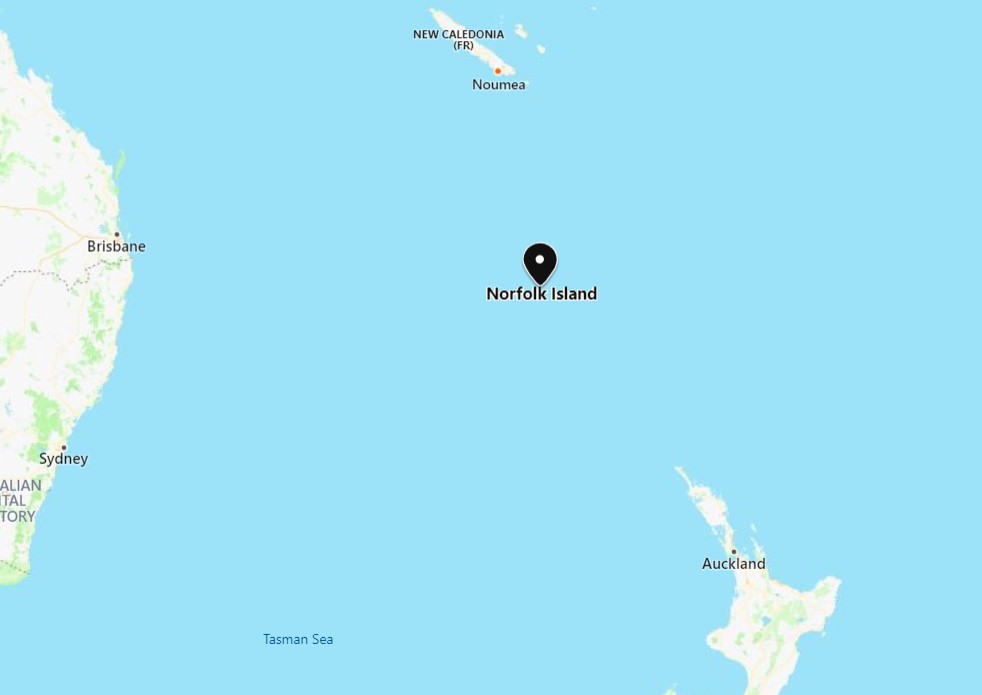
The day on which they were to have made Norfolk Island, was the time fixed for carrying into effect that plan which had been contrived, by Walton, and others, on board the hulk. At noon, the Captain was employed in taking “sight.” Two soldiers were parading the deck; Walton was sitting either on, or contiguous to, the bowsprit; the troops were in the fore-scuttle; six prisoners were on deck ; the serjeant went below with a view of allowing a fresh party of the prisoners to take their turn on deck; no sooner did Walton observe all things were so far favourable, than the signal was given—the sentinels on deck were secured, and deprived of their arms; the Captain was made prisoner; the hatch of the fore-scuttle, in which the military were all pent up, was closed, in the act of doing which one of the prisoners was wounded in the shoulder, as the soldiers immediately commenced firing ; the sailors were in like manner secured, by being forced into the prison hold, at the same time that Walton and his party, liberated their fellow prisoners from confinement; the vessel was immediately in a state of confusion; in the cabin Mr. Buchanan seized a brace of pistols, and was in the act of discharging them, when he was knocked senseless by the butt end of a musket; in less than one minute, the pirates had complete possession of the vessel.
Walton took upon him-self the command—another of the name of Douglas was appointed chief mate—Edwards, alias Flash Jack, became second mate, and Clay contented himself with the mere stewardship. No violence was offered to any one on board after the capture. We had nearly forgotten to mention that the soldiers kept firing away through the bulkhead into the hold, until they understood that the crew were in danger of being shot. The military were divested of their accoutrements and red coats, in which the pirates became dressed, and, in less than a quarter of an hour, the serjeant had the mortification to behold all his stripes decorating one of the pirates who lorded it away at a great rate.
For the sake of justice to those concerned, and we hope it will prove effectual in inclining His Excellency the Governor to extend mercy on so extraordinary an occasion, we think it necessary to state, that a number of the prisoners, among whom, it is said, was Anthony Best, actually refused to share in the honours of the day, and, on that account, were kept confined with the crew in the hold, and of course had to endure none of the best of treatment for acting in the laudable way they did ; and we have little doubt, therefore, that their case, if our information be correct, will meet with compassionate consideration. Being short of water, and in want of a nautical almanack, and a chart, they resolved on making for New Zealand, with the view of obtaining, by fair or foul means, those requisites from any whaler that might be in the way, as their ultimate destination was South America.
Walton had his fears about making New Zealand, but Captain Harwood succeeded in making him believe that no force, which he might expect to meet, could successfully resist him and his party. Upon this they took fresh courage, though they were obliged to compel the crew to work the vessel; and, had it not been for Mr. Harwood fortunately securing a lunar observation, they could not have made New Zealand so early as they did, in which case they must have experienced all the horrors consequent on a privation of water.
It is worthy to remark, that, so divided was this motley group, there were, at one time, no less than three different parties—among the prisoners there was the neutral party, there was a Roman Catholic party, and there was the Protestant party, who had the command; and the Catholic brethren had formed the plan among themselves of taking the vessel from their Protestant brethren, and forcing them to walk the plank. But the call at New Zealand upset all this policy. Having gone so far, we now furnish the extracts from the log.
“At 9 A. M. on Friday, the third, of January, a brig hove in sight, coming into the Bay of Islands, which we supposed to be a stranger. When they saw the ships, they hauled in, and at 10 o’clock, she being then nearly in, the Captain went on board, and enquired of him whom he supposed to be commanding the stranger, and whence he came? He replied, from New South Wales, bound to the River Thames with troops and provisions. We supposed, from the number of people, about fifty men, chiefly armed, that were on the deck, that she was proceeding to some settlement, and we had no suspicion whatever of them, at that time; though we, notwithstanding, thought the manner in which they managed the vessel was very strange. Captains Duke and Clark enquired of the Captain of the brig whether he was acquainted with the place? He said he was not, very well; and he was advised, in order to get a good birth, to run further in, and close to the ships, which he did.
We asked one of the men who was walking on the poop, and supposed to be an officer, how long he had been running across? when he replied very abruptly, that he did not know. About an hour after, Captain Clark sent Mr. Summerfield on board the brig with a note requesting any pitch, tar, or rosin they might have to spare, as his ship was in a leaky condition, and had none of these articles on board, and received the following answer : —
“Captain Walton’s compliments to Captain Clark, but having only one cask of tar, is willing to spare him a part of it, and will render him any service. Your obedient servant, JOHN WALTON.” ” Brig Wellington.”
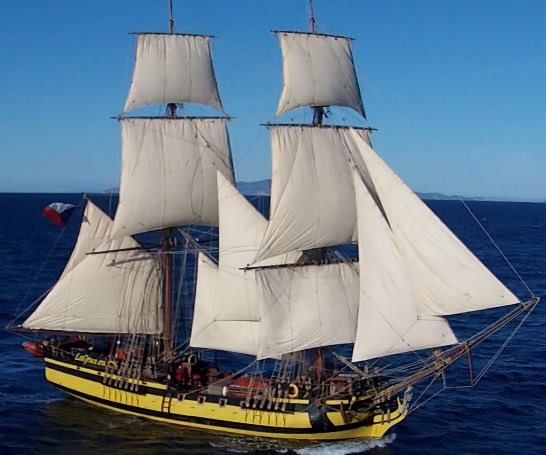
“In the course of the day, Mr. Fairburn having some business with Captain Duke, came over and enquired what vessel it was? Captain Duke replied, he could not tell, but supposed her to be the brig Wellington, from Port Jackson. Mr. Fairburn and Captain Duke then went on board, to see if there were any letters for the Missionaries ; when Mr. Fairburn recognised a person who had formerly been a painter at Sydney, named Clay, and Captain Duke also recognised another, who had formerly been condemned in England, and was to have been sent to Norfolk Island.
This excited their suspicions, that the vessel had been run away with from Port Jackson; for the people on deck, in soldiers’ jackets, had no appearance whatever of regular troops. After leaving the brig we consulted together on what we had observed, and Captain Duke sent a polite note to the Commander to come on board to dine, as we wanted to learn who he was, and what he was about. He, however, declined the invitation, but said he would come for an hour in the afternoon. He did not come according to promise, and we went on board again, and remained upwards of an hour, during which time they appeared in great confusion, watering the vessel and trading with the natives, whilst we thought it very strange, as she was only proceeding to the Thames, that they should be taking such a quantity of water to supply them on so short a passage; and, during the time Captains Duke and Clark, were in the cabin, they observed a number of counter-signs passing amongst the company, which consisted of about 10 persons and a guard.
Mr. Williams came on board whilst we were there, and put a few questions to the Commander, which he answered in a very unsatisfactory manner. As we were going away a gentleman, who proved to be Captain Harwood, who commanded the brig previous to her capture, found an opportunity of whispering to Captain Clarke, and also to the Surgeon of the Harriet, telling them who he was, and that the vessel had been taken from him. We invited the two Captains, Walton and Harwood, to tea. Walton came, but Harwood they would not allow to come, and our boat’s crew informed us that a number of persons were confined below in irons. Whilst we were on board the brig, it appears Mr. Fairburn had a note slipped into his hand, acquainting us that she was from Port Jackson, bound to Norfolk Island with prisoners and provision; that, on the 21st of December, they rose upon the guard, whom they subdued, and confined below in irons, in which situation they were at that time, together with some of the prisoners, and that they intended to take the vessel to South America, after leaving this place, where, it was reported, they were going to set the passengers and a number of the prisoners on shore.
When Walton came on board, Mr. Williams put some close questions concerning the brig, and also their intentions. He prevaricated a good deal, and when Mr. Fairburn produced the note that had been privately given him by Captain Harwood, he was struck with astonishment, but did not attempt to deny the truth of its statement. He confessed the whole of the transaction as to the taking of the vessel and confining the guard. A few, he said, were wounded, but none were murdered. He observed also that he little thought of being so trepanned, but that he should be resigned to his fate. We told him that he should consider himself a prisoner, and that we would not suffer him to leave the ship. We did allow him, however, to depart between 10 and 11 o’clock, as the brig could not proceed to sea that night. He told us that they were bound for South America, where they would go on shore, and deliver the brig up to the former Captain and crew; and that, on leaving the Bay of Islands, it was their intention to set the passengers and a number of the prisoners on shore, with two months’ provisions.
“On Saturday the 6th, at daylight, we got the guns on deck, and made all ready, in case the pirates should make any attack on us. At 8 A. M. the brig bore down close alongside of the Harriet and let go the stern anchor. They wanted several articles from us, in lieu of which they offered provisions, and every description of tools, all Government property, but the Captain resolved to have no transactions whatever with them. At noon an invitation to dinner was sent to Captain Walton and any of the passengers, which was declined. After dinner, Walton sent the following note to Captain Clarke :—Captain J. Walton’s compliments to Captain Clark, and will be glad of his company to spend an hour or two this afternoon, with himself, the late officers, and passengers, in which, he may rest assured, nothing but sociability is intended.
“N. B. I cannot with propriety allow Captain Harwood to go out of the vessel alone. ” I remain yours, &c. “JOHN WALTON.”
“We went on board, and whilst there, every transaction was disclosed. The passengers said they had been very well used since the time of their capture, by the prisoners, in every respect, except plundering their property. Mr. Buchanan sent some of his property to me, to be taken care of for him, if he was allowed to go on shore. Captain Harwood complained very much of not having rope sufficient to bring the vessel from South America to Port Jackson again, and Captain Clark agreed to let him have a small quantity if he would give him a receipt for it, but he never received any until the brig was recaptured, and he reinstated in his former situation. At this time the crew and officers did not consent to have anything to do with the vessel further than in self-defence. Whilst on board, the following statement was drawn up:
“Bay of Islands, Jan. 6, 1827.—I do hereby certify, that the crew of the brig Wellington, consisting of ten men, and ex-Commander, is, by the force of arms, compelled to leave the Bay of Islands by the present Captain and crew. In witness thereof the undersigned Captains have subscribed their respective names; their vessels being whalers, and too weak in force, without endangering the lives of their crews, and of the troops on board the brig Welling-ton, to recapture her from the hands of the prisoners or present crew, by whom she was taken on her passage to Norfolk Island. “JOHN WALTON.”
“Whilst Captains Duke and Clark were on board the brig, Mr. Tapsell, the chief mate, got a spring upon her cable, which, when the pirates discovered, they called Captain Duke on one side, and told him they observed the spring on the cable, and that they were told by the native girls the guns were loaded, and that the chief mate meant to fire four guns at them, if they got under weigh. However, they allowed Captain Duke to depart on giving his word that it was not his intention to fire.
When they returned on board, the crews informed Captains Duke and Clark that there were more prisoners on board than we were aware of; that it was the intention of the rest, when they went out to sea, to make them all walk the plank, and, that if it was agreeable, they would endeavour to stop her, rescue the poor fellows that were below, and reinstate the Captain; and at 7 P. M. we resolved not to let her go out of the har-bour, but to attack her the next morning. The brig having moved further in shore, and clear of the Harriet, we have taught our spring, and brought the ship’s broadside on to her.
“On Sunday the 7th, at 4 A.M. the brig hove short, and loosed the jib. At 5 we hoisted our colours and fired the first shot.
The pirates hoisted no colours, and we again fired, after which both the Harriet and ourselves continued firing for some time, and then ceased. After the second shot had been discharged, the chief part of the pirates ran below, and some jumped overboard. Finding that a number again mustered on the deck, we fired one more shot ; the pirates never fired any; and they having received a considerable deal of injury both in the hull, masts, and rigging, we sent it note to them, to the following purport :—
“We wish to know your determination, as to whether you mean to strike and deliver the passengers, guard, and those confined on board the brig, otherwise we can command one thousand natives who will massacre the whole of you. We mean to behave humanely to you all. “ROBERT DUKE. “JOHN CLARK.”
“To this communication we received the following reply:—” It is with the greatest reluctance I have, on the part of the majority of the crew, to request that, if they resign the vessel, they may be permitted to land some provisions, &c. &c. together with themselves. On those terms we will surrender, otherwise the passengers, crew, and soldiers must share our fate. ” JOHN WALTON.”
“Sunday morning, 7th Jan.” Note. —” We allow you to land your prisoners, provided you give up your passengers and guard to my chief officer, and allow them to come on board the ship. ” ROBERT DUKE.”
Answer.—” We have come to a determination, that, until those canoes of New Zealanders sent expressly by the Missionaries, be returned to whence they came, we cannot think of landing ; as we conceive there is more danger in going on shore than in remaining on board open to your fire, we having as a security troops, crew, and passengers, who must all share the same fate. We intend landing as soon as the canoes depart. ” JOHN WALTON.”
“In the course of the day, on Sunday, the canoes being dispersed, Captains Duke and Clark, Mr. Williams, and Mr. Fairburn, went on shore to disperse the natives. At 3 o’clock the pirates began to disembark, the guards were released, and at 4 we had full possession of the brig. As soon as the prisoners landed. The natives commenced stripping them, it being impossible to prevent them from so doing. Forty-one- [line obscured in original].
They all landed at Koratica except Captain Walton and George Clay, who were landed a little further off by Captain Duke himself, for fear of the natives. On going on board the brig, we found Skidmoor, a man residing on New Zealand, bartering for and buying everything he could purchase out of her. In the latter part of the day we hove the brig’s anchor up and warped her close to the two ships for protection, in case of being attacked from the shore.
“On Monday, the 8th, at 10 A.M. Captains Duke and Clark, Mr. Williams, and Mr. Fairburn, with the officers and carpenters belonging to both ships, went on board the brig to survey her, and found the hull, masts, and rigging much injured, and the carpenters were set to work to repair her hull and fish her mainmast. When on board, we were informed, that a quantity of property had been taken out of her and brought on shore. We immediately proceeded in search and discovered a cask of provisions concealed in some sacred ground, and had it again brought on board the brig.
“On Tuesday, the 9th at 10 A.M. the natives brought a prisoner on board the brig —Douglas, who acted as chief mate, after she was captured. The natives then came on board of us and received 50 lbs. of powder for his apprehension. They likewise brought back the brig’s boat that was taken away when the prisoners landed, and for which I gave them 50 lbs. more of powder.
“On Friday, the 12th, at daylight, the natives brought on board James O’Neal, Henry Drummond, Charles Daly, William Lyddington, William Ryan, and William Holt, prisoners, whom they had secured.
“On Saturday, the 13th, the natives brought in Jennings, McGuiness, John Lynch, and William Webb, for each of whom we gave 25 lbs. of powder. We likewise received from the Harriet 3 tons of bread, and from the Missionaries, who had been plundered by the natives under the command of Shongy, several boxes.
” On Sunday, the 14th, Matthew Flame, Cornelius Killick, and John Stewart, were brought on board by the natives, who received from us for apprehending them, one musket and a cartouche box.
“On Monday, the 15th, at daylight, the natives brought in a number of prisoners, amongst whom were John Walton and Charles Clay, late Captain and Purser of the brig. As the natives well understood that these two were superiors on board, they would not deliver them up without receiving 100 lbs. of powder, and two muskets, which we were obliged to give them. The following were the prisoners brought in on this occasion :—John Walton, and George Clay, for whom we gave 100 lbs. of powder and two muskets, Thomas Yarn, Richard Johnson, John Edwards, Edward McGuiness, John Swan, and Richard Carter, for each of these we gave to the natives 25 lbs. of powder, and for Thomas Cole, William Brown, and Pat. Gorrell, one musket each.
” On Tuesday, the 16th, a prisoner, James Bennett, was brought on board, for whom we gave 25 lbs. of powder.
” Wednesday, the 17th, John Smith and Andrew Davies were brought in, for whom the natives received 25 lbs. of powder.
“Thursday, the 18th, at daylight, we took on board William Worker and Thomas Bayley, and gave 25 lbs. of powder for them.
“Friday, 17th, Edward Colston was brought in, waiting for handcuffs.
“Saturday, the 20th, the people were employed to-day in getting in order pistols, muskets, and cutlasses, some of the prisoners having been heard to say, that they would re-take the ship if they should lose their lives. The armourer is employed in making irons. There are yet ten prisoners on shore; the natives have captured four of them and are tracking the rest.
“Monday, the 22nd, at day-light, the Harriet got under weigh. A strong guard was kept over the prisoners, and double irons put on three of the most desperate characters.
“Tuesday, the 23rd, at daylight, we hove up and warped the ship into the stream, ready for getting under weigh when the wind came fair. This morning we received on board the Missionaries and their families and took some provisions out of the Wellington for the use of the prisoners.
“Wednesday, the 24th, at 9 A. M. the mate went ashore to bring a prisoner on board whom a chief had in possession. At 1 he returned with the prisoner, mustered all the others, and examined their irons, and found those on 11 of them cut, and two knives found with them. They were tied up, and received each of them two dozen lashes, with the exception of a man named Henry Drummond, who, after receiving three lashes, begged to be let down, and that he would confess all he knew. On this condition the Captain let him loose, and he then told that their intention was to rush up the hatch-way, get possession of the vessel, and put to death the crew if they did not comply with their wishes and again take the brig. The crew of the brig was then to be sent on board the Sisters, and the latter’s crew on board the brig, and after taking the masts, and everything wanted out of the brig, to let us go.
Thursday the 25th, the armourer was employed in making handcuffs, and irons for the legs of the prisoners. Henry Drummond and John Boyd were kept upon deck, as the other prisoners swore they would massacre them for informing. The handcuffs were taken off John Stewart and Thomas Cole to attend upon the rest.
” On Sunday the 28th we got under weigh, in company with the brig Wellington, at daylight.
” Tuesday, the 30th, at sea in company with the Wellington. We allowed four prisoners at a time to come upon deck and inspected their irons. None were found cut. Walton, Clay, Drummond, and Boyd were kept on deck.
” Saturday, February 3rd, this day at 4 P.M. John Mathews, the cooper’s mate, gave information that one of the prisoners, by name Thomas Ryan, had spoken to him and told him he had a secret which he would communicate, provided he would swear that he wished he might never see heaven if he revealed it. He informed him that the prisoners below had been consulting on the previous night, how they could best take the ship, as the wind was fair, and two or three more days would bring them to Sydney, but that out the assistance of one or more sailors; the cooper’s mate they thought was the only per-son in whom they could trust to render them any assistance, and if he would do so, they promised he should live in the cabin, and have all the money they found in the ship, and that when they got to South America, they would deliver up the vessel to him, and despatch all the crew, the Captain and officers, after they had worked the ship for them. The cooper’s mate willing to acquire the information he could, asked what assistance he could render them, when the prisoner told him to get them a knife and two files, and also to shew them where the arm chest was placed. The mate then enquired who amongst them was to be the leader in this conspiracy, and was told that Holt was, who would find out the devil. It was agreed then that the prisoner and the mate should have further conversation the next morning, when he would come first up the hatch. It was arranged between the first mate, and the cooper’s mate, that the former should detect the latter in conversation with the prisoner, which was accordingly put in practice, when the prisoner turned pale, and did not offer one word in his defence. We then immediately commenced handcuffing the prisoners behind, and bolted Walton and Clay to the deck, finding it absolutely necessary to use all the means that lay in our power for securing these desperate ruffians.
“Sunday, the 4th. Found most of the prisoners who had been handcuffed behind, with their irons before, they having drawn their legs up through their arms; allowed none of them to come on deck in the forenoon.”
From this date up to the arrival of the Sisters, and the Wellington in Sydney Cove, on the 9th of February, nothing particular occurred, and, we have little doubt, our Readers will feel gratified by the perusal of the minute details which we have been enabled to lay before them of this remarkable and daring transaction.
Sydney Gazette and New South Wales Advertiser (NSW: 1803 – 1842), Friday 16 February 1827, page 2
For information about the trial, I recommend the report of R. v. Walton et al. [1827] NSWSupC 7; which can be found at the Macquarie University website, Decisions of the Superior Courts of New South Wales, 1788-1899.
http://law.mq.edu.au/research/colonial_case_law/nsw/cases/case_index/1827/r_v_walton_et_al/
 Moreton Bay and More