
english settlers go out in the midday sun
“Hot enough for you?” It’s one phrase guaranteed to further raise the temperature of anyone who ventures outdoors in Queensland between November and March. The temptation is to inform the questioner of your unvarnished opinion of their mental state, IQ, standard of personal hygiene, and the questionable nature of their parentage. But you don’t. You summon the energy to smile weakly, and try to find someone slightly less idiotic to speak to.
Summer officially starts on December 1, but the heat arrives much earlier. As we slink from airconditioned homes to cars to shops and offices, seeking out shaded spots on the way and contemplate another season of singing carols about snowmen, sleigh bells and frost, spare a thought for the early European settlers of Moreton Bay and beyond.
Coup de Soleil
In the years immediately after the break-up of the convict colony, free settlers rapidly moved into what would become Queensland. They took their ideas of dress and attitude to sporting pursuits and outdoor labour with them, often with fatal results.
“During the height of summer, sun stroke is not an uncommon accident. It generally occurs after the sun has passed the meridian. A person whose system has been exhausted by previous exertion, or weakened by intemperance, and in whom, consequently, the circulation is less able to bear up against any disturbing cause, will be the most liable to suffer from undue exposure. A man when sun-struck will sometimes drop as if shot.” Maryborough Chronicle.
Heat exhaustion was prevalent and usually referred to as a Coup de Soleil or sunstroke.
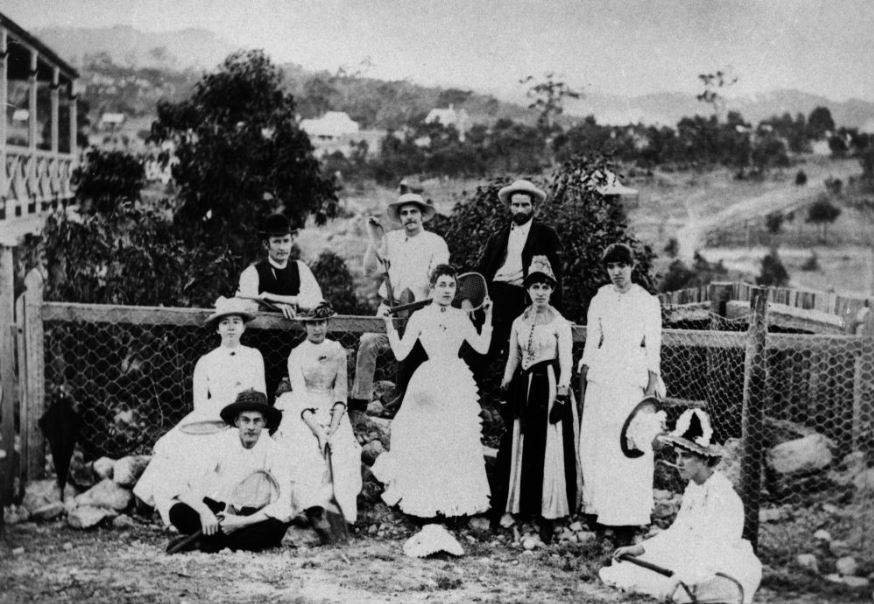
An abundance of fabric.
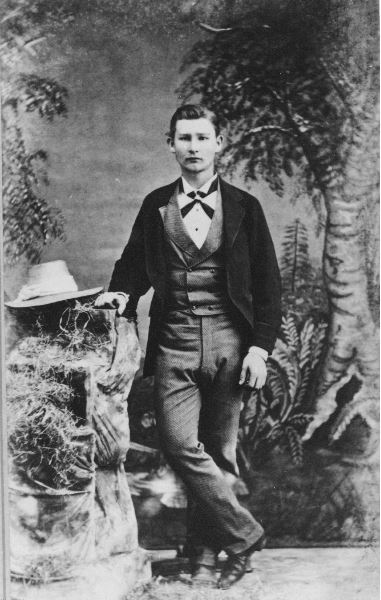
At least the hat would please Dr Cannan.
A great deal of the discomfort was caused by the way the new arrivals dressed. A respectable man of that era wore a waistcoat, starched collar, jacket and cravat. A hat was always worn. In January 1860, Dr Kersey Cannan, after conducting an inquest on a victim of coup de soleil, suggested that the close-fitting black felt hat favoured by colonists was unsuitable for the climate.
The doctor advised, “The body dress should be of cotton and from head to foot every thing should fit loosely, to allow the most perfect freedom of respiration, and to the movements of the body, so as nowhere, but especially about the neck, to press on, or interrupt the circulation of the superficial blood-vessels.” Dr Cannan’s intentions were noble, but impossible for a gentleman to follow, it seemed.
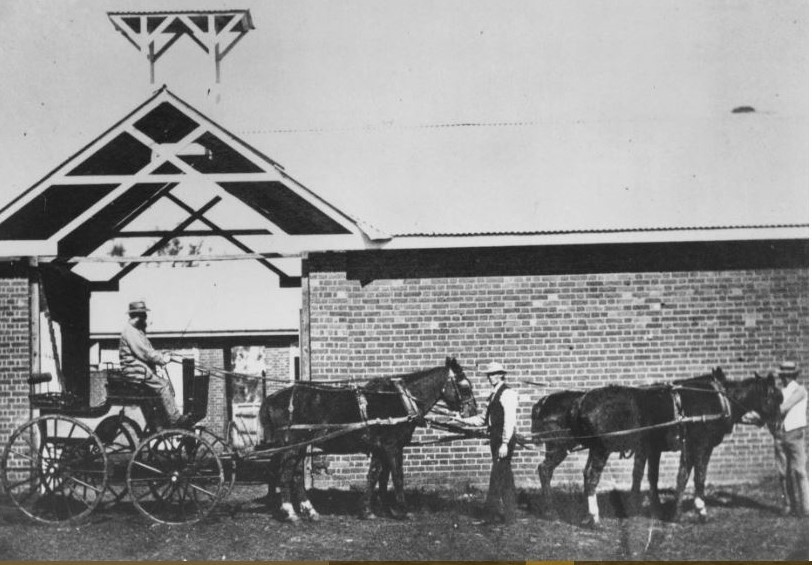
(Gilbert Davidson at Canning Downs Station.)
“Anybody possessed of a salamandrine constitution must be in raptures with the temperature of Brisbane just now. While ordinary mortals are gasping for breath, longing for the restoration of a pristine costume, something assimilating to that of the blacks, seeking for a cool shade from a vertical sun, and otherwise comporting themselves as though they feared the approach of the final combustion of all things mundane -Salamander would go about in a suit of West of England broadcloth, mounting a resplendent black hat, and trying to make everybody believe that he was very happy and comfortable.” Courier .
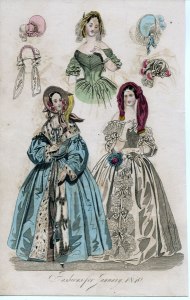
crinoline in the 1840s
A respectable woman of that time was covered in fabric at her throat and ankle and all parts in between. Underneath all of that material lurked a formidable system of chemises, bloomers, stays and petticoats. Of course, gloves and a hat were essential, but the hats were more decorative than practical.
To make the misery of keeping up with fashion complete, crinolines became prevalent in the 1840s and lasted well into the 1860s. Wide skirts with petticoats evolved over the decades into extravagant tent-like constructions that had to be supported with frames. Practicality was swept aside, as no doubt, were any low-lying knick-knacks, small children or household pets in a lady’s orbit.
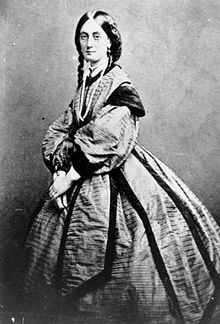
Here’s Lady Bowen stoically modelling one in Brisbane in the early 1860s. Diamantina de Roma Bowen was the wife of Queensland’s first Governor, and found the climate delightful, except for three months of the year (guess which ones). To add to her discomfort, she went through three pregnancies in this climate and those clothes. It was a mark of gentility in men and women that one appeared to be impervious to the prevailing climate, and no-one ever observed Lady Bowen looking uncomfortable.
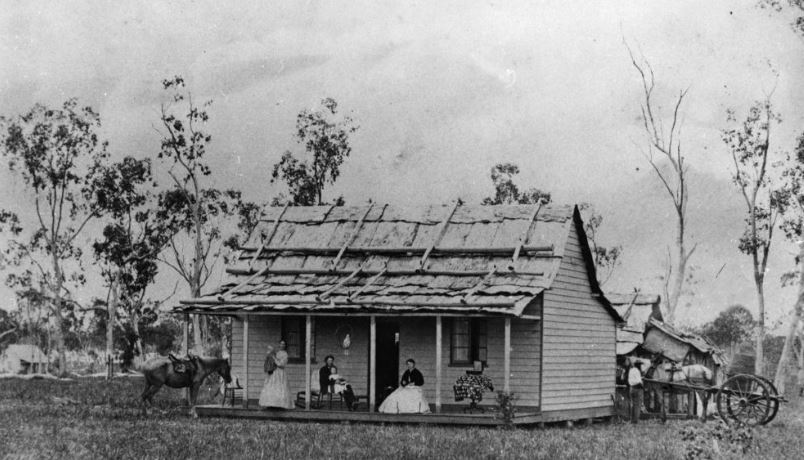
Crinolines were not exclusively reserved for society women. Ordinary women sported these voluminous skirts, even out in the sticks, in a house that looked like the roof would blow off in a strong breeze.
The Dangerous Amusement of Drinking
If they weren’t able to dress according to the climate, settlers had to restore their spirits in other ways. Water was available in creeks, water-holes and rivers, but the quality was questionable. Brisbane Town had a reservoir near Roma Street, the contents of which would make a modern person shudder.
“What is lost in transparent purity was compensated by being both food and water, more especially after thunder storms. This was a favourite resort for dogs to get a luxurious bath. There were no galvanised tanks in those days and the great objection to catching water from the roofs was the houses were all shingled and discoloured the water.” Thomas Roper, Recollections.
The consumption of vast amounts of tea was the understandable alternative to reservoir water, meaning that the evils of the town’s water were largely boiled away. In the country, water tanks were used, but these were often haphazardly constructed, subject to drought, and tended to become home to frogs and their families, rather than a source of refreshment.
The other option, understandably highly popular, was to quench one’s thirst with something stronger and more refreshing, leading of course to further dehydration.
Understandably perhaps, Dr Cannan’s strictures on alcohol were no more heeded than his opinions on suitable dress:
Of all the means of prevention of Heat Apoplexy, the avoidance of spirituous liquors, and of excess in the use of animal diet, must take the lead. Dr Cannan
All pictures, except those of Lady Bowen and the illustration of crinolines, are from the State Library of Queensland. The other images are from Wikipedia.
 Moreton Bay and More