
This is the first of an occasional series of posts highlighting Old Brisbane discoveries and observations made during excavations.
The Commandant’s Cottage

In 1986, construction workers at a site between George and William Streets discovered some of the sub-structure of the Moreton Bay Commandant’s Cottage. Although the building itself was long gone, the footprint was secured and incorporated into this courtyard. The area shown in the image above shows the kitchen wall (the smaller lines of bricks) and the verandah that surrounded the cottage (grey sandstone).
There’s something poignant about a quiet public space that commemorates a long-vanished building. Imagine the convict servants who worked in the place. The families that lived there – the Logans, Clunies, Fyans, Gravatts, Cottons, Gormans and Wickhams. Babies were born, and children grew up there. Letitia Logan fretted in the cottage as her husband went on long excursions into unknown territory. She always feared that he would be killed out there.
Governors, Colonial Secretaries and notable explorers were entertained there in an official capacity. Shipwreck survivors were tended to by Captain and Mrs Logan (Captain Leary and survivors of the Brig Woodlark, 1828) and by Captain Fyans (Eliza Fraser and survivors of the Stirling Castle wreck ,1836). If only those stones could talk!
Remnants of Frog’s Hollow
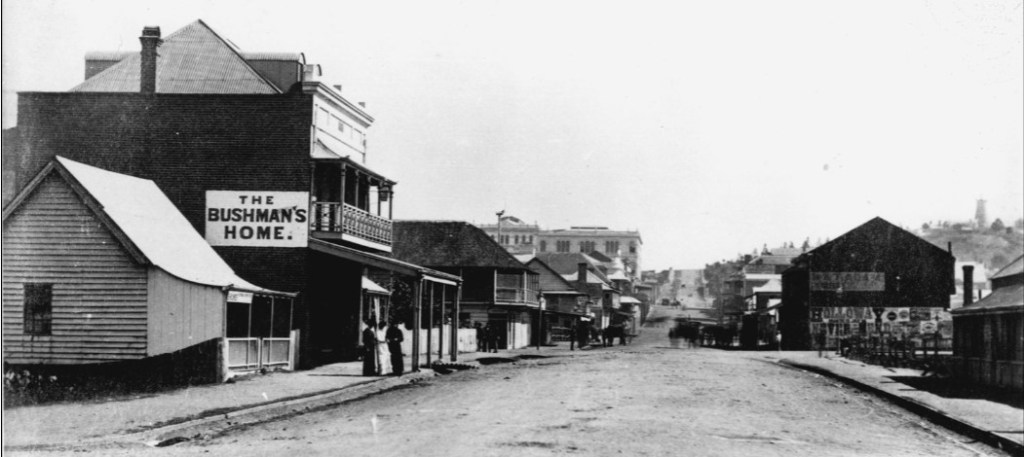
In the 1880s and early 1890s, there was a section of Albert Street that was utterly notorious, even for Frog’s Hollow. There were several Chinese businesses along one side of the street, including a building called the Nine Holes, which was notorious for gambling and opium smoking.
The ongoing Cross-River Rail project in Brisbane has unearthed some artefacts that show the presence of Chinese homes and businesses. The Nine Holes area first came to attention around the time of the photo below, with stories of opium smoking and fan tan games. Towards the 1890s, the presence of Frog’s Hollow’s other notorious industry – prostitution – in the Nine Holes saw a concerted civic program to remove the Chinese.


Chatelaine (cleaning opium pipes) 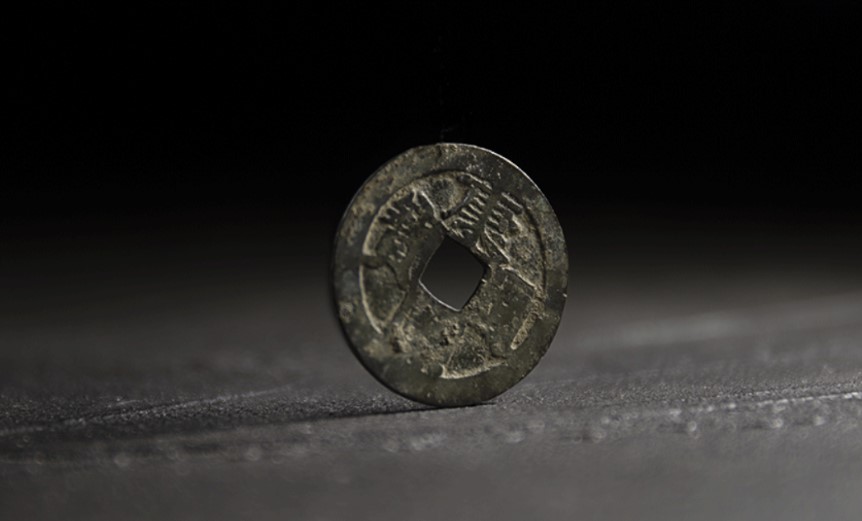
Chinese Coin 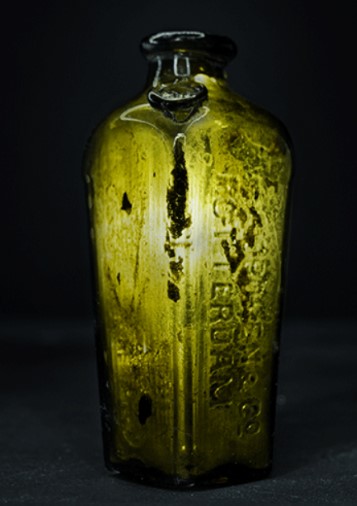
Miniature Gin Bottle 
Lavender Salts 
Woman’s boot 
Bottles
Images from:
Queensland Government Cross River Rail Project – Archaeology
State Library of Queensland – Image of Albert Street, 1883
Historic Queen’s Wharf website
 Moreton Bay and More