
As imagined by the Windmill Reporter.

1850 was drawing to a close, and the population of Brisbane Town – estimated at some 2000 souls – was contemplating how best to make a success of the settlement. That is, the part of the population that thought about such things. Most people were wondering where their next shilling, and/or drink was coming from. And when.
The economy was stalling, due to a shortage of affordable labour. Dr Lang had sent several shiploads of carefully selected, socially useful, sober Protestants to do a spot of Colony-building, but no-one knew quite what to do with them at first.
Her Majesty’s Government, not to be outdone, sent a couple of ships containing convict exiles to the Bay. The prospect of (very) cheap convict labour had squatters dancing for joy. As well as providing inexpensive work, the exiles kept the Police and Magistrates of the Colony fully occupied for years to come.
As the old convict-built public buildings fell into disrepair, and infrastructure was cried out for, it became clear that Moreton Bay was well and truly out of sight and mind to her administrative masters in Sydney.

Windmill was of the school of thought that considered the business of Moreton Bay would best be conducted in Moreton Bay. This attitude, however, was met with guffaws of disbelief in Sydney, and it would be a further nine years before Separation occurred.
To counter the belief that returning to transportation was a way of saving the settlement, Windmill conjured a public parade to welcome the transport ships….
7 December 1850.
The passing of your new Government Bill and the uproar that is kicked up about separation will account for my awakening from my lethargy. I had almost resolved not to address you again, for I found your readers generally either too testy to laugh at my inimitable style or too stupid to understand it. I find however that although a prophet has no honour in his own country, he may be appreciated elsewhere; and as a sensible and judicious Editor, writing as far off as a town in Africa, laments the disappearance of my reports from your paper I am somewhat consoled by Cape discrimination for Moreton Bay dullness.

Now concerning separation for Moreton Bay, I find that nearly all the patriotic inhabitants are determined to ask for prisoners as well as that boon, in order, I presume, to guard against the possibility of that district becoming too prosperous and respectable.
The best of the fun is to see this movement ardently joined in by some of the clap trap spouters on the other side last year: – persons who, as they then spoke in ignorance of their subject, now wheel around upon grounds as unsatisfactory. Their defection is only laughable.
Well then you all agree to have these prisoners. Allow me to congratulate you. You are laying the foundation of a widespread reputation from which I admit that your new colony will be likely to realise a great amount – shillings; and that is everything.
As the enthusiastic Port-Phillipians have celebrated their freedom by public rejoicings and processions, permit your humble reporter to suggest the propriety of a public procession here, on the occasion of Moreton Bay being formally declared a penal Colony. A programme expressive of the rise and progress of the movement might easily be framed, e.g.

A FEW BRACE OF
EXPECTANTS AND LATE GOVERNMENT OFFICERS,
(Sufferers by the Cessation of Transportation.)
A RICH GOVERNMENT CONTRACTOR,
(Hired at considerable expense, as a temptation.)
THE DESPATCHES OF THE COLONIAL SECRETARY OF STATE,
(Represented in a Series of Dissolving Views.)
A Dozen Disappointed Traders.

A GIGANTIC LAND SHARK,
(Just Caught)
SEARCHERS AFTER CHEAP LABOUR,
(Struggling with refractory Captives from Amoy, New Caledonia, and India.)
THE TRANSPORTATION PETITIONS,
(Engraved on a Tablet of Brass, and supported by a figure attired as the GENIUS OF INVENTION, with a pen in one hand and a fee in the other.)
The Public Spirit of Moreton Bay.
(Represented by an enormous 0.)

A detachment of Light Pickpockets
(Handcuffed together.)
POLICE.
Floggers in Ordinary, two and two.
(Each bearing a new Cat-o’-nine-tails.)
TRIANGLES.
(Mounted on a Bullock Dray, and prepared for Active Service.)
Vestals from Miss Coutts’s and other Asylums,
(Appropriately attired in White.)

A Battalion of Her Majesty’s 1st Heavy Ironed Gang,
(Surrounded by a Guard of Honour, with fixed Bayonets.)

GREEN, THE HANGMAN,
(In the Costume of Gibbet-King-at-Arms and wearing the (hempen) Collar of his Order.)
Suits of Clothes belonging to Hanged Malefactors,
(Borne upon Poles, and garnished with greasy Halters.)

A PLATFORM, SURMOUNTED BY A CROSS BEAM AND BEARING CASTS OF THE HEADS OF THE FOLLOWING DISTINGUISHED HEROES: –
LYNCH. KNATCHBULL. JENKINS.
MOLLOY. FYFE. TATTERSDALE.
(Each Head surmounted by the fatal White Nightcap.)
HEADMASTER OF THE PRINCIPAL INFANT TRAINING SCHOOL,
(Carrying the Book of Instruction, (the Newgate Calendar), elegantly bound.)

After this you might bring in the School Children, practising on each other’s pockets; and the procession could be closed by
THE POPULACE,

(HUZZAING FOR JOY.)
I think that a procession of this kind would tell well; and it would be sufficient for the purpose, as you would be likely to have a great many other public exhibitions shortly afterwards. By the way, though, I don’t know how you will like my introduction of GREEN, for you may perhaps think with me that Moreton Bay would then be entitled to a hangman of her own; however, you have the programme, and can follow it if you like.
More anon.
TELEGRAPHIC DESPATCH.
Saturday 7 December 1850.
(From our Windmill Reporter)
DRAMATIS PERSONAE
GREEN THE HANGMAN
Alexander Green, a Dutch-born convict who had been transported in 1824 for shop-lifting, was the Government Executioner. His occupation prior to this was variously described as Circus Tumbler and Mountebank. By the age of 30, he was an alarming prospect – his hair was already white, his face pock-marked and bore a large scar from his nose to his ear. After being dismissed from the position of Constable in the 1820s, he took the job no-one else would do, and the consequences of it. He drank and was violent in his private life, and gradually brought drinking and volatility to his work.
He began to bungle hangings, prolonging the misery of the condemned, and eventually had to be admitted to the Lunatic Asylum, where he died after 23 years as an inmate. “In appearance this ancient executioner resembled George Cruikshank’s famous study of a miser. his cheeks were quite yellow, very thin and drawn, while his head was ornamented (appropriately enough) by a large white conical night-cap. At one time this man used to amuse himself by hanging a number of dolls all day, but he is now past entertaining himself even in this genial manner. Mr Green’s age is 86, and he looks about 500.” Freeman’s Journal, 18 August 1877. (The journal was incorrect – Green was 76 at the time. KB)
MISS COUTTS
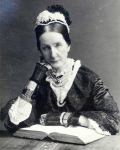
Angela Burdett-Coutts, 1st Baroness Burdett-Coutts, 1814-1906, was an heiress to a great fortune who devoted her life to philanthropy. She became famous for many acts of charity, most famously founding a home for changing the lives of young women who had taken to a “life of immorality.” Hence Windmill’s impertinent reference to vestals. If Miss Coutts had heard it, I have no doubt she would have boxed his ears.
LYNCH, KNATCHBULL, JENKINS, MOLLOY, FIFE AND TATTERSALE
John Lynch was hanged at Berrima Gaol in 1842, following a career of crime – he was a convict, bushranger, thief and multiple murderer.
John Jenkins and Thomas Tattersdale were found guildty of murdering wealthy settler Dr Wardell, and were hanged in 1834.
Owen Molloy was found guilty of murdering John Leonard at Moreton Bay in 1849 and, prior to his execution had confessed to the murder of Robert Cox, for which William Fife was hanged the previous year.
John Knatchbull was found guilty of murdering Ellen Jamieson and executed in 1844, having previously escaped the gallows for two mutinies.
Cruikshank, George. Illustrations from Mornings at Bow Street and the Comic Almanac
 Moreton Bay and More