
The military detachments who served at Moreton Bay had some interesting prisoners to manage. As well as the twice-convicted felons, there were men who might have served alongside them at one time, had it not been for war or arduous remote postings.
Veterans of the Napoleonic Wars
Among the soldier convicts at Moreton Bay in the early years were a few men who had been court-martialed during the decade of unrest throughout Europe caused largely by the territorial ambitions of a Mr N Bonaparte.
One striking case was Private Giuseppe La Barbiera, a 30-year-old native of Naples, who was serving with His Majesty’s Sicilian Regiment in Malta in 1815. In November of that year, he was court-martialed for mutinous behaviour and attempting to shoot his sergeant. He was to have been executed but was reprieved and transported for life as a felon.
Transportation meant New Holland, and La Barbiera arrived In New South Wales per the Elizabeth in 1816. He seemed to adapt to his new life remarkably well, being commended to the Colonial Secretary by his employer, and then assigned to work as a constable and pound-keeper.
In 1824, however, his life of respectability ended when he stabbed a fellow-servant in a fit of jealousy, nearly killing the man, and putting two female servants in fear of their lives. At the Supreme Court in Sydney, the sentence of death was passed on him, ten years after his first in Malta. La Barbiera was again reprieved from the noose and transported for life, this time to Moreton Bay. He arrived there early in 1825, becoming the 18th prisoner named in the Chronological Register. All was quiet for a long time.
The ten-year curse struck again for Giuseppe La Barbiera in 1835. He was charged with the stabbing murder of a fellow convict, George Stephenson, at Moreton Bay. When sent to Sydney for trial, he notified the Crown that he intended to call as witnesses a group of convicts who could testify that he had been attacked by Stephenson first. Captain Clunie thought that there would be “much perjury” at the trial because the witnesses had not been separated from La Barbiera for some time after the killing, and he advised the Colonial Secretary of the suspected collusion.
Giuseppe La Barbiera, had his third death sentence commuted, and was again removed to a penal colony for life. The Commandant of Norfolk Island was instructed by the Colonial Secretary to keep La Barbiera “in irons and under a vigilant watch.”
Giuseppe La Barbiera survived the hardships and irons at Norfolk Island, returning to Sydney in time to have one last ticket of leave cancelled, in February 1841, for disorderly conduct in the district of Campbelltown. He must have been exhausted after more than two decades of harsh penal servitude. He died in Sydney Hospital on 30 November 1841 at the age of 58.[i]
Veterans of Colonial Outposts
Other soldier convicts had been tried by their regiments in the remote locations in which they served in various peace-keeping, exploratory and furthering-the-interests of-His-Majesty’s-Government capacities. British soldiers were posted as far away as Nova Scotia, Mathra, Jamaica, the Cape of Good Hope, Portugal, Bombay, Gibraltar, Sierra Leone, Rangoon and Palermo. Conditions in some of these postings would have been difficult, particularly in the heats of India and Africa. Not all the soldiers enjoyed the comparative comfort of barracks life – some were in camps, others fought skirmishes and campaigns. Desertion became a very popular pastime, but one that, if detected, brought harsh penalties – usually transportation for seven years to life. Some convicted deserters were also branded with the letter D for good measure.

Many soldiers chafed under the strict discipline of army life in home postings. Foreign postings – particularly the remote and uncomfortable type – caused frustrations to boil over. Disobedience of orders brought hundreds of lashes and stoppages in pay. Drinking or sleeping on the job earned lashings or solitary confinement. Mutinous conduct – particularly involving striking a superior officer – could earn a soldier a death sentence by firing squad. Sometimes, the sentence would be commuted to transportation for life as a felon.
A new life as a convict did not suit the military temperament either, and, of the 80 soldiers recorded as being convicts at Moreton Bay, only four -Thomas Trotter, David Wright, Patrick Thompson and George Baxter – came free with their Regiments. All of the others were convicted of a further crime whilst under sentence in Australia.
There was the turbulent Martin Kelly of Tipperary, who was a soldier in the North African Corps in 1827. He was Court-Martialed in Sierra Leone for striking his superior officer, Colour Sergeant Shaughnessy[i]. Originally sentenced to 800 lashes, this was revised, and he was ordered to be shot. His death sentence was commuted to transportation for life to New South Wales. He clearly didn’t enjoy submitting to authority there any more than he had in Africa. At Goulburn Plains in 1830, he received 3 years for running away from his chain gang and stealing clothing from two houses. Unsurprisingly, he didn’t enjoy life at Moreton Bay, either, absconding in March 1831, never to return.
John Ellis of the 4th Light Dragoons was Court-Martialed in Dublin in 1826[ii] for “Desertion and making away with his necessaries” and transported as a felon to New South Wales. He had been in the Colony for around 18 months when he was convicted by the Bench at Penrith for “Divers (diverse) highway robberies.” He was given three years at Moreton Bay and spent most of his time there either planning to abscond or out in the bush as an escapee. He absconded from March-May 1829, November-December 1830, April-July 1831, and July 1832-January 1833. Eventually apprehended in Port Macquarie in December 1832, he was returned to Moreton Bay. His Colonial sentence was up in February 1833, and rather than attempt to detain the wretched man any longer, Clunie had him placed on the next boat to Sydney.

Some transported soldiers committed crimes of considerable violence in their new country. John Houlahan[iii], a private in the 77th Regiment deserted and lost his necessaries in Spanish Town, Jamaica in 1828. When caught and Court-Martialed, he was ordered to be transported for life to New South Wales. Two years later, and employed as a constable in Sydney, he lost his job in a quite spectacular fashion, “dismissed for highly improper conduct.” His actual charge before the Penrith General Sessions was “violent assault and battery to the effusion of blood, and most violent and outrageous drunken conduct, and threatening to take the lives of several persons.” He received two years at Moreton Bay, and managed to stay there, and not incur any further sentence time, leaving in January 1833. It is worthwhile noting that there were women sent to Moreton Bay at the same time for receiving stolen goods of no great value, under sentences of death commuted to seven or fourteen years.
Charles Brisland, a private in the 26th Regiment, was Court-Martialed at Gibraltar for repeated desertion, and received a sentence of transportation to New South Wales. He found things worse there and absconded and committed a house robbery. He was sent to Moreton Bay in late 1829 for three years and died there in 1831.[i]
Quite a few former soldiers did not survive Moreton Bay. John Burdo drowned in 1827. William Craven (Waterford 1826, Desertion), Dennis McCarran (Burma 1825, Desertion), James Phillips (Waterford 182, Desertion), John Thompson (Antigua 1819), Owen Haslem (East Indies 1815, Mutiny and Threatening Language) and Thomas Trotter (102 Regiment, Came free) all died in 1829. Dennis Lamb (Madras, 1815) died in 1830.
Having tried desertion in the Army, and – very often – absconding in New South Wales, there were soldier convicts who disappeared into the bush from Moreton Bay permanently. Perhaps some had the skills to survive in completely unknown terrain, and with no European settlements for hundreds of miles. They were: William Sheehan, James O’Regan, John Mackey, Martin Kelly, Michael Kane, John Crabtree and James Butterworth.
The most famous, or notorious, convict soldier at Moreton Bay had arrived in Australia a free man with the 57th Regiment, stole a length of calico, and imperiled the career of Governor Ralph Darling.
The Moreton Bay Soldier Convict Cause Celebre
Patrick Thompson

It all started with a larkish attempt to get out of the 57th Regiment. Privates Patrick Thompson and Joseph Sudds, stationed in Sydney Town in 1826, were foolish enough to make a show of robbing a clothing shop whilst wearing their uniforms, and getting caught. They thought that if the crime was enough to get them transported, they would be freed of the hated 57th.
The Jury found both prisoners guilty, and the Court sentenced them to seven years transportation each. The prisoner Thompson on hearing the sentence, said, “I hope your Honour will let my firelock go with me to the penal settlement you talk of, as it would be serviceable to me in the bush.” The other prisoner left the bar smiling.[i]
They clearly had no idea what life at Moreton Bay would be like, and apparently no idea that their Regimental masters would get wind of their intent. The Governor, Lieutenant-General Governor Darling had other ideas:
GENERAL ORDER. Head Quarters, Sydney, Nov. 22, 1826. THE LIEUTENANT-GENERAL REGRETS it has become his duty to expose, to the indignation of the troops, two soldiers, who have committed an offence, under circumstances which leave little doubt that their object was to obtain their discharge from the service. Privates Joseph Sudds and Patrick Thompson, of the 57th regiment, have been convicted of a robbery in the town of Sydney, committed in open day, and without even an attempt to conceal the fact, and have been sentenced to be transported to a penal settlement for a period of seven years.
The Lieutenant General, in virtue of the power with which he is vested as Governor in Chief, has thought fit to commute the sentence, and to direct that privates Joseph Sudds and Patrick Thompson shall be worked in chains, on the public roads for the period of their sentence— after which they will return to their corps. The garrison has been assembled to witness the degradation of these men from the honourable station of soldiers to that of felons doomed to labour in chains. It is ordered that the prisoners be immediately stripped of their uniform, in presence of the troops, and be dressed in the felons’ clothing; that they be put in chains and delivered in charge to the overseers of the “chain gangs,” in order to their being removed to the interior, and worked on the mountain roads — being drummed, as rogues out of the garrison. [ii]

The two men were accordingly stripped of their army gear and drummed out of the Regiment. Joseph Sudds had been unwell for some time, and the physical ordeal of chains and a tight, spiked neck collar only added to his misery. He became so ill that he was removed to hospital where he died on 27 November 1826. His death was attributed to bronchitis and dropsy, rather than the too-tight neck restraint.[i]
The case of Sudds and Thompson occupied the newspapers of the Colony for nearly five years. The legality of the Governor in his capacity as Lieutenant-General assuming the power to alter the criminal sentence of a court of law was questioned. The legality of sentencing first offenders to a penal colony designated for secondary punishment was also an issue, as was the act of putting the soldiers in spiked iron collars attached to their leg chains and expecting them to work on the roads.

Edward S Hall of The Monitor, always ready to rail against injustices, became obsessed with the role the chains played in Sudd’s death, and the treatment of Thompson over the ensuing years. Patrick Thompson was put on a road gang in his extraordinary restraints and became so ill that the benevolent Governor decided to send him to Moreton Bay instead.[ii] On his arrival, he encountered a certain Captain Patrick Logan of the 57th Regiment, who informed Thompson (according to The Monitor’s spy) that he was “no longer a soldier.” Thus began Hall’s magnificent obsession with Captain Logan, which would deepen over the next three years to the point that Logan was in the process of suing Hall for libel at the time of his (Logan’s) death. The allegation that Logan found too much to bear was that he had caused the death of a prisoner through excessive use of corporal punishment. The case was dropped after Logan’s murder, although an enquiry was held on the excesses of his command. He was, of course, cleared.
Patrick Thompson arrived at Moreton Bay aboard the Brig “Wellington” on 20 July 1827, to an unfriendly reception from his former colleagues, who ran the settlement. He gave it a year before absconding – not, of course, with his firelock. It was a creditable attempt, as he lasted nearly a month before returning.
In March 1829, barely six months after returning from his excursion in the bush, Thompson found himself discharged from Moreton Bay, by order of the very Lieutenant-General who had sent him there – Ralph Darling. The weekly articles in The Monitor, together with Hall’s incessant letters to every Colonially-connected authority figure, must have done the trick. Not that Darling would have admitted it.
Discharged with Ignominy
Patrick Thompson was discharged to the Regiment he had belonged to before. That meant he could travel to England, and, perhaps weary of the misfortunes that attended his sojourn to the colonies, he took that opportunity immediately. The welcome at Home was not what he had expected. On arrival at Chatham barracks, he was placed in the guardhouse for nine weeks. The order transmitting his pardon had been altered, he said, in a different hand, to add “discharged with ignominy.” (Although military sources claimed his behaviour at dinner led to his spell in the cells.)
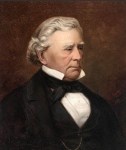
By 1830, the levels of outrage in Sydney following Sudds’ death and Thompson’s ordeal had not died down, and the unpopular and autocratic Governor attracted the attention of the House of Commons. Mr Hume was quoted as saying that it was “utterly impossible for General Darling to be allowed to continue in the colony, and he hoped that Patrick Thompson would not be sent out of the way but would be ready to be called as a witness against that individual.” William Wentworth, publisher of The Australian, enthusiastically joined Edward Hall to campaign against Darling; and Patrick Thompson petitioned the Commons. In 1831, Darling’s reign as Governor came to its end, and he returned to England, residing for a time above an ironmonger’s shop, and not “at home” to anyone, particularly process servers.[iii]
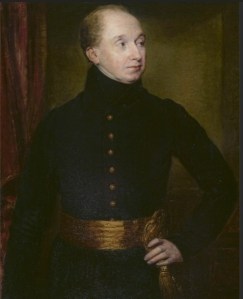
By 1833, Darling had moved to the Continent, and Patrick Thompson was reported as being “in safekeeping, notwithstanding several attempts to smuggle him away.” He was ready to give evidence to the House whenever they called on him. They called in 1835, and Thompson arrived at the appointed place and time, only to find that the select committee had abruptly finished their report without regard to his evidence. He was not permitted to state his case.
The Empire struck back, in other words, and the Parliamentary select committee exonerated Ralph Darling on September 1, 1835[iv]. The following day, he was knighted by the King.
With the enquiry closed, and the former Governor now long out of the picture, interest in Thompson’s troubles gradually faded away. Sporadic mentions in the Australian press continued, as Patrick Thompson tried to re-ignite public interest.
In 1871, author Marcus Clarke created some retrospective interest in the case when he included a chapter called “Governor Ralph Darling’s Iron Collar” in his book, “Old Tales of a Young Country.”
[i] Clarke, Marcus. Old Tales of a Young Country: Governor Ralph Darling’s Iron Collar, 1871
[ii] Hobart Town Courier (Tas. : 1827 – 1839), Saturday 20 November 1830, page 4
[iii] Australian (Sydney, NSW : 1824 – 1848), Friday 24 May 1833, page 2
[iv] Bent’s News and Tasmanian Three-Penny Register (Hobart Town, Tas. : 1836 – 1837), Saturday 23 January 1836
[i] Australian (Sydney, NSW : 1824 – 1848), Saturday 11 November 1826, page 4
[ii] The Sydney Gazette and New South Wales Advertiser (NSW: 1803-1842) Saturday 02 December 1826, page 2.
[i] Queensland State Archives, Item ID: ITM869689
[i] The National Archives of the UK, Series: WO 86: General Courts Martial, 1812-1829, Australian Joint Copying Project.
[ii]The National Archives of the UK, Series: WO 86: General Courts Martial, 1812-1829, Australian Joint Copying Project.
[iii] The National Archives of the UK, Series: WO 90: General Courts Martial, Abroad, 1796-1900, Australian Joint Copying Project.
[i] Convict Death Register, 1826-1879, New South Wales, Australia.
 Moreton Bay and More