
One event dominated the news on 20 March 1847 – the recent wreck of the steamer Sovereign, and the loss of 44 lives. The murders of Andrew Gregor and Mary Shannon six months earlier still haunted the Courier and its readers.
Page 1
The front page was, as usual, the place for advertising. First, Mr A.S. Lyon, the publisher of the Courier, was getting into the Employment Registry business – for the modest fee of 2 shillings and sixpence, families in the district requiring servants could be matched with same. “N.B. For the accommodation of the public, a Branch Office will shortly be established in South Brisbane, where men can hire themselves without being put to the expense of crossing the water.” A bridge over the Brisbane River was decades away, and the ferry service was so slow and infrequent that one would be forgiven for weighing up the risk of a swim to get to the other bank.
The industrious Mr Lyon was also spruiking the sale of Suburban Allotments, in the heart of what is now the Central Business District of Brisbane. All had river frontage, and one – No. 11 – even boasted a waterhole, “which at trifling cost can be made to afford a constant and abundant supply of water.” One could even, if one purchased Lot 26, count as one’s neighbour Richard Jones, Esq. You’d have to build a house on it to live next to him, though. No waterhole in that one.
J.C. Pearce (James Canning Pearce, not the irascible John Canning Pearce) offered shares in the Steamer Experiment. Which later famously ran aground.
The Reverend John Gregor advised that he would be preaching a sermon the following day on behalf of the Benevolent Society. Poor Gregor was treated harshly by the Church hierarchy, and was unable to win the affection of most of his congregation. His brother, Andrew Gregor, had recently been murdered by a group of indigenous people at Pine River, a matter of private grief for Rev. Gregor, and public alarm. The Courier was active in keeping the tragedy in the minds of its readers.
A prominent storekeeper of North Brisbane ran an advertisement on the same page:
£ 20 REWARD
SUBSCRIPTION FOR THE APPREHENSION OF THE TWO BLACKS WHO MURDERED MR. GREGOR AND MRS. SHANNON.
A REWARD of £10 for each Black will be given to any party who apprehends the following Aboriginal Natives, viz.: – Dick Ben and Moggy Moggy, the murderers of the late Mr. Gregor and Mrs. Shannon.
Persons who approve of the above objects are politely requested to forward their Subscriptions to
J. RICHARDSON,
North Brisbane.
Vigilantism, anyone?
Ebenezer Orr required Shepherds in an unspecified quantity for some unspecified purpose. He was also leaving Brisbane and requested all persons owing him money to pay the same without delay. Please and thank you.
An unnamed party wanted to purchase a pair of Moreton Bay Rosella Parrots (apply at the office of this paper). If the transaction took place, one can only hope that the birds were offered a pleasant and airy perch on someone’s verandah, and not stuffed and mounted in a display case.
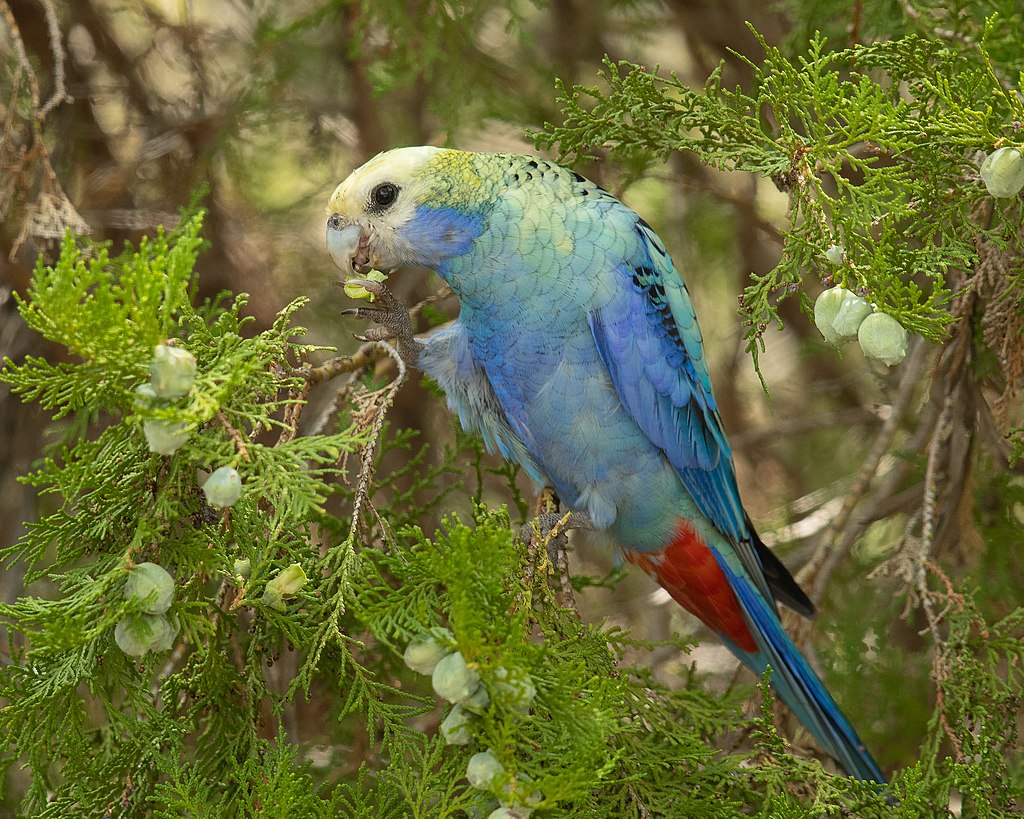
Moreton Bay parrot By JJ Harrison (https://www.jjharrison.com.au/) – Own work, CC BY-SA 4.0, https://commons.wikimedia.org/w/index.php?curid=86319950
John and Ellen Mulroney absconded from the hired service of Sarah A. Owens at Old Man’s Water Hole, and that formidable lady cautioned all parties against hiring or harbouring them. They owed her the sum of £7, 7s all up, and they were not getting away with it, by Jove.
Michael Power advertised a dazzling array of Goods, from Groceries (including salad oil, mind) to Ironmongery, Drapery, Glass, and Earthenware (“superior to anything heretofore exposed for sale in Moreton Bay”). He was also the agent for Parr’s Life Preserving Pills, presumably in case the salad oil didn’t agree with people.
Francis Ede was offering to clean and repair the most complicated Clocks and Watches. Robert Hulland had obtained the Sawyer’s Arms license, and could offer choice wines, spirits bottled and draught ale and porter. The horses of visitors to his establishment could be put in the yard, gratis.
Page 2
The schooner Jane had made it safely into port with two steerage passengers and rather a lot of beer. That was rare welcome news.
The Courier devoted its leader to the late Sovereign tragedy and felt itself bound to investigate every aspect of the event. The attention of the readers was drawn to the dangers of the southern entrance to the Bay, and the lack of buoys to mark the channel. Captain Cape, master of the Sovereign, was praised for his courage and leadership.
There was one Letter to the Editor, and it came from “Publicola.” That individual felt moved to protest at letters published in the Sydney Chronicle from “Moreton Bay Man,” who sought an inquiry into the activities of Moreton Bay settlers in pursuit of the murderers of Gregor and Shannon. According to “Moreton Bay Man,” the search had already turned into vigilantism, and cash and work pardons for convicts had been offered as a reward for killing indigenous people. What evidence, demanded “Publicola,” did that correspondent have? The words defamation and libel were used repeatedly, and the suggestion of a public thrashing of “Moreton Bay Man” be administered, once he was found. The Editor of the Courier could not have agreed more with those sentiments.
The Benevolent Society underwent a change of leadership, with the appointment of a certain Arthur Sydney Lyon as Secretary. That made him the publisher of the only newspaper, a labour agent, a Benevolent Society committee member, and an offeror of fine riverside lots, one with a waterhole.
The mail that had been on the Sovereign was brought to town and found to be largely intact, except for the newspapers. Two bodies from the Sovereign were found on Moreton Island – those of Mr Brown and a second officer named McKellar or “Scotchy.” Mr Brown had £76 in cheques and orders in a moleskin on his belt, and his watch. These were placed in the care of the Police Magistrate. Poor “Scotchy” had nothing left of worth, having lost his life.
A survivor of the wreck, John McQuade, who was under sentence in Sydney, surrendered himself on arrival, and was released immediately by the Police Magistrate. Being shipwrecked and nearly drowned was punishment enough.
A servant of Assistant Surveyor Warner was not so fortunate. Cox had absconded after receiving wages in advance. The Bench disapproved of his entering into a contract he did not intend to fulfil and gave him two months in Sydney Gaol with hard labour.
Even worse than taking wages for services not rendered was getting drunk. Five times. David Mackay, a prisoner working on the pilot boat, was the unrepentant tosspot in question, and he was given four months with hard labour in the Sydney Gaol.
Page 3
Inter-Colonial News
There were conflicting reports of the intentions of Her Majesty’s government about the future of North Australia. The Sydney Morning Herald reported that the number of convicts at Norfolk Island was being reduced to five hundred, and ships departing England for that place were ordered to take their human cargo to Van Diemen’s Land. The Parramatta Messenger harrumphed at that, accusing the Herald of “weak invention.” The Courier extracted both reports and left the readers to ponder the question.
There were more Classifieds on Page 3. Thomas Dowse was instructed to sell the goods of the late Isaac Smith, including the poor dead man’s clothing, bedding, cooking utensils and shoemaking tools.
Mr Dowse would also sell the splendid household furniture of Mr T.H. Green (presumably still alive), including:-
- Mahogany Sideboard
- Crimson Damask Sofa
- Escritoire
- Chest of Drawers Loo, D, and Dressing Tables
- Horsehair and bedroom chairs
- Toilet set (complete)
- Handsome case of stuffed birds (not, fortunately, the Rosellas – yet) and ALSO
“A very excellent eight-keyed Flute, Violin, fast-pulling Funny, and a variety of other articles.”
A brief, discouraging internet search for a fast-pulling Funny yielded bored pandas and skateboarding dogs, and I did not press further.
The rest of the Classified Advertisements were occupied by the details of stopped cheques and money orders lost on the Sovereign. There was no established overland road from Sydney to Moreton Bay, and no railway. Everything arrived by sea, usually packed in oilskins to ensure that the contents would not get wet. In the event of any items being recovered, the public was cautioned against attempting to have the fortune in cheques cashed. Merchants were cautioned against honouring any of the items.
Page 4
More from the Parramatta Messenger and its vigorous campaign against, variously, transportation and the Sydney Morning Herald.
A destructive fire was reported at Port Adelaide, destroying many residences, including Mr Bayley’s and Mrs Forsythe’s. The adjoining Inn was also destroyed, but Captain Wakeling rejoiced at having saved two hogsheads of brandy, all his clothing and deeds. Losses to the affected parties totalled over £5000. Wakeling was unable to save two horses, whose deaths the South Australian Register described in gruesome detail. The fire was caused, it was believed by the ash from a tobacco pipe. The Lieutenant Governor, having wisely kept well out of town during the dangerous part of the fire, bravely turned up to survey the charred ruins.
The English Extracts covered an exhausting list of topics – partial possession of Madagascar, a visit by General Tom Thumb to Stamford, and Courtroom witticisms. The Duke de Montpensier married the Infanta of Spain and neither party understood the other’s language. Whether this was advantageous to the couple was debated waggishly.

Charles Sherwood Stratton, General Tom Thumb (Wikipedia)
A French paper reported the death of the big cat tamer Van Amburgh during a performance in which he taunted a tigress by trying to take meat away from her. (The report was incorrect, however, and Mr Van Amburgh continued to place his head in the open mouths of various large felines until his death from a heart attack in 1866.)
Another report described a miraculous potato-cooking device called the Anhydrohepseterion. I doubted the integrity of the report, however, the University of Reading has in its Archives “Museum of English Rural Life,” a leaflet extolling the virtues of this waterless potato cooking contraption. I wonder why it didn’t catch on. The name, perhaps?
A man slipped on the spire of a Congregation Meeting House in Kingston, Rhode Island and nearly fell off before a providential rescue. “The scene was terrible to behold.” Worse to be involved in, I should think.
Electrified Sparrows?
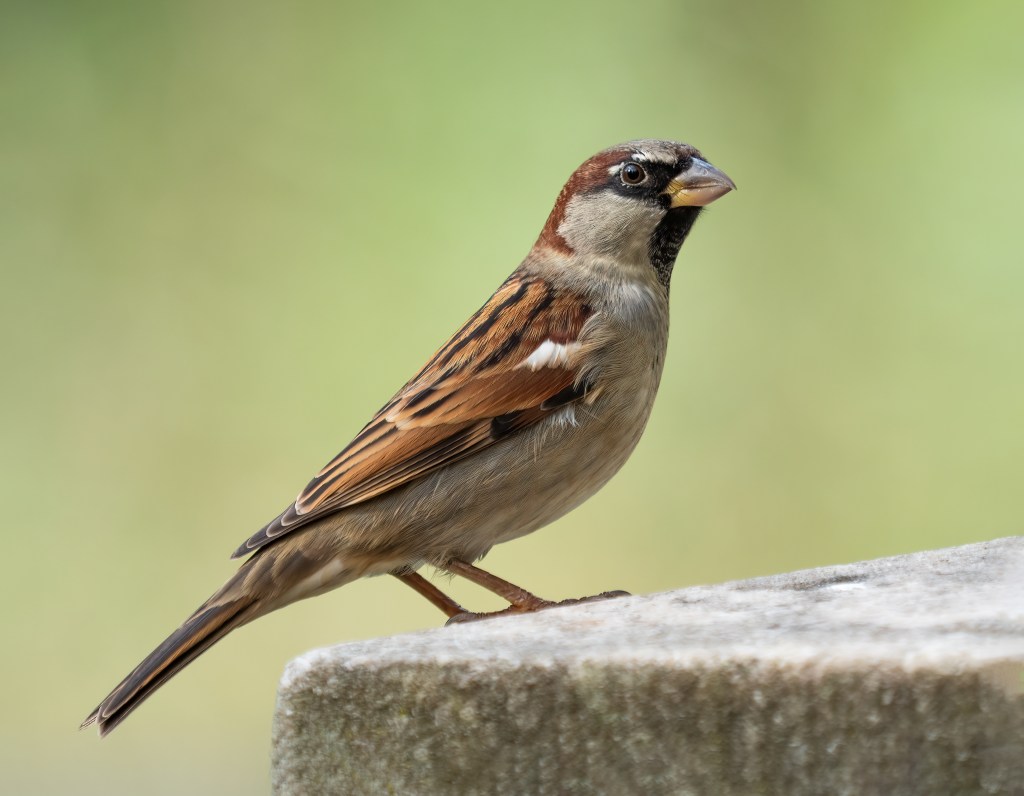
An article headed “Electrified Sparrows” described the effect of contact with telegraph wires on the birds, and thoughtfully suggested that the Great Sparrow Problem of Great Britain could be solved by transmitting a very powerful charge down the lines. Murdering sparrows in great quantities seemed quite reasonable to the English paper quoted.
A number of puns were printed, ending in:- MISERY: The life of an unpaid Editor. Mr A.S. Lyon, however, believed in business diversification on a grand scale. I expect that he was paid.
 Moreton Bay and More