
Some of the Stories Behind the Longreach Collection
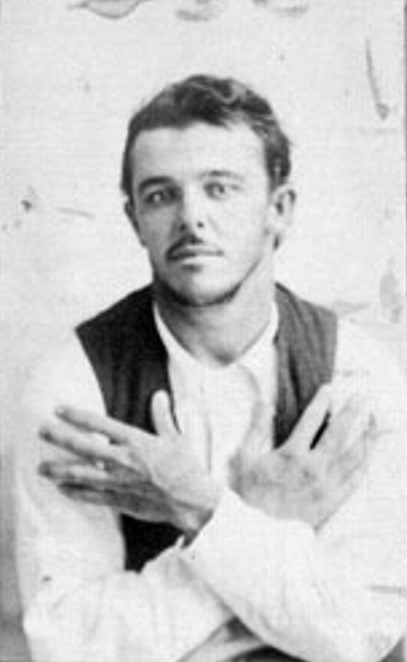
Charles Fox was convicted of false pretences – he had passed a cheque for £4 that was valueless. He made a reasonable impression on the Judge by pleading guilty at the earliest opportunity, but he couldn’t supply any character references. He’d lost them. He looks pretty confident though, posing for Longreach photographer Lamberto Bacci, having spent one night in custody prior after sentencing.
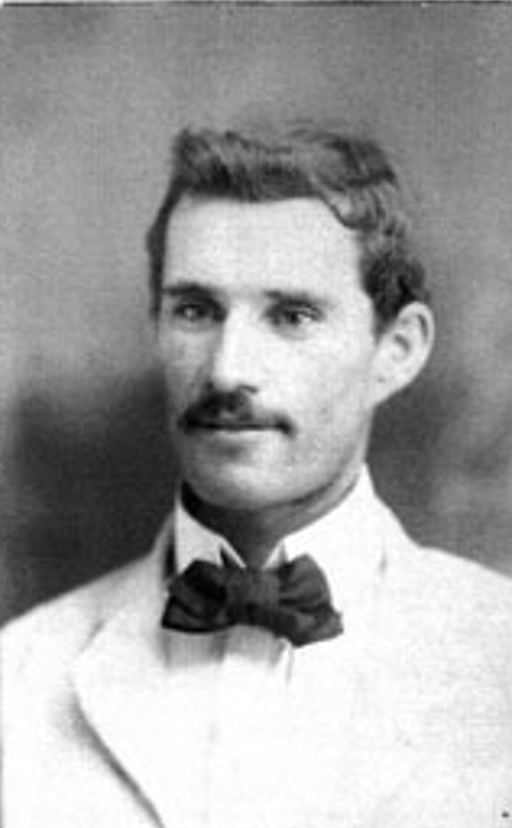
Joseph McKenna poses suavely in a white suit and bow tie for Ipswich photographer F A Whitehead. Mr McKenna had just avoided three years’ hard labour at Brisbane Gaol thanks to the probation system, and took care to (a) take an amazing mug shot, and (b) report immediately to Ipswich Police, thus earning himself a way out of spending time in durance vile. The offence? A spot of forgery on a £17 promissory note that he couldn’t honour. He was dreadfully sorry. Unlike Charles Fox, he did not enter into a payment agreement for the amount of the fraud.
Joseph McKenna: Queensland Times, Ipswich Herald and General Advertiser (Qld.: 1861 – 1908) Thu 15 Sep 1898, Page 6. Charles Fox: The Western Champion and General Advertiser for the Central-Western Districts (Barcaldine, Qld.: 1892 – 1922) Tue 31 Jan 1899, Page 4.
The Loiterers
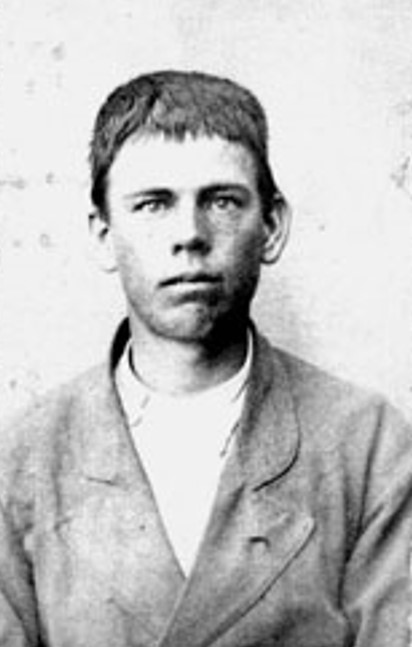
Arthur Wells, pictured in 1889 on release at the age of 22, had an unfortunate criminal history. He had already racked up convictions for indecent exposure, obscene language, creating a public disturbance, and two charges of larceny. He had also acquired three aliases, two tattoos and lost a finger. The police felt that any loitering he was engaged in was probably with intent. The Bench agreed.
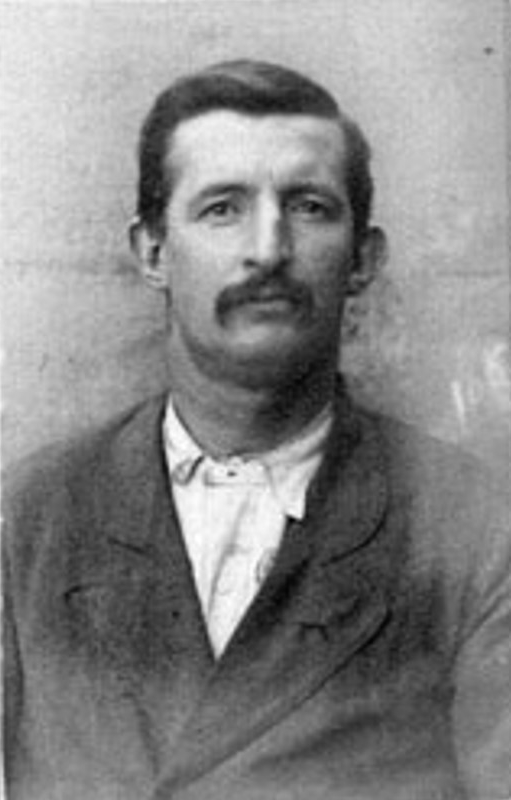
Henry Atwell, also pictured in 1889, received six months’ hard labour for loitering with intent in Skew Street Brisbane. His form consisted of a spot of bother in 1886, when he punched a Mr Morrison in the nose at a race meeting. “As such a process of settling disputes is not recognised by the law, he was ordered to pay a fine.” The loitering in question was the result of a “sting” by plainclothes Constable Courey, who had spotted Atwell and a mate wandering around near Roma Street at midnight. Constable Courey decided to test their honesty by pretending to be roaring drunk, and, sure enough, the two men tried to “roll” him. That’s when they discovered that he was a policeman, and earned themselves some custodial time.
Arthur Wells: Criminal History on file. Henry Atwell: The Telegraph (Brisbane, Qld. : 1872 – 1947) Thu 7 Mar 1889, Page 4. Toowoomba Chronicle and Darling Downs General Advertiser (Qld. : 1875 – 1902) Sat 29 May 1886, Page 3.
Crime Truly Did Not Pay
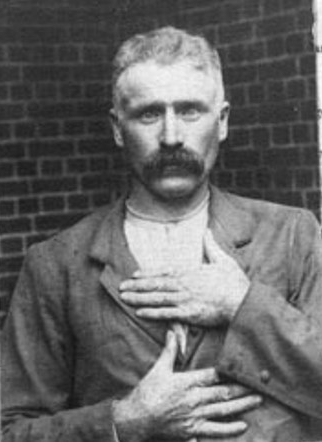
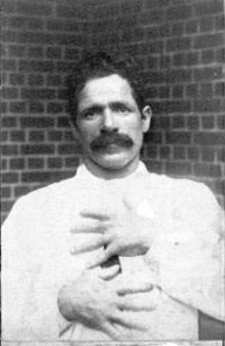
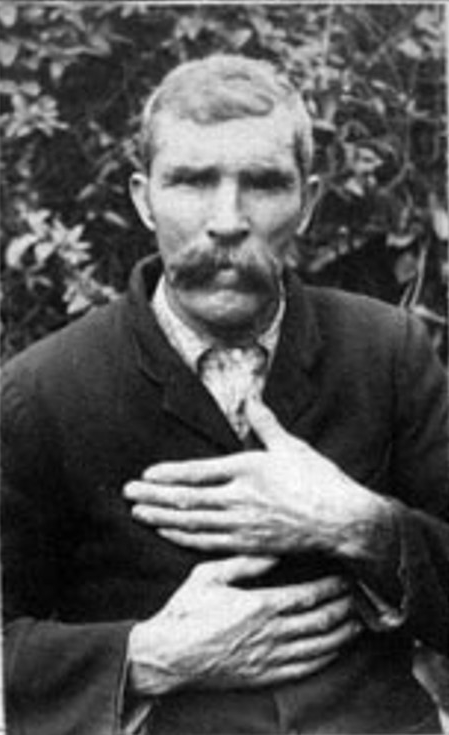
Archibald McKinnon was convicted of breaking and entering a dwelling house and stealing therein. He and a mate, John Cooper, had got into a store at Capella and stole some porter and beer, presumably with the intention of having a few refreshing beverages in the privacy of their home. Had it not been for probation, both men would have been in prison for two years, contemplating the high price of their thirst.
Thomas Walsh alias Kinsella was convicted of stealing by finding in the mining town of Mount Morgan. People were inclined to drink a lot when they got into town, and a chap by the name of John Kennedy had taken so much grog that he fell asleep on the verandah of the Great Northern Hotel, where a miner named Mr Walsh was a boarder. Kennedy woke up without his watch and chain. Nothing more was heard of the watch until Thomas Walsh took it in to Albert Wotley for repairs. Mr Wotley recognised Kennedy’s watch. Thomas Walsh, who was drunk at the time of the theft and the sale of the watch, employed a number of lines of defence, all of which unfortunately contradicted each other. Probation saved him from a two year term.
Archibald McKinnon, John Cooper: The Brisbane Courier (Qld. : 1864 – 1933) Fri 3 Feb 1899, Page 6. Thomas Walsh: Morning Bulletin (Rockhampton, Qld. : 1878 – 1954) Sat 10 Sep 1898, Page 40.
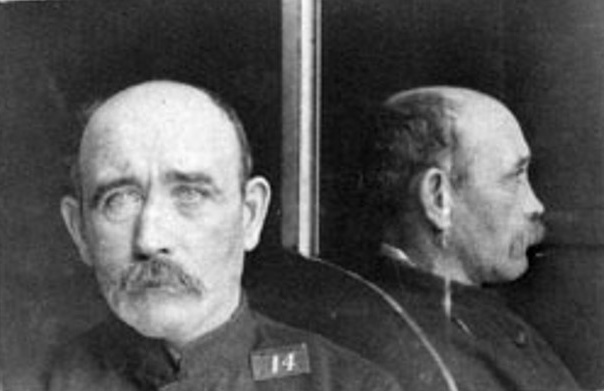
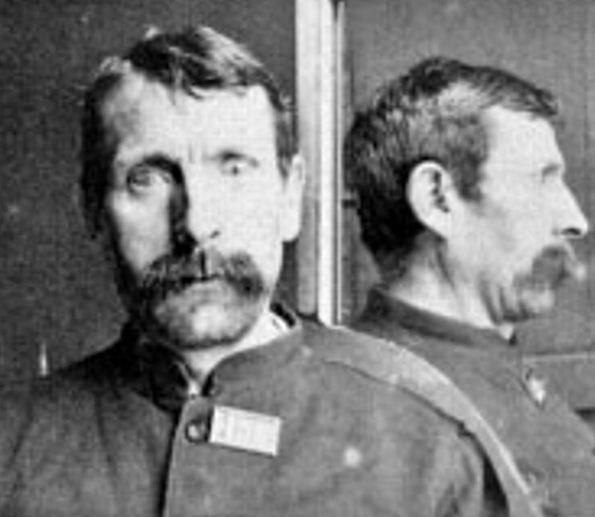
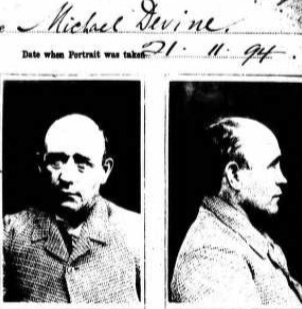
Michael Devine was just 39 when this release photo was taken. He had arrived in Queensland the previous year, and this was the first offence of that type here, which gave the Court the option of granting this new-fangled probation business. Devine had been in prison in New South Wales for theft and drunkenness, his prison entrance photos there in 1893 showing a rather more robust-looking man than the prematurely aged and miserable man here.
Phillip Dillon, who clearly wasn’t camera-ready, had been before the Courts for assault, drunkenness and supplying liquor to South Sea Islanders. He may have been an alcoholic, and if the photo is anything to go by, had a severe withdrawal in prison.
Michael Devine: The Brisbane Courier (Qld. : 1864 – 1933) Wed 8 Feb 1899, Page 7. Phillip Dillon: The Bundaberg Mail and Burnett Advertiser (Qld. : 1892 – 1917) Wed 20 Jul 1898, Page 2.
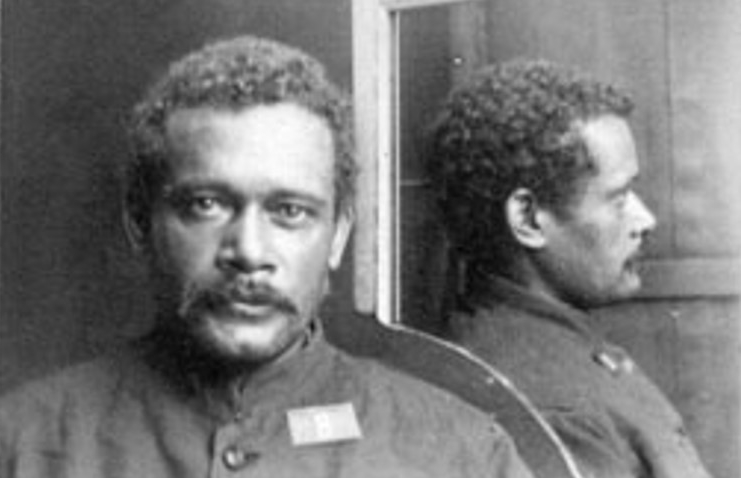
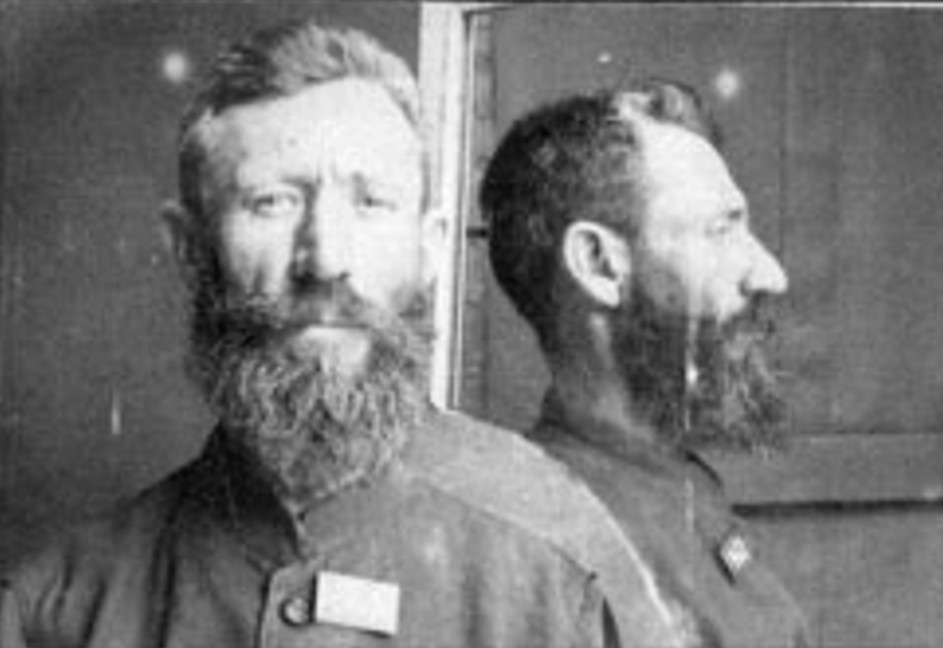
There’s a face one wouldn’t expect to see in a record of released prisoners at Longreach – that of an African American man. The newspapers were at pains to note that he was ‘half-caste,’ a distinction of great importance at the time.
William Jamieson was an American sailor who had been in Australia since the turn of the decade and who had found a lot of trouble in the tropics. At Townsville in 1896, he was serving a sentence for assault when he made his situation by worse escaping from custody and assaulting the turnkey at Stewart’s Creek gaol. A move to the Darling Downs did not improve matters, with Jamieson clocking up assault, obscene language and larceny charges. He was released on probation in January 1899.
John Alfred Trundle, who at 37 was only four years older than Jamieson, had evidently had a hard life. He was an unemployed horse trainer who sported a gunshot wound on the palm of his left hand, and a few convictions for drunkenness. On 15 November 1898 he was down on his luck, and asked two Assyrian hawkers (John Romunus and Peter Kattar, with whom he was slightly acquainted) for 3d. for a loaf of bread. The men kindly invited him to sit down in their house, and they would give him bread and meat. Unfortunately, they left him alone in the parlour for a time, and later discovered a watch and chain missing from a waistcoat that had been in the room with Trundle. The police later found Trundle drunk in Kent Street, with a fancy watch and chain in his possession that seemed somewhat out of place with his general appearance. The next morning, Mr Romunus reported the watch and chain missing, and Trundle earned himself six months’ hard labour, after his “I was in liquor” defence failed to impress the Bench. After a month in custody, probation was ordered.
William Jamieson: Warwick Examiner and Times (Qld. : 1867 – 1919) Sat 28 Jan 1899, Page 2. The Daily Northern Argus (Rockhampton, Qld. : 1875 – 1896) Sat 25 Apr 1896, Page 3. John Alfred Trundle: Maryborough Chronicle, Wide Bay and Burnett Advertiser (Qld. : 1860 – 1947) Wed 16 Nov 1898, Page 2.
Violent offenders
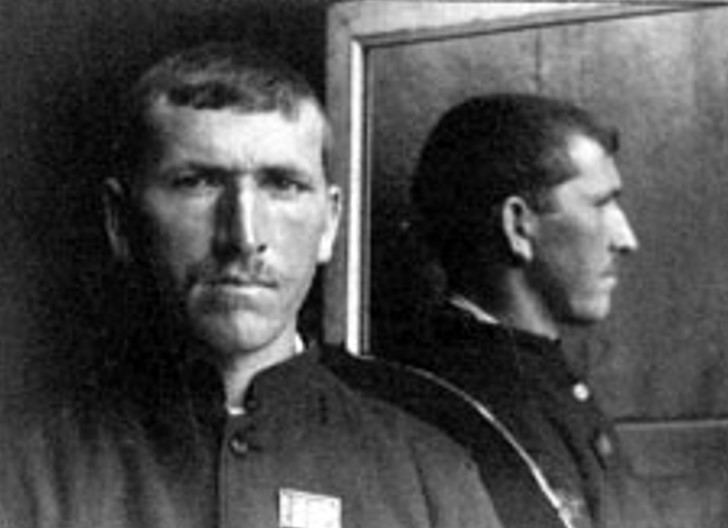
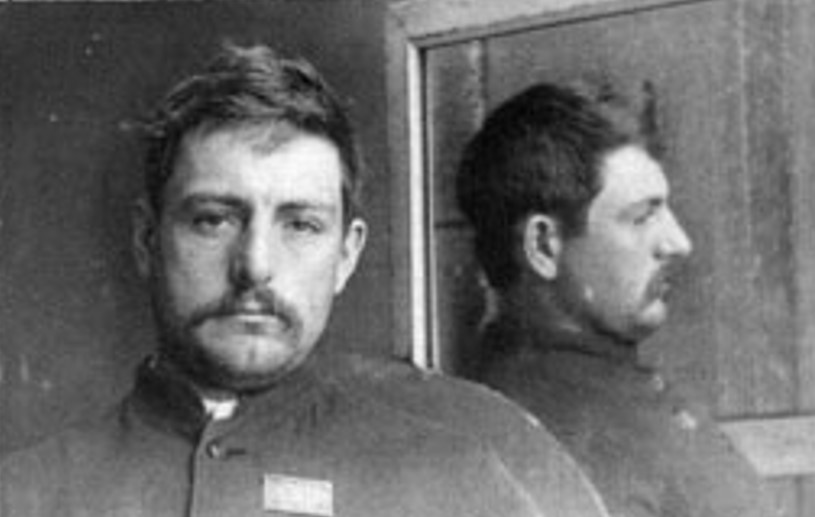
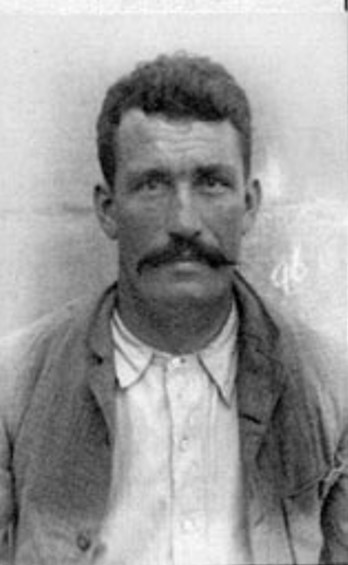
Top Left: James Ryan – Assault Occasioning Actual Bodily Harm, Right: Michael Considine – Murder and Bottom Left: John Burford – Manslaughter.
James Ryan was a violent man – he had previously served a sentence for cruelty to an animal.
John Burford was a “professional pugilist” (boxer), who got into a fight with another man, with fatal results for said other man.
Michael Considine‘s was a terrible case. He had been drinking heavily for some time, had suffered head injuries in a fight, and was at his family home with his parents and brothers when he killed his father. The Considine family had been trying to keep Michael at home, but he kept running away at night, convinced that someone was after him. He argued with people who weren’t there, hid under his bed, and when coaxed out, begged the family to pray with him – his prayer-book had to be wrested away from him as he alternated lying on the floor and praying on his knees. On February 25 1899, after a long night of escaping from the house and trembling in terror, Considine cut his father’s throat. Michael Considine was imprisoned at Her Majesty’s pleasure, due to “lunacy brought on by delirium tremens.” In December 1893, the Colonial Secretary decided to commute the sentence and release Considine on probation, having received constant petitions from Ipswich residents over the years. One had 700 signatures on it.
Ryan: Criminal History. Burford: Western Star and Roma Advertiser (Qld. : 1875 – 1948) Wed 4 May 1898, Page 2. Considine: Queensland Times, Ipswich Herald and General Advertiser (Qld. : 1861 – 1908), Thursday 18 July 1889.
Offences involving stolen livestock

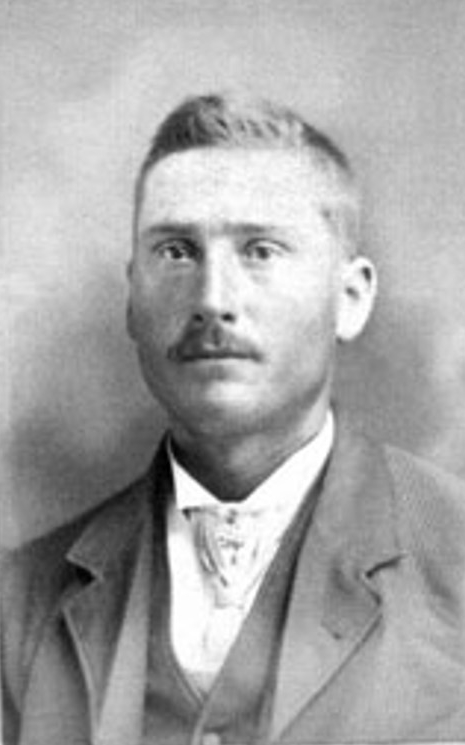
Alfred McLennan was charged with horse stealing at Cooby Creek, and a very trusting man named Constable Jones brought him into Toowoomba via the Crow’s Nest train on 1st February 1899. On disembarking, Jones gave McLennan a saddle and bridle to carry, and walked alongside him to the lock-up. He did not think about handcuffing McLennan. No need, really. Just before they reached the lock-up, McLennan pointed out a horse at Trevethan’s Coach Factory that he thought was stolen. As Constable Jones turned to look, McLennan threw the saddle down in front of the astonished officer of the law, and hared off across Tattersalls’ Sale Yards. Constable Jones pursued his man through a pig sale and a timber yard, but lost him at McHugh’s butcher’s shop. McLennan, it turned out, was a fit young man who had no difficulty vaulting fences and negotiating a path through livestock and piles of timber. His tracks ended at a swamp. The police pursued him for nearly a fortnight, finally getting their man in Allora.
It was quite an anti-climax when Alfred McLennan pled guilty to horse stealing at Toowoomba District Court and received probation. He was photographed full-length because one of his identifying characteristics was differently-sized feet.
Walter Schonfeldt (or Schonfeld) was found in possession of a brindle bullock at Harrisville in August 1898. He claimed to various people that he had either (a) bought it from a man named White at Coleyville, or (b) “swopped it for a little stag.” At the District Court, he did not call or give evidence for his defence, relying on his counsel to show in cross-examination that no-one could actually prove he had stolen the bullock, and that his actions in openly driving the bullock in to Ipswich were not the actions of a guilty man. The jury took their time deciding his guilt, and recommended him to mercy on account of his previous good character. His Honour remarked that “young men of his class who would take a bullock in the way that he had done would not steal a watch or anything of that sort.” It appeared that the Schonfeldt family was a very respectable one.
Walter Schonfeldt was released and photographed on 25 October 1898. On Friday 4 November, he was struck by falling branches while tree-felling, and suffered head injuries and a broken spine. He died of his injuries on Sunday 8 November, barely a fortnight after gaining his freedom.
McLennan: Toowoomba Chronicle and Darling Downs General Advertiser (Qld. : 1875 – 1902) Sat 4 Feb 1899, Page 3. The Telegraph (Brisbane, Qld. : 1872 – 1947) Mon 13 Feb 1899, Page 5. Schonfeldt: Queensland Times, Ipswich Herald and General Advertiser (Qld. : 1861 – 1908) Tue 8 Nov 1898, Page 4. Queensland Times, Ipswich Herald and General Advertiser (Qld. : 1861 – 1908) Thu 27 Oct 1898, Page 6.
Convicted, but rather pleased with themselves
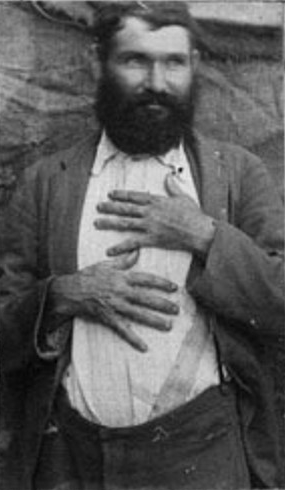
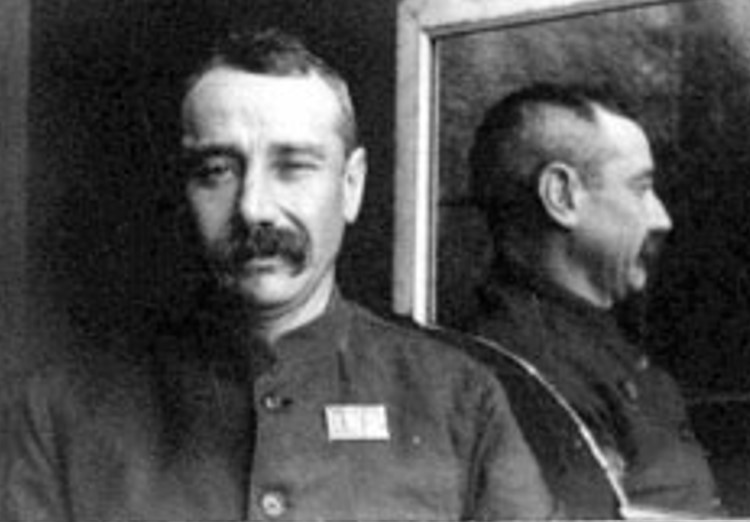
John Devereux, pictured looking unusually happy for a man in his position, was convicted at the District Court at Charleville for stealing a cheque. He would have been facing eighteen months in gaol, probably at St Helena, but was released on probation.
He refunded the 19 pounds proceeds of his crime, shaved his beard and whiskers off, acquired three horses (lawfully one hopes), and went to look for employment as a shearer at the stations in the Warrego district.
Solomon Lewis Laurence also looks unreasonably pleased with himself, considering that he was convicted of child desertion. This seems to have been quite a popular activity in the 19th century – a time when it was difficult enough for a woman to obtain a maintenance order, and separation and divorce were frowned upon. Perhaps he was just totting up the money he didn’t have to spend on the kiddies when the photographer’s flash went off.
Devereux: Western Star and Roma Advertiser (Qld. : 1875 – 1948) Sat 18 Feb 1899, Page 2, District Court Sittings. Laurence: Criminal History.
A life or two in mugshots
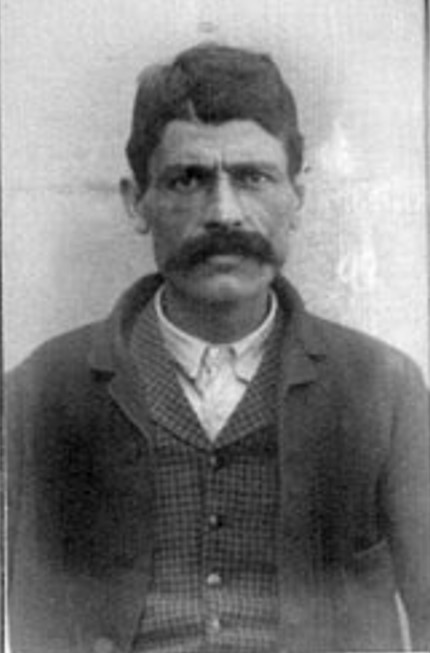
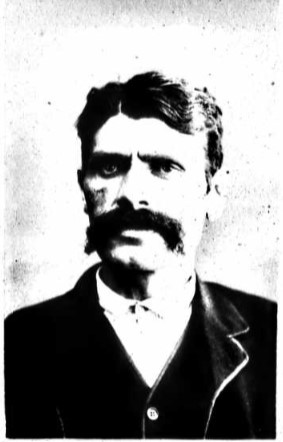
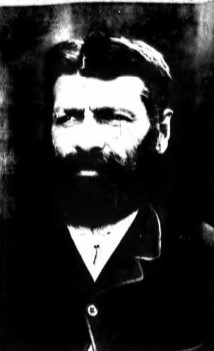
Robert Felix Sali was born in Switzerland in 1859, and emigrated to Sydney. He was a barber by trade, but embarked upon a peculiar life of crime in Queensland and New South Wales.
In August 1884, he was convicted of inflicting grievous bodily harm, and sentenced to seven years. He was released early, and travelled to Brisbane in 1889, where he went on a spree of forging and defrauding that caused the first portrait to be taken.
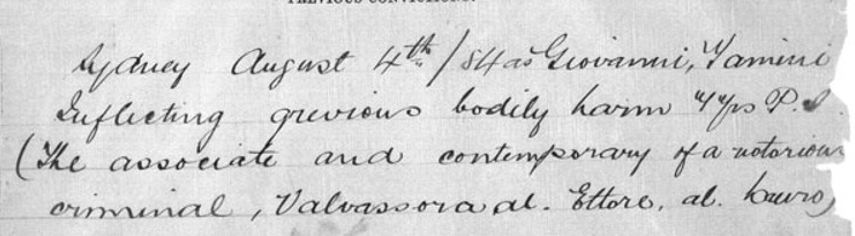
Another seven years, and another early release by a trusting prison system, then Sali fetched up in Sydney again, and forged his way to another seven years in 1895. In October 1897, he was discharged early from gaol by special permission and placed on board a ship “for the purpose of leaving the colony.” It wouldn’t last.
A year later Sali was back, and in the neighbourhood of Cootamundra, lushly bearded and ready to commit offences. Here, he forged and uttered as usual, and added a new crime to his repertoire: “Maliciously removing bolts and fish plates from the Railway Line at Boree.” It was apparently his intention to cause a locomotive crash. This time the Bench was really quite annoyed. Robert Sali was given eight years for the forgery, and after the expiration of the eight years, he would commence a sentence of fifteen years for the railway sabotage.
 Moreton Bay and More