

This article was published in the Western Star and Roma Advertiser in 1875, the year before John Hayes and Kaspar Hahn had their fatal confrontation. It was the story of the Lansdowne Station and the hardships endured by the people who set it up.
THE BARCOO—LANSDOWN STATION
“Lansdown is one of the principal stations in Central Queensland. It has a history which is as sad as interesting, and as instructive as that of any I have had to describe. In the course of this account it will appear that Lansdown is so distant, and so large, that it can only be properly worked by means of a large capital. The history of this station affords a lesson of the danger of attempting to work a station of such magnitude on inadequate means. I learnt the history of Lansdown from one who profited by the lesson taught. He told me of the taking up of the station by a gentleman with whom were two partners. Of the formation of the station; of the losses by drought, by native dogs, and by travelling; he described how they braved that terrible drought of 1868, their having then spent large sums in fencing, and larger sums in dam making. Then there were tales of fearful floods, the washing away of the dams which were erected at such vast expense, and then of the utter ruin of the station-holders. Unfortunately, this was no exaggeration, no overdrawn record of disaster. It was calculated to point a moral as well as to adorn a tale.
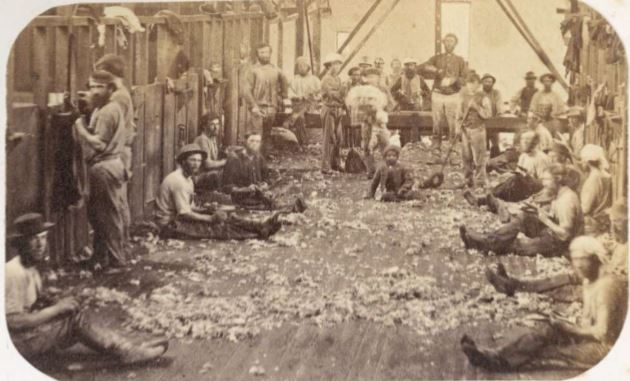
“Lansdown Station, 12 miles from Tambo, on the Barcoo, embraces seventeen runs, or nearly eight hundred square miles of county. It was taken up for Burne, Mayne, and Ward by Fred. Walker, the explorer, about the year 1862. In the same year stock was brought on it by Mr. Felix N. Burne, one of the partners. The head station was formed temporarily on the Ward River, about 12 miles from Oakwood, that being the only apparent permanent water on this vast station at the time.
“Thus the original firm remained in possession of Lansdown for a period of eleven years, viz., from 1862 until the 5th July, 1873. During this time, they underwent the whole catalogue of troubles and vicissitudes incident to station life. After the drought of 1868 they spent large sums in attempting to procure water. Wells were sunk, some of which were 120 feet deep, but unsuccessfully -only saltwater was obtained, and very little of that. Efforts were made to construct dams, but they went to work without the practical experience which can only be obtained in this paradoxical— this often dry and often fearfully flooded country.
“No adequate idea was formed of the great force of the water; those very necessary guides, flood-marks, were not to be obtained. The dams, constructed at thousands of pounds of expense, were carried away with the first rush of water. The result was that the drought reduced the sheep considerably. To the native dogs heavy losses were also attributed; it was calculated that 6000 sheep were worried by the warrigals. Poor Burne and his family had to leave and go to a neighbouring station, through the want of water. The only human being left in charge was a man who had to cart water for his own use from the Barcoo, 12 miles distant. The desolation was very great, and there appeared to be no cessation of the drought for more, than a year. Day by day the sun poured its torrid rays on that great waterless tract, without anything to maintain hope except a passing cloud, which many a time came only to disappoint. In 1869 the drought broke up, the men returned with the remnants of the flocks, and dam-making was again commenced. The want of water was the only drawback, for strange enough, the grass was not scarce. The high flood of 1872 carried away five dams; two small ones erected across the extreme ends of some creeks were alone left. Two years before, in 1870-71, Mr. Burns had commenced fencing, but this was abandoned through the loss of sheep by the native dogs. The combined disasters, the troubles, the trials, and severe struggles, the loss of his friends, and the general destruction which befell his neighbours all round was almost enough to shake his reason. In July 1873, the station was sold to Mr. George Fairbairn who, being a wealthy Victorian capitalist, and having had previous practical experience in the development of large pastoral properties, is now, with a view to utilising every acre for wool growing, expended large sums of money in its development.
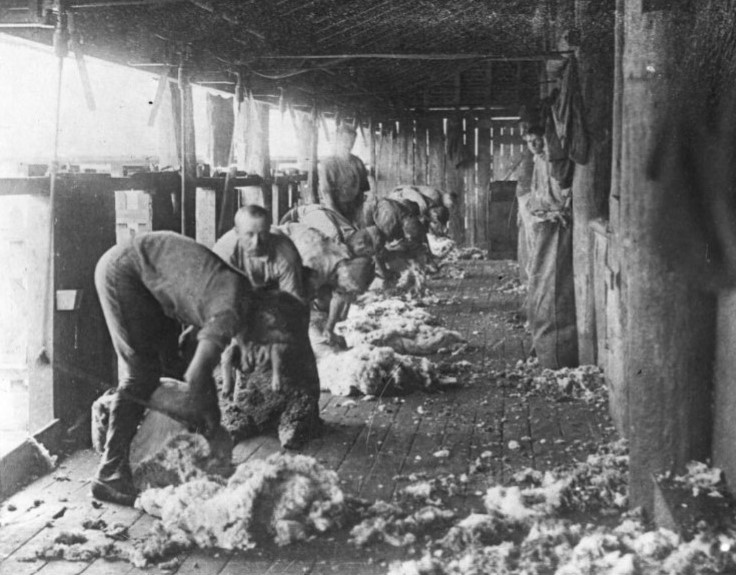
“This vast property of undulating downs and plains is covered with good descriptions of herbs and grasses. The most noticeable of these grasses is the Mitchell—a small hardy grass with a curly leaf. It does not grew rank or coarse, and many say it never dies, but it withers and is good food so long as sheep have water. Fine patches of salt bush and cotton bush also are seen. In regard to the dams it was soon apparent that some of them had been constructed on good sites, but for want of means to raise them higher by a few feet they were carried away. In others there was a want of judgment in fixing the sites, so that the dam might be in such a position as to allow the water to spread and get away. Viewing all this great work, the incomplete fences, the wrecked dams, and the fine country, one can understand the proposition put forward, “that no one has any business here unless he is prepared to spend plenty of money and be content with all outlay and no income for several years.” For water alone “you must be prepared to spend at least £20,000,” said someone, and Mr. Fairbairn saw that he must give an unlimited credit for the management of the station.

“The last two years have witnessed a great change in the aspect of the station. Fencing, which, with some show of reason, was at first, declared a blank failure, was again tried. The new manager set about repairing the old paddocks, erecting new ones, and at the same time carried on an organised and successful system of poisoning native dogs. The dams were repaired, and other dams erected. One of these has been already described, the second is a mile from the house; it throws the water back a mile; the embankment is about a quarter of a mile across; the great expense, the risk of destruction, and the insidious course of the water here clearly demonstrated. Though something over £1000 had been expended in throwing up earthwork, though the slopes had been well laid down in couch grass, and through the get-a-way was as stable, and gradually slanting off as possible, yet it was found necessary to spend £200 more in competing with an enemy not generally taken into account. Above the by-wash the water burrowed, and found old tree roots intersecting the ground for a great distance, and it required a good deal of ingenuity to cope with the new trouble. Another of these dams cost £1300.

“The proprietor of Lansdown imported large quantities of wire from England. The manager set about fencing, and there is now 150 miles of wire fencing in course of completion; this fencing is nearly all (5) wire, with the exception of that around the horse paddock, at the head station. It may be surmised how heavy the expense of fencing is, considering the price of wire, and the coast of carriage hundreds of miles overland. From Rockhampton the carriage is £46 per ton. There are now eight paddocks, ranging in size from seven miles square, to two miles square. Nearly half the station will have been fenced in before the year closes; and it must be remembered that this and the water supply is only the beginning of an immense outlay for the development of this dry country, an outlay which many a pastoral capitalist might be pardoned for shrinking from.
“The flocks, numbering only 30,000, originally were from the studs of Mr. Traill, of Collaroy, and have been already worked up to 50,000, though it is possible that 200,000 will be the capabilities of the station when fully developed. I should like to say more about the management of the station. the working of the sheep in paddocks, the laying down of couch grass, and other improvements, but it is yet almost too early to descant upon the subject, seeing that for the greatest part the works are in their infancy. The lesson that had to be learnt was that of dam making; and here again I must not forget to note that the evaporation is so great that it was found that the evaporation of 16 inches in a summer’s month was no unusual thing. Allowing for this, there is water in the dams for 22 month’s supply, though the greatest drought ever known (viz., in 1868) only lasted 18 months.”
Western Star and Roma Advertiser (Qld. : 1875 – 1948), Saturday 20 November 1875, page 3.
 Moreton Bay and More