
In December 1865, a man named James Keane recorded his history in the Register of Admissions to Dunwich Benevolent Asylum.[1]
It was certainly impressive:

“Arrived in Sydney by the Shamrock from Liverpool A.D. 1845. Employed by Messrs. Stenhouse and Hardy Solicitors, Elizabeth Street, Sydney. Was for a considerable time Editor of the “Moreton Bay Courier” under the proprietorship of James Swan Esquire, Have also been Managing Clerk to the Honourable Arthur Macalister Esquire, was formerly Editor of the newspaper “Goulburn Herald” under the proprietorship of William Jones Esquire, and at a later period was Editor of the “Maitland Mercury” under Messrs. Tucker, Cracknell & Falk.”
Keane noted that he was the son of Patrick Keane, Captain, 27th Regiment of Foot, and Frances McBierne. He originally hailed from Dublin. Keane gave his age as 56 years on admission, which meant he had been born around 1809.
Under this glorious resume is noted, in a different hand, and rather brusquely, “contracted joints,” and then ”Died at Dunwich, 31st December 1875.”
Naturally, the passing of a man who had edited three of the nation’s oldest regional newspapers, and who had been a managing clerk to an important political figure, would bring forth tributes from his peers. Newspaper articles would note the passing of another grand old colonist, albeit one to whom life had been unkind enough to render him a pauper patient at a Benevolent Asylum for ten years.
No. Nothing of the sort. The world turned without noting his passing.
He seemed to have invented his life.
The Keane Family
There were two men named Patrick Keane who served in the 27th Regiment of Foot in the time period that would make sense. Which one is the Patrick who fathered James is hard to establish. One Patrick Keane (alias Kain) was born in Ross Curry, Fermanagh, served with and was discharged from the 27th after 24 years of service aged 54[2]. The other Patrick Keane, came from Agless, County Mayo, served, and was discharged from the 27th aged 39[3].
There was a Patrick Kane who was married at St Paul’s Dublin in 1805, but the name of the bride is not recorded in the roll. No marriage by a Patrick Keane to a woman named Frances can be located within the time frame necessary to cause James to be brought into the world. Admittedly, the Irish records from 220 years ago relied on parish record-keeping, and there’s every possibility that the record has not yet been made available.
Arrival In Australia
James Keane stated that he arrived in Australia in “1845 A.D.” aboard the Shamrock. This too is hard to establish from the records. A James Kean did arrive in Sydney via the Shamrock, but he embarked at Van Diemen’s Land, rather than Liverpool. Perhaps he had a rather disjointed journey. Perhaps he misremembered. There was a solicitor of that name who was transported to Van Diemen’s Land for forgery at that time, and it’s tempting to believe that it might have been him, but there’s no solid evidence.
Legal Career
“Employed by Messrs. Stenhouse and Hardy Solicitors, Elizabeth Street, Sydney.”
Well, he actually was employed by that firm – for a short time. When James Keane, also known as James Kean or James Wilson, was undergoing a trial in 1857 for forging and uttering a cheque purporting to be under the hand of Mr Hardy, he was able to establish his employment at that firm in 1850-1.
Mr Nicol Stenhouse gave evidence that, “near the end of the year 1850, prisoner introduced himself in the name of James Keane, as a person in extreme destitution, as indeed his appearance intimated, when he (Mr. Stenhouse) afforded him pecuniary assistance, and not long afterwards gave him employment as clerk in his office.” [4]

It must have been a brief appointment, because in mid-1851 James Keane was employed by another solicitor – a Mr McCulloch. This employment also resulted in a committal and trial for forgery and uttering a cheque.
At the McCulloch hearing, William Young deposed: “I am an attorney in the Supreme Court. I am managing clerk to Mr. McCulloch, solicitor. l know the male prisoner James Kean. He was employed about three months in Mr. McCulloch’s office; he ceased to be employed there about six weeks ago; he was chiefly employed as copying clerk.”
Not perhaps the most glorious legal career. Just as it is hard to establish when the man came to Sydney and by what means, how he came to fetch up at the office of Mr Stenhouse in “extreme destitution” is lost to time.
Forgery and Uttering – 1851
In December 1851, James Keane and his wife Melissa were charged with forging (him) and uttering (her) a cheque for £170, purporting to be drawn in favour of a Mary B Brown by John Tindale. John Tindale was a client of Mr McCulloch, and Keane had enjoyed access to his papers in Mr McCulloch’s office. Mrs Keane went to the bank and claimed to be Mary B Brown’s sister. The teller was immediately suspicious, and she was prevented from leaving the premises and given in charge of the police. When Melissa didn’t arrive home, James Keane bravely took to his heels and was tracked to a public house in Sussex-street, where he was apprehended.
Melissa Keane or Melissa Wilson as the gaol records put it[5], had a baby in her arms at the time of her arrest, and appeared “very pale and feeble” in Court. She was able to produce a certificate of marriage, showing that James ‘Kean’ and Melissa Cassidy had been married in the Tamworth district in 1851.[6] James Keane and his bride must have been in there during the period between his engagements at Stenhouse and Hardy and McCulloch’s.

Melissa Keane may have been unwell in court because she was pregnant with the couple’s daughter, Frances Melisa Keen, who was born on 17 April 1852[7]. At that stage, Mrs Keane was – fortunately – a free woman. She was found not guilty, but her husband was convicted, and sentenced to five years’ hard labour on the roads.
If Melissa Keane/Keen/Wilson waited for her husband’s release and accompanied him to Moreton Bay, there is no record that shows it. It would have been understandable if she chose a new life elsewhere under another name.
James Keane’s sentence of five years may have been shortened by good behaviour, because he fetched up in Goulburn, Maitland and then Moreton Bay in 1856. His term does not appear to have been appealed or commuted.
Editorships
“Was formerly Editor of the newspaper “Goulburn Herald” under the proprietorship of William Jones Esquire, and at a later period was Editor of the “Maitland Mercury” under Messrs. Tucker, Cracknell & Falk.”
Well, he was mentioned in both newspapers. After his early release, James Keane moved through New South Wales, visiting Goulburn, and incurring the wrath of the Chequers Inn in 1855. Later that year (“at a later period,” remember) he appeared before the Maitland Bench on a charge of False Pretences, for which he was discharged. There is no evidence of Keane having written anything for either regional newspaper.


“Was for a considerable time Editor of the “Moreton Bay Courier” under the proprietorship of James Swan Esquire.”
James Keane arrived in Moreton Bay in 1856, and appeared first in the Moreton Bay Courier, not as editor, but as an advertiser. He set up a commercial agency in George Street with George Davidson. This partnership was dissolved, acrimoniously, in April 1856.

Keane soldiered along solo for a time, advertising himself as an accountant in the process.
There is no record of Keane editing the Courier during that period. William Wilkes (The Windmill Correspondent) edited the paper under the proprietorship of former editor James Swan from 1850-1857. After that Richard Belford and then Theophilus Parsons Pugh took the helm. James Swan sold the paper to Thomas Blacket Stephens in 1859.
(James Swan, Esquire, did know James Keane – there was a civil action on foot in Sydney between the men in 1857 – at least there was according to Keane in a rambling letter to the North Australian in 1858. More on that shortly.)
Ipswich beckoned in 1857, and trouble followed him there.
Forgery and Uttering – 1857-8.
Keane apparently gave up the commission agency in Brisbane around the time of his advertisement (May 1856), and went to work for a solicitor named Walsh in Ipswich. In 1857, he was a clerk for a solicitor named Cooke in that town, when the police came calling.
To give some idea of Keane’s self-aggrandisement, he put the engagement thus in his letter to the North Australian:
“I entered into a written agreement with Mr. Cooke, a solicitor, then residing in this town, to conduct and manage his business for three years, upon very advantageous terms. Mr. Cooke was then recently out from England, and he considered me a valuable coadjutor from my knowledge of the colonial law. It was at his request, backed up by the wish of some respectable persons in this town, that I consented to enter into such arrangement.”[8]
I suspect that Keane did not explain to Mr Cooke exactly how he had become so knowledgeable about the colonial law.

On 17 August 1857, Keane was arrested for having on 31 March 1857, forged and uttered a cheque for £670, using the signature of Mr Hardy, of the firm Stenhouse and Hardy, for whom Keane had worked in early 1851. He was transported to Sydney for a committal and trial that took months to complete.[9]
There was a lot of unflattering publicity in Brisbane and Ipswich about Keane’s arrest. James Swan, approached to prove Keane’s residence in Moreton Bay at the time of the fraud, gave evidence that yes, the man was indeed in Ipswich at the time. Swan refused to swear that the handwriting on the cheque was not Keane’s.
Nicol Stenhouse came to court and gave evidence of Keane’s employment as a clerk at his office in 1851, characterising the employment as an act of kindness to an indigent man. He also refused to be drawn with any certainty about the handwriting in question.[10]
The idea that Keane could forge the signature might have been within the realms of possibility to Swan and Stenhouse, but for him to then utter the forged cheque in Sydney, whilst he was a resident of Ipswich, was not.
Keane was eventually acquitted of both charges, and released from custody in Sydney in 1858, broke and unable to get a passage back to Moreton Bay. Kindly old Mr Stenhouse stepped in again and helped Keane leave town. Possibly with a gently worded suggestion that he have the goodness not to return.
Keane returned to Ipswich and fired off an extraordinarily long Letter to the Editor of the North Australian newspaper, railing against the injustice of his arrest and trial. He sensibly omitted any mention of his 1852 prison sentence, and embellished his career highlights.
The letter provoked a couple of pointed responses. “One of the Public”[11] made some oblique observations about how Keane managed to secure finances and employment, as well as another case pending at Ipswich, for which another man was in custody.
Henry Sanderson of Sydney wrote to correct some of Keane’s account, and describe how his brief acquaintanceship with Keane was abused:
“As your correspondent, “One of the Public,” states, “I very much admire the tact of Mr. James Kean in his attempt to brighten his character;” but I cannot admire tact which is injurious to the character of his (Kean’s) witnesses. I beg to state, in conclusion, that I was an unwilling witness. I attended three days or more at Darlinghurst, neglecting business of some importance. I was written to by Kean in the most abject style several times, and, as payment for my time, I was imposed upon in the most dishonest and bare-faced manner by Kean giving me a spurious order for £9 3s. 0d. upon the late Mr. Walsh which Mr. Mallon Thompson (solicitor, of Ipswich), on behalf of the executors of the late James Walsh, repudiated payment of on the plea of “never indebted” in his letter to me of the 18th December, 1857. I also, and finally, beg to state, that I only knew Mr Kean as Mr Walsh’s and Mr Cook’s clerk, that I was no friend or acquaintance, and never knew anything of him except as in the capacity I have named.”[12]
Keane’s character never brightened fully, and he returned to commercial agency in Ipswich in 1859.
“Have also been Managing Clerk to the Honourable Arthur Macalister Esquire.”
Naturally, there is no evidence to support this claim. Arthur Macalister was admitted as a solicitor in 1850 and opened a practice in Ipswich. James Keane was in Ipswich from 1856 – 1857, where he worked for Mr Walsh, then Mr Cooke. From August 1857 to 1858, Keane was in custody in Sydney. He then went back to working as a commercial agent in Ipswich.
Arthur Macalister tried for a career in politics for several years, before succeeding in 1859. Macalister had a stormy, but highly successful career in politics, becoming Colonial Secretary for a time in 1862, then Premier in 1866.
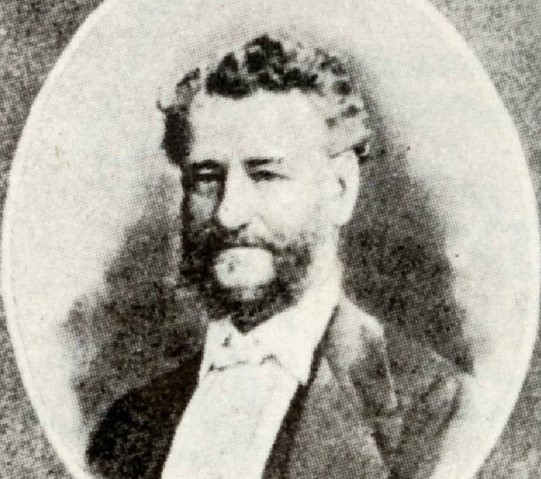
Keane was otherwise occupied until 1859, and it seems unlikely that the ambitious Macalister would have employed a commercial agent with a very doubtful reputation as his ‘managing clerk’ as he entered Parliament.
James Keane was next heard of as an inpatient at Ipswich Hospital – one of the signatories to a published letter of appreciation to the retiring dispenser of that institution in 1863. He may have been suffering from the rheumatic pain that eventually took him to long-term care at Dunwich.
After that, he was the subject of a series of arrests for drunkenness and vagrancy in Ipswich and Brisbane between 1864 and 1865, each more pitiful sounding than the last.
DRUNKARDS.—Alexander Sim and James Keane were each fined 6s. for drunkenness.[13]
VAGRANCY.—James Keane was brought up, charged with having no lawful visible means of support, and was ordered to be sent to the hospital.[14]
DRUNKENNESS.–James Keane, an old man, who described himself as an attorney, was discharged on his promising to leave the town.[15]
VAGRANCY.—James Keane, described as an attorney, and an inmate of the Benevolent Asylum, charged with vagrancy, was discharged.[16]
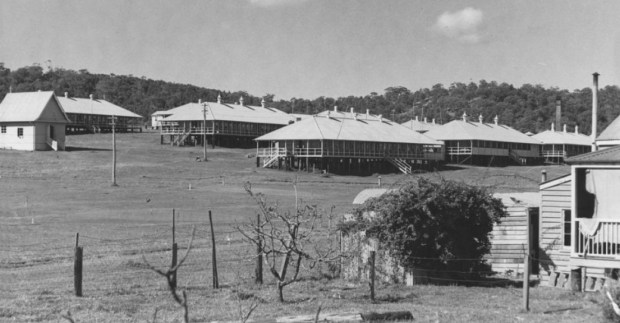
In December 1865, James Keane, whoever he might actually have been, was admitted to Dunwich Benevolent Asylum, where he remained for precisely ten years until his death. He did, however, “brighten his reputation” at last – if only on the admission register.
[1] Register of the personal details relating to males and females admitted to Dunwich Benevolent Asylum 01‐Jan‐1859 – 26‐Jan‐1875, QSA, ITM9519, page 30.
[2] WO 121/82/78 (UK National Archives)
[3] WO 97/463/27 (UK National Archives)
[4] Sydney Morning Herald (NSW: 1842 – 1954), Tuesday 1 September 1857, page 2
[5] Melissa Wilson in the Gaol Records, New South Wales, Darlinghurst, 1851. She was noted as having come to the colony in the Charlotte Jane in 1848. She was a native of Belfast, slender and with brown eyes and had a pale complexion. She was discharge on 02 February 1852, by which time she was about seven months’ pregnant.
[6] Australia, Marriage Index, 1788-1950 Marriage Date: 1851.
[7] Frances Melisa Keen in the Australia, Births and Baptisms, 1792-1981 Baptism Date: 17 Apr 1852.
[8] North Australian, Ipswich and General Advertiser (Ipswich, Qld. : 1856 – 1862), Tuesday 7 September 1858, page 4.
[9] Sydney Morning Herald (NSW : 1842 – 1954), Tuesday 8 December 1857, page 4.
[10] North Australian, Ipswich and General Advertiser (Ipswich, Qld. : 1856 – 1862), Tuesday 7 September 1858, page 4.
[11] North Australian, Ipswich and General Advertiser (Ipswich, Qld. : 1856 – 1862), Tuesday 14 September 1858, page 4.
[12] North Australian, Ipswich and General Advertiser (Ipswich, Qld. : 1856 – 1862), Tuesday 28 September 1858, page 3.
[13] Brisbane Courier (Qld. : 1864 – 1933), Monday 8 August 1864, page 2.
[14] Brisbane Courier (Qld. : 1864 – 1933), Thursday 11 August 1864, page 2.
[15] Brisbane Courier (Qld. : 1864 – 1933), Monday 2 January 1865, page 2.
[16] Brisbane Courier (Qld. : 1864 – 1933), Saturday 21 October 1865, page 5.
 Moreton Bay and More
1 Comment