
Mug Shots 1875 – Vagrancy
Until 2005, Queensland had an antiquated statue on the books called Vagrants, Gaming And Other Offences Act 1931. It was a gloriously haphazard collection of offences, including, but not limited to:
- Public nuisance,
- Unlawful parachuting,
- Indecent postcards,
- Bottles in stadiums, and
- Protection of young children in picture theatres.
The Act’s purpose was “to make better provision for the prevention and punishment of offences by vagrants and disorderly persons, for the suppression of unlawful gaming and other offences, and for other purposes.” The Act was the successor to the Victorian vagrancy laws, traceable to the Imperial Vagrancy Act 1824, which set down the principles by which those idle and disorderly persons could be charged and punished.
The relevant provisions of the Vagrancy Act 1824 are quoted in bold italics in the following post.
The Idle Poor
The idea of government-funded social security was akin to the idea of space travel to the men who framed the vagrancy legislation that applied in Queensland in the 19th century. The poor could be assisted by the parish, or benevolent associations, but no-one in authority wanted a lot of poor people wandering about the streets, unable to give a good account of themselves. Those able to work to maintain themselves and their dependents, were expected to, or else.
“That every Person being able wholly or in part to maintain himself or herself, or his or her Family, by Work or by other Means, and wilfully refusing or neglecting so to do, by which Refusal or Neglect he or she, or any of his or her Family whom he or she may be legally bound to maintain, shall have become chargeable to any Parish, Township, or Place.”
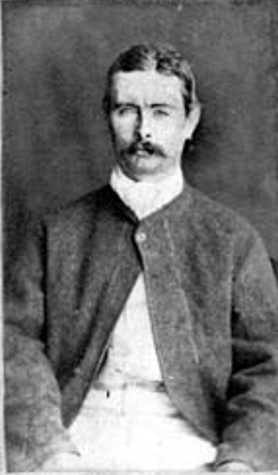
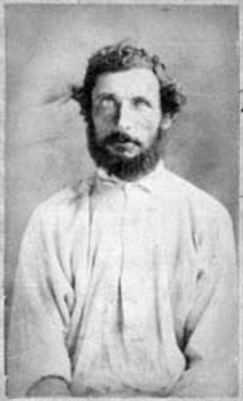

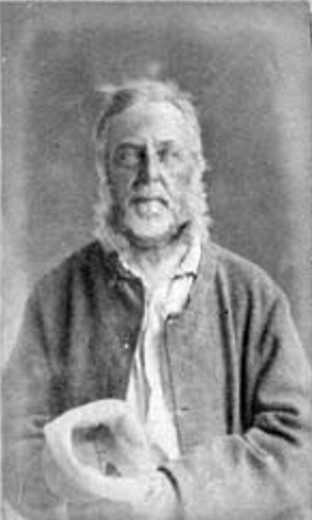
Left to right: James Cunningham, John McGrath, Robert Spence, William Wilson.
James Cunningham, a horse trainer by profession, was sentenced to one months’ imprisonment at Ipswich on 11 September, 1875. He looks fairly tidy and respectable in his prison entry photograph. He was noted as having grey hair and blue eyes, and was missing precisely seven upper teeth. Someone counted.
John McGrath, an Irish labourer who had been in the Colony for five years, was convicted as a vagrant at Brisbane on 11 February 1876, and given a month performing hard labour in order to atone for the crime of not being able to find work as a labourer in the first place.
Robert Spence was convicted at Gympie on 13 August 1875, and given three months’ imprisonment. He clearly didn’t learn the lesson against idleness imposed by the legislature, because he was imprisoned again – this time with hard labour – in December 1875 at Brisbane. This time, he was charged with having no visible means of support, which is unsurprising for a 45 year-old, vision-impaired, unemployed miner who had just been released from prison.
“Every Person wandering abroad and lodging in any Barn or Outhouse, or in any deserted or unoccupied Building, or in the open Air, or under a Tent, or in any Cart or Wagon, not having any visible Means of Subsistence, and not giving a good Account of himself or herself.”
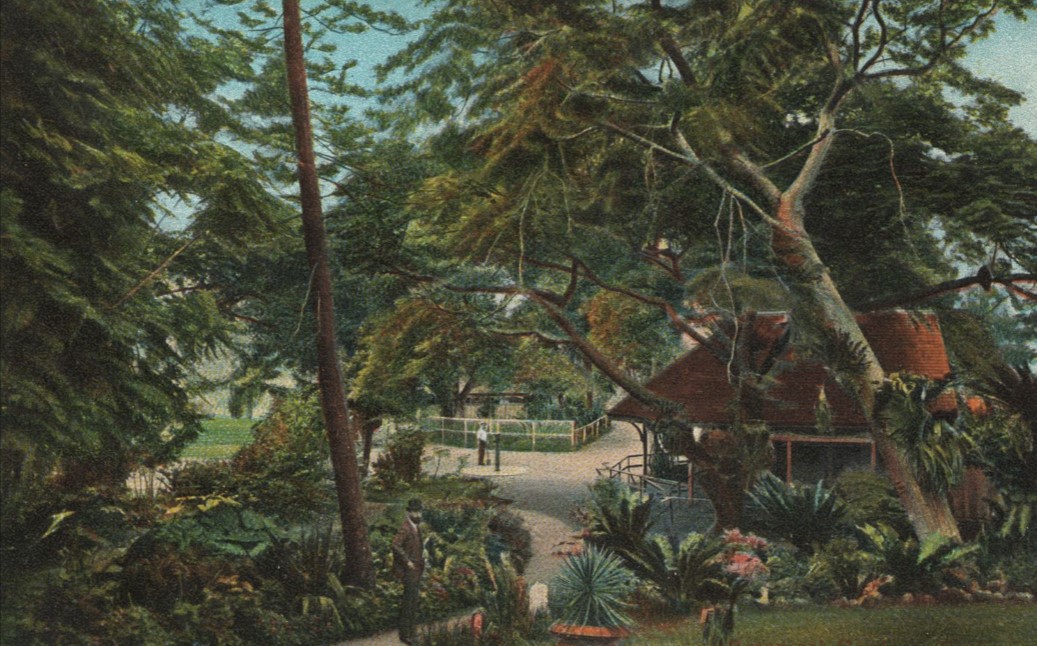
William Wilson, pictured clutching his hat and looking every inch the stereotype of the vagrant, was a weather-beaten 56 years old. A clerk by profession, he was down on his luck. When arrested in the Botanical Gardens at Brisbane in January 1876, he protested that he could in fact support himself if he were able to sell some books and apparel. The arresting officer opined that this excuse had disarmed the Bench on a previous occasion, and that a term of imprisonment should follow. It was further revealed that Mr Wilson had begged for money in the streets at one point. The Bench, all too familiar with poor old Mr Wilson, gave him three months with hard labour.
A ROGUE AND A VAGABOND
“Every Person committing any Offence against this Act which shall subject him or her to be dealt with as a Rogue and Vagabond, such Person having been at some former Time adjudged so to be.” That included “every Person playing or betting in any Street, Road, Highway, or other open and public Place, at or with any Table or Instrument of gaming, at any Game or pretended Game of Chance.”

William James Mitchell (pictured here wearing a nice cosy scarf in addition to a flourishing beard) was officially a rogue and a vagabond. Mitchell was charged with playing an unlawful game at the expense of James Carey. Carey, newly arrived from the North with money in his pocket, ventured into a public house and found himself with a number of brand-new friends who were kind enough to offer him a stake in a game. The odds were in his favour, they said, as they sat down in pairs to play.
“The game is played with eight pieces of paper in rows of five and three, a coin is placed beneath a hand, and whichever side guesses right takes a piece of paper up; this continues until either row is exhausted, and the first row that is demolished wins.” The Brisbane Courier.
As the game progressed, Carey noticed that his playing partner was winking at Mitchell just before Carey made his guess. (The only person a player could show the coin to was his partner.) He sensibly gave the two men in charge of the police. William Mitchell’s person was searched, recovering £59 3s. 6d of Carey’s money in the process, and earning the vagabond and rogue one month in Brisbane Gaol. His charge sheet mentions “old Van Diemen’s Land” convictions, and “a long sentence in Darlinghurst Gaol, New South Wales.”
Pilfering from ships you shouldn’t be on in the first place.
“Every suspected Person or reputed Thief, frequenting any River, Canal, or navigable Stream, Dock, or Basin, or any Quay, Wharf, or Warehouse near or adjoining thereto, or any Street, Highway, or Avenue leading thereto, or any Place of public Resort or any Avenue leading thereto, or any Street, Highway, or Place adjacent, with Intent to commit Felony.”
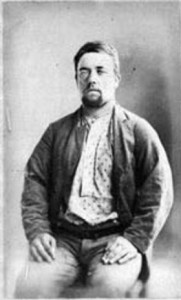
William Spencer was a double offender under the vagrancy legislation. Not only was he on board the Salado when he shouldn’t be, he was found guilty of stealing a coat from one of the sailors. For his unlawful boarding and pilfering proclivities, he was given one month in gaol.
Perhaps Spencer was just trying to find a coat that fit. The clothing supplied to him by Her Majesty’s Gaol clearly wasn’t the height of comfort, or fashion. But at least it was free.
Loitering with Intent
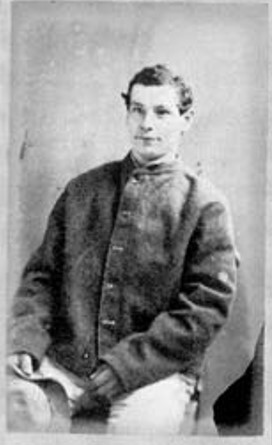


From left: Alfred Rooker, John Neville and James or John Doolan
“Every Person being found in or upon any Dwelling House, Warehouse, Coach-house, Stable, or Outhouse, or in any inclosed Yard, Garden, or Area, for any unlawful Purpose.”
In March 1875, Constable Taylor spotted Alfred Rooker walking on the New Farm Road, wearing “false whiskers”, and immediately became suspicious. Taylor’s suspicions were confirmed when Rooker and a companion began peering in windows and trying doors, including that of Mr J. Evans, Pawnbroker. Taylor intercepted Rooker’s companion there, but Rooker took to his heels.
When apprehended and charged, Alfred Rooker sought to establish an alibi by calling other lodgers at his home to give evidence that he had been safely in bed on the night in question. The trouble was, none of the witnesses could remember him being there. He was found guilty, and sentenced to six months’ hard labour on the roads.
Rooker was a brush-maker by trade, who had arrived in the Colony the previous year aboard the memorably named immigrant ship, the Tim Whiffler.
Also in March 1875, John Neville, who had served sentences in New South Wales and Van Diemen’s Land, received a six month gaol term with hard labour for loitering near a property with an unlawful purpose.
William Walsh, the landlord of the Bendigo Hotel in George Street, was alerted to some potential nefarious activities in the neighbourhood. He took a dark lantern and enlisted the help of a neighbour named Deasley to see what the trouble was. In a dark laneway, the men uncovered the lantern and found John Neville standing against a wall with his hat over his eyes.
Walsh put the lantern up to Neville’s face, and asked him what business he had being in the laneway at that hour. Neville did not give him a satisfactory account of his presence, and was taken to the police barracks. A search of the area in which Neville had been loitering revealed a fully-loaded revolver. The police went to the house Neville had been staying in, and found a box of 50 cartridges with 44 cartridges still in it. The other six cartridges were in the seized revolver.
In the morning, the owner of the house that Neville had been found leaning against discovered that his door lock had been tampered with. Between tampered-with doors and loaded revolvers, it seemed that Neville had indeed been up to no good.
A few weeks later, John Doolan (also referred to as James Doolan) was convicted of a similar offence, and also received six months’ hard labour. He had neither false whiskers nor a revolver, but it still earned him a stretch.
Counterfeit notes and forged cheques


John Horan (left) and Thomas Faulkner
John Horan was the only Australian-born offender in the 1875 Brisbane Gaol photographs of convicted vagrants. He was a 33 year-old shoemaker who had already been convicted of larceny from the person in 1873.
Horan could not read or write, so forging a cheque was out of the question. In May 1875, he passed a counterfeit £1 note in a Brisbane store and received three months’ hard labour “on the roads and other public works of the colony.”
Thomas Faulkner or Fawkner, was a young Irish immigrant, who was paralysed on his right side, and relied on crutches to get around. He couldn’t make an honest living, he reasoned, so he decided to make a dishonest one. He was well-educated, and decided to put his writing skills to use to generate some wealth.
In 1872, he received six months’ hard labour for false pretences, committed at Maryborough. He had attempted to pay for his lodgings with a cheque from his father. “The old man” did not have an account with the bank in question, and the bank, rather unsportingly, refused to honour it. When pressed by his landlord, he made vague promises, but ultimately, no money was forthcoming. He was given into custody.
In 1875, the method that had failed in Maryborough failed at Ipswich. Again, the pater was mentioned, but money was not forthcoming. On both occasions, Faulkner claimed that the offence was committed when he was in liquor. On both occasions, he went to gaol.
Doing what you really shouldn’t be doing out in public
“Every Person wilfully, openly, lewdly, and obscenely exposing his Person in any Street, Road, or public Highway, or in the View thereof, or in any Place of public Resort.”
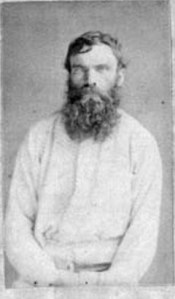
In February 1876, an Irish miner named Patrick Sullivan alias Barratt came to Brisbane. Presumably the visit was for recreation rather than business, because he decided to combine his recreation with Kate Fahey’s business. The transaction might have gone unnoticed and unpunished had the parties been able to secure a discreet location, or better yet, a closed room.
Unfortunately, outdoors at Petrie Bight was not a discreet location, and their activities attracted the attention of the police. Ms Fahey was an “old offender,” and received a fine of £5, or three months’ imprisonment. Mr Sullivan, being new in town and a man after all, received £5, or only one month in prison. Presumably Mr Sullivan had spent his money on Ms Fahey, and wasn’t able to stump up the fine. He chose the one month in gaol.
The poor are always with us. And are still heavily policed, even with the availability of social welfare.

 Moreton Bay and More