

Veterans of the Napoleonic Wars must have been a tough breed. A handful of them lived hard lives in Queensland, still working at hard physical labour in their seventies and eighties. There was no aged pension, and injury or illness in a labouring man removed their only means of earning a living. The Dunwich Benevolent Asylum was the last refuge for the old veterans.
Abraham Brown, Trafalgar
Abraham Brown, born c. 1778, was the son of a gamekeeper from Copenhagen, Denmark. At the age of 23, he was forcibly recruited by the English Navy, and thus began a long, solitary journey that ended at Dunwich, when he was 100 years old. He entered the Asylum aged 91 in 1869. Here’s his history as told to the officials at Dunwich:
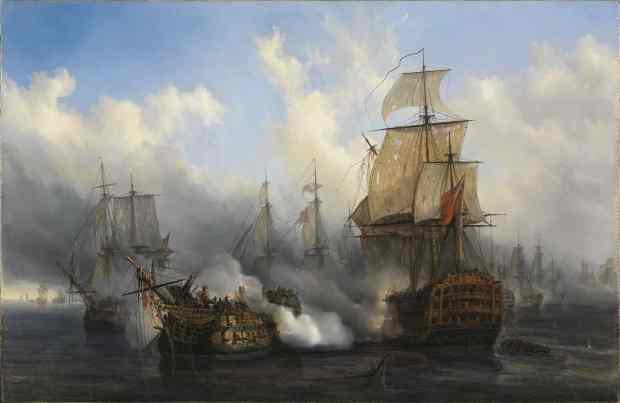
Trafalgar.
“I came to Sydney per Brig “Atlanta” in 1822, as an able seaman. I obtained my discharge of her there, and entered the coasting trade, in which I was engaged many years. While in this trade, carrying cedar, I was the first man to open the Clarence in the Schooner “Susan.” belonging to Mr F Smith, of Kissing Point. I have been in all the Colonies at different times, and of late chiefly about the Richmond and Tweed Rivers, and Nerang creek, getting cedar. I was never married, and have no relations in the Colony.
“I was pressed in 1801 for Lord Nelson’s fleet, under orders for the Copenhagen Expedition. I had to fight in the battle of Copenhagen against my country, where I have never been since.”
“Old Trafalgar” died in 1878.
Robert Brown, Trafalgar.
Robert Brown, born c. 1784, was 82 when he entered the Dunwich Benevolent Asylum in December 1866. He had arrived as a free immigrant to New South Wales in 1835 and set to work shepherding about New South Wales and Queensland. The only information about his life prior to emigrating was a note – “was a seaman at Trafalgar.” All that could be determined of his family history was that he had been born in Londonderry and was Roman Catholic.
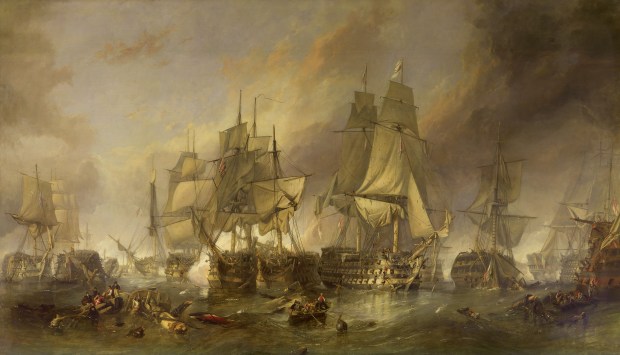
He was suffering paralysis of the lower limbs by the time he was referred to Dunwich by the Brisbane Hospital, where he had been for two years. Robert Brown died at Dunwich at the age of 86 in 1870, having spent six years suffering from paralysis.
Johann Ehlers, Battle of Leipzig
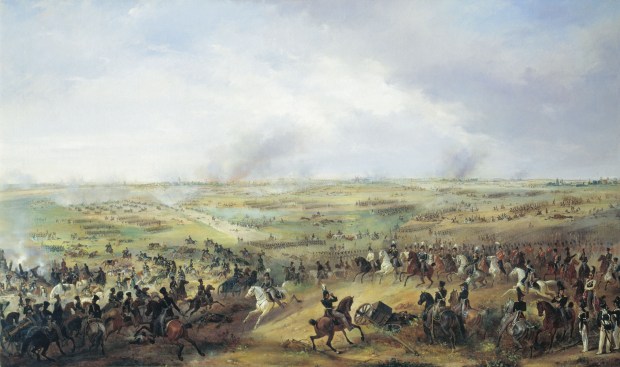
The Battle of Leipzig, Zauerweid.
Johann Frederick Ehlers was a very hard-working German immigrant, who was admitted to Dunwich in April 1868, aged 80 years. He came to Brisbane in the Aurora in 1856 when a mere stripling of 68 years of age. He had been present at the Battle of Leipzig in 1813 – 43 years before emigrating.
Ehlers set about shepherding with the Archers and Mr Walsh in the 1850s. He only stopped working at the age of 77, when he broke his leg in a fall from a horse, and spent three years in the Maryborough Hospital. He was no longer able to earn a living and support his wife and two children, to his great regret.
Johann Ehlers remained at Dunwich for five years, suffering the effects of old age and injuries, before passing away aged 85 on December 16, 1873.
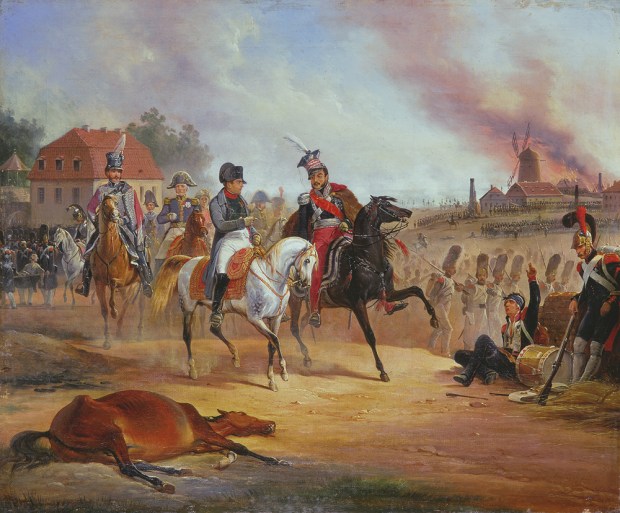
“If this doesn’t work out, I’m going to blame you.” Napoleon and Poniatowski, Battle of Leipzig, 1813. Suchodolski
James Farr, Peninsular Wars
James Farr was admitted to the Benevolent Asylum in 1862, when it was still located at the Brisbane Hospital. He was 81 on admission, which places his birth around 1781.
Originally from Dublin, Farr served for 24 years with the 87th Regiment of Foot before being pensioned off in 1829. He served in the Peninsular Wars (1807-1814) and was wounded five times. To give James some historical context, he served in the same conflict as Captain Patrick Logan.

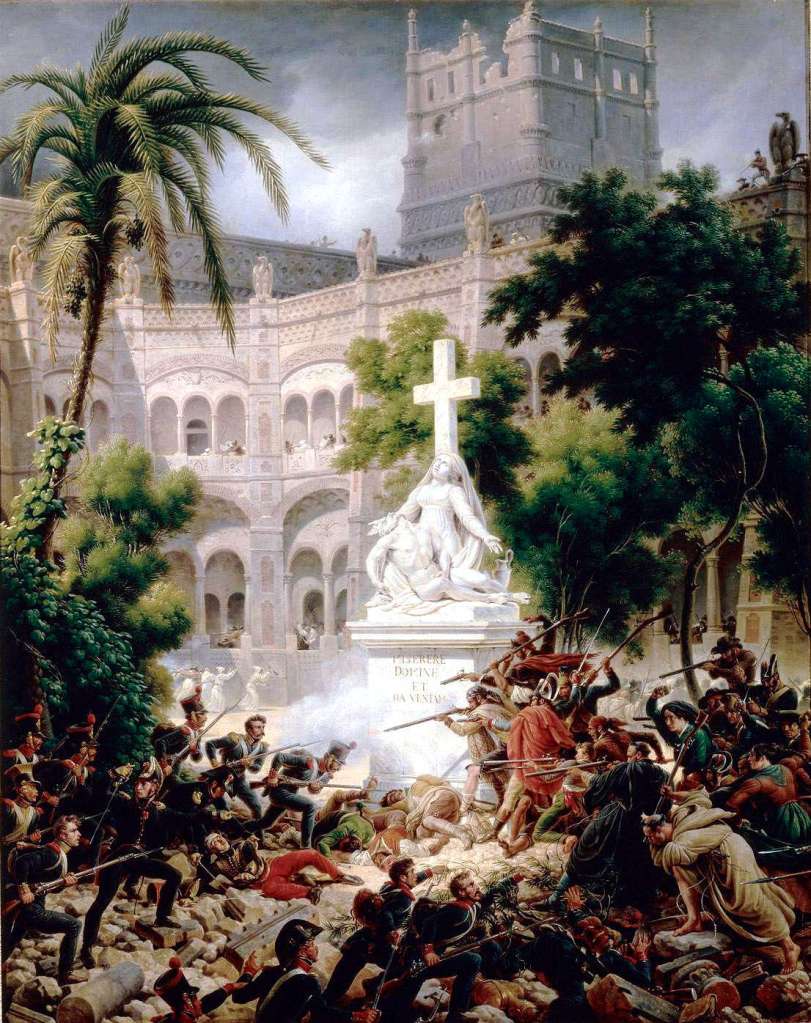
Farr emigrated to Sydney in 1832 by the Maria Anne and spent sixteen years in the service of Chief Justice Francis Forbes in Sydney.
After working for Chief Justice Forbes, he worked around New South Wales and Queensland as a shepherd. James Farr was 94 when he died at Dunwich in March 1875.
William Reilly, Waterloo AND QUATRE BRAS
William Reilly was aged 91 on admission to the Benevolent Asylum in 1883. He was born in Liverpool around 1792, the son of William Reilly, a soldier. Young William followed his father into the army, serving with the 4th Regiment of Foot.
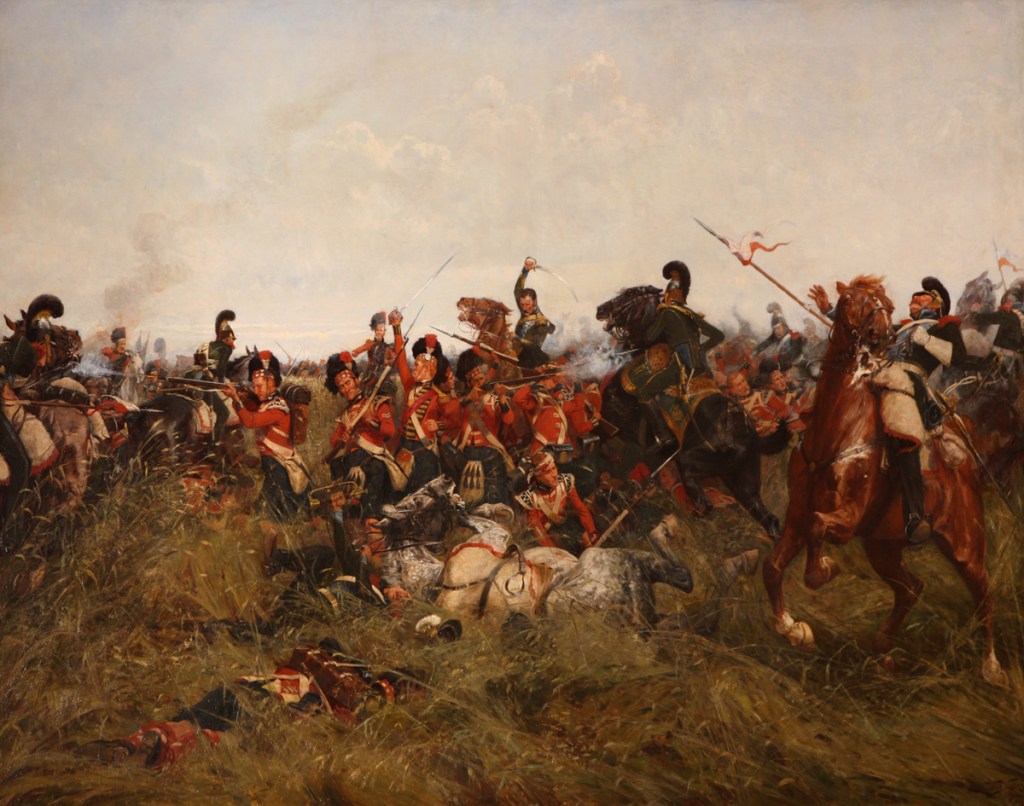

During his military career, he fought in 1815 at Quatre Bras and Waterloo (where he received a gunshot wound). Napoleon having been dealt with, Reilly continued soldiering, and came to Sydney with his Regiment per the Three Bees in 1819.
In the late 1820s, Reilly was part of a detachment that was sent to a place called Moreton Bay, where he did duty at the Amity Point Pilot Station.
After his discharge, he worked his way about New South Wales and Moreton Bay (as Queensland was known then). He worked at all the famed stations – Glengallan, Canning Downs, Pikedale and Maryvale.
Reilly married twice – to Margaret Smith in Liverpool, then Mary Farrell in Sydney. He fathered William and Daniel, who were in their early twenties when dear old dad was 91.
William Reilly only stayed at Dunwich for six weeks in 1883, and was readmitted and discharged again in 1884. A search of Births, Marriages and Deaths suggests that he finally passed away in 1886.
George Winfield (or Wainfield), Waterloo
At the time of his original admission to Dunwich in 1867, George Winfield (82), gave the following account of himself:
“Arrived in Sydney in 1819, Ship Baring, Captain Ramsay. Came as a pensioner in charge of prisoners. Lived in and about Sydney up till 1842, then came over to Moreton Bay with Mr Hughes of Gowrie, and has been shepherding and different places since – was sometime with Mr Sheridan of the Customs – last employment with Mr Turner of Helidon. Recommended by Mr Rawlins, Police Magistrate, Ipswich.”

Battle of Waterloo, William Sadler
His earlier career was cautiously noted by the Dunwich staff: “Claims to have” served in the 64th Regiment at Waterloo and was there shot through the leg, and lost his little finger previously in Rocket Brigade. He had a pension of 9 d. per day, but lost it through misconduct and drunkenness.
George Winfield certainly had a hard life. His alcoholism saw him arrested many times for drunkenness and vagrancy. He was sent to St. Helena by an exasperated Magistrate Pinnock for “habitual drunkenness” for six months in 1877. There were seven admissions and discharges to Dunwich between 1868 and 1881, when he was finally too old and infirm to leave. He passed away, aged 86 in 1883.
The Brisbane Telegraph summed up his life in 1872, eleven years before he finally departed it:
“A WATERLOO VETERAN. — A poor old soldier named George Winfield, said to be one of the oldest survivors of the memorable battle of Waterloo, in which he lost an arm, and had a wonderful escape of his life, appeared before the City Bench this morning in the custody of the police, charged with being a vagrant, having no means of support. The old man, who for a long time was in the enjoyment of a pension from the country for which he so gallantly fought and bled, came out to New South Wales about fifty-five years ago, and, foolishly enough, was induced to part with his pension, which he is stated to have sold to the Government of that colony for a piece of land — which he says he never got. In the days of his youth, he served eleven years in the Royal Artillery, and before leaving the old country obtained medals for good service. Now, however, in his extreme old age — for he is nearly ninety — the unfortunate warrior has come to want and distress, picking up a scanty livelihood partly by begging, and now and again doing odd jobs for a few charitable persons who have given him casual employment. It is a sad spectacle, and one hardly creditable to the Government, to see one of England’s gallant defenders fallen so low as to be compelled to beg for a living up and down the colony. None, we think would be found to grudge the unfortunate old man the means of spending the probably short time he may have yet to live in peace and comfort, and we are sure no one would object to his being taken care of and well provided for by the Government, which carefully feeds and clothes the criminal population. The Police Magistrate, after investigating the charge seemed at a loss what to do with the old veteran, and ultimately remanded him to ascertain whether the Government would be disposed to take charge of him and place him in the Benevolent Asylum.”[i]
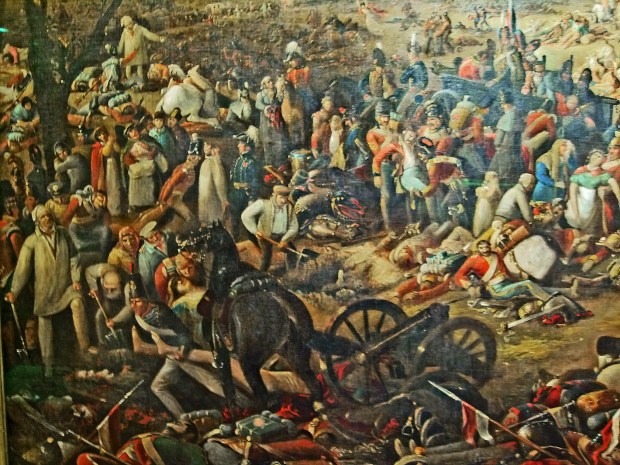
The Morning After Waterloo, Clark
[i] Article – The Telegraph (Brisbane, Qld.: 1872 – 1947) Thursday 3 October 1872 – Page 2.
- Queensland State Archives ITM 298715 Admission Register, Males – Dunwich Benevolent Asylum 1882-1889.
- Queensland State Archives ITM 9518 Register of Personal Details Males Admitted to Dunwich Benevolent Asylum 1859-1882.
- Queensland Registry of Births, Deaths and Marriages.
- Queensland State Archives ITM 92273 St. Helena Penal Establishment. Prisoners, Male. Record of all prisoners admitted to the St. Helena Penal Establishment, 1867-1883.
 Moreton Bay and More