

A menace. Larcenous. Infernal. A nuisance. Horrid. Abominable. Laws were passed against it but had little effect. Newspaper letter-writers railed for decades.
Vigilantism broke out. Fights ensued. Blood was shed. Men went armed. The sleep of innocent families was murdered. Jonquils were destroyed. Even orchids.
What was this scourge, this menace to peaceful society?

The Goat Nuisance. Yes, goats.
From 1842, these remorseless invaders spread west from Brisbane to Ipswich, to the picturesque townships of the Downs, and then northwards along the coast and in the interior.
Brisbane Falls to the Enemy
Starting with a hostile takeover of Mr Orr’s verandah in 1846, goats moved on to decimate the Government Gardens, where “of the many clumps of bananas nothing now remains except the roots, whence now and then a sickly stem proceeds, which some ruthless goat appropriates so soon as it has acquired such vegetable importance as to be worthy of his attention.”
Having ruined “the most agreeable promenade to be met with in the vicinity of the town,” the goats took to raiding the veggie patches of insufficiently-fenced dwellings in Brisbane. They were particularly fond of gathering on verandahs in the evenings for a spot of socialising. They made “bah” noises and did their business wherever it took their fancy. They had to be stopped. Their owners had to be brought to account. The police were duly diverted from their normal duties to chase them to the pound.
Since the crusade of the constables against the vagabond goats of the settlement that could not show an honest means of obtaining a livelihood, not a living thing has been observed within the desolate folds of this lock-up for disorderly quadrupeds.
Moreton Bay Courier, August 1848.
Just how a goat was meant to show an honest means of obtaining a livelihood was not explained.
Any perceived slackness in the police response to what would be henceforth universally known as The Goat Nuisance led to suspicions that, as known goat-keepers, the police were on the side of these “disagreeable” creatures.
The Goat Nuisance percolated away in Brisbane until the Inclosure Act was assented to in 1854, and empowered owners of inclosed lands, as they were called, to destroy any goat trespassing on said lands. It also reaffirmed the police power to seize, sell or destroy straying livestock.
The town constables did the best they could to impound and sell unclaimed goats. For a time, Brisbane muddled on with this method, but not very happily. Livestock noises, particularly those of the braying goat, desecrated the Sabbath for the observant in Fortitude Valley. Something had to be done.
The Menace Spreads to Ipswich and the Downs

The rustic streets of Drayton, near Toowoomba, were under siege. Small farmers were losing crops, and entire flocks of goats were roaming the streets of the town, presumably not willing or able to demonstrate an honest means of earning their livelihood. Where were the constables?
In Brisbane, larking about, it appears.
In 1859, Separation from New South Wales occurred, meaning that an entirely new bureaucracy had to be created in order to run the colony. That included new Departments, Councils and a lot of new public servants and police officers. “A perfect invasion” of clerks and plods was observed in Brisbane, and, until they had actual duties to carry out, they amused themselves with goat hunting. Driving unsecured livestock to the pound was a terrific diversion for them, but when they were done with goats, they threatened to start on delinquent horses and cattle, to the distress of equestrians and butchers alike.
“The late crusade of the police against the goats ended in the capture of a number of billies, found straying in the streets at night; and great was the grief of a number of juveniles who were thus deprived of the animals they had been in the habit of riding, the boys who owned the goats might have been seen looking at their favourite steeds in the pound with affectionate feelings. When told that whoever owned the goats would be summoned, they grew shy, and the public may anticipate an announcement shortly, that there are a number of the goats for sale, the highest bidders to be the purchasers with the prospective possibility that the buyers may find themselves in the position which the late owners have wisely evaded.” The Moreton Bay Courier, March 1860.
The Police Force of Drayton made a grand announcement that it would take matters into its own hands from May 11, 1860. They would enforce the Inclosed Lands Act (18 Vict.) like there was no tomorrow, dash it all. However, their mighty efforts did not seem to have much effect.

Drayton Police Station, 1860s. The police are there, somewhere.
A few months later, a bored young Drayton woman wrote to the Editor of the Darling Downs Gazette, bemoaning the local preoccupation with goats. “Church yards and solitude! What’s the reason that nobody ever sees anybody, that nothing looks frisky, except kids and what right have they to have all the fun to themselves? Goats and nuisances, is there no amusement for Christians?” (I would have thought that churchyards and solitude would have been fairly high on the list of Christian amusements in a small country town in 1860.)
A correspondent for the North Australian recounted his rollicking trip through the Downs, which terminated in Drayton. The town boasted “gals with tremendous hoops and ditto ankles; a deserted foal, a lugubrious sprinkling of poultry, many goats, — and there you have Drayton!” I hope that Drayton’s bored young lady, who went by the nom de plume Fanny Fern, wasn’t offended out of her ennui by this cruel description of the town’s feminine charms.
1861 – Toowoomba Embarks on a Crusade
In Toowoomba, a local gent seeking political office was heckled on the hustings by cries of “goats, goats!” to his evident bewilderment. Rallying, he took the opportunity to tell the crowd that, if elected, it would be in his power to do something about the goats, which brought the audience to its feet, cheering.
Toowoomba wasn’t going to stand for miscellaneous goats strolling through its unpaved streets and chewing on the petunias of the innocent. Their police decided to show up their Drayton counterparts and embarked on no less than a “Goat Crusade.” This crusade was as violent and disruptive as those undertaken in the name of religion. The Brisbane Courier approved mightily:
GRAND BATTLE. – Some time since a warning was issued by his Worship the Mayor, and the Police Magistrate, cautioning the proprietors of goats against allowing them to stray in the public streets. No notice being taken of this document, the police, after the fatigues of the assizes, received permission to refresh themselves by indulging in a shooting excursion, and this day (Saturday) the town has resounded with the report of firearms, the groans of the wounded (goats), and
The cry of women shrill, Like shriek of goshawk on the hill,
as they vainly endeavoured to interpose between their long-cherished pets, and those who were carrying into effect the extreme penalty of the law. Upwards of sixty head were bagged, which will considerably abate the nuisance so long complained of. The Courier, July 1861.


The “grand battle” ended rather ignominiously when the goat-murdering constables settled down for a spot of lunch, only to discover the hard way that they had been sitting on some soldier ant beds.
The Relentless March North and West
In Maryborough, the new council fretted about making their first by-law to deal with the goat invasion. Alderman Howard harrumphed that an even smaller town out west, Dalby, was enforcing the existing Towns Police Act, so why shouldn’t Maryborough? “No-one likes to have his garden uprooted by a lot of infernal goats,” he added.
That small western town, Dalby, despite the adoption of the Towns Police Act, didn’t witness a rounding-up of the town’s goats. The Toowoomba Chronicle laid their failure to stop the nuisance at the feet of an unnamed local official, who was known to keep goats. Influence in high places, it hinted, darkly. Even the cedar doors of Dalby were at the mercy of hungry goats.
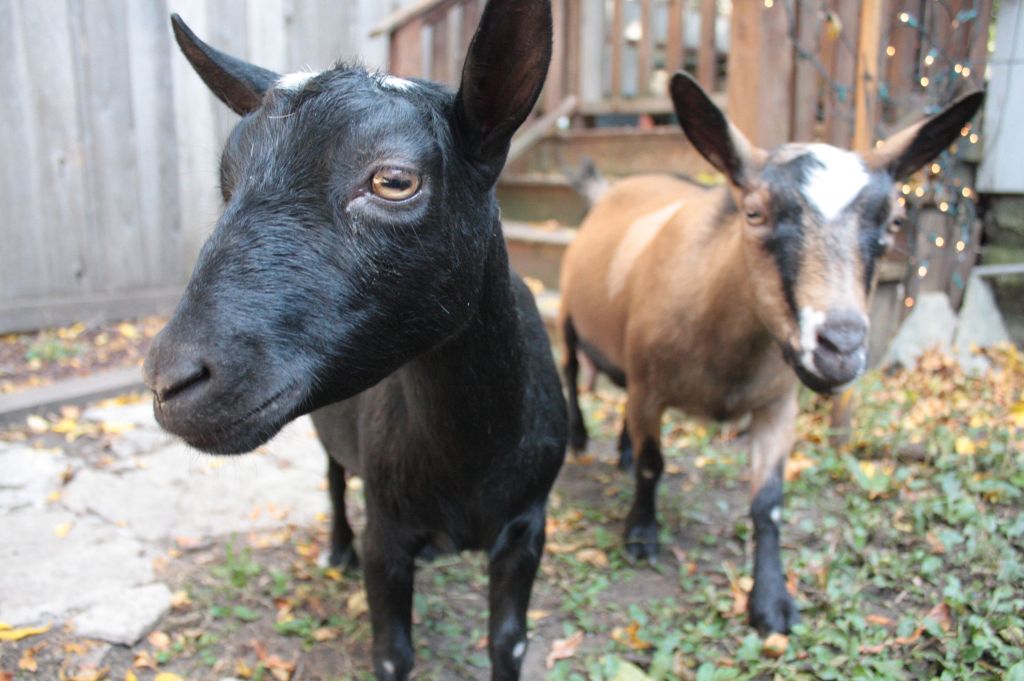
At Gayndah, the locals had to board up the entrance to the unfinished primary school building to prevent goats and pigs “from enjoying their usual promenades and hide and seek gambols.” The school building had not been completed before the money ran out, and rather than find a way to finish the building and let the non-goat kids in, government and citizens argued endlessly about who was responsible.
By 1863, the Courier officially endorsed the zero-tolerance approach to dogs and goats taken by Toowoomba, where “that on moonlight nights the police of that town muster in great force for the purpose of shooting all stray dogs and goats they may encounter.” Presumably, the residents of Toowoomba grew used to falling asleep to the sound of gunfire.
Not very deterred, the goats took over Gladstone, and the Courier’s special correspondent suffered terribly.
“Almost every night my slumbers are broken in on by certain unheard-of discordant sounds proceeding from my verandah; forth I rush, to encounter about two dozen of those horrid goats, who of course rush “pell-mell” as I thunder amongst them and drive them with stones and brick-bats away; but (abominable intruders) almost before I am between the sheets, once more, there they are again, hissing, bashing, stamping, jumping, until perhaps at length I may manage to console myself to sleep with the pleasing opiate.”
In Rockhampton, some people thought that they were above the law when it came to shooting goats. One of those people was a solicitor named Mr. Dick, who – of course- got clean away with it.
“CHAMOIS HUNTING. — Sydney Dick, solicitor of the Supreme Court, was charged with cruelty, and unlawfully ill-treating a certain animal, to wit, a goat, the property of E. S. Rutherford. Mr. Dick defended himself.
The Bench: How do you plead Mr. Dick?
Mr. Dick: I plead the Goat Act. (Laughter.)
Mr. Dick defended himself by stating that he had shot the goats on his premises as they were a nuisance, so much a nuisance in fact, that his neighbour, Mr. Bellas, had offered him £5 to shoot the billy. Mr. Dick, personally, had shot the maternal ancestress of the family, and according to Mr. Rutherford had severely wounded several others, which now limped through the streets. A witness called on behalf of Mr. Rutherford had seen nothing except the death of the goat, after it was shot.
The Bench dismissed the case.”

Rockhampton, shortly before the Goat Nuisance and Mr. Dick’s reign of terror.
Rockhampton residents were so troubled by the nuisance, that the Northern Argus presumed that a permanent altar to goats and dogs had been built in their city. Their Inspector of Nuisances chased after flocks of them, waving his baton bravely, but most escaped by hiding under verandahs. Rocky was holding out for a hero.
Northern Argus, Rockhampton 1865Some great reformer is wanted. Some Hercules to clean out our Augean stable and choke off both dogs and goats. Life is become a burden in Rockhampton.
Presumably Mr. Dick had run out of ammo.
Back in Maryborough, Alderman Howard’s plan of removing nuisances through the Towns Police Act had failed to bear fruit. In early 1864, “Fair Play” wrote to the Chronicle to describe the torment wrought by “a grand corroboree of goats” each night on his verandah. Pity the Courier’s Gladstone correspondent wasn’t nearby with his pleasing opiate.
In Brisbane, the Goat Nuisance had even made its way to the outlying district of Spring Hill. The following year, the serenity of far-flung Petrie Terrace was destroyed by marauding goats, and residents worried that the jurisdiction of the constables might not extend that far out into the wilds. Even further afield, Joseph Baker, of Paddington West, found his trees thoroughly barked, and set out to make the trees unpalatable with a mixture of tree gum and cow dung.
(For non-Brisbane residents, the in-joke is that Spring Hill and Petrie Terrace are well within the Brisbane Central Business District, with Paddington just a little further out. The real estate prices in these central locations do not bear thinking about by those without sturdy trust funds.)
No Community was Safe
1866 saw vagrant goats return to Toowoomba, hell-bent, presumably, on avenging their species after the mass murder of 1861. Goats took up residence on the town’s verandahs, and no amount of fitful police activity or indignant letter-writing could remove them.
“SIR, – I wish you would be good enough to expose also the annoyances to the public by goats. At night they take up their lodgings on your verandah, and the stench they create and their everlasting bah! bah! and the chorus followed by their kids, render sleep next to impossible.” C.M.S., Toowoomba.
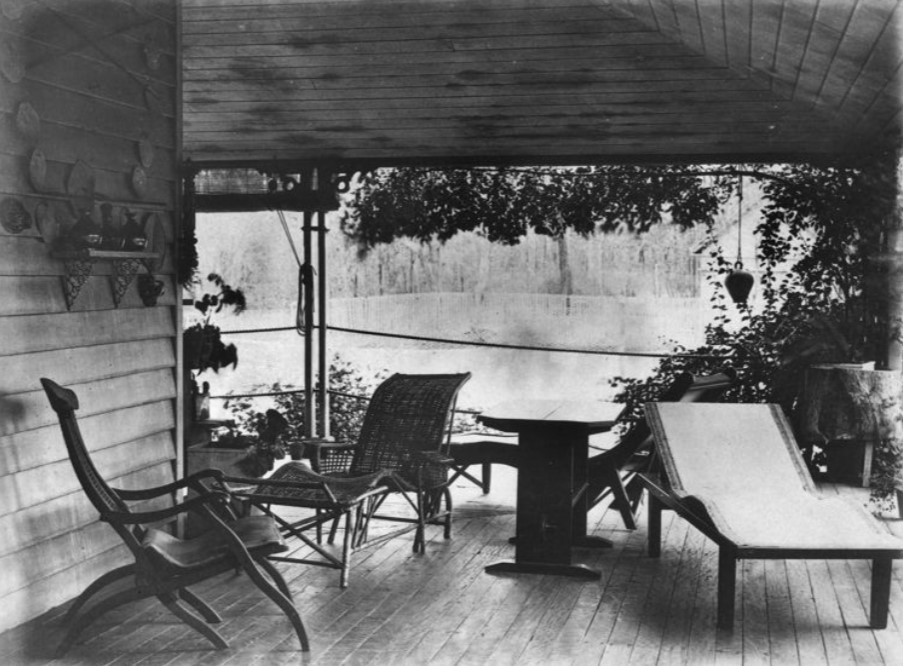
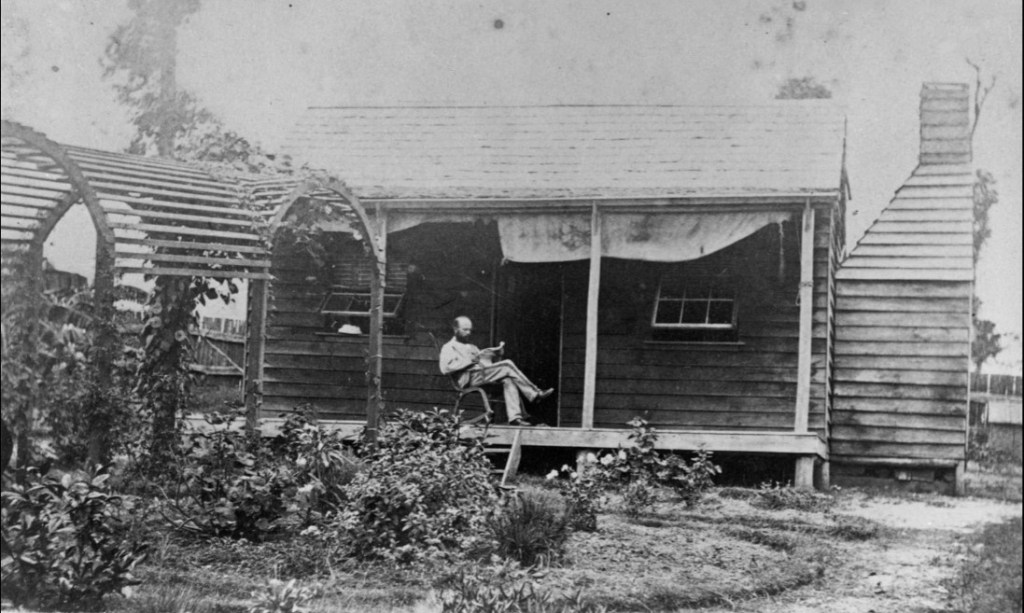
Meanwhile in Brisbane, terror apparently ruled the streets. A letter-writer named Omega asserted to the Courier that there were “hundreds of goats parading in the streets of Brisbane to the destruction of trees and flowers.” Wow. It’s a miracle that anyone ventured out of doors. Angry householders traced the owners of land used to graze goats. Even Attorney-General Ratcliffe Pring was a suspected goat owner, or at least a tolerator of the species.
“A Resident of Leichhardt Street” suggested the following: “When any difficulty occurs in finding the owners of those wandering goats, that they should be shot by the police or other ‘proper authority.'”
Wait – who should be shot – the owners or the goats?
Every city, town, township and hamlet claimed to be overwhelmed by goats by the end of the century. Inspectors of Nuisances, when not writing people up for bad drains, chased goats, pigs and dogs about relentlessly. The town cemetery of Roma became “the chosen sanctuary of all the goats and pigs in the town.”
Even the most remote communities were thoroughly goated. In 1892, residents of Maytown on the Palmer River goldfields threatened to leave the place en masse if their goats were not curfewed. (For other reasons, Maytown became a ghost town in the 1920s.)
Clermont didn’t muck around. In 1896, 227 goats were rounded up and destroyed in one night. The Capricornian stated that “a moderate computation” estimated there were still 600 roaming the area.
The enterprising authorities at Palm Island rounded up their goats and auctioned them off to their owners at five shillings for females and 22 shillings for males.
“The day after the sale of goats,” says the “Pilot,” “the streets of the town were infested with goats as bad as before. If goats are a nuisance on the streets let the board see that they are kept off them.” Just fancy a goat nuisance at the gates of Torres Straits! One might as well expect it at Gibraltar or Aden. Perhaps the nannies were eating the fortifications or the barbed wire fence round the Government Resident’s bungalow, while billies aided or abetted, or abutted, as the case may be.
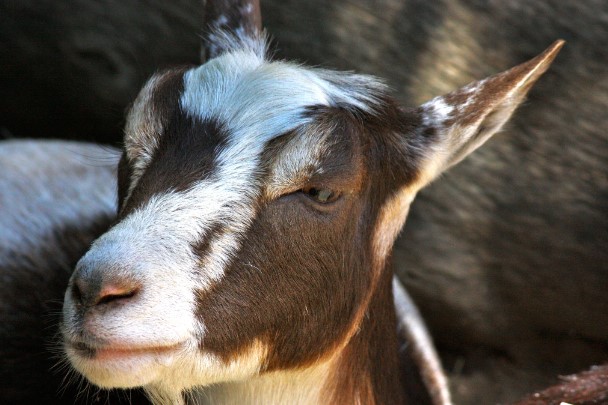
In 1900, the Maranoa Council was debating how to deal with stray goats and dogs, when “the harmony of the proceedings was rudely disturbed by a number of the vagrant mongrels disgracing the town indulging in a spirited free fight beneath a window of the chambers.” They quickly turned their focus to the dog problem, rather than further harassing the goats.
Vigilantism
Unsurprisingly, with so many deploring the very existence of goats in their midst, some humans felt that they had a licence to behave as cruelly as they liked. From Mr. Dick shooting and injuring goats in Rockhampton in 1863, the reports of cruelty grew as the problem seemed insoluble.
Small boys were reported to be “worrying” goats in Ipswich – attaching them to carts and forcing the goats to drive them about by beating them roughly with sticks. In Petrie Terrace, George Caldwell found his milch goat alive, but in great distress, having been stabbed several times and with one of her horns nearly ripped off. A policeman at Kangaroo Point took to drowning goats – one animal took nearly four hours to die -and a caretaker at a park on Gregory Terrace cut the throats of straying goats and left their carcasses to rot, reasoning that it was good fertiliser.
When the Gregory Terrace amateur butcher was reported in the press, a letter-writer calling himself Deus Terminus offered the man the use of his razor. Deus’s excuse for his call to cruelty was the loss of his amaryllis and “jonquilles.” “Any Oder Man” chimed in with a tale of woe involving devoured orchids. A.O.M. also suffered crockery losses when he left his door open, and a goat got into his kitchen.
Anyone who dared to speak out against violent treatment was howled down in the press, as “Goatee” found when they had the temerity to suggest that (a) a goat would supply a poor family with cheap milk, and (b) perhaps fences, gates and closed doors might help householders. “Goatee” and “Any Oder Man” managed to earn themselves a temporary ban from the letters pages after what resembled the colonial equivalent of a twitter flame war.
The Goat Nuisance Slowly Subsides
Brisbane, and then other centres, gradually overcame the Goat Nuisance, not by vigilantism, or Urgent Official Action, but by urbanisation and population growth.
After the turn of the century, more people were living in the suburbs, and few chose to keep goats for milk or lawn control, what with milkmen and hand mowers about. Goats retreated to farms, and befouled city verandahs no more.

“We good?”
Images – public domain and State Library of Queensland.
 Moreton Bay and More
1 Comment