
On the afternoon and evening of Monday 7 January 1867, a group of Europeans, estimated to be between 200 and 500 in number, terrorised the Chinese population at the Crocodile Creek gold diggings. When the mob was finished, many were injured, and just about every Chinese person in the township had lost everything but the clothes they stood in. Their belongings were looted by their fellow townspeople. There were some sympathetic European people who took in and sheltered the Chinese, earning themselves a fair bit of bother from the rioters in the process.
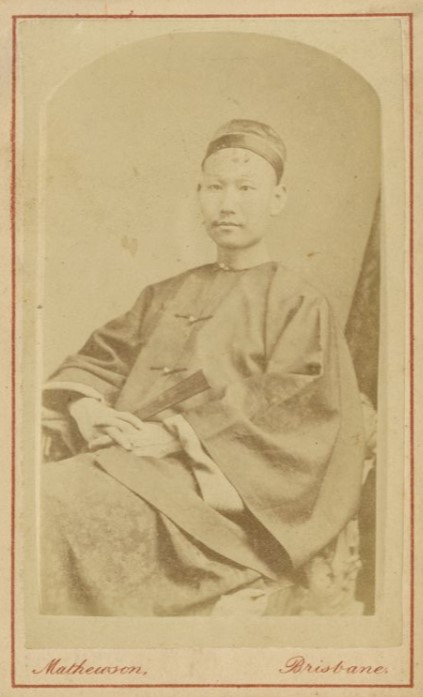
The cause of the disturbance was claim-jumping. An old-timer told the Argus that there were a lot of white men about the diggings who were too lazy to peg out their claims properly or sink a shaft and prospect seriously. The easiest way for these diggers to strike gold was to jump the claims of the Chinese, whose industry and success they found galling. If the Chinese objected to the claim-jumping, they were set upon with picks and shovels.

The whole line of road to town was a living mass of terrified Chinamen hurrying in from the murderous hands of the rioters.
Northern Argus
The Rockhampton Police – 20 kilometers away – were alerted to the affray, and came to Crocodile Creek in force, arresting nine Europeans. Those arrested were: Jeremiah O’Sullivan, Andrew Sponger (two charges), Abraham Solomon, James Donovan, William McCaul, Robert Kennedy, John O’Sullivan, John Stone, and Daniel Galvin.
The wording of the initial charge was archaic – that they did “with divers other evil-disposed persons whose names are unknown, but whose persons can be identified, unlawfully and riotously assemble and gather together at Crocodile Creek, with sticks, staves, and other offensive weapons, to disturb the peace of our lady the Queen, and being assembled and gathered together, and being then armed as aforesaid, did then and there unlawfully burn, pull down houses, shops, and erections used in trade.”
The Town
Gold was discovered at Crocodile Creek in 1865, and a township burst into existence almost at once. (In the gold rush’s early years, the town was known as Crocodile Creek, but it was rechristened Bouldercombe to make it sound a little less, er, rough.) By 1867, the population would have been between 3000 and 5000. People blew into town, staking claims, living in tents on the fields, or in rough-hewn shacks and cottages in the settlement.
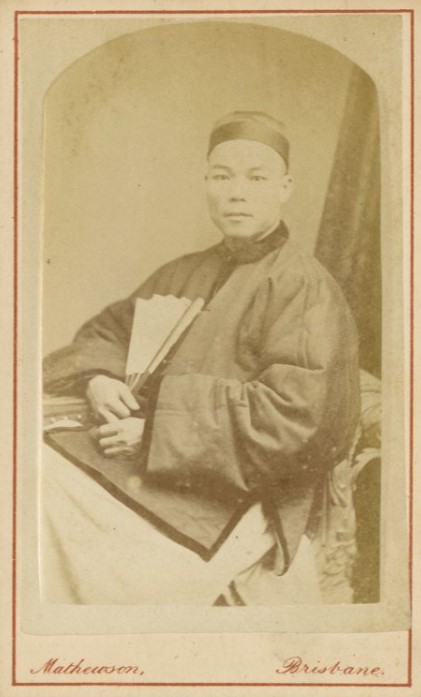
There was a large Chinese population at the Crocodile – many were diggers, but others ran pubs, barbershops, stores and market gardens, and had become part of the community. There was a venerable Chinese Doctor, Tack (Jack) Long. Some Chinese lived in grass humpies, others in cottages and houses. Several Chinese businessmen had European wives, who assisted in their businesses. Contrary to popular belief, not all of the Chinese people at Crocodile Creek were there to take as much gold as they could carry back to China.
The Europeans were also a mixed bunch. There were broke, desperate men seeking their fortune. There were families. There were businesses. Many locals were kindly, decent people who could not tolerate the ill-treatment of the Chinese.
James McClay, a builder, was chief among these – he sheltered Chinese people at his home, prevented some of their tents being burned, and faced down the rioters, one of whom said it was “a damned shame that a white man should go against his countrymen.”
Emma Young Sing, wife of the publican, also sheltered fleeing Chinese people. Her European origins saved her from personal harm, although her property was damaged.
Eliza Sam Ham, married to a Chinese storekeeper, found her house under attack, and one of the rioters threatening to “knock the place down on top of her.” She took up a tomahawk and ran out to face the rioters, who had moved on. Her house would be destroyed before the afternoon was over. Mrs Sam Ham gave evidence against the Europeans, saying “I’m not frightened of anybody.”
It is to be hoped that the ringleaders in this brutal and unmanly attack will be caught and punished for the benefit and safety of others, and their expulsion from the diggings will be an example to others for some time to come.
Northern Argus, 9 January 1867
The Trial
Unusually for the time, the Chinese witnesses at the trial were listened to and believed by the Court. They even stood up to some strategic cross-examination from the wily Ratcliffe Pring, who appeared for the rioters.
The main offenders – Daniel Galvin, Abraham Solomons, John Stone and Timothy O’Sullivan were found guilty of affray, and Chief Justice Cockle told them:
“Your misconduct led to the destruction of the property of the Chinese diggers, and the expulsion of many harmless persons, who were driven from their homes, their tents burnt down, and their property destroyed before their very faces – even the very blankets in which they slept were not spared. Such affrays cannot be tolerated.”
They were sentenced to nine months’ imprisonment in Brisbane Gaol.
Sources:
Northern Argus (Rockhampton, Qld.: 1865 – 1874), Wednesday 9 January 1867
Brisbane Courier (Qld.: 1864 – 1933), Wednesday 9 January 1867
Rockhampton Bulletin and Central Queensland Advertiser (Qld: 1861-1871) 23 March 1867
Northern Argus (Rockhampton, Qld: 1865-1874), Saturday 23 March 1867
(For this post, I have chosen to use photographs of Chinese Australians in Queensland, rather than drawings and illustrations made by European people.)
 Moreton Bay and More