
On January 12, 1872, Attorney-General Ratcliffe Pring attended Queensland’s Parliament in a rather excitable condition. His behaviour in the House led to his expulsion, then his arrest in Dalby while carrying out Circuit Court duties. (This is a repost of the Ratcliffe Pring story.)
A Detective hits town
On Monday 22 January 1872, a plainclothes police officer from Brisbane was spotted on the streets of Dalby. He loitered about all day, making himself conspicuous, although the residents of that town weren’t sure what he was looking for. That is, until he enquired about the time a certain coach would arrive in town. That gave the game away.
The most anticipated coach arrival that day was the one that would carry the Honourable Ratcliffe Pring, the Attorney-General, to town as part of the Court Circuit. Thanks to the electric telegraph, everyone in Dalby knew that the Speaker of the Legislative Assembly had issued a warrant to arrest Mr Pring, following a ruckus in the House. Perhaps the not-very-subtle plainclothes plod would arrest the highest law officer in the Colony, right on their very doorsteps?
The Career of Ratcliffe Pring
Ratcliffe was the name conferred on the infant son of Thomas Pring, a solicitor and commissioner for the peace in Crediton, Devon in 1825. The grandiose handle, a good public school education, legal training and a weak chest that led to his move to the Colonies, all conspired to create the character of Ratcliffe Pring. He would be an important man, but inclined to arrogance. He achieved high public office – a very big fish in a very small pond – but found himself at odds with self-made colonial men. He argued brilliantly in Court, but tempestuously in the legislature.
Pring’s career in Queensland began as Crown Prosecutor for Moreton Bay in 1857. When Separation occurred, he was appointed as the Attorney-General, a position he held for the better part of twenty years. Political life in the new colony was turbulent, and Pring was in the thick of it at all times.
In 1860, Ratcliffe Pring was the subject of one of a recurring series of “Parliamentary Pencillings” in the Courier. The writer is very unkind to the Attorney-General’s appearance and demeanour:

His head is not indicative of any great amount of intellectuality, and there is scarcely a noteworthy point about it, if we except the forehead, which is low, and is made to appear even more so by the manner in which the hair is parted in the middle – straight, disconnected, and rebellious locks coming down on either side, lessening considerably the visible area of the brow, and looking like anything but “wavy curls in silken softness falling.” The features are well cut and were it not for the sensual mould of the lower part of his visage, he might be considered handsome, though the complexion is rather swarthy, and the face small and round. His eyes are dark and bright but are not capable of any amount of expression.
However, the Penciller acknowledged the persuasive personality, rhetorical flair and single-mindedness that made Pring a successful Crown Prosecutor (at that time, the Attorney-General also appeared in the Supreme Court to prosecute cases).
When he is well up on a subject, and interested in it, Mr. Pring speaks both with fluency and effect, as he did on the night when the doom of pre-emptive right was sealed in the House, and he and his colleagues were striving all they could to avert it. His excitability sometimes carries him too far, and his irritability ditto, and it is then that he appears to least advantage… Whether pleading for a litigant, or defending the ministry, he identifies himself with his cause, – takes up the cudgels, or throws them down, con amore, – and spares neither pains nor trouble in prosecuting his aim.
Ratcliffe Pring steamed through the 1860s, winning and losing major cases, and winning and losing parliamentary office. He prosecuted the Editor of the Courier, Theophilus Parsons Pugh, for libelling the Government in 1862 over a dispute with Judge Lutwyche (and lost). Then another row arose in1865, which brought the subsequent Editor of the Courier, Thomas Blacket Stephens to Court, also for libel. The case had the jury locked up and deadlocked. A nolle prosequi was ultimately tendered.
Pring considered the proudest moment of his prosecutorial career in the 1860s was sending Gold Commissioner Thomas John Augustus Griffin to the gallows in 1868 for murdering two policemen.
1872 – the ‘Scene’ in the Legislative Assembly
Knowing the tempestuous and litigious nature of Ratcliffe Pring, no-one in the press or Parliament was game to say outright that he was drunk. He had ‘had dinner,’ or was ‘in an excitable state.’
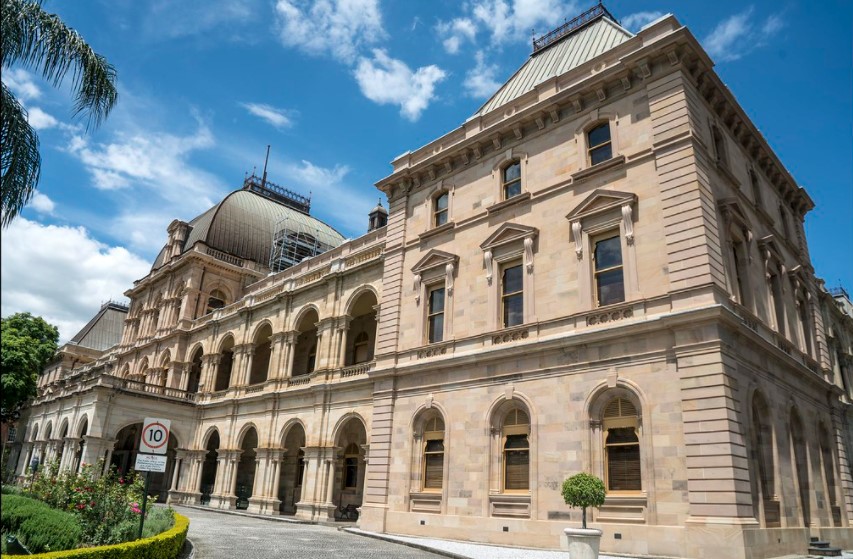

The sittings of the Queensland Legislative Assembly of 12 January 1872 began with Pring requesting, and being granted, a short leave of absence from the House to attend to prosecutorial matters. The House ploughed through a lot of business – Strangers in the house, the Electoral Districts Bill, the Married Women’s Property Bill, a debate on the work of shorthand writers in Parliament and the Savings Bank Bill. At one point, dinner was taken, and the House reassembled to hear the Colonial Secretary on the subject of an adjournment for one week. Then things became very average indeed.
Mr de Satge, the Member for Clermont, was in the middle of a long speech objecting to the proposal when Ratcliffe Pring rose to a point of order. From Hansard:
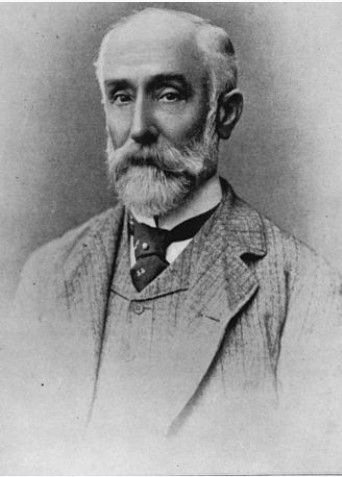

Mr. DE SATGE: What is the point of order?
The Hon. R. PRING : You sit down, sir.
The SPEAKER: The honourable member must not address the honourable member for Clermont in that way: he is out of order in doing so.
The Hon. R. PRING: The honourable member should sit down when I rise to a point of order.
The SPEAKER: What is your point of order?
The Hon. R PRING: I will not raise it now.
A prickly Mr Pring subsided, and Mr de Stage continued his objection to the adjournment. He said that he was “sick of kicking his heels about the town,” when Pring interrupted with, “Making love.” De Satge recovered enough to say that he would not take any notice of things Mr Pring said “after dinner.” The speeches continued.
Then the Member for Warwick, Mr Charles Clark, having heard Pring’s remarks to de Satge, decided to poke the bear.
Clark said that there “was no doubt that already the honourable member for North Brisbane, Mr. Pring, had used extremely offensive and personal remarks in regard to the honourable member for Clermont; but that was not at all to be wondered at, because that honourable member, when he entered the House after dinner, was invariably in such a state that he made displays of a similar character.” From Hansard:
The Hon. R. PRING : Mr. Speaker, I rise to a point of order. The honourable member is using gross personal remarks towards me.
The SPEAKER : The honourable member for Warwick is not in order in referring as he has done to the honourable member for North Brisbane.
The Hon. R. PRING (speaking from his seat) : And more than that, I will tell the honourable member that if he will come out from this place for five minutes, I will settle all things.
The SPEAKER : The honourable member is clearly out of order in using such language.
The Hon. R. PRING : The dirty wretch!
The SPEAKER : If the honourable member persists in his conduct, I shall have to–
The Hon. R. PRING: I apologise, Mr. Speaker. The honourable member referred to me in a grossly personal manner, and I replied to him, as I had a right to do.
Mr. CLARK : I did not hear all the honourable member said.
The Hon. R. PRING : I will kick you.
HONOURABLE MEMBERS on both sides of the House: “Chair, chair”; “Order, order.”
The SPEAKER: I must insist upon the honourable member observing order, or I must otherwise take steps to enforce it.
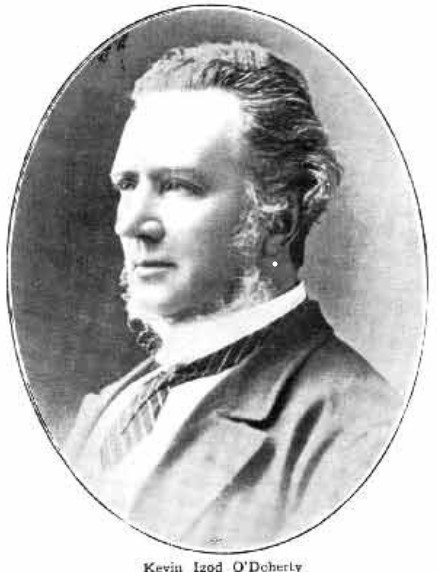
The bickering continued, with Pring becoming more choleric by the minute. Clark goaded him in response. The genial Dr Kevin O’Doherty, Member for North Brisbane, was trying to inject some reason into proceedings, when Ratcliffe Pring not very quietly lost it. From Hansard:
Dr. O’DOHERTY: The honourable member for Clermont had stated that he was very sick of coming down to that House, and kicking his legs about the town, as he could not have things carried on just as he wished. Now, he thought it was very unfair of that honourable member–
[ At this stage of the debate, and whilst the honourable member for North Brisbane was addressing the House, the honourable member, Mr. Pring, rose from his seat, apparently with the intention of leaving the House. When passing the bar of the House he made an attack upon the honourable member for Warwick, who was seated near to the bar, and attempting to seize the honourable member by the collar of the coat said, ” Come outside and we’ll settle it.” Upon which–]
The SPEAKER said, Sergeant, arrest that honourable member.
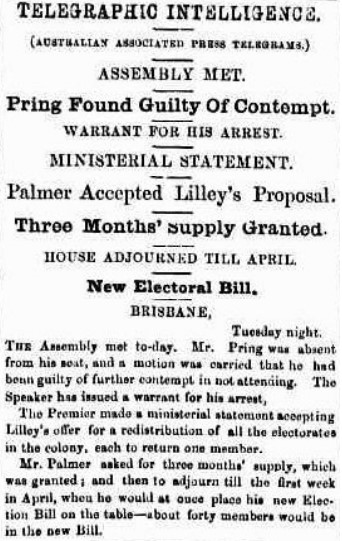
Mr Pring left in a hurry, did not report to the Sergeant-At-Arms, and shortly afterwards resigned in high dudgeon. Then, with Court matters to attend to on the Western Circuit, he left town. The town he left was aghast, and bitterly divided over Pring’s future.
Arrested in Dalby


As Ratcliffe Pring’s coach pulled up in Dalby, Senior Sergeants Stevenson and McKeirnan, took a leisurely stroll towards the Criterion Hotel, and waited quietly in the dining room. It appeared that the Attorney-General had been advised earlier that he would be taken into custody at Dalby, and he joined the policemen in the dining room in remarkably good humour. Once the formalities had completed, Ratcliffe Pring wandered about the bar and dining area, smoking and greeting acquaintances. At least one officer hovered nearby at all times, but made sure not to cramp the prisoner’s style. It was all quite civilised.
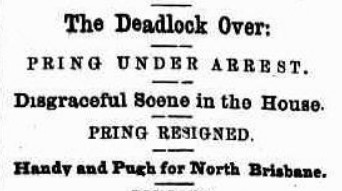
The following morning, Pring and Stevenson took the train for Brisbane. By the time the train had reached Toowoomba, Mr Pring’s time in durance vile had expired. A telegram reached Senior Sergeant Stevenson, ordering him to release the prisoner from his custody. The House was not sitting, and therefore he could not be surrendered into its custody. Mr Pring steamed on to Brisbane a free man.
Ratcliffe Pring was a free man, but, due to his resignation being accepted, he was a man who had an election to fight and a living to earn. On his arrival in Brisbane, he was greeted by 300 supporters and gave a stirring speech at the North Australian Hotel on all things Ratcliffe Pring-related. He was considered to be the favourite at the election, and campaigned sturdily in between working as a Queen’s Counsel, defending the very people he might have been putting in gaol just a few weeks earlier.
He was not vindicated at the election.
The Returning Officer declaring the state of the poll to be as follows: – Handy 506, Pring 331 and Pugh 153.
Brisbane Courier (Qld. : 1864 – 1933), Monday 29 January 1872
Ratcliffe Pring wasn’t done with Parliament, or with the office of Attorney-General. He spent the rest of the 1870s being elected and rejected, and was finally elevated to the Bench in 1880.
In the early 1880s, cardiac asthma weakened his health, and despite persevering with his career in dogged Pring fashion, he passed away on 26 March 1885. Managing his finances was not one of Ratcliffe Pring’s talents, and his estate amounted to £200.
Archibald Archer, Member for Rockhampton, tabled a motion in the House, requesting a gratuity to be paid to Pring’s widow. After a good deal of debate about the use of public funds to do what Ratcliffe Pring had failed to do – provide for his wife – a gratuity of £1000 was approved 25 to 13.
Sources:
Moreton Bay Courier (Brisbane, Qld. : 1846 – 1861), Saturday 25 February 1860, Moreton Bay Courier (Brisbane, Qld. : 1846 – 1861), Tuesday 23 October 1860 Brisbane Courier (Qld.: 1864 – 1933), Thursday 11 January 1872 Northern Argus (Rockhampton, Qld. : 1865 – 1874), Saturday 13 January 1872 Northern Argus (Rockhampton, Qld. : 1865 – 1874), Wednesday 17 January 1872 Rockhampton Bulletin (Qld. : 1871 – 1878), Tuesday 23 January 1872 Brisbane Courier (Qld. : 1864 – 1933), Monday 29 January 1872 Telegraph (Brisbane, Qld. : 1872 – 1947), Thursday 26 March 1885 Queensland Times, Ipswich Herald and General Advertiser (Qld. : 1861 – 1908), Thursday 7 May 1885 Toowoomba Chronicle and Darling Downs General Advertiser (Qld. : 1875 – 1902), Thursday 10 September 1885 Brisbane Courier (Qld. : 1864 – 1933), Saturday 12 September 1885, The Honourable Ratcliffe Pring QC | Supreme Court Library Queensland (sclqld.org.au), W. Ross Johnston, ‘Pring, Ratcliffe (1825–1885)’, Australian Dictionary of Biography, National Centre of Biography, Australian National University, 1974, Queensland Parliamentary Debates [Hansard] Legislative Assembly, Wednesday 10 January 1872.
 Moreton Bay and More