
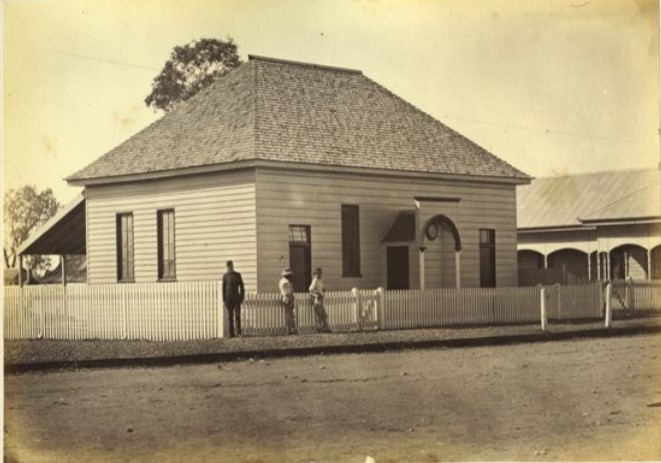
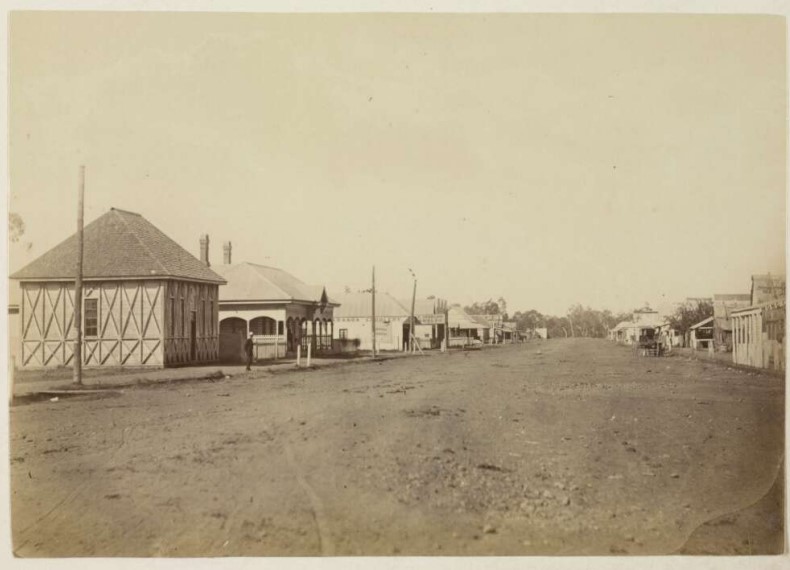
Roma was a young and thriving western town in 1873. It was surrounded by vast pastoral holdings – these were of great economic benefit to the region, but provided something of a mixed blessing when it came to power dynamics, politics and the law.

January – Escapees, Floods, Oddfellows and the Gaol.
A notorious escapee captured at Roma.
Alfred Allwood, a prison escapee of some notoriety, was arrested at Roma in January on a larceny charge. Allwood had been in and out of prisons since his teens, and during one stretch had been sent to Woogaroo Asylum in 1865, where the admitting officers were not fooled: “Very quiet and easily managed. Presents no appearances of mental disease. Probably feigning with the hope of escape.” Which is precisely what Mr Allwood did, being on the loose for a month before being returned to Woogaroo, which in turn returned him to Brisbane Gaol to resume his sentence.
Unsatisfied with his accommodations at Petrie Terrace Gaol in 1866, Allwood made use of the old “dummy in bed” technique to escape detection by the guards, climbed the walls using clothes props, and then started nicking things left right and centre around Brisbane, including a horse, saddle, and bridle. Which he made good use of, for 250 miles, until pursuing troopers caught up with him. Allwood did not escape from Roma’s lock-up, and was duly sent to be tried at Warwick for larceny. He was acquitted.
Flooding delays the mail and the Judge.
Floods swept over the Maranoa, with most of the region under water, creating a hazard for the mails, and threatening the upcoming proceedings of the District Court Circuit. Although witnesses from St. George made it through to Roma, the Judge was “quietly rusticating, water bound, at Surat, and unable to place himself in communication with those interested.” The sessions of the Roma District Court had to be delayed until February, when Judge Blakeney would find that there were worse things than being bogged down at Surat.
The Oddfellows and the Gaol.
Two major projects were completed in Roma in January 1873. The Gaol was finished, and the Independent Order of Oddfellows established a lodge – the “Loyal Western Star Lodge,” no less. The long-awaited facility’s grand opening (the lodge, not the gaol) was slated for early February.
A change of date for the Races.
The western calendar of horse-racing meets was perfected when Roma announced that it would be holding its annual Racing Carnival in March, rather than June. This meant that the sporting gentlemen of the region could progress easily from one meet to the other, with no double-ups or double-backs. Mr WB Murphy, a local grandee with a love of trophies, had purchased a much-fancied mare named Greyskim, and hoped to win honours at Roma, which was considered the most important meet in the district.
The township anxiously awaited news of the proposed railway link.
February – ‘Captain Starlight’ Gets Off Scot-Free. (And all hell breaks loose.)
Other things happened in Roma in February 1873, but they were effectively wiped from the collective memory by the trial of Regina -v- Redford (or Readford) held on February 11.

The Bowen Downs Station cattle stealing case.
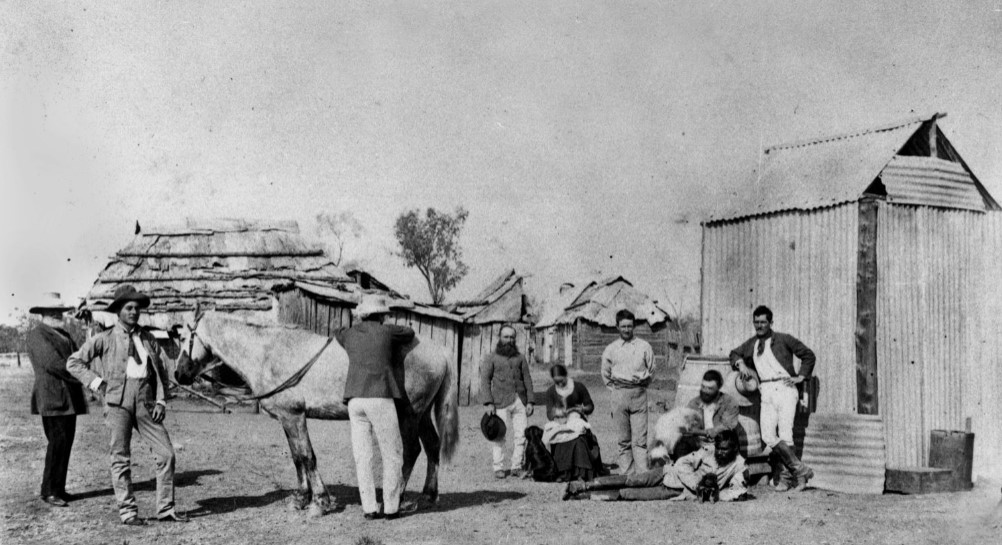
Briefly, there had been a very large theft of cattle from Bowen Downs Station in 1870, amounting to over 1000 head. One bull in particular was easily identified by a Bowen Downs agent when it turned up in other hands in South Australia – it was a rare and very valuable white bull and bore their brand. Various former station hands were arrested and tried over the ensuing years, with no success. Redford, who had been keeping a low profile as his co-accused went through the rigours of the law, was finally arrested in 1872, and sent to be tried at Roma.
The prosecution felt that they had a strong case. Judge Blakeney, free at last from water-logged Surat, had arrived in Roma for the sessions. The tenacious litigator Ratcliffe Pring, QC, instructed by Mr Hely, prosecuted. The witnesses were ready. The famous white bull had been fully identified and secured outside the court for witnesses to identify. What could possibly go wrong?


To start with, there was trouble with the jury pool. Only seven remained after challenges, and the rest of the jury had to be made up of men who had been put aside by the Crown. Said jury heard a series of prosecution witnesses, all able to identify the defendant and place him in South Australia with the rare white bull. They were amused by a former co-accused of Redford’s, James McPherson, who had escaped from the Lunatic Reception House in Brisbane and disappeared into New South Wales for a bit. McPherson played to the gallery and gave evidence in the manner of someone who wanted to be held not criminally responsible for his part in the theft, due to unsoundness of mind.
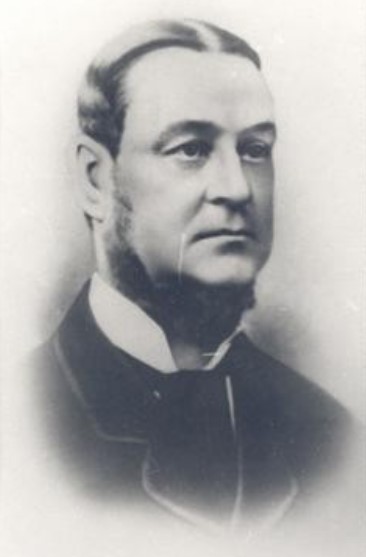
The summings-up of the prosecution, defence and judge were lengthy. The courtroom was packed. The jury retired, and deliberated for an hour, returning with a verdict of “not guilty.” Judge Blakeney, startled, asked them to repeat the verdict, and after having it confirmed, made a remark that would become famous throughout Australia.
“Thank God, gentlemen, that verdict is yours, not mine.”
Judge Blakeney, 1873.
“Captain Starlight”

The defendant, Henry Arthur Redford or Readford, 1841-1901, was a stockman and bushman, with a nice line in cattle-stealing. His exploits in the Bowen Downs robbery appear to have formed part of the early career of the fictional character Captain Starlight in Robbery Under Arms, the 1883 novel by Rolf Boldrewood. Redford never used the “Starlight” moniker, and Boldrewood based his character on several of the prominent bushrangers of the day, but the idea that Captain Starlight had escaped justice in Roma became part of the Australian bush ranging legend.
The press reaction to the Redford verdict was immediate, and unflattering to the Roma jurors. The Telegraph sniffed:
“Most people of quick perception, who carefully scan a jury of twelve on a criminal case, can tell precisely how the ‘verdict will go,’ and this is more especially observable when the panel is composed of comparatively illiterate men.”
The Brisbane Courier was equally scathing:
“Amusements are scarce about Roma, so an occasional diversion in the shape of a ‘judge and jury’ trial for cattle-stealing, is a delicious treat. The last sittings of the District Court were more than usually amusing, as there were several cattle stealing cases to be tried, and the jurors enjoyed it mightily.”
March – A Day at the Races.
The citizens of Roma spent February and March under attack from newspaper editorials and letter-writers throughout the colony and beyond for the verdict of the jury in the Redford case. The first March Roma Racing Carnival seemed to suffer as a result. The Queensland Times gloated:
I have just seen a sporting gentleman who has returned from Roma races, which he states were this year, for some unexplained reason, a most miserable failure. He says the whole affair was as dull as being at a funeral. Very few horses – not more than three I think he said – started for any race; the sport was bad; the general leading men where nowhere; Mr WB Murphy had only one horse there – Greyskim – which won the Consolation Stakes.
But the most remarkable part of the story is that when the “Marquis of Donnybrook” saw his favourite horse Caliph come in last for the Roma Handicap he fainted outright and had to be carried into the weighing-yard!
“When Hogan faints, and weak as woman turns,
It must be true ‘the devil lives and learns.'”
No band – not even the ubiquitous German band – was present; six ladies only attended the race ball, and, as the services of each musical lady were required in turn at the piano, there were only five available for partners. Worse still, one followed Hogan’s example and fainted – had to be carried out – reducing the number six to four of the “fair sex.” Roma! quanta de spe decidisti? (How much hope have you given up?) Can it be a judgment for the decision of the jury in the Redford case?
The Marquis of Donnybrook referred to was one Patrick Hogan, proprietor of the Donnybrook Hotel, a jovial and well-liked local identity. And sadly, the fainting fit was in fact a stroke, which proved fatal a couple of days later. (Unbeknownst to the Queensland Times writer, at the time of publication, though).
April – If you can’t find a cattle rustler guilty, you can’t have a District Court.
The Interdict.
On 5 April 1873, the Queensland Government Gazette included the following proclamation:
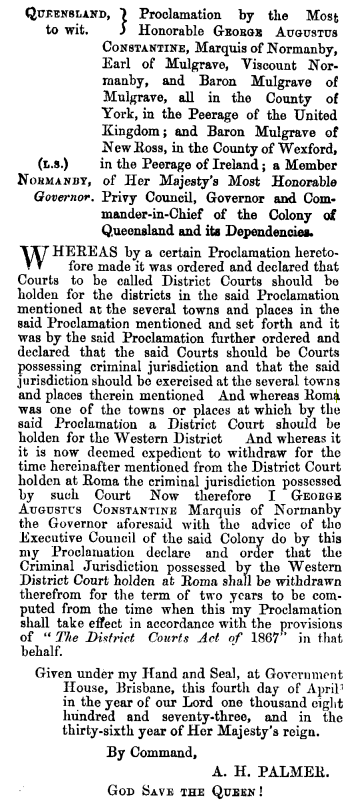
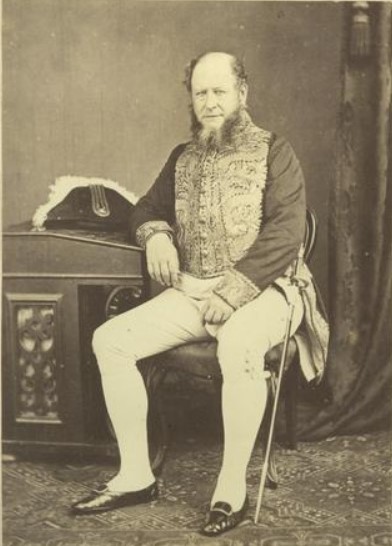
Once they’d read past the myriad titles and honours enjoyed by the Governor, the Marquis of Normanby, the people of Roma felt the sting in the proclamation. They were not permitted to hold criminal trials for two years, on the ground that “it is now deemed expedient to withdraw” them.
While the Telegraph sneered that the young blades of the district could enjoy as much cattle-stealing as possible until the order was revoked, Romans (as they called themselves) worried about the effect the withdrawal would have on their community and economy.
An Insulted Roman.
The Redford case kept the letters pages of most Queensland publications busy for the rest of the year, but one letter has a certain resonance. From an “insulted Roman,” it makes some points about the cattle industry’s influence on the Government at the time.
“The character of Roma, its commercial interests and the good name of the people, has been sacrificed as a peace offering to the “White Bull” of Bowen Downs, the owner or part owner of which, by a strange coincidence, is one of the best and firmest supporters of the present Ministry.”
May – Parliament and Talk of Ladies!
Mr Macalister has Views.
In May, Mr Macalister raised the issue of Roma’s criminal jury interdict in in the Legislative Council. He raised it briefly, and rather timidly, but he raised it nonetheless. He stated, on behalf of the people of Roma, that for the Government “to act in this manner simply because twelve men on a jury refused to give a verdict pleasing to the Government, appeared to him to carry absurdity on the face of it.” Having done his duty by the Maranoa district, he went on to other matters, right speedily.
If you want to see ladies, come to Roma!
On 27 May 1873, the correspondent of the Dalby Herald attended a Grand Ball at the now jury-less Courthouse in Roma. He waxed lyrical, albeit tinged with that snicker reserved for his observations of the activities of the Romans:
“On Tuesday night the “large ones” of this town held a grand ball in the Courthouse, which was magnificently decorated for the occasions.
“But talk of ladies! If you want to see ladies, come to Roma.
“I am told that for the week previous they were mentally engaged in thinking of all the most modern improvements in style.
“Some represented butterflies with six wings, others with a tail representing a comet, the hair of some disheveled, others bore it in jetty ringlets, while some (and not the worst style) were keeping it coiled tightly like a boa-constrictor, and all with the finest white gloves from the kid-market, the gentlemen bearing the same high order with a fine black suit, a new dux collar and the same white gloves mentioned in the preceding chapter of this “little work.”
“The company were supplied with an odiferous supper and plenty of old Jamaica rum in bottles, of which so ate unsparingly and drank copiously in order to leave no balance of their two-guinea admission, commencing at about 8 pm and continuing until an early hour next morning, using their limbs freely at quadrilles, polkas etc.”
An “odiferous supper?” Hmm. At least some of the Roma locals were enjoying themselves, after the miserable race meeting, and being depicted in the national press as barely literate cattle-thief enablers. Tragically, no known photographs of this event exist, and I have had to range far and wide to find depictions of the fancy dress of the era.
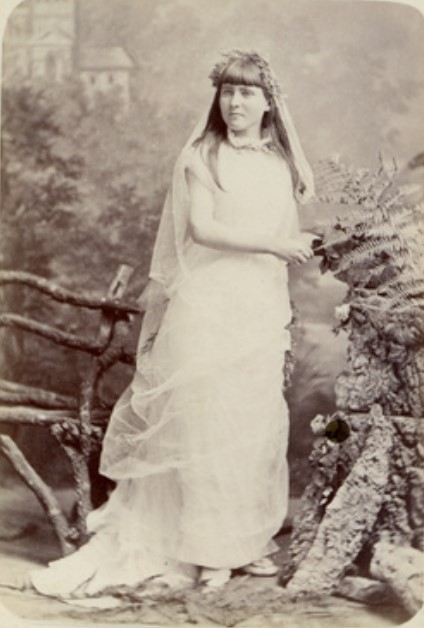
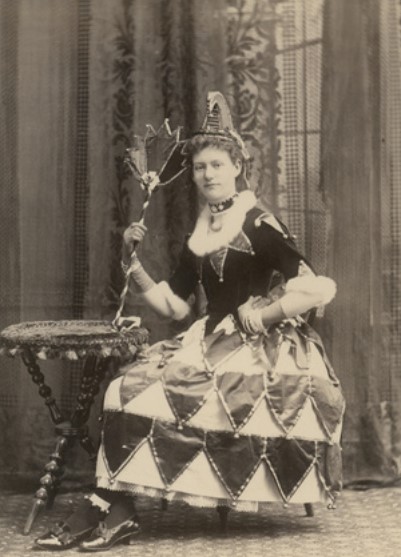
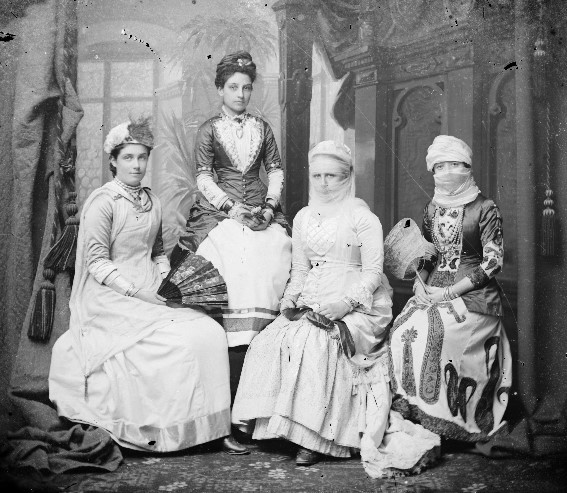
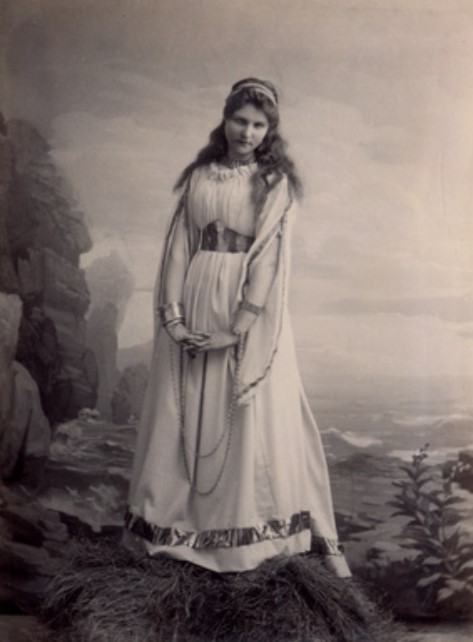
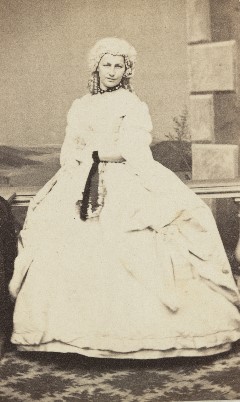

(Most of these photographs are from a costume ball held in Adelaide a few years after the Roma festivity, and I suspect that the Roma ladies might have been a tiny tad less winsome, but you get the idea. The 19th century adored a bit of a dress-up. All are via the National Library of Australia.)
The township anxiously awaited news of the proposed railway link.
June/July – the Roma Papers and the Condamine Flood.
In June 1873, the papers leading to the suspension of the District Court in Dalby were tabled before the Legislative Assembly. They showed that on 6 March 1873, the Attorney-General, John Bramston, wrote to Judge Blakeney for his account of the recent criminal sittings as Dalby. There had been a scathing leader about the case in the Sydney Morning Herald, and that had spurred the Attorney to make some enquiries. It’s one thing to have the jury system out West mocked in the Courier, quite another to have scorn poured on it by an august southern newspaper. Read by gentlemen.
Judge Blakeney was only too happy to oblige. He set out the strength of the case, then turned to the jury selection. One juror, he said, displayed a leaning towards the prisoner by his questions to counsel. “I would respectfully point out that the jury list for the Roma district is so constituted, that when the counsel for the prisoner exhausts the challenges allowed under the Act, the more respectable persons mentioned in the panel are set aside, and the remainder, exclusive of those set aside by the Crown, are of a class whose sympathies are almost always with the prisoner.”
Also included in the documents were a couple of letters from various Esquires of the district, deploring the verdict in the Redford trial. Now Roma knew who had spoken against their townsfolk.
Flooding rain.
Of more immediate concern to Roma in June was the Condamine, which was in flood. Mails were delayed, coaches stranded, and telegraph lines damaged. On one road, the bridge had completely disappeared, and passengers by the Cobb & Co Coach from Roma were desperate to cross the swollen river. The punt-man had long quit his job and left town. A friendly local on the opposite bank tied the punt to its ropes. Badly, it turned out. The gentlemen seeking to cross persuaded “two blackfellows” to get into the churning water and get the punt, which they very kindly did. The rope could not be found.
Facing another night in the cold, the gents cadged some wood and a barrel and decided to make a raft to take them across. Having failed to take the speed of the water into account, they barely escaped with their lives, succeeding in crashing into two large trees before exhausting themselves getting back to the riverbank they’d just left. The raft washed up downstream in pieces. I suspect that the two indigenous men they’d roped into dragging the unmoored punt across were hidden in the nearby bush, laughing themselves silly. And the man whose fence they’d “borrowed” to make the raft had to take them to Court in November to get compensation.
August – The Pigs Leave Charleville and the Show Comes to Town.
What the heck was that noise?
Pigs were required in Roma, and Charleville kindly provided a couple of hundred, whose unhappy progress through that town created a huge stir. Perhaps the poor creatures sensed what awaited them at the end of the journey.
“The whole of Charleville and its immediate neighbourhood was last week thrown into a state of in describable alarm; nothing like it has occurred since the awful fright the enthusiastic Scotch gave the Japanese ambassadors in Holyrood Palace, by the sudden burst of the most infernal screeches and screams from the national instrument.
“The fright of the Charleville inhabitants was caused by a noise as nearly resembling that of the bagpipes as any merely earthly noise possibly can do—namely, by the peculiarly musical gamut proceeding from the throats of between one and two hundred pigs which had been collected from the bush and scrub on the Warrego and driven towards Roma much against their inclination.
“Their intended arrival, some time or other, had been previously announced in the Dalby Herald. Mr. Hewitt is commander-in-chief of this perilous expedition, Mr. Simon Carrol being second in command, whilst the rear-guard is formed by Mr. ex-Native Trooper Tommy. What an ear for music Mr. Hewitt will have when he shall have arrived in Roma! and undoubtedly Simon will be the most popular carol of the day, to which “As Joseph was a walking, He heard the angels sing,” will yield the proud pre-eminence it has so long occupied.“
The Show came and went.
The first Great Western Pastoral Association Exhibition was held in Roma in August 1873. And the rain pelted down, restricting the presentation of the area’s famous livestock. The Darling Downs Gazette was in no doubt that the annual event would become the “fete day of the West,” but couldn’t help but damn the event with faint praise. “The general tone of the meeting speaks well for its promoters, who spared no trouble to bring the exhibition to a desirable issue, and there is no doubt of the beneficial results arising from it alike to all classes, both town and country. The exhibits, although not numerous, show the interest the neighbouring stockholders have taken in its inauguration.” Which is a lot of words, when “boring” would do.
The township anxiously awaited news of the proposed railway link.
September – Politics, Roma Style.
Mr McIlwraith had a cool reception.
“September 19. A crowded meeting of the Electors was held here last evening, at which Mr McIlwraith delivered an address. He met with a very cool reception.
“A resolution was put to the meeting: –
That Mr McIlwraith is not an eligible candidate for Maranoa.
“An amendment was put: – That Mr McIlwraith is a fit and proper person for the representation of this district.
“The amendment was put and negatived, and the original motion carried.”
Whoa. Harsh.
But they liked Mr Miles.
“Mr Miles addressed the electors last evening, there was a very large and enthusiastic meeting, and a vote of confidence in the gentleman was carried unanimously.”
October – the Charleville pigs arrive, a plucky woman saves the coach, and Judge Blakeney is hooted.
“Lord! Bacon!”
The Charleville pigs arrived in Roma, but the townsfolk were not allowed to forget the Redford trial, at least if the Queensland Times had anything to do with it.
“The Charleville pigs arrived safely in Roma; I am told (but I won’t vouch for the truth of the story) that the herd was met at the entrance to the town by a deputation consisting of the twelve gentlemen who formed the “white bull” jury.
“Immediately on meeting, the deputation raised their hands heavenward, exclaiming, “Lord! Bacon!” by which the intimated their knowledge of the fact that the “inductive” lord of that name had never been “cured” of selling justice till he was disgraced. The pigs gave a sympathetic and significant grunt in reply.”
Miss Morgan saves the Roma coach.
The Roma to Dalby coach very nearly met with disaster, but for the pluck of one Miss Morgan. The coach hit a rut in the road, and the driver, Mr Cunningham was thrown from the vehicle, which rolled over him. Cunningham called out to the coach’s only passenger, Miss Morgan, to take the reins, which she did, right pluckily, pulling up the horses herself.
Fortunately, Mr Cunningham was not badly injured, and the coach with its passenger and goods made it to Dalby with a tale to tell.
Three groans for Judge Blakeney.
Judge Blakeney still had to conduct Civil and non-jury cases in Roma, and in October he had two civil matters to hear and determine. There was a lot of local interest in the cases, but nothing compared to the interest in the presence of the learned Judge after the release of the Roma Papers.
The bare facts of His Honour’s departure seem to be that he was heckled by some Roma residents as his coach left town after the hearings. Metropolitan newspaper reports stated that “between seventy and eighty of the leading citizens of the place assembled and greeted him with three groans, this being his first visit here since his report throwing discredit upon the Roma jurors was made public.” The Dalby Herald retorted that “the ‘demonstration’ was the act of about five and twenty, and certainly not one respectable citizen amongst them.”
Whether it was a large or small crowd, respectable or ruffian, the booing of the Judge was deplorable in the eyes of the colony at large and it had an unfortunate result. The jury trial interdict was due to be lifted, but after hearing of the demonstration, the Executive decided to let it continue indefinitely. (Due to the cost and inconvenience of sending trials elsewhere, the ban was finally lifted in January 1874.)
November – Three-Fingered Jack and More Politics, Roma-Style
A bushranger and killer on hunger strike.
The police stations and gaols of the West earned their keep in November 1873, largely due to the efforts of a St. George copper, Police-Constable Brady. He had captured John Garbett, the Taroom murderer, an accused rapist, an indigenous man accused of murder, and a bushranger and accused killer, John Moreland aka “Scranny,” aka “three-fingered Jack.”
Roma found itself with a murder accused in its precincts. John Moreland was lodged at Roma Gaol, awaiting his remand North to face trial for murder and robbery. He had been on the run for three years, after a stick-up at the Gilbert River ended with him shooting dead one Donald Simpson.
At Dalby lock-up, John Garbett was on hunger strike, rather than cooperate with the police in his investigation. Moreland was doing the same at Roma Gaol – “endeavouring to starve himself to death.”
Both Garbett and Moreland died in Brisbane Gaol. Garbett was executed by hanging at Brisbane on 10 March 1874. John Moreland, who was lodged at Brisbane in preparation for the journey North to be tried, died of general wasting and dysentery at Brisbane Gaol within days of his arrival. Clearly his hunger strike in custody took a toll.
They had no confidence in Mr McIlwraith, but they elected him.
By the end of November 1873, the polls were in. The region had decided to elect Mr Thomas McIlwraith, despite his chilly reception at Roma some months earlier. Mr McIlwraith went on to become Sir Thomas McIlwraith, Premier of the colony of Queensland.

December – delightful thunderstorms, a completed hospital and a rich Christmas Race meet.
December found the township suffering a heatwave, with temperatures reaching 104 degrees in the shade. The Brisbane Courier’s correspondent found the thunderstorms that whipped up in the afternoons “delightful,” cooling the air and refreshing the soil. Everything was growing, from the Chinese market gardens to the crops and grazing fields.
The Hospital was finished in December, its design eminently suited to the Queensland climate – wide verandahs, airy spaces and hilltop aspect. “‘A wide door and effectual’ for the relief of human woe in the shape of diseases is thus opened, as all classes and sexes have free admittance and every form of disease can be treated.” The modern Roma Hospital, while a model of 21st century efficiency, has none of the gentle charm of the old buildings.

The Redford jury and the District Court’s suspension still hovered over the letters pages of Queensland’s newspapers, but the end to the ban was drawing near.
Having elected Mr McIlwraith, the township anxiously awaited news of the proposed railway link.
Finally, at the end of a turbulent year, Romans could have a flutter at the Christmas Races. Held on 26 and 27 December 1873, they offered a prize pool of £120, including a Town Plate of £20 for the first day, and a Publican’s Purse of £30 for the second.
And with that, a defining year was over.


 Moreton Bay and More
1 Comment