
Some daring escapes from regional lockups in early Queensland.

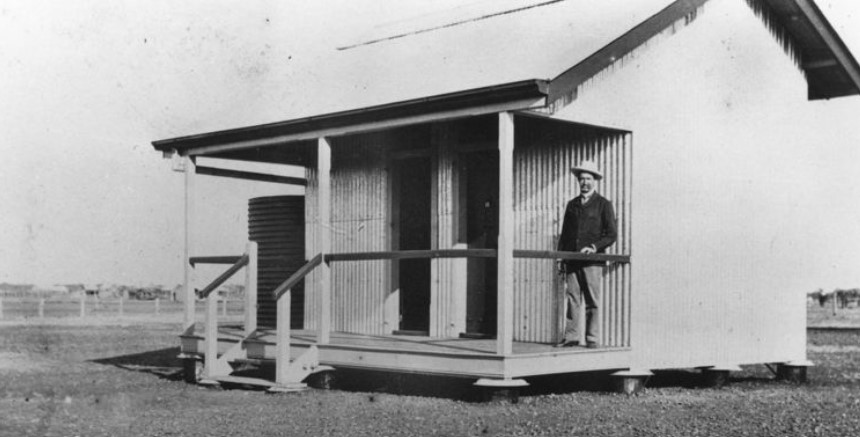
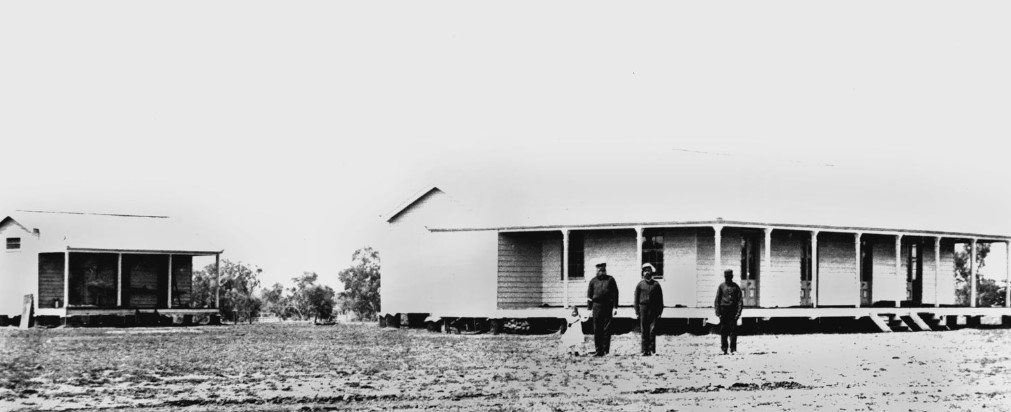

Top: Richmond Police Station, Bottom l-r: Boulia Police Station’s Cells, Surat and Tweed Heads Police Stations.
As the population of Queensland spread out across the vast colony, so did the Police Force. The trouble was that the stations and their lockups were erected with Government funds and at the direction of bureaucrats. The criminal classes of the colony were hardly troubled by the appearance of these ramshackle establishments, and had quite a merry time of it breaking out of just about everything they were put in.
Toowoomba 1861 – Mrs McDonald vs Escapees.
On the morning of Tuesday 9 April 1861, the constables stationed at Toowoomba were all out doing their civic duty. Collecting the census. The Government of the new colony lacked the necessary funds to employ census-takers, and found it necessary to send the plod out to do it, particularly in regional towns.
Thus, Constable McDonald, the lockup keeper at Toowoomba, was obliged to leave the lockup in the hands of Mrs McDonald, who was also taking care of their littlies.
At 11 am, Mrs McDonald was bringing in water to the prisoners, when five of them rushed the door. Mrs M, child in arms, succeeded in shutting the door on two of the five, but the other three got clean away. It is not known if they had given their details for the census prior to taking leave of the establishment.
Brisbane 1864 – Falkenberg Flees.
It was quite a coup for the Brisbane lockup to have one Alfred Falkenberg, a notorious forger from Sydney, in its cells.
Not only did they have custody of Falkenberg, but they also had an actual Sydney Detective in their midst. The great man himself, Detective Elliott, who had pursued his quarry through two colonies, paid Falkenberg a quick visit in his cell at 9 pm. All was well.
At midnight, the guards changed shifts, and found that their celebrity guest had left the building.
On inspecting the cell, it was found that Falkenberg had used a sharp instrument to cut away the wood surrounding the iron bars of his cell window, and had been able to loosen the whole apparatus enough to get out without being detected. (Pat-down searches were clearly not a priority.)
All the available members of the force scoured a twenty-mile radius, but the only sighting of the prisoner was made by the ferryman, who had taken a mystery passenger across in the middle of the night.
Dalby 1865 – Get Naked and Get Out.
The contemporaneous reports are sheer perfection. It would be criminal to interfere with them:
“The lock-up and cells of Dalby are a wretched black hole, and a disgrace to the Queensland or any civilised Government. Richard Heaslop was confined with another man, on a charge of horse-stealing, in a cell six feet by four feet. The ceiling, which is about seven feet from the floor, is composed of rotten pine boards, and when once on the top of the ceiling, he had only to jump into the lock-up keeper’s room, who was compelled to keep the door open, as the thermometer was 101 in the shade.
“At three o’clock on Sunday morning the two prisoners stripped themselves stark naked; Heaslop slipped his handcuffs and got off the chain; the other man could not get off his handcuffs but released himself from the chain. They then helped one another through the ceiling, tearing away the wood with their hands. Heaslop jumped down, followed by his mate.
“In vain the lock-up keeper, Macdonald, and his wife, who acted with indescribable pluck, strove to stop them; their naked bodies gave no hold, and whilst striving to keep them both, the two got away.
“At one blow Heaslop knocked the lockup keeper on one side, with another kick he satisfied his wife, and with one bound he went over the children’s bed, through the calico walls, and was free; he at once made through the bush to a station, where he has a sweetheart, not five miles away, and there is not much chance of his being taken in Queensland if the sun can once more set on him.
The second prisoner was easily apprehended at daybreak – he was still starkers. Heaslop remained at large, though:
“Great was the consternation of John, the groom at Mr. Gayler’s this morning, when rising at daylight, to find that the harness room had been broken open, that all the horses had been let out of the hay yard, and that two saddles, a traveller’s swag, with a revolver and a lot of other things, had disappeared. Heaslop had on his escape from the lock-up, skirted round the town, and had retraced his steps to Gayler’s Hotel. Here he crawled into the hayloft, naked, cold, and hungry, whilst the Police Magistrate and the constables were searching Greenbank and scouring round the bush for miles.
“Secure in the middle of the hay, he lay all Sunday, and on Monday morning about 3 o’clock he issued from his hiding place, broke open the saddle room, dressed and equipped himself from a gentleman’s swag, took his best horse and revolver, and having caught another horse, saddled him and packed him, but without a hat proceeded down towards Drayton.”

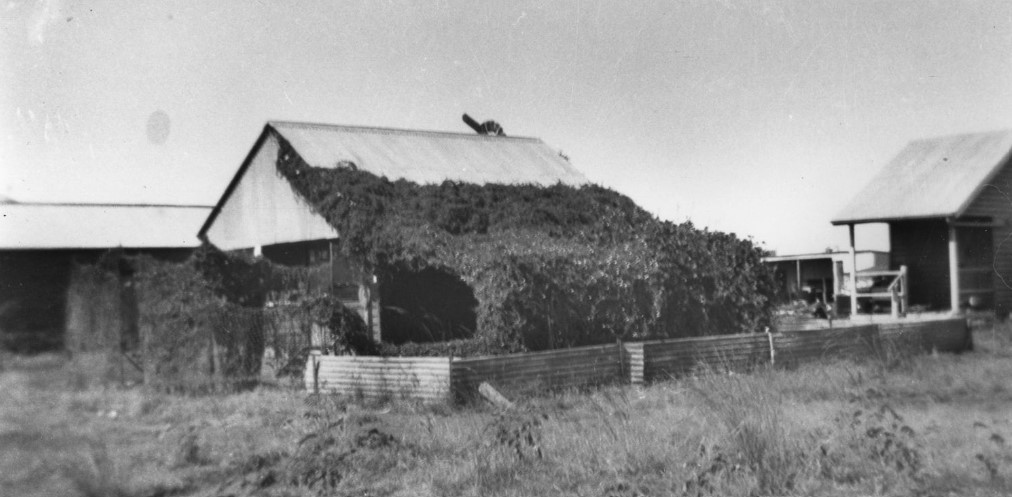


Top: left-right: The police facilities at Springsure, Kjabbi and Landsborough. Bottom: Jundah Police Station. Presumably, the rampant bougainvillea at Kjabbi provided a natural deterrent for potential escape attempts.
The Night-Bucket Breakout – Taroom, 1870.
Frederick Bowyer (under arrest for horse stealing), and two other desperadoes had evidently grown tired of the primitive surroundings of the Taroom lockup.
They called to Sergeant Hill, and asked him nicely if he could take out the night bucket (comfortable ensuite facilities are still not featured in lockups, apparently). Sgt Hill suspected nothing, and entered the cell alone.
Bowyer “rushed on him like a tiger,” and the three men took Hill’s weapon and cleared out.
What Hill lacked in foresight, he made up for in gumption. He took his heels and chased the escapees. Bowyer tried to shoot the sergeant with his own weapon, but Hill was able to tackle him before he could fire, and secured him back in the lockup. Presumably Bowyer’s night bucket needs were not met with such prompt attention after that escapade.
Bowyer would late plead guilty to the escape attempt in the hope of receiving no extra punishment, but the Judge “could not shut his eyes to the aggravated circumstances” of the breakout, and Bowyer copped another eighteen months.
Coming soon: The St Helena Escapes and A Lifetime of Crime.

 Moreton Bay and More