
Once larrikinism appeared in Queensland, it seemed nothing could stop its growth, much to the horror of right-thinking Christian white people all over the Colony. Larrikins were first noticed in Brisbane, but were soon observed west through Ipswich, then Toowoomba, gradually creeping out over the entire Darling Downs, as far as Warwick. The evil spread north with the population, troubling Rockhampton, then Gympie, Maryborough, Mackay and the goldfields.
Larrikinism became the term used to describe a variety of anti-social behaviour, and in the latter part of the 1870s, and was used to cover everything from nicking tarts from a church vestry to manslaughter.
Journalists, politicians, upstanding citizens, and of course the clergy, puzzled over the cause and cure of this curse. The police were apparently never around when youths gathered threateningly on street corners and passed insulting remarks to churchgoers. The world, as colonial Queensland knew it, was ending.
Larrikin behaviour in the 1870s.
Offending churchgoers and upright citizens.
In 1876, the larrikin element of Brisbane grew tired of upsetting exclusively the parishioners of All Saints Wickham Terrace. With great ecumenical spirit, they annoyed Catholics, Anglicans, Wesleyans, and even audiences for unaffiliated street preachers.
Unlike the pigtail-pulling All Saints children, these larrikins were not part of the congregation. Groups of teenage boys and young men would loiter in the precincts of churches and make rude comments to decent churchgoers as they went to their places of worship. Some services were interrupted by “vulgar, indecent” music hall songs performed by a larrikin chorus outside.
The evensong service of Brunswick Street Anglican church became a favourite taunting opportunity, making it, in the words of one parishioner, ”scarcely possible to proceed through any quiet street after dark, without being assailed with ribald abuse from these blackguards.” In Rockhampton, a group of urchins ran alongside a carriage full of church ladies, making inappropriate remarks, and a Sunday School teacher was humiliated by larrikins disrupting her lessons.
The precincts of Brisbane’s St Stephens Cathedral provided a comfortable place for raucous youths to lounge about, waiting for the righteous to emerge, ready to be insulted. Young ladies attending a church in Red Hill endured “the most indecent remarks” as they entered. At St Thomas’ Church in South Brisbane, the larrikins offended the noses of parishioners as well as their ears. They reeked of smoking their version of tobacco – dried cabbage leaves steeped in poppy juice, which left a smell described as “quite poisonous.”
Church picnics and fetes were not safe from the scourge, either. In Gympie, larrikin youths disrupted a Wesleyan Tea Meeting by making noise outside the building. When the harassed attendees repaired to the vestry to take tea, they found that their tarts had been stolen. At the Fortitude Valley church picnic, hungry larrikins helped themselves to cakes.


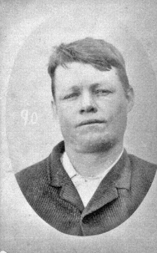
Lounging about and insulting people.
Churchgoers were not the only targets of the new class of nuisance. Groups of young men and boys would congregate on street corners and insult passers-by. Kangaroo Point and Queen Street were favourite locations for public abuse. When not insulting the upright, larrikins were pestering nurse-girls in the Brisbane Botanical Gardens and annoying visitors to the cemetery.
Rockhampton’s larrikins were at first fond of throwing stones. They threw them at the Immigration Depot with such vigour that they frightened a Chinese man who lived next door. He made the mistake of trying to defend himself and was promptly arrested. They threw rocks at each other, and destroyed shop windows instead.
After a couple were sent to the Reformatory for this, it appears that the Rocky larrikins preferred to steal the occasional hat, lounge about, and insult people. A whole band of them sat on the riverbank opposite the Lunatic Reception House and yelled insults at the unhappy arrivals there.
Benches and shade trees were placed along the Esplanade, for decent people to enjoy river breezes, and larrikins used them to loaf about on and make insulting remarks. They were shooed from the benches. The benches were destroyed. Then the Rockhampton larrikins turned their attention to infrastructure.
Sabotage!
The larrikin revenge on Rockhampton began with a bit of nocturnal noisiness and tampering with gaslights. Then it became quite creative.
A Rockhampton cabman’s horse was taken from its post and introduced into the Sub-inspector’s yard, where it proceeded to trample the meteorological instruments. When the gauge was replaced, days later and at considerable Government expense, it was almost immediately found stuffed with clay.
Then Rockhampton’s one o’clock gun failed to fire, to the alarm of many who apparently relied on its loud discharge frightening them out of their wits to tell them it was one o’clock. An investigation discovered that rocks and gravel had been stuffed into the barrel. That was hastily removed, but still the gun wouldn’t work. Further examination showed that there was a cork stuck firmly in the touchhole. This meant that for short periods people in Rocky were apparently unable tell the time or record the weather.
Other harmless larrikin amusements included ringing church and hospital bells at odd hours, summoning furious wardsmen and vicars. Customers of the Electric Telegraph Office at Mackay were horrified to find that the blank slips stored below the customer counter had rude words scrawled on them.
Larrikins adored a fete, fair, picnic or Exhibition. In Brisbane, when not attempting to sabotage a model windmill, they changed the prize tickets on exhibits at the Brisbane Exhibition, causing great distress and confusion to the exhibitors of prize-winning produce. Sometimes younger larrikins were seen to pilfer or tamper with the exhibits.
Ipswich residents with vines or fruit trees in their gardens would find them denuded, the only clue to the culprit/s being the sound of scampering feet fading into the distance. In Toowong, householders found that local youths had allowed calves into a cow’s enclosure, and were appalled to be thus deprived of milk in their tea.
Making the night hideous.
“Imagine the evil consequences of allowing our youths to be under the impression that they are permitted to get drunk once a year!”
A correspondent to the Maryborough Chronicle, in all seriousness.
Decent citizens in the 1870s expected to sleep through the night – every night – without interruption, thank you very much. Including New Year’s Eve. The prospect of one noisy night each year was too much for the correspondents to the various local papers. Toowoomba and Ipswich actively dreaded the prospect of people banging tin-kettles and singing in public, and wrote nervously to their Editors, begging for peace. Luckily for them, the constabulary had read their pleas and showed up in force to prevent any merry-making whatsoever.
“For several years past all the larrikins, rowdies and loafers in the district congregate, at the advent of the new year, and march in a disorderly procession through the town playing selections from popular negro melodies upon kerosine tins, pots, frying pans, and other most unmusical instruments.” Gympie 1876. (The following year, the Good Templars invaded the town in numbers, and put a stop to any noisiness.)
In Dalby, a peeved resident was moved to dip his pen in ink and write to the Editor when his rest was disrupted by a group of young men who walked through the town, singing. They “localised” several popular items like “Old Don Pon’s knapsack was number 99,” “Kiss me, old Mother,” “Put me in my flea-bitten little bed,” “Dear old Mother I have come Home to die,” “Marching through Dalby,” (substituted for “Georgia”). Wrote the gentleman: “Those same young gentlemen, when approaching the corners of Cunningham and Drayton Streets wound up with the National Anthem.” Geez mate, at least they sang “God Save the Queen.” They might be ruffians, but they were loudly loyal to the doughty old woman in black on the other side of the planet.
Petrie Bight in Brisbane was also the site of a moonlight serenade that went unappreciated. “Last night a gang of noisy ruffians assembled about midnight near the Nairnshire, ship, at the wharf next the Custom House Ferry, and made the night hideous with yells, oaths, and discordant singing – a perfect Babel of noises, in short.”


The war on brass bands, circus performers and actors.
Larrikins, despite their fondness for noise-making, appeared to exhibit a particular hostility towards brass bands. Sunday band concerts at the Botanical Gardens were disrupted by youths pelting pellets of soil at the bandsmen. (Cue sternly worded Letter to the Editor). The rehearsals of the Roma Amateur Band at Mr Johnson’s wool room were abandoned after larrikins snuck a cat into the room, followed shortly by several yelping dogs in hot pursuit. Shenanigans ensued, unsurprisingly. (Cue very sternly worded Letter to the Editor…)
Theatre performances, particularly in Ipswich and Gympie, were not safe. In Ipswich, young theatre patrons expressed their appreciation of an evening’s entertainment by whistling instead of applauding. The horror. Burton’s Circus performers estimated that Ipswich larrikins were the worst they’d encountered. It was there that larrikins cut the tent ropes of the “Rockhampton Blondin,” a misdeed that was fortunately discovered before the rope-walker was due to perform.
At Gympie, the professionalism of the actors in a much-lauded performance of “The King’s Musketeer” was severely tested by an audience spiked with hooting youths, whereas Burton’s Circus performers, to their evident surprise, escaped relatively unscathed there.
Besieging the Brisbane Volunteers.
The Brisbane Volunteer Rifle Range was sensibly located adjacent to the Brisbane Hospital, residential properties and was a stone’s throw away from a grassed area frequented by cows and goats. The Volunteers found it impossible to conduct target practice, because larrikin ruffians would crouch near the targets, hoping to collect the lead discharged. The local scamps and innocent pedestrians, not to mention the local cows, appeared not to comprehend the existence and meaning of the “danger flag,” resulting in a lot of hasty calls to cease fire.
The Volunteer Cadets fared no better when they tried to hold a football match. The ball was thrown in the air to start the game, and landed in the rough hands of local larrikins, who proceeded to play with it. On the rare occasions a cadet managed to gain possession of the ball, the lead larrikin, a youth with “a most forbidding face” would challenge said cadet to a fight.
Outrages to decency.
To the great amusement of their friends, and the horror of all upstanding attendees, a group of larrikin lads dressed as ladies to take part in a picnic race event in Ipswich. But cross-dressing in jest was a lot easier for spectators to bear than “parading the Yatala Bridge in a state of nudity at twelve o’clock on a Sunday morning.” Four Beenleigh youths had decided to do this, probably with a view to having a swim, but were caught by the plod and banged up for 24 hours. In the words of the Queenslander, the sentence “will probably afford these offenders an opportunity of meditating upon the undesirability of any future indulgences of their vicious tastes at the expense of public morality.” Insert own harrumph here.


Making a larrikin and the remedy for rowdyism.
It depended on who was doing the pontificating. There was one thing that every expert, leader-writer and correspondent agreed on – there needed to be more police and tougher magistrates. (That sounds eerily familiar.) But the other causes and cures put forward were, at best, bizarre.
Early in the larrikin era, The Queenslander’s expert felt that the climate in Queensland – being hot and humid – forbade the kind of high spirits needed to be a proper larrikin. They were proved incorrect, to put it mildly. The Brisbane Courier felt that it was a lack of public education.
Blame mothers.
In 1877, a Rockhampton missionary by the name of Peter Campbell felt that parents, but particularly mothers, were to blame.
“Fathers and mothers -particularly the latter – have very great duties to perform, and serious responsibilities resting upon them, in reference to their children. I have no hesitation in saying that it is principally because mothers either utterly ignore or neglect parental duties and responsibilities, that society at the present day is afflicted with larrikinism. A morbid and maudlin tenderness, unaccompanied by firmness (and the occasional hearty use of the rod); with a desire to get rid of trouble at home (shown by apathy about children roaming the streets in gangs at all hours, seasonable and unseasonable); an utter absence of prayer and family worship, and asking God’s blessing at every meal hour; and the bad personal example generally set by parents in their own houses; these are the fruitful sources, and the aiders and abettors of larrikinism!”
Campbell’s remedy was to confine the children at home on a close watch, and feed them less meat:
“Mothers should be careful what food they give to their young people. In warm countries like ours, much animal food is not required by youngsters. A lighter diet, including rice and vegetables, is better. I firmly believe that larrikinism owes something of its vigour and restlessness to the act of young people being fed with so much animal food.”
Too much or too little education.
Another Rockhampton-based authority felt that youngsters (presumably they meant working-class youngsters) should not be sent to school. It made them useless.
“Boys and girls are not turned out to work as they were before the educational era set in; they are nowadays sent to the great national charity schools, which, when they leave, they are just about as worthless a set of little men and women as can be well imagined.”
A very optimistic letter-writer suggested that free public reading rooms could cure the larrikin problem by giving them something improving to read. If they’d not been utterly spoiled by too much or too little education, that is.
Tobacco and geography?
Perhaps, said another, larrikins could be prevented and cured by instilling in them a love of plants. Presumably cultivating plants, not destroying them. Also, in a way, plant-related – a leader in the Brisbane’s Telegraph in 1879 decided that it was all Sir Walter Raleigh’s fault. He had introduced tobacco into English society, and the eventual result of centuries of degenerate tobacco use was the Australian larrikin.
A leader in The Week in 1878 decided that larrikins were a by-product of simply being in Australia. “I fancy that the geological hypothesis will clear up a lot of ethnological difficulties which have troubled me for some time past.” Oh good.
In other words, there was no single cause or cure. Regardless of the ethnological difficulties or amount of meat doled out
This post has concentrated on the “lighter” side of larrikinism at that time – the singing, lounging, bad language, and inventive taunting of authority. There was another side – involving violence, animal cruelty and racist attacks, and that will be part of the Larrikin Series in due course.


 Moreton Bay and More