
Few men are as well-named as Samuel Challenger. He challenged laws, customs, and authority over his long life, which began and ended in respectability. For several decades, he was a pain in the neck of police and prison authorities in two hemispheres.
Yorkshire
Samuel was born in Darton, Yorkshire on 15 September 1794, the youngest of the nine children of Charles William Challenger and Mary Downing Challenger. Samuel’s christening took place in the late medieval grandeur of All Saints, Darton on 26 October 1794.

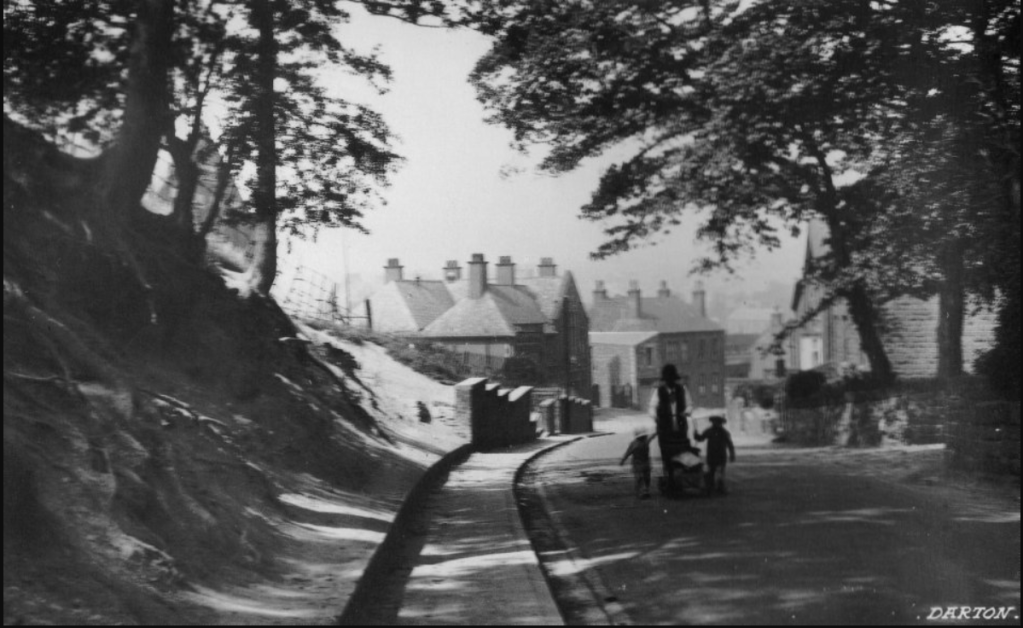
When he was 20, Samuel married Margaret MacPhie (1794-1851), and they began a family with the birth of Maria in 1815. Samuel began his long career in the law (wrong side) the following year, when at 22, he was imprisoned for vagrancy at the Wakefield Assizes, and “confined in the Hose of Correction for six months and declared a rogue and vagabond.”
After this rude interruption to their married life, Samuel and Margaret went on to have two more children – Matilda in 1817, and Alexander (Sandy) in 1820. There were intermittent brushes with authority, but nothing major until April 1822, when he was again imprisoned for vagrancy.
On 15 April 1822, Challenger was given a sentence of three months in the House of Correction “kept to hard labour and privately whipped.” And on the same day, the breakdown of his marriage became a matter of law. Margaret had left him and had taken out Articles of the Peace at the Sheffield Sessions. These articles were produced at the Wakefield Sessions and ordered Samuel Challenger to keep the peace with a surety of his own in the amount of £20, plus two other sureties in £10 each. If not, he would be confined for 12 months at Riding Gaol. And, if he could come up with two sureties, the Assize Court ordered that their names, places of residence, and professions be provided to Mrs Margaret Challenger’s Attorney, Mr Stephenson of Holmfirth.
We next hear of Samuel Challenger on 22 March 1828, when he was convicted of warehouse robbery at the York Assizes and sentenced to life in prison. A spell in the hulks followed, and on 29 May 1828, he was transported to New South Wales aboard the Albion. His voyage took 158 days and sounds like a miserable one. In June, he became ill with diarrhea off Madeira. In August, he had cyanche tonsilitis, then pyrexia (sudden, acute fevers) in October.
New South Wales
Challenger arrived on dry land in New South Wales on 3 November 1828, no doubt a relieved man, but one who found himself indentured to one George Druitt at Bathurst. He behaved himself there for several months.

Then, in 1829, two events took place that altered his future. In Stockport, Lancashire, a sixteen-year-old named Jane McMenamy gave birth to his son, Samuel Challenger, Jr (1829-1880). And at Bathurst, Challenger was charged with three other men for attempting to rob the house of Mr William Hall.
Samuel Challenger, together with John Batley (Marquis of Huntley), Richard Chinn (Eliza) and Richard Green (John) conspired to commit a burglary at William Hall’s house. Two of their fellow servants, James Roberts and William Hayes knew of the plan, and decided to thwart it.
Roberts reported the plan to Mr Hall and the Chief Constable. William Hayes, on being asked by Batley for a gun, supplied him with an inoperable one. The authorities, backed up by spare constables, hid in Hall’s darkened house on the appointed night, and waited.
At 1 am, noises were heard at the window blinds. The policemen crept out into the yard and found five men trying to dislodge a window. On being called out, one of the men ran away and was shot in the leg (he subsequently died). The other four – Challenger, Green, Batley and Chinn – knew the game was up and surrendered. The total loss to Mr Hall was one slightly cracked windowpane and some dislodged putty. The criminals were tried at the Supreme Court and received sentences of death recorded.
Moreton Bay
The four men had their death sentences were commuted to life, and they were transported to the Moreton Bay penal settlement on the Waterloo, arriving in August 1829. John Batley had his sentence reduced in 1836 and returned to Sydney. Benjamin Green died at Moreton Bay on 14 February 1830, and Richard Chinn absconded in September 1831, never to return. Samuel Challenger had an eventful decade at Moreton Bay.
Absconding
1830
Samuel Challenger fled the Moreton Bay convict settlement four times between 1830 and 1834. Then in 1838, he was punished for, well, not absconding.
In August 1830, while Captain Logan was still in charge of the settlement, seven men absconded. Most were old hands – George Brown, James Bent, Charles Fagan, John Bulbridge, William Saunders, and Timothy Shea. The seventh escapee was Samuel Challenger, making his first escape. For Fagan and Bulbridge, the adventure would end with desperate crime, capture and execution at Moreton Bay the following year. George Brown – unusually – only stayed out until 3 September.

In December, four men returned to the settlement on the same day. Among them were Challenger and Saunders, who had clearly been out together. Saunders was another incorrigible escapee, and presumably taught Challenger how to survive in the bush outside the penal colony.
Challenger’s four months on the run (and no doubt, the punishment that followed it) took its toll, and two days after surrendering, he was admitted to the Moreton Bay Convict Hospital with a fever. He remained an inpatient for seven days.
1831
Convict absconding ebbed and flowed during the time of Commandant Clunie. Clunie was a more humane leader than Logan but was inclined to punish absconders quite harshly. In November 1831, four men absconded, including Challenger. Three of the four men – Challenger, Daniel Stewart, and Jonathon Yates – returned within days of each other in January 1832. Samuel had been out just over six weeks.
1832
Seven convicts ran on 31 October 1832, all veteran escapees. Challenger returned alone on 5 December 1832, his shortest time out in the bush – 36 days in all. Two other men who ran on 31 October returned on 16 December. They were James Wilkinson and Thomas Jackson. Samuel may have spent all or part of the time on the run with them.
1833
Challenger didn’t abscond in 1833 but spent six days in Hospital in February of that year – another victim of the scourge of Moreton Bay – ophthalmia. Poor hygiene conditions at the settlement caused hundreds of convicts to suffer eye infections and irritations.
1834
In August 1834, Samuel Challenger again tried his luck on the run. No-one else left that day, and when Challenger returned 129 days later, he was also alone. Presumably, he had contacts in the bush – other “wild white men,” or in the indigenous population. Otherwise, survival would have been nearly impossible.

1838
By 1838, Challenger was an overseer at the Mill, and Sydney Cotton was running the penal establishment. This time, he appeared before the Bench for not absconding. Sort of. It was a strange hearing, at which he apparently gave no evidence, and it earned him 100 lashes.
From the Trial Book of Moreton Bay:
“Samuel Challenger, 1st May 1838
Albion
Michael McEvoy duly sworn states that: between 3 and 4 months ago I was sawing at Canoe Creek, Overseer Challenger sent for me and proposed that we should leave the settlement together. Several times I communicated with him about it and then left my work and came down to him at the Mill. I remained at the Mill for the whole of the night, and finding that Challenger was not prepared to go, I was obliged to go without him. He went down to the Settlement and brought Anderson with him; Benson was there at the time.
James Benson sworn states that: I was living at the time at the Mill with Challenger about 3 or 4 months ago when McEvoy came there for the purpose of absconding – he remained with Challenger 2 days and 1 night. I heard McEvoy say that he and Challenger were going together.
Sentence 100 Lashes.
Commandant.”
I presume that Challenger was punished for counselling McEvoy to escape, although no offence is stated in the record.
A short stay in the Moreton Bay Hospital for rheumatism followed almost immediately. Challenger was by then 44 years old, and had been in custody, and at times whipped, for the better part of the last 20 years.
Another Life
According to the records, Samuel Challenger was one of the convicts sent back to Sydney in early 1839. He was still under a life sentence, and his Moreton Bay record was rather patchy, meaning that he didn’t receive a Ticket of Leave until 1843. He spent some of the intervening years in an iron gang at Woolloomooloo.
Once granted his Ticket, Challenger was permitted to reside in the district of Windsor. He worked there as an assigned servant, then as a labourer. He reunited with Jane McMenamy, who had emigrated to New South Wales, and in 1844, they had a son named Charles. They had to wait until 1847 to receive permission to marry, an event they celebrated with the birth of a daughter, Mary Jane.
His first wife, Margaret, lived until 1851. The couple had been apart since 1822, and Margaret had employed a solicitor to protect her legal interests at the time. It is unlikely that Samuel had any idea whether she was still living or still legally his wife in 1847.
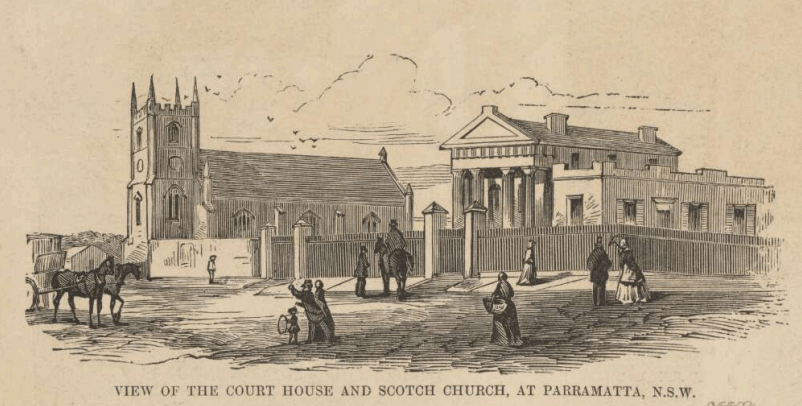
Challenger was involved in a fairly bizarre court case in 1849 – as the complainant. He was robbed in Parramatta whilst drunk and in the company of some extremely questionable parties, including three loose women. The magistrate hearing the case accused several of the parties of perjury and had some pointed things to say about a married man “keeping company with such abandoned characters.” One wonders what he said to his wife, who had been patient throughout his long sojourn at Moreton Bay.
On a happier note, in 1855, 61-year-old Samuel Challenger was in a position to pay the immigration deposit for his son Samuel to bring his young family to Australia. Samuel Jr, his wife Sarah, and daughter Mary arrived via the Nabob. Young Samuel set up in business, and Senior enjoyed (for him) a quiet life.
In March 1872, Darlinghurst Gaol received a very old man into custody. He had chosen to spend two nights in custody rather than pay a fine for drunkenness. He had been there before, but that was over 40 years ago. He was a former convict, who had arrived in Australia by the Albion in 1828, and his name was Samuel Challenger. His age was estimated as 80 (he was around 78 at the time).
On 26 August 1872, Samuel Challenger died at Liverpool, New South Wales. He was survived by his wife Jane, who passed away in 1894, his son Samuel, who died in 1880 and his daughter from his first marriage, Matilda, who passed away in 1889.

 Moreton Bay and More