
The Tale of Murder and Escape – Longbottom’s Depositions, 1825.
1825, November
Sir
I have the honour to inform you, that four Crown Prisoners (as per margin) arrived in the morning who state themselves to be deserters from the settlement at Moreton Bay.
They assert that they have been five weeks on the journey which they made nearly the whole way, within a few miles of the sea beach. They mention they crossed two very large rivers, besides many smaller ones; and over some very large plains many miles in length, thus they give an account of their excursion, however my opinion is that they have made their escape in a boat. I have therefore sent a black constable with a soldier as far to the north as Trial Bay in hopes of being able to secure the boat if they have made their escape in the manner I suppose.
I am glad in taking this opportunity of informing you for the information of His Excellency, that bushranging at this stated has entirely ceased; the few who have absented themselves, to avoid work, being generally apprehended in a few days, lurking about to the Northern end of the settlement.
I have the honour to be, Sir, your most obedient servant, H. Gillman, Commandant.
To: The Colonial Secretary.
Names in the margin: William Smith, Thomas Mills, John Longbottom, John Welsh.
Depositions regarding Longbottom & Ors taken at Port Macquarie.
Commandant’s Office, Port Macquarie 25th Novr.
Sir,
I have the honour to inform you that since my writing to you on the 19th inst, respecting the four deserters at Moreton Bay, one of them, John Longbottom, has given a testimony that they seized the Barge at that Settlement, having previous to their effecting this, committed a murder and used other violence.
For the particulars of the transaction, I beg to refer you to the accompanying depositions which I have taken the liberty of enclosing to you, and request you will be kind enough to have forwarded to His Majesty’s Attorney General.
I have thought it advisable to retain these men here until I receive instructions on that head.
I have the honour to be Sir,
Your most obed’t sev’t
Gillman Commd’t
Sir,
I have the honour to forward to you enclosed, depositions relating to four crown prisoners who deserted from the penal station at Moreton Bay, under circumstances of great aggravation, as appears by the testimony of one of them, Longbottom.
They will be retained in close custody here, until I receive further instructions respecting them.
I have the honour to be, Sir, your most obedient servant. Gillman
To: His Majesty’s Attorney General.
Deposition of Francis Bodenham, Gaoler, Port Macquarie.
New South Wales
To wit.
Deposition taken before me, Captain Henry Gillman 3rd Regt (or Buffs), one of His Majesty’s Justices of the Peace in and for the said Territory and Commandant at Port Macquarie this twenty-third day of November 1825.
Francis Bodenham, Gaoler at Port Macquarie being duly sworn, saith that on Sunday evening last I received an order from the Commandant to confine the four deserters from Moreton Bay in separate cells, which I in consequence accordingly did.
About eight o’clock the same evening one of them, John Longbottom, knocked at his cell door and desired the watchman to acquaint me he wished to see me. I immediately went to him, and he said he suspected that his companions had been saying something about the circumstance of his escape, and that he might as well tell the whole himself. He then said, he was one of five who belonged to the shingle splitters at Moreton Bay, who had made an agreement with four of the crew of the barge to make their escape. That they had secreted a part of their provisions and given a false information of their having been stolen by the Blacks, in which account they received from the Commandant more provisions, and a soldier and two constables to protect them. On a day appointed, the barge came down to the shingle splitters with four of her crew, and a stockkeeper found in the boat, whom they had rushed and whose musket they had taken from him. As they drew near, they have a signal to the shore that everything was prepared. Upon this, he and the rest of the five at the shingle splitters, before the police and the constables knew what was the matter, seized the muskets belonging to them there, while the others immediately jumped on shore bringing the stockkeeper with them. They took possession of three muskets and a bayonet that were on shore without striking a blow. After this they knocked down the two constables and the soldier and beat them until they could not stand – the soldier particularly, whose head was cut in a dreadful manner.
They then tied the whole of them there to separate trees, the soldier, the two constables, stockman, overseer and hutkeeper, and afterwards went to the boat and made the best of their way down the river, and on making the sea stood along the coast to the southward for three days, when they wrecked their boat in endeavouring to put in to obtain some water, and saved nothing from her but two muskets and a bayonet which were hidden at Point Plomer, where he could find them. On receiving this information, I (the gaoler) went and reported it to the principal superintendent, but at ten o’clock the same night, Longbottom again sent for me and told me he had not said what was exactly right, and that he must tell it for he could not rest until he had done so. He now said that the soldier was murdered, then a man whom they call Mills formerly coxswain of the barge was the one who killed him, that he did it with a bayonet, that the soldier who was lying on the ground from his severe beating begged for his life, but Mills with a horrid oath swore he never liked a red jacket in his life, and that he would now have his revenge on him, and that he gave him a stab in the breast which killed him instantly.
Francis Bodenham.
Sworn before me on this twenty-third day of November 1825. Gillman.
Statement of John Longbottom, Prisoner.
New South Wales, to wit.
The Examination of John Longbottom[1] a Prisoner of the Crown sworn at Port Macquarie, taken before me Captain Henry Gillman, 3rd Regt or Buffs, one of His Majesty’s Justices of the peace in and for the said territory, on the twenty-third day of November in the year of our lord 1826, he the said John Longbottom, upon his examination now taken before me, confesseth the following:-
About five days before I made my escape from the settlement at Moreton Bay, myself, and John Walsh[2], Thomas Mills[3], William Smith[4], Lewis Lazarus[5], Robert Nixon[6], Thomas Donelly[7], Edward McGrath[8] and John Price[9] prisoners there, made an agreement to desert from it together and on the Tuesday following the barge left the camp to go down the river to the shingle splitters.

On the way there of her crew, Lazarus, Donnelly, and McGrath seized a stockman, McWade[10] who was minding Government cattle there about a mile below the settlement, forced him into the boat and brought him to the shingle splitters, where I and Smith were waiting for them as had been agreed upon.
When the boat came there, the crew gave Smith and myself a signal that all was right. At this time the muskets of the soldier and the constables stationed at the shingle splitters were outside, leaning against the huts, the soldier and one constable lying down in the hut and the other constable outside. Smith and myself seized two of the muskets (standing guard over the other), cocked them at the soldier and constables, and threatened to shoot them if they offered any resistance, at the same moment the others jumped out of the barge, and the whole of them, Walsh, Mills, Lazarus, Nixon, Donnelly, McGrath and Price came up to the hut, dragged the soldier out, and began to beat him and the two constables, and desired me to stand by and watch the overseer and the hutkeeper did not go away to give the alarm to the settlement. They said they would not hurt them, they would injure some but the soldier and the constables, who they most severely beat and kicked.
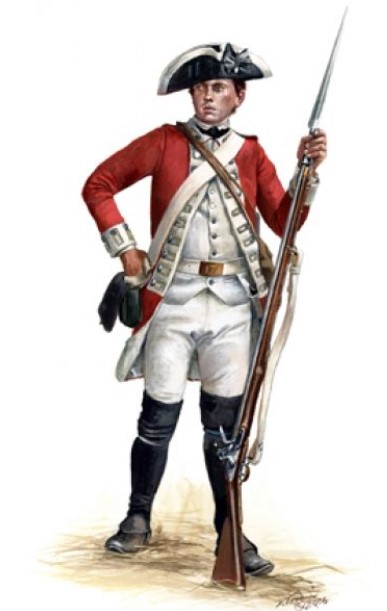
After this Mills said “I never liked a red coat (meaning the soldier) in my life, I’ll run the bayonet through him” which he instantly did, through the lower part of his breast and killed him on the spot.[11] The soldier at this time was lying on his back from the severe beating he as well as the constables had received with sticks and the butt-ends of the muskets, and when Mills stabbed him, Smith said “That’s right.”
After this, we tied all the others to separate trees – the overseer, the hutkeeper, McWade and the two constables. Mills took the bayonet from Stanley[12] the overseer who had given to him by Wilcox for his protection against the blacks. The party that came down in the barge had a musket they took from McWade the stockman; and we had all together now four muskets, and two bayonets, the soldier’s musket and bayonet, the two constables’ muskets and two bayonets, the soldier’s musket and the other bayonet before mentioned.
After we had tied them to the trees, we took all the provisions we could find and the whole nine of us got into the boat and made the best of our way to the sea, which we reached the same evening. We kept at sea with the Saturday following, following and sailing to the southward in sight of the land, under the direction of Mills, who had charge of the boats.
The wind that blew so strongly from the eastward that we were afraid we should not be able to live at sea; in consequence of which we were obliged to beach her. In an attempt to do this, she was dashed to pieces by a very heavy surf, that was rolling in, and five persons – Lazarus, Nixon, Donelly, McGrath and Price were drowned[13] in endeavouring to make the shore, and our provisions, the sails and everything onboard was lost excepting the two muskets and the bayonet which are now produced to the court.
We now made the best of our way to the Southward, and arrived here on Thursday last, six days after the loss of the boat. When we came in sight of the settlement, Mills said we had better come into it and give yourselves up, for it was probable we should not be sent to Sydney by the first vessels, but ordered to work with the gaol gang, from which we might again perhaps be able to escape again.
Mills was coxswain of the barge a considerable time before he ran away. Of the nine that deserted from the settlement, four belonged to the Barge’s crew, three to the settlement, and myself and another (Smith) to the shingle splitters section. My reason for giving this information is that I could not rest until I had done so; the other prisoners do not know I have made the confession. The Gaoler was the first person I told this to.
Questions by the Court:
You have said you seized the muskets that were leaning outside a hut together; do you know how it was that the soldier’s and constables’ muskets were allowed to be left there?
Answer by the prisoner:
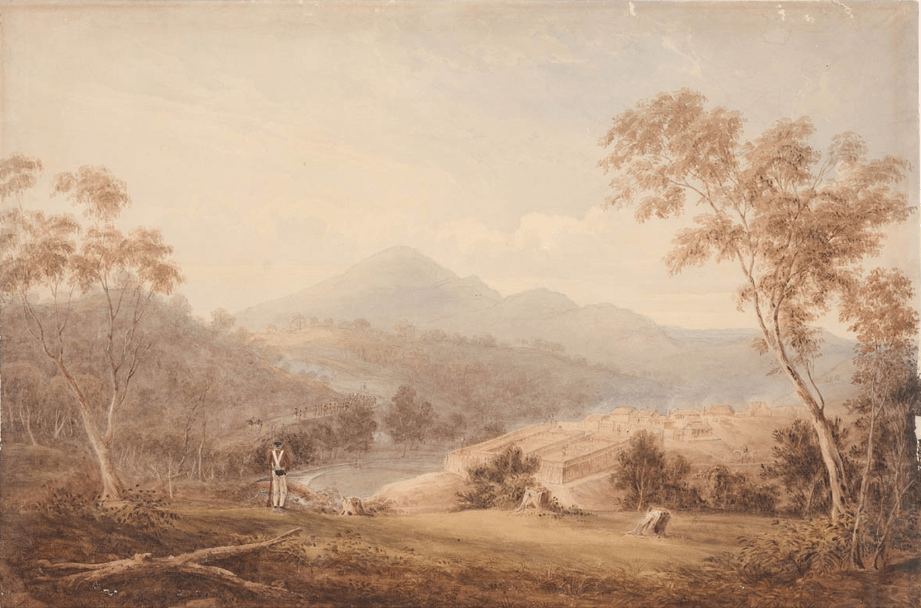
The Military and prisoners lived in one hut together, the muskets are generally left outside in the daytime. The prisoners were in the habit of taking them for their amusement when they chose. The soldier, the constables, and the working hands of the gang, all sleep in one hut as the shingle splitters.
John Longbottom x his mark
Sworn before me this 23rd day of November 1825.
Statement of District Constable John Bunn.
New South Wales, to wit
Deposition taken before me Captain Henry Gillman, 3rd Regt or Buffs, one of His Majesty’s Justices of the Peace in and for the Territory aforesaid, and Commandant at Port Macquarie, this twenty-third day of November 1825.
John Bunn, District Constable at Port Macquarie being duly sworn, saith, that on Monday last I received an order to accompany the prisoner John Longbottom to a spot near Point Plonier where he said he and the three men who deserted with him from Moreton Bay in the boat had hidden two muskets in a place which the prisoner pointed out to me. The two muskets and bayonet now produced to the Court. One of the muskets is loaded with a heavy charge of powder and shot.
John Bunn
A cursory examination of the records of Moreton Bay, the Colonial Secretary’s papers and Sydney Gaol show that none of this happened. What had Thomas Mills done to offend Longbottom so greatly that the man was prepared to frame him for murdering a soldier? Why claim that five men drowned escaping, and name them, whilst the men concerned were still alive at Moreton Bay? Of course, this is all lost to time, but it must have been an interesting year or so at Moreton Bay when all four1825 escapees were back there together.
[1] John Longbottom, per Batavia. Arrived at Moreton Bay per Mermaid on 14 September 1825. Absconded 23 October 1825, noted as taken at Port Macquarie. Returned to Moreton Bay. Arrived again at Moreton Bay on 31 July 1827, returned to Sydney August 1828.
[2] John Welsh, per Minerva. Ran 23 October 1825. Returned to Moreton Bay in November 1826, discharged to Sydney in December 1836.
[3] Thomas Mills, per Eliza. Arrived at Moreton Bay per Amity, 14 September 1824. Not recorded as having run but was sent (back) to Moreton Bay in September 1826. Returned to Sydney in January 1827, having served his colonial sentence. Had a soldier been murdered at Moreton Bay, Mills (and probably the other three absconders) would have faced trial in Sydney, and if found guilty, would have hanged. Instead, all four men were returned to live and work at Moreton Bay.
[4] William Smith, per Lord Sidmouth. Arrived at Moreton Bay per Mermaid 14 September 1825, ran 23 October 1825, taken at Port Macquarie. Returned to Moreton Bay in November 1826.
[5] Lewis Lazarus per Isabella. Arrived at Moreton Bay per Mermaid on 14 September 1825, returned to Sydney in February 1833, recorded as having run in January 1826. He was captured at Port Macquarie in February 1826 and returned to Moreton Bay in November 1826. He was not drowned in 1825.
[6] No Robert Nixon at Moreton Bay. There was a Patrick Nixon, #731, who arrived per Mermaid on 14 September 1825 and returned to Sydney in 1833. He is not recorded as absconding. He was not drowned in 1825.
[7] There was no prisoner named Donnelly at Moreton Bay at the time. Other Donnellys did not arrive until years afterwards.
[8] Edward McGrath, #733, arrived in Moreton Bay per Mermaid on 14 September 1825 and returned to Sydney in 1830. He is not recorded as having run. He was not drowned in 1825.
[9] John Price, #732, arrived at Moreton Bay per Mermaid on 14 September 1825, and returned to Sydney in 1827. He isn’t recorded as having run. He was not drowned in 1825.
[10] John McWade, a Canadian sailor, arrived as a volunteer on 14 September 1824 per Amity. He was returned to Sydney on 9 October 1826.
[11] There is no record of a soldier being murdered at Moreton Bay in an escape by prisoners. The Commandant and/or the Colonial Secretary would have noticed.
[12] No convict with the surname Stanley at Moreton Bay until several years later. A James Winstanley arrived on 14 September1824 on the Amity, and then returned to Sydney on 09 October1826.
[13] None of these men died escaping from Moreton Bay in 1825. They were all alive and still at the settlement.
 Moreton Bay and More