
How the Old Windmill nearly disappeared in 1850.

The oldest surviving building in Queensland, built by convicts for convicts, was very nearly demolished in 1850. It’s hard to imagine Wickham Terrace without the sail-less Windmill, set slightly back from the road and surrounded by trees. Since 1828, it has been a grain grinding and punishment site for convicts, a signal station, surveying landmark, museum, observatory, and a television and radio broadcast station.
Today, the Windmill’s historical, cultural and architectural significance keep its interior free from tour parties and visitors. (Well, except me – the gardeners left the door ajar one morning, and I poked my head around the door very briefly to take an illicit peek.)
But in 1849, the treadmill and the convicts were gone, and the building was abandoned. Locals made forays into the building and surrounds, looking for bricks, timber or anything they could carry away.

The Courier’s Windmill Correspondent, who signaled to his editor from that lofty peak had noticed these raids and was moved to complain. (Windmill was really the indefatigable William Wilkes, who had perfectly good lodgings, but created the solitary man in the Windmill to make wry observations, and to poke fun at local worthies.)
TELEGRAPHIC DESPATCH. 30 June 1849. (From our Windmill Reporter.)
If you had led the life I have for some weeks past, you would not pester me so much by signalising for news. A regularly organized plan of destruction is going on with regard to this building. Every piece of iron, wood, or stone that can be carried off is seized. I notified this to you before, but now matters are getting desperate. Only a few nights since, a fellow coolly kicked away a log of wood that I was using for a pillow and walked off with it on his shoulder. I expect them to begin digging for the foundation stone next week, so I take perhaps the last opportunity I may have of communicating from here.
In August 1849, James Maskell was charged with stealing bricks from the Windmill by the Barrack-sergeant in charge of its “security.” The case came about as the result of a “hot tip,” and sure enough, Mr Maskell, like many others in the town, was found to have a number of bricks lying about in order to erect a building. The case was dismissed because it was not possible to prove beyond reasonable doubt that the bricks Mr Maskell had in his hot little hands came from the Windmill. Clearly, CSI Moreton Bay was not consulted.
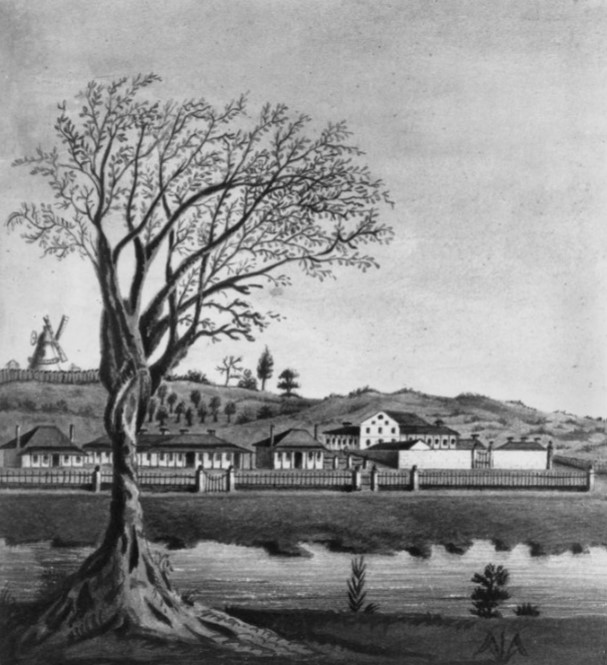
In December 1849, things looked grim for the slightly down-at-heel building.
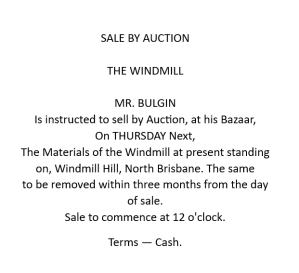
The Government in Sydney wanted the cash, the Commissariat in Brisbane wanted the materials, and there were projects deemed more worthy of attention than the Windmill. A gaol with a roof had become a priority, as had a hospital that could extend its care beyond the military. The best efforts of Mr Bulgin at his Bazaar (the mind boggles) paid off, and the Windmill was purchased by the Commissariat Officer, Mr Walker, for £30.
The Courier dared to hope that the Windmill could be saved.
It would be a great pity to destroy a structure which is not only likely to be of public service, but which also adds so much to the picturesque beauty of the town.
The Moreton Bay Courier, 8 December 1849.
The Commissariat Officer would not be deterred by such arguments and put the building up for public tender on 29 December 1849. The townsfolk and the Courier mobilised:
Monday next will be the last day for receiving tenders to purchase the old Windmill at North Brisbane, according to the notice issued by Mr. Walker, the Commissariat officer here. If arrangements should not be made for securing the building to the town, it is hoped that the shameful absurdity of pulling it down will not be persisted in. Independently of the uses to which this structure might hereafter be converted, and of the picturesque beauty of its situation and appearance, it is the best possible point for trigonometrical angles, and has accordingly been much used for this purpose.
The paltry sum likely to accrue to the Government from its sale, would be but a contemptible compensation for its destruction. It is the best fixed point for land measurement in the district, and if it were necessary to bring Scripture to our aid in advocating its preservation, there is a strong passage that might be used, for “cursed is he that removeth his neighbour’s landmark.”
The Moreton Bay Courier, 5 January 1850.
As it turned out, the Commissariat Officer was cursed to look upon the Windmill for the remainder of his tenure, because the sale contract fell through on a legal technicality, and the building was returned to the possession of the Crown.
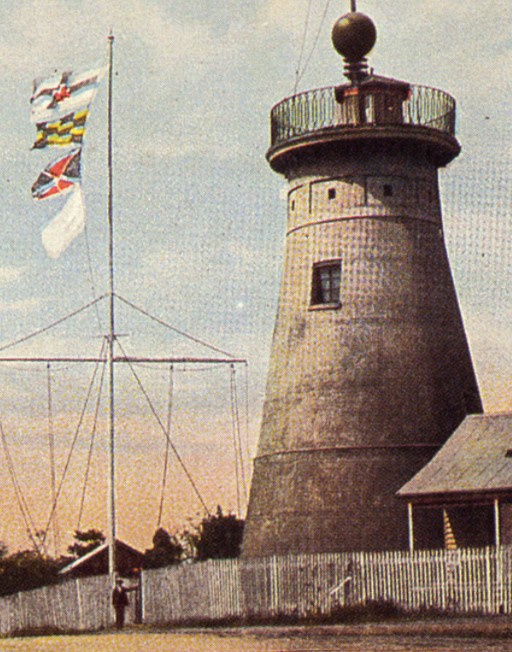
By the mid-1850s, the sails had been removed, and the Windmill began life as a signaling station (not for cheeky journalists) and observatory. And cursed be anyone who removes it.

 Moreton Bay and More