
Ah, Summer! Time to go to the cricket.
Something rather unseemly had happened in the cricketing world in August 1882. An Australian side had won the test series against the English, on English soil! A mock obituary was printed in the Sporting Times:
“In Affectionate Remembrance of ENGLISH CRICKET, which died at the Oval on 29 August 1882, Deeply lamented by a large circle of sorrowing friends and acquaintances R.I.P.
N.B. – The body will be cremated and the ashes taken to Australia.”
The English team toured Australia in the summer of 1882-1883, determined to win back “the ashes.” On February 1, 1883, the English cricketers arrived in the colony of Queensland for the first time ever to play some matches against local sides. They were greeted as heroes by the Queensland public and met by a Reception Committee comprised of a lot of bewhiskered local grandees.
ARRIVAL OF THE ENGLISH CRICKETERS IN BRISBANE.
Shortly after 1 o’clock yesterday afternoon, the steamer Kate, with the Reception Committee and a number of other gentlemen on board, started from the Queen’s Wharf to meet the Keilawarra from Sydney with the English cricketers.
Prominent among the company assembled on the deck of the Kate were the Hon. A. Archer[i], Hon. B. D. Morehead[ii], Mr. Justice Pope Cooper[iii], Mr Porter (mayor)[iv], Hon. P. Macpherson[v], and Messrs R. H. Sheaffe[vi], J. Hamilton[vii], and J. S. Jessop[viii], MLAs. The Committee appointed to represent the Brisbane Eighteen consisted of Messrs. Nettle (captain), Hobbs, and Neeson.
The Reception Committee:
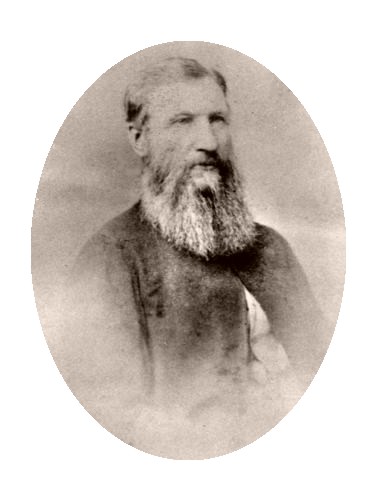
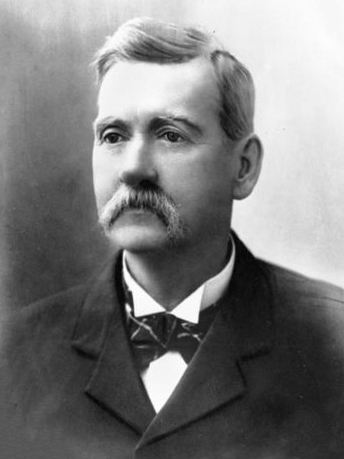
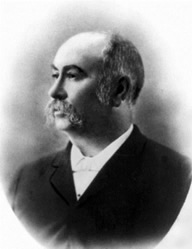

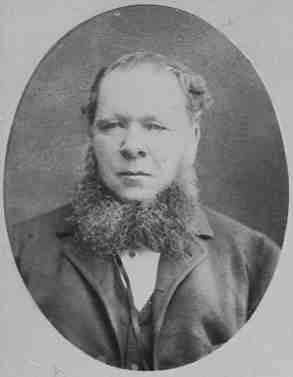
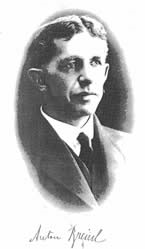
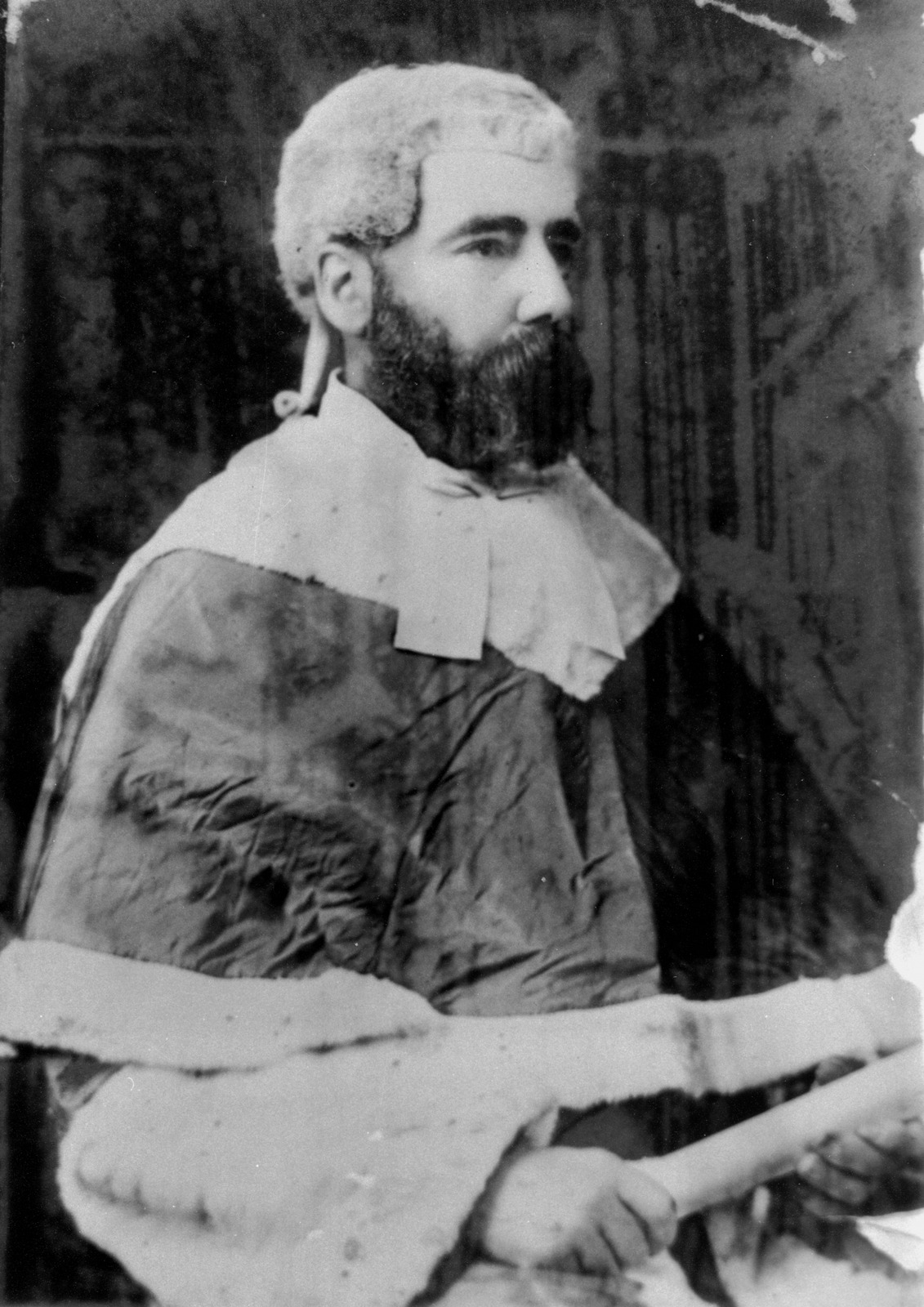
Top row. From left to right: Archibald Archer, Boyd Dunlop Morehead, John Shillito Jessop, John Hamilton. Bottom row. From left to right: Robert Porter, Roger Hale Sheaffe, Sir Pope Alexander Cooper.
The weather was all that could be desired, and after a pleasant run down the river the Keilawarra was sighted shortly before 4 o’clock. The Kate stopped her engines and waited for the larger vessel, which was thronged with passengers, and as soon as it approached close, three ringing cheers and one cheer more were given for the English cricketers. They soon made their appearance and were speedily transshipped, and the Kate turned her head up stream and started for Brisbane, the Keilawarra following in her wake.
The English team are a fine stalwart sunburnt set, who look cricketers every inch. The Hon. Ivo Bligh[ix], Leslie[x], and Barlow[xi] commanded most attention. They seemed very pleased with their reception, and readily entered into conversation with their hosts. Champagne having been produced, the Hon. B. D. Morehead, in proposing the health of the English team, said that that day would be a red-letter day in the annals of Queensland, and still more so if by any chance they could send their visitors away defeated. He referred to the characteristic fact that the English will not brook defeat, and in this instance, having been beaten at home, they had travelled so many thousand miles to regain their lost laurels. In conclusion, he said however much they were beaten by the English team, the Queenslanders would send them home with the warmest feelings of goodwill. (Applause.)
The Cricketers.
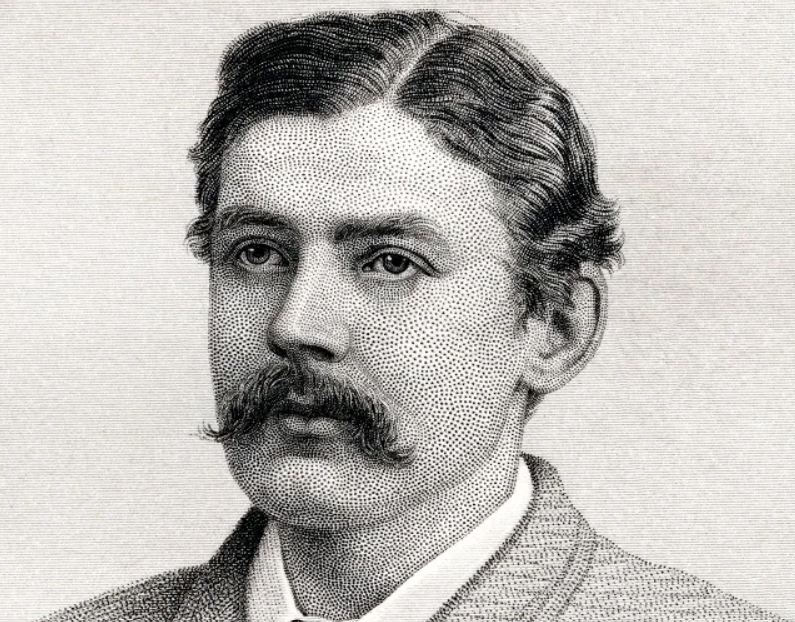
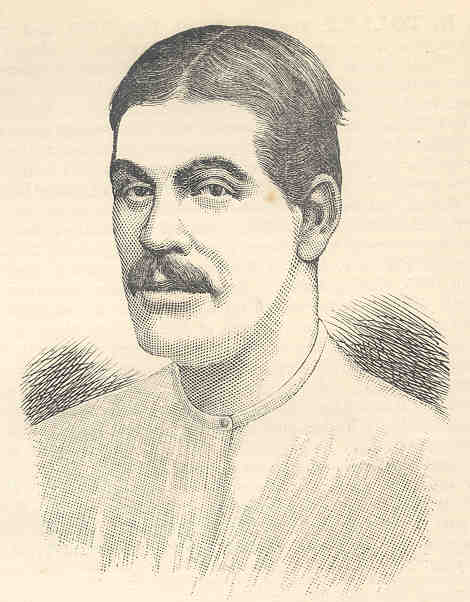
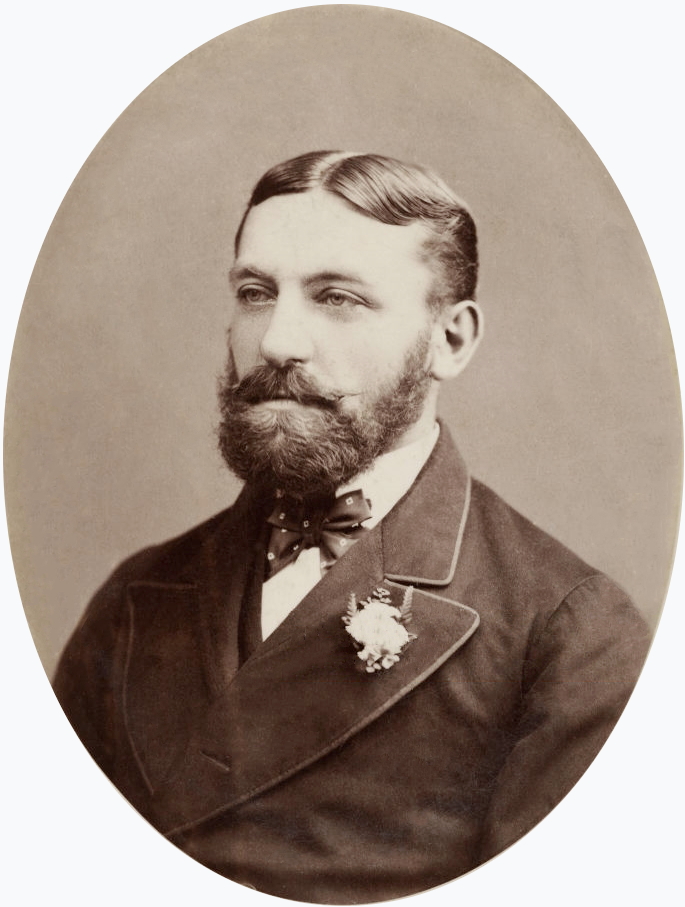
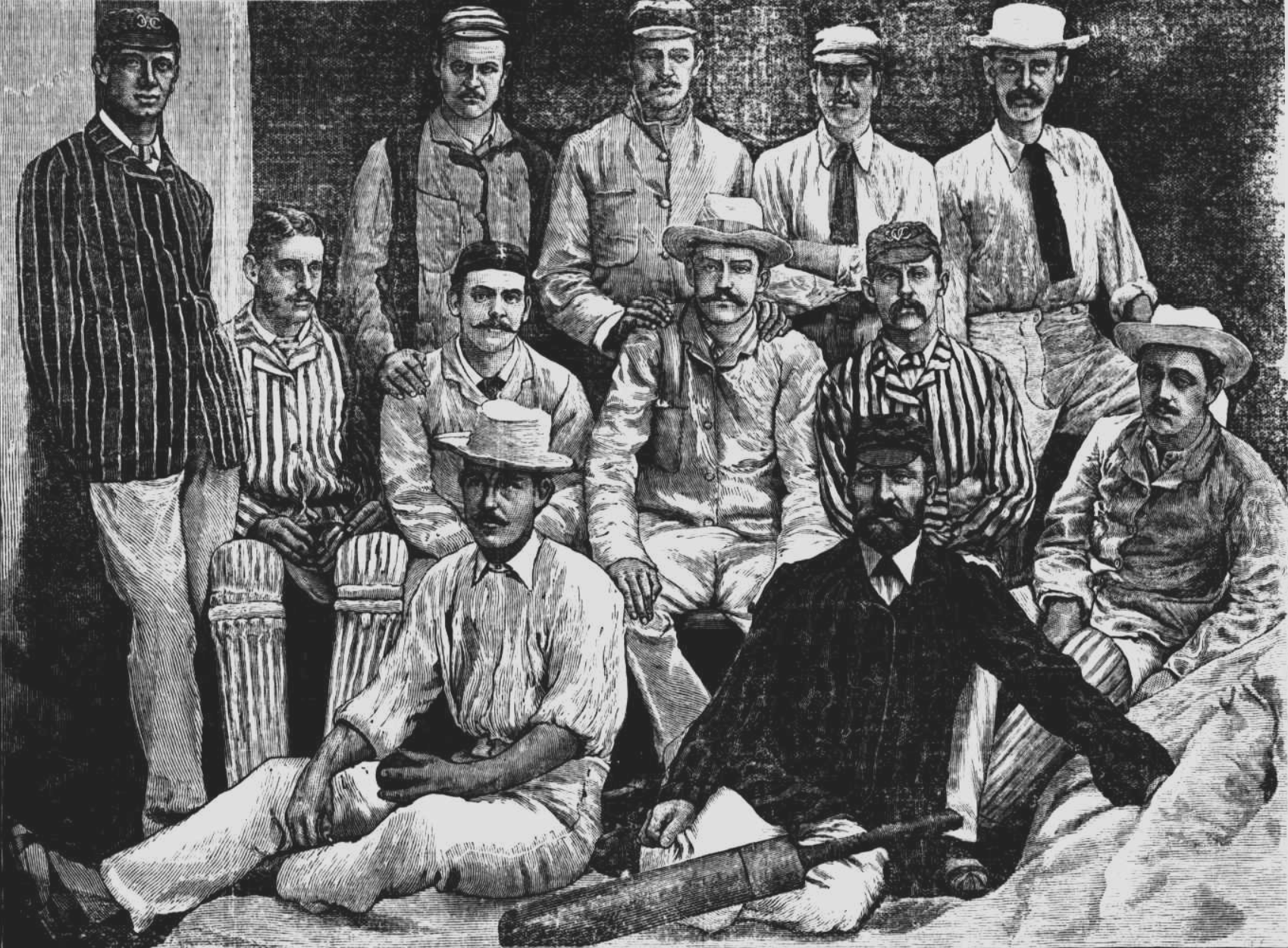
Top row. Left: The Hon. Ivo Bligh (Captain). Fred Morley. Bottom Row. Left: Dick Barlow. Centre: The England Team. Right: Charles Leslie.
The Hon. Ivo Bligh, in the course of a neat speech, expressed his thanks not only for the kind reception he had received, but also for the large and influential company assembled to meet them. He mentioned that it was the first time an English team had visited the colony. They had heard much about the mosquitoes of Queensland, and much also of the Queenslanders’ hospitality, and probably it was to these means Mr. Morehead was trusting to gain the victory for Queensland. He went on to say he might tell the captain of the other team that he had a lucky shilling which never lost a toss. He expressed his thanks again for the hospitable reception and proposed the toast of the Queensland Cricketing Association, coupling with it the name of Mr. Miller, the Hon. Sec., who replied in suitable terms, in which he referred to the great difficulties cricketers experienced in Queensland in having no professionals.
The Kate was by this time drawing near Brisbane and the inhabitants on both banks turned out and waved their handkerchiefs. As the Kate passed, the crew of the dredge Groper also gave a hearty cheer as the vessel passed, which was laughingly responded to. Children on the banks cheering and waving their handkerchiefs were especially noticeable, and the Hon. Ivo Bligh, referring to them, said it was the most touching reception he had experienced in Australia.
The professional Morley[xii], we regret to hear, has been left behind in Sydney, being too unwell to accompany the team, and the popular Lancashire professional Barlow, the hero of the recent match, is also unfortunately on the sick list, having strained his thigh severely while bowling against the Australian Eleven in Sydney. He will play today but will not be allowed to bowl – a fact which is undeniably in favour of the Queensland teams. Barlow received a great number of presents as testimonials from Englishmen and others in Sydney for his plucky bowling, which won the match for the English. His success is all the more remarkable and meritorious when it is remembered that he bowled right up to the close of the match in spite of great physical pain arising from his injured limb.
A great crowd was assembled at the Queen’s Wharf, who cheered again and again as the Kate drew near. After the cricketers had disembarked, they proceeded to their quarters at the Queensland Club in a four-in-hand driven by Mr. Pope Cooper. The professionals are staying at Flynn’s hotel the Globe, in Queen-street. Altogether the proceedings passed of most successfully, and all the cricketers expressed themselves as very pleased with their hospitable reception, a result which is due in no small measure to the indefatigable secretary of the Reception Committee.
Brisbane Courier (Qld.: 1864 – 1933), Friday 2 February 1883, page 5.
No test match was played in the colony of Queensland that year. The English side played two matches against local teams, winning each by a very considerable margin. In that 1882-1883 series, England won back the Ashes, and the captain found himself a wife in country Victoria.
[i] Archibald Archer (1820-1902) Member of the Qld Legislative Assembly, and member of the pioneering Archer family. They owned or ran just about everything.
[ii] Boyd Dunlop Morehead (1843-1905), whose career summary reads thus: Clerk, Bank of New South Wales 1862-1862; Manager, Bowen Downs Station (1866-1861); Founded BD Morehead & Co 1873; Postmaster-General; Premier, Chief Secretary, Colonial Secretary 1888-1890. I have severe CV envy.
[iii] Sir Pope Alexander Cooper (1846-1923), Barrister, Prosecutor, Supreme Court Judge, Senior Puisne Judge, Chief Justice, Chancellor of Queensland University, Attorney-General (1880-1883). Ditto.
[iv] Robert Porter (c. 1825-1902), building contractor, alderman (1867-1885), Mayor of Brisbane 1882. Respectable civic type.
[v] Peter Macpherson (1841-1913), Solicitor, Member of Legislative Council 1881-1913. Died in office. Not literally, one hopes.
[vi] Roger Hale Sheaffe (1838-1895), Pastoralist, Investor, Mayor of Sandgate, Member of Legislative Assembly (1878-1883). Named after a loyalist General from the American War of Independence. Related to that general too, if Wikipedia is correct.
[vii] John Hamilton (not his real name) (1841-1916) Gold miner, doctor (not a real doctor) on the goldfields, Member of Legislative Assembly (1878-1904) (really). Enjoyed trouble.
[viii] John Shillito Jessop (1840-1895), Businessman, pastoralist, Dalby mayor, Member of Legislative Assembly 1882-1893. Respectable rural civic type.
[ix] Ivo Francis Walter Bligh, 8th Earl of Darnley (1859–1927). Ivo Bligh succeeded to the title of Earl of Darnley in 1900. He had a parliamentary career, was President of the MCC, and married one Florence Morphy of Beechworth, Victoria in 1884.
[x] Charles Frederick Henry Leslie (1861-1921), right-arm fast bowler, who became a business magnate of considerable standing.
[xi] Richard Gorton Barlow (1851-1919), cricketer and later umpire, known for being almost impossible to dismiss, as well as being a handy left-arm medium pace bowler.
[xii] Frederick Morley (1850-1884), fast bowler. Morley suffered an injury on the voyage out from England when the team’s ship collided with another vessel in Colombo Harbour. Morley was never able to regain his health and passed away in 1884.
Images are all out of copyright, and are sourced from the Queensland Parliamentary Archives, State Library of Queensland, National Library of Australia and Wisden’s.
 Moreton Bay and More