
The past might be a different country, but in some ways, they did things the same way there.
The Housing Shortage.
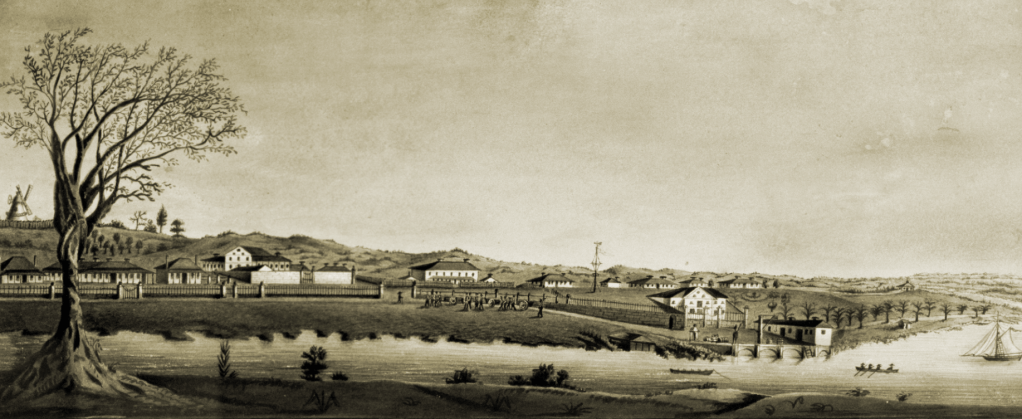
Building.-We are glad to perceive that the advice which we have so frequently tendered to the owners of town allotments is beginning, to be acted upon, namely, that of building small cottages to obviate the many complaints of strangers that they cannot obtain comfortable house accommodation when they arrive in the settlement.
During the last week or two, considerable activity in the house building line has sprung up, and dwelling houses are rising in every part of the settlement. Preliminaries for the erection of three new churches are also being settled, and the buildings, we understand, will soon be commenced.
They will, when erected, give to the place an urban air, which at present its scattered buildings little confer upon it, while the building of numerous cottages will remove an evil which there can be no doubt has much retarded the increase of the town.
Moreton Bay Courier, August 1848
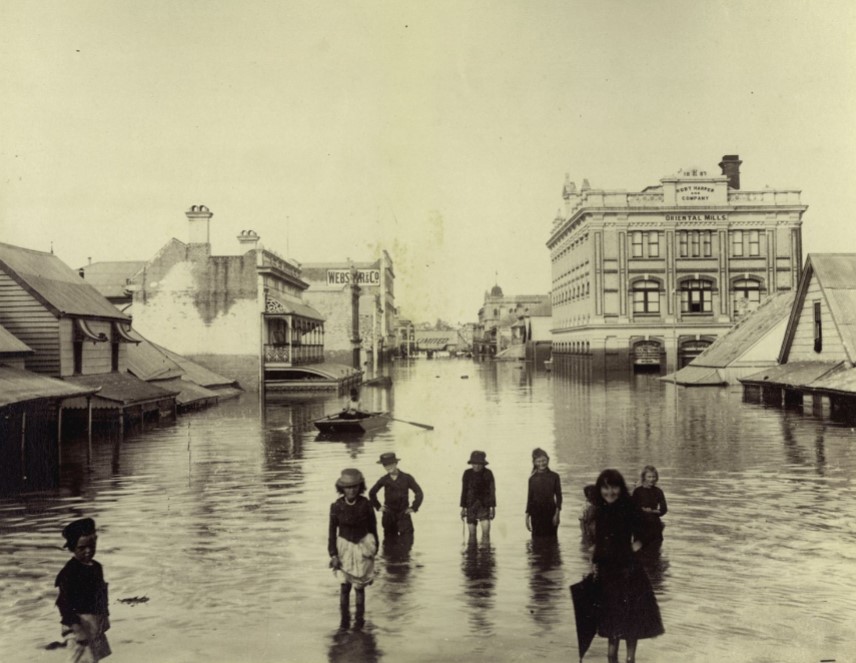
A housing shortage affected our early free settlers, too. In the 1846 Census, the population of the County of Stanley, encompassing North and South Brisbane, Ipswich, and a few nearby stations, was 1599. And here’s what they lived in:
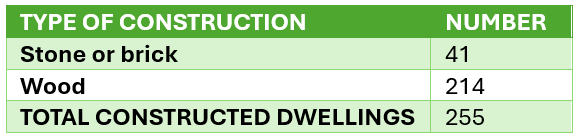
Of these constructed dwellings, 205 were finished, 50 were unfinished. Only six dwellings were unoccupied.
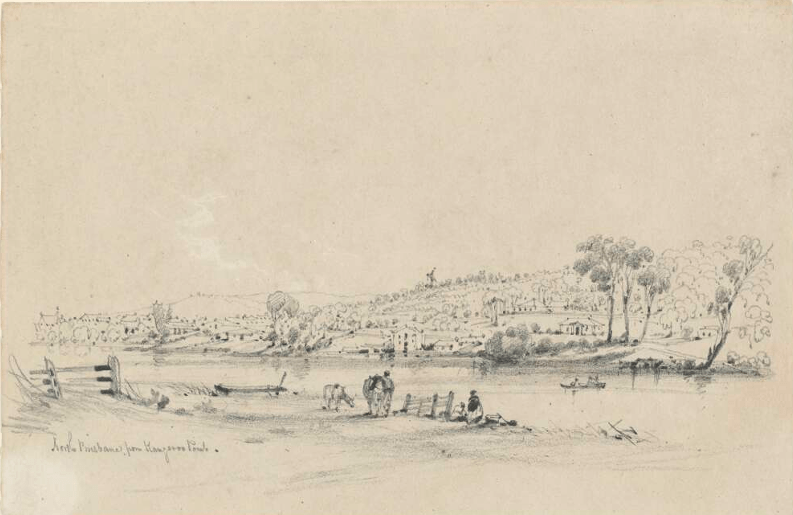
In 1849, the need for migrants, preferably the non-convict variety, was answered. Ships arrived, bearing artisans, labourers and domestics. And Brisbane Town had nowhere to put them.
To the Editor of the Moreton Bay Courier. SIR,-Will you kindly permit, through the medium of your excellent journal, some strangers by the ship Chaseley to express to Mr. David McConnel our heartfelt thanks for his generous and untiring exertions in the procuring of tents for our reception, with the very complete arrangement of carts to convey our luggage to the same? This was handsomely done, and in perfect tone with the urbanity and kindness of both his admirably good lady and himself to the passengers generally throughout the voyage. It is the complete, yet quiet and gentle, way they do all kindnesses that exalts our estimation of their excellence. We leave to the language of the heart the expression of Your obedient servants, THE UNFORTUNATE FORTUNATES.
Moreton Bay Courier, May 1849.
They had travelled to the other side of the planet, and were grateful that someone provided some tents for them. These people were too good to be true.
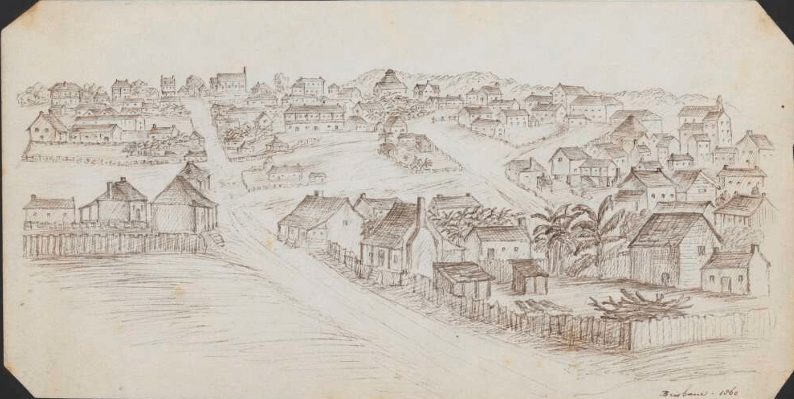
The Census of 1851 showed that the population of Stanley and Moreton (roughly the same area as 1846’s Stanley) had increased to 5059, of whom 2513 lived in Brisbane and its suburbs. The number of dwellings was now 729.
Young People Roaming the Streets.
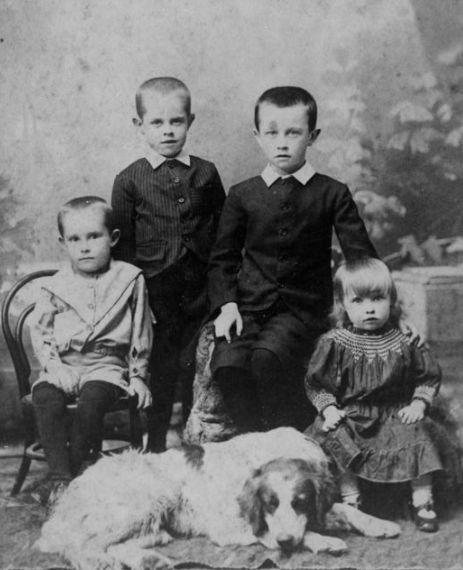
Fishing on Sundays! Being absent from their houses! Mind you, these ‘delinquents’ were small children, not adolescents. Teenagers hadn’t been invented in the 1840s – there were children and youths. They were either in school or in work, and no Victorian parent could have imagined that entire industries would be developed to specifically clothe, feed and amuse people who fell between the ages of thirteen and twenty.
CAUTION TO PARENTS.—We some weeks ago cautioned parents against allowing their children to absent themselves too much from their houses, and we again repeat it in the expectation that a late unhappy circumstance may give double effect to the recommendation. Children in this colony are allowed, by far, too much indulgence in the employment of their time.
No person would, of course, desire to see them excluded from that recreation which is so necessary and congenial to their period of life, but their amusements, and the time for enjoying, them, ought to be regulated by their parents, and if they were so, it is to be hoped they would not be found fishing on Sundays, and engaged in other unbecoming occupations, which would not be tolerated under that better and more strict state of society which obtains at home.
Parents who neglect the moral training of their offspring incur a heavy responsibility, and the first step towards such training is to teach them a becoming reverence for the Sabbath. We hope that for the good of the children, the satisfaction of their parents, and the advantage of society at large, these repeated cautions may have some effect.
Moreton Bay Courier, April 1848.
Youth crime did develop as an inevitable consequence of population growth and urbanisation. Reformatory Schools were opened to take in children and adolescents who were getting up to a little more than fishing on Sundays, but that would be twenty years in the future.
Bad Behaviour on the Roads.
The invention of the horseless carriage did not create the problem of what is now called road rage, but it certainly made things deadlier.
Horses were as valuable to the 19th century Queenslanders as cars are today. And people were just as liable to consider that the road, or dirt track, belonged to them. One William Kent chose to tear along the streets of Ipswich on his mighty steed, and pity help any pedestrian who got in his way. Two pedestrians did, and got a nasty fright, as well as a gobful. Unfortunately for Mr Kent, he had terrorised the local gentry. And then he compounded his crime by resisting arrest, to put it mildly:
The defendant was charged with a double assault, firstly, in having, without the slightest provocation, attempted to ride over Walter Gray, Esq., and his lady, at the same time making use of the most insulting and obscene language.
On a warrant being taken out for him, the unfortunate official who had to enforce it was knocked down, brutally kicked on the head, and bitten on the left cheek. Under those aggravating circumstances, which were clearly proved, although the defendant tried, by a rambling statement, to palliate his offence, their worships sentenced him to a fine of five pounds, and costs, which was immediately paid.
The prisoner is evidently one of those flash characters who from the fortuitous circumstances of their possessing – for most probably the first time in their lives – a horse and a few pounds, consider themselves entitled to act as they like, setting at nought all laws, and outrages all decency.
Moreton Bay Courier, 1848
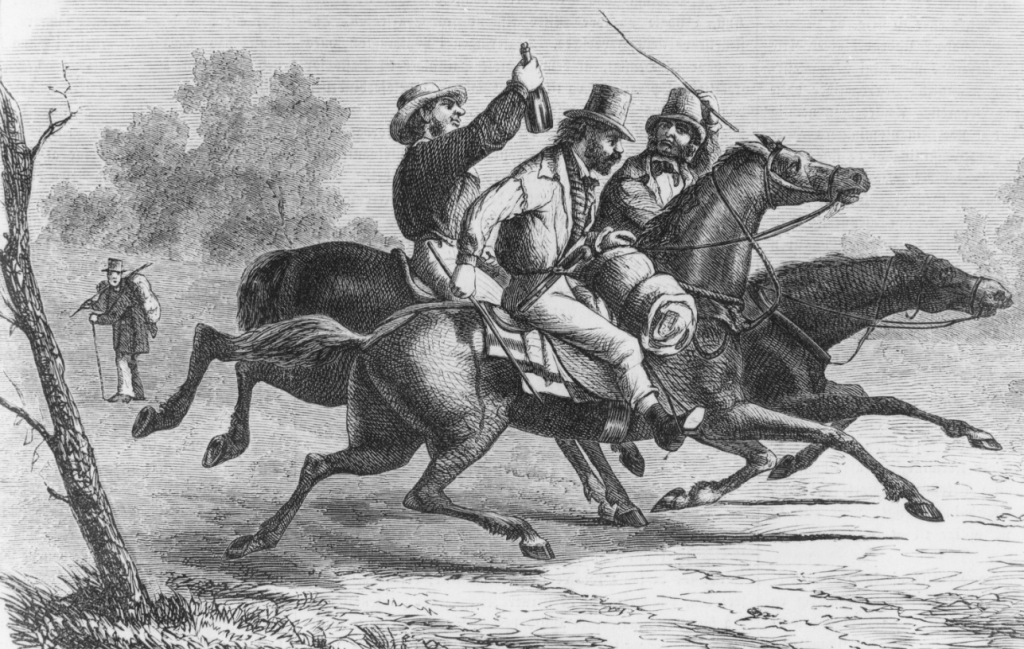
FURIOUS RIDING.— At the Police Office, on Wednesday, a young man named Patrick Hill was summoned before the Magistrates, charged furiously riding through the public streets on Friday the 28th instant, thereby endangering the lives of the people. From the evidence of a constable on duty in Brisbane Street, it appeared that the defendant was seen galloping up the road at full speed, and shouting out as if he were either drunk or mad (most probably a slight touch of both maladies affected him at the time), and barely giving time to persons passing along to get out of his way. The defendant having nothing to plead in extenuation of his conduct, was convicted, and fined £3, and, in default of payment, was ordered to be imprisoned for one month.
North Australian, 1858
Drunken hoon.
Harassment of Drag Artistes.
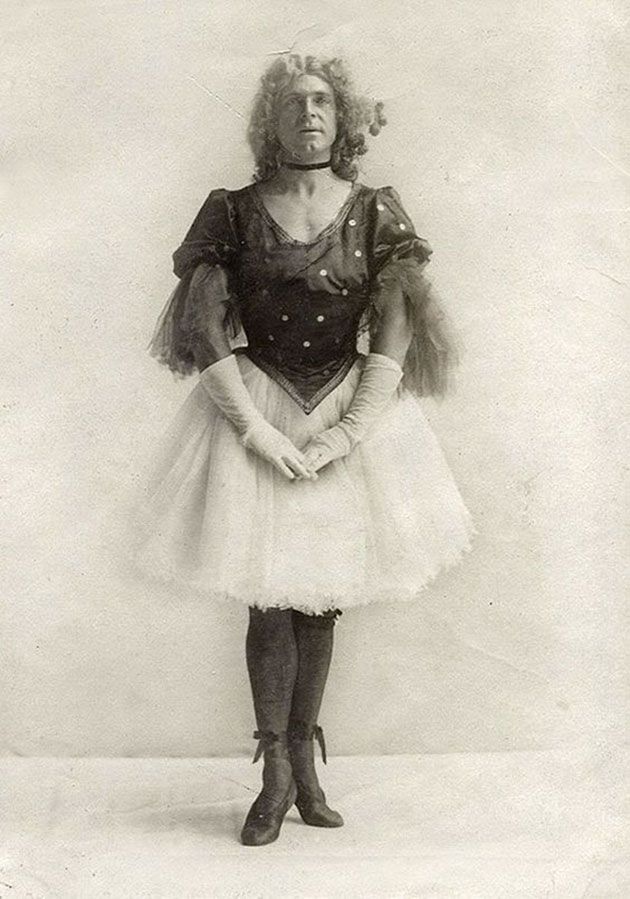
Okay, one drag artiste, and it is doubtful that William Pittman would have considered reading fairy tales to the innocent ears of middle-class children. But still, Pittman’s attempt to express his inner self met with a hostile response.
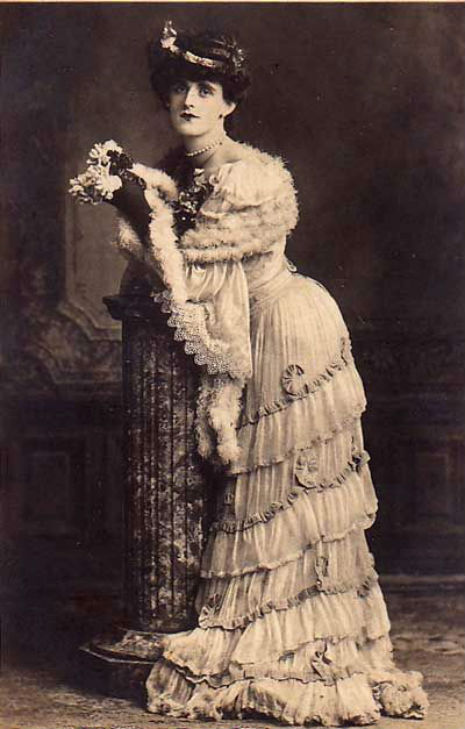
A WOLF IN LAMB’S CLOTHING.-On Saturday last a man named William Pittman thought fit to exhibit himself in female attire, in Queen Street. It was a singular fancy on his part, for he cut anything but a graceful figure.
His proportions not being pleasant to the eye of the chief constable, who is a bit of a connoisseur in that way, William was lodged in the watch-house, on a charge of drunkenness. On being brought before the Bench on Monday, he was admonished and discharged.
Moreton Bay Courier, 1849.
At least Captain Wickham decided not to further punish Mr Pittman, who, one suspects, had to pass a couple of decidedly uncomfortable nights in the lock-up.
The more things change…
 Moreton Bay and More