
Floods, Droughts, Captain Starlight and a Plague of Cats.
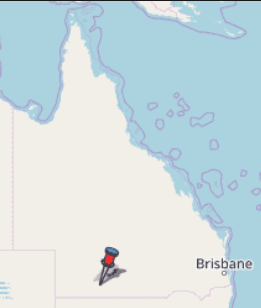
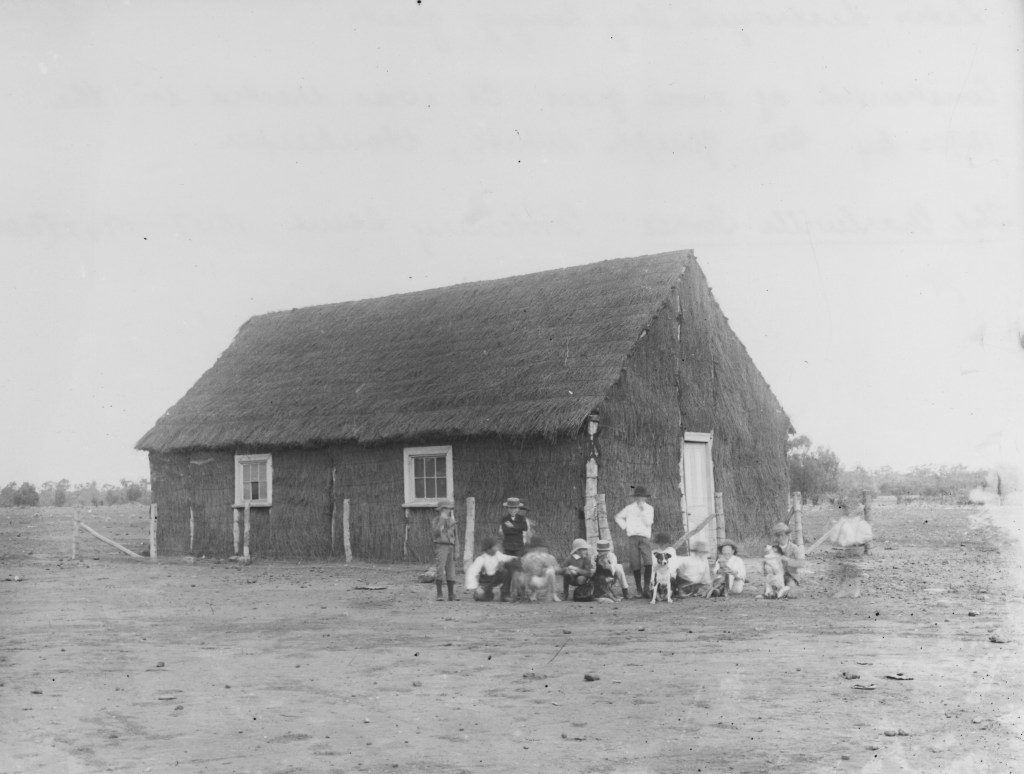
Things were looking up in Thargomindah in 1888. Bores were being drilled, camels were being mooted, and telephones were impending. A legendary bushranger passed through. And so did thousands of cats.
January: Terrific Heat.
In January 1888, Thargomindah experienced an intense heatwave. Daytime temperatures were recorded between from 113◦ to 117◦ (45-47 Celsius) in the shade. Unsurprisingly, at least two deaths from heat exhaustion were reported. (Queensland’s summer occurs between December and March.)
February – March: Foundation Stones, Floods and Phones.
Unsurprisingly, the massive heatwave was followed by a downpour. The Bulloo River broke its banks (and, it turned out, a large portion of the rabbit-proof fence).
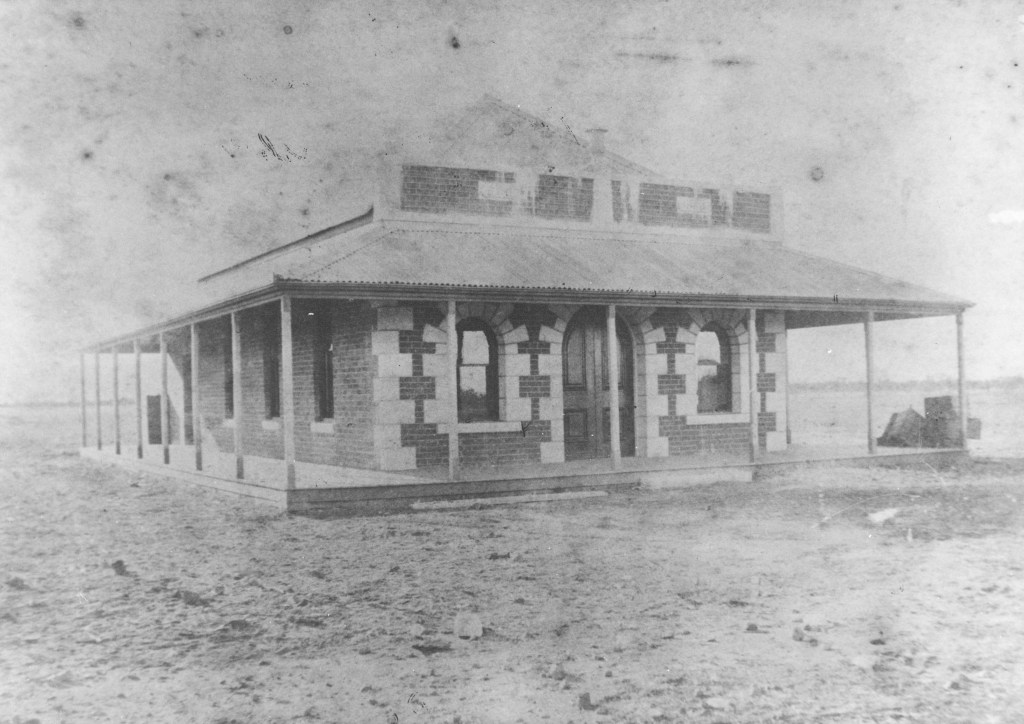
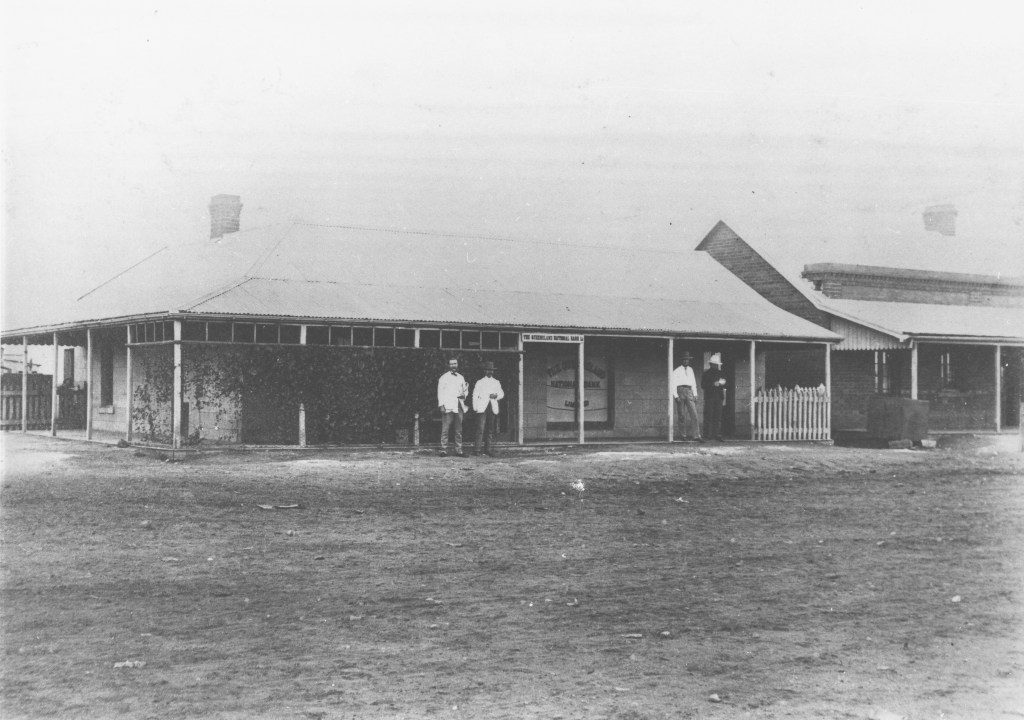
The foundation stone of the Thargomindah Hospital was laid, “the town being en fete for the occasion.” A telephone exchange was reported to be coming soon. At the end of February, a “row” broke out between Chinese and European men – smaller than a riot, but larger than a disagreement over a brisk cup of tea. The parties involved would spend March in the Police Court taking out an answering summonses.
May: The Rabbit Fence Inspector Strikes it Lucky.
Mr Dickson, tasked with checking the rabbit fence, missed a lot of the damage done by January’s deluge. Perhaps his attention was taken by his discovery of “a splendid silver field” near Oontoo. Hopefully, Mr Dickson staked a claim to the silver, and retired rich, a more appealing prospect than spending the rest of his working life tramping through the outback, trying to work out whether rabbits might be able to get through a fence.
June: Bores, Camels and Rabbits.
Promising bores had been struck on stations around Thargomindah – so promising that townsfolk were organising a “powerful agitation” for an artesian bore to be put just outside the town.
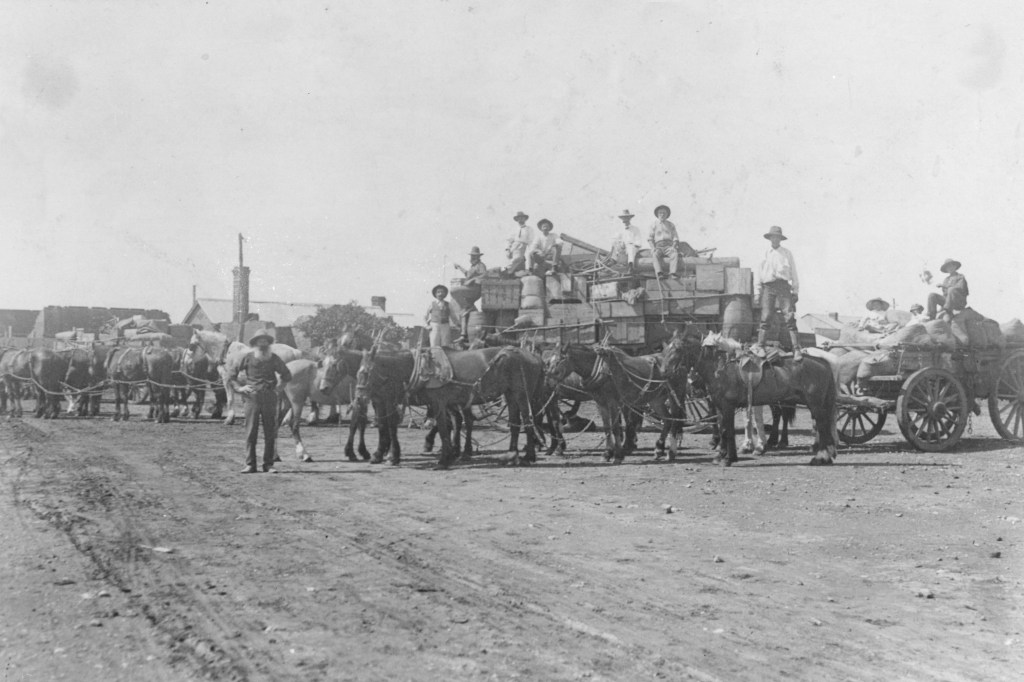
A gentleman named Charles de Burgh began an experiment with camel trains to carry loads to and from Thargomindah and Bourke. That June, the first ships of the desert began the journey from Thargomindah in a team of sixteen. Very slowly and majestically, one imagines.
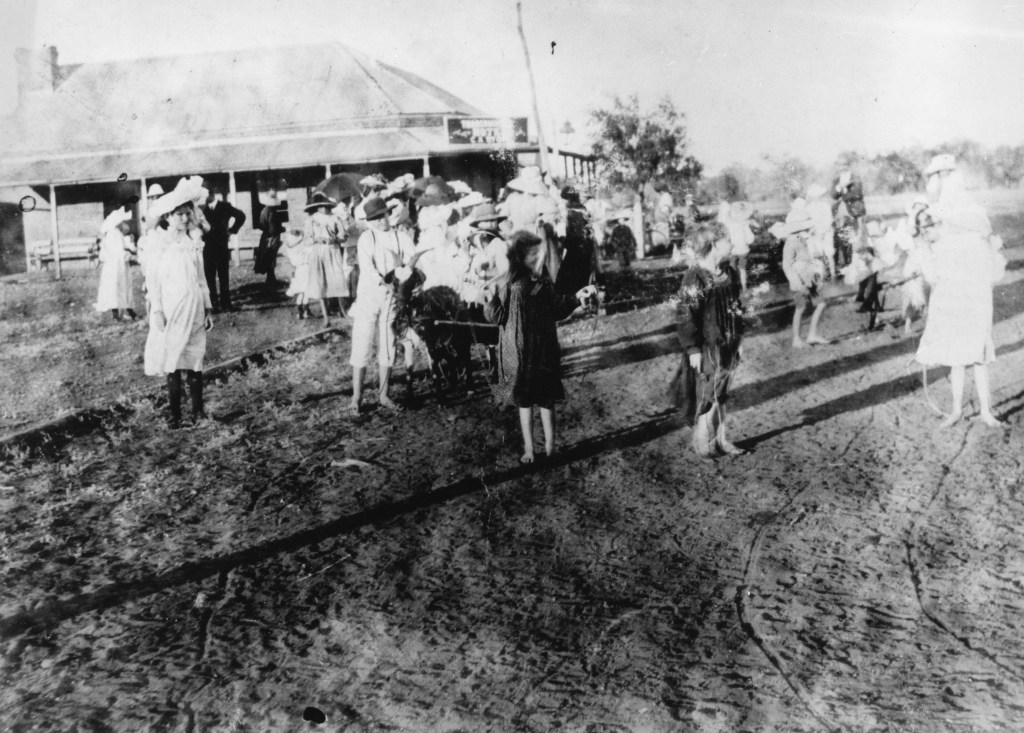
Perhaps it was the flood in January. Perhaps it was because Mr Dickson was off finding silver deposits. At any rate, local station managers reported that a seventeen-mile gap had appeared in the rabbit fence near the border. The Lands Office stoutly denied that the gap existed, but the Marsupial Board admitted that it had been paying a working party 12 guineas a week to patrol the allegedly non-existent gap, and keep the bunnies at bay. Unsurprisingly, the rabbits were getting through in numbers.
Towards the end of June, the rabbit situation was getting out of hand. Then, mysteriously, a new plague unleashed itself on Thargomindah.
July: A Plague of Cats.
A remarkable immigration is now taking place in this district. Thousands upon thousands of cats are advancing from the north and infesting the bush. It is supposed that they are following the armies of rats which recently passed through here.
Australian, Brisbane, July 1888.
There had been a plague of rodents – variously reported as rats or mice – earlier in the year. Outback farmers deal with the occasional infestation of rodents who eat their way through grain stores and pantries. One plague is bad enough, but the rodents were followed by rabbits. Then by, of all things, cats.
That the feline army will now relinquish their pursuit of their traditional prey, the rats and mice, to pay undivided attention to the more substantial rodents, is devoutly to be wished.
Western Star, July 1888.
No-one knew where the thousands of starving cats came from. Really. No-one seemed to remember a local station-owner advertising in the Thargomindah Herald for cats at 2 shillings 6 pence per head. Hmm. Mysterious.
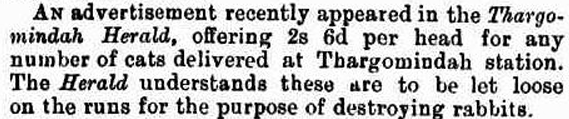
Oddly enough, the plague of cats that made news across the country seems to have faded from the headlines as soon as it arrived. Presumably the moggies fed and moved on.

July: The Jockey’s Funeral and Horse Disease.
In July, a remarkable funeral took place in Thargomindah. A local jockey had died, and twenty of his fellow jockeys formed a procession, all in their racing colours. The late jockey’s favourite mount even attended the funeral. That image is quite touching – the riderless horse following the casket of its rider. Hopefully, the horse was not involved in the death of the jockey. The story caused the Queensland Figaro to imagine the funeral of an editor:
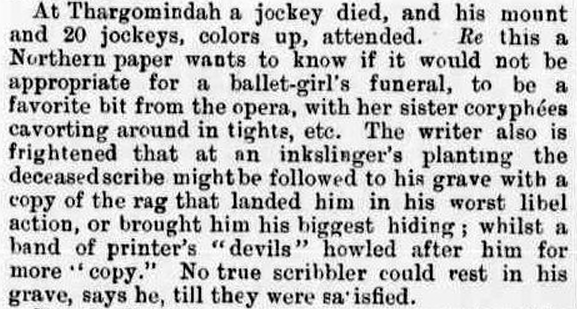
In another horsey matter that month, a number of horses from Thargomindah were inspected at the Indooroopilly Sheep Quarantine Ground and found to be suffering from Birdsville horse disease. That’s geographically confusing, to say the least.
July-August: Starlight or Moonlight?
Imagine that you are a famous bushranger, and no-one seems to know who you are.
Frank Gordon alias Dr Lamb alias Moonlight, the notorious Sydney criminal, who served 20 years for shooting a constable, and who a year ago was sentenced to twelve months for passing valueless cheques in the Thargomindah district, was released from custody today. He was at once re-arrested on another charge of issuing valueless cheques, and remanded to Thargomindah. The accused, who is apparently well-educated, took exception to the warrant on which he said he was arrested a year ago.
Mackay Mercury, July 1888
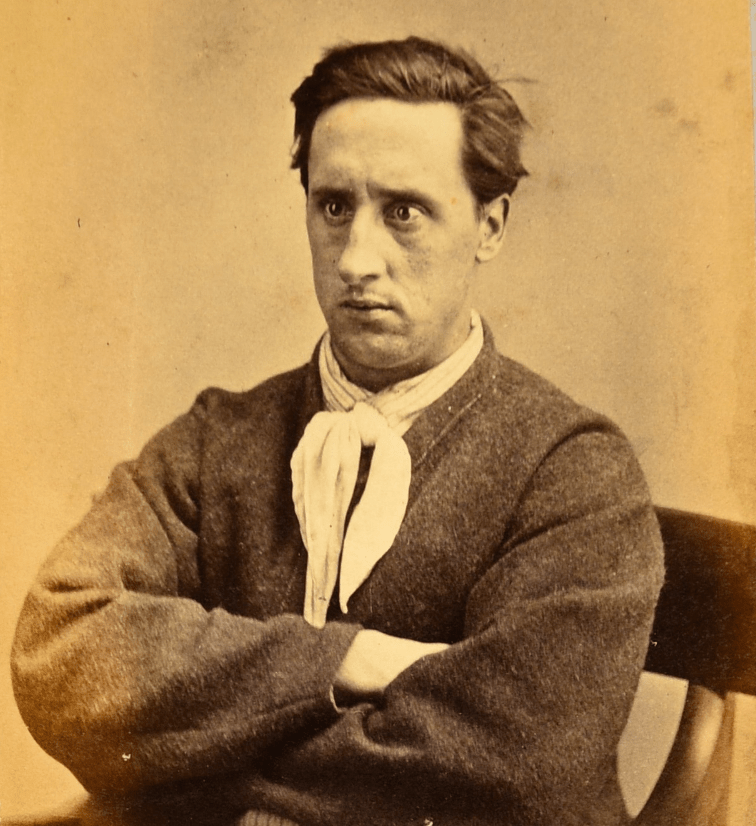
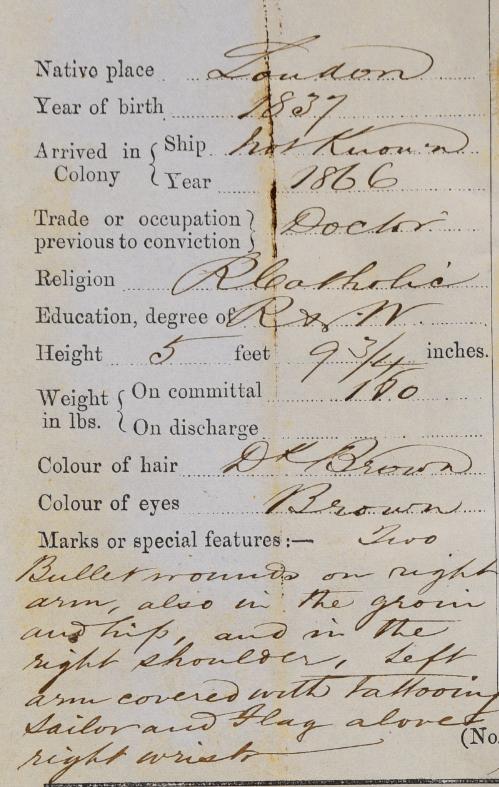
Or, perhaps he was this chap.
THARGOMINDAH.
[FROM OUR OWN CORRESPONDENT.]
August 7.
At the Police Court today William Lamb, alias Dr Lamb, was charged with passing valueless cheques in December last. The prisoner is believed to be identical with F. Pearson, who in December 1878, stuck up a number of shearers on the Warrego River, on which occasion Sergeant McCabe was shot. Pearson was arrested at Bourke six weeks later and sentenced to death, but was reprieved.Warwick Argus, August 1888
Captain Moonlight or Moonlite (Andrew George Scott) had been hanged in January 1880 in New South Wales, so it can’t have been him. There was a bushranger who went by the name of Dr Pearson, Frank Pearson or Captain Starlight, who was convicted of killing a policeman during a hold-up in 1868. Pearson was sentenced to death, then was controversially respited, and served fifteen years.
In 1884, Frank Pearson was a free man, and spent time knocking around the outback. In 1887, he was imprisoned at St Helena Island for forgery, under the name of Frank Gordon alias Lamb. Robbery Under Arms, a bush ranging novel featuring a character named Captain Starlight, had been serialised in the early 1880s, then published in 1888. Frank Pearson or Gordon or Lamb understandably claimed to be the inspiration for Starlight, although the author claimed that Harry Readford was the real inspiration.
At any rate, the man of a thousand pseudonyms was brought to the bench at Thargomindah in August 1888, remanded for plea to the District Court, and spent three months in Toowoomba Gaol. Perhaps bushrangers were out of style, because Thargomindah wasn’t overly interested in Starlight’s brief tenure at the lock-up.
September: Save our Stock Routes.
Having a bushranger about is one thing. Having Gum Holes Road declared as a stock route at the expense of Thargomindah was quite another thing, thank you very much. Thargomindah’s economic survival depended on regular stock movements through the town. The Progress Committee pleaded for better roads.
October – November: A Cyclone?
In Queensland, cyclones are usually associated with the coastal tropics. However, in late October 1888, a tempest visited land-locked Thargomindah.
Thargomindah was visited by a cyclone, on Friday afternoon, such has not been known before by the oldest inhabitant. The clouds of dust were so dense that lamps had to be lit in the business places during its continuance. For nearly half an hour the wind was something terrific, and a number of roofs were blown off; otherwise there were no casualties reported. A similar storm came on the following day, but it was not nearly so severe, although some roots suffered. Lightning caused bush fires which destroyed 40 telegraph poles between Eulo and Thargomindah.
Queensland Times, November 1888
December: More Bores Please!
The cyclone brought dust and fire, but not flood. The townspeople of Thargomindah were still agitating for an artesian bore for town water. This was far-sighted of them, and in 1898, the bore sunk into the Great Artesian Basin became the source of hydroelectricity to power the lights of the town.
And what might a plague of cats look like? I was foolish enough to ask AI.
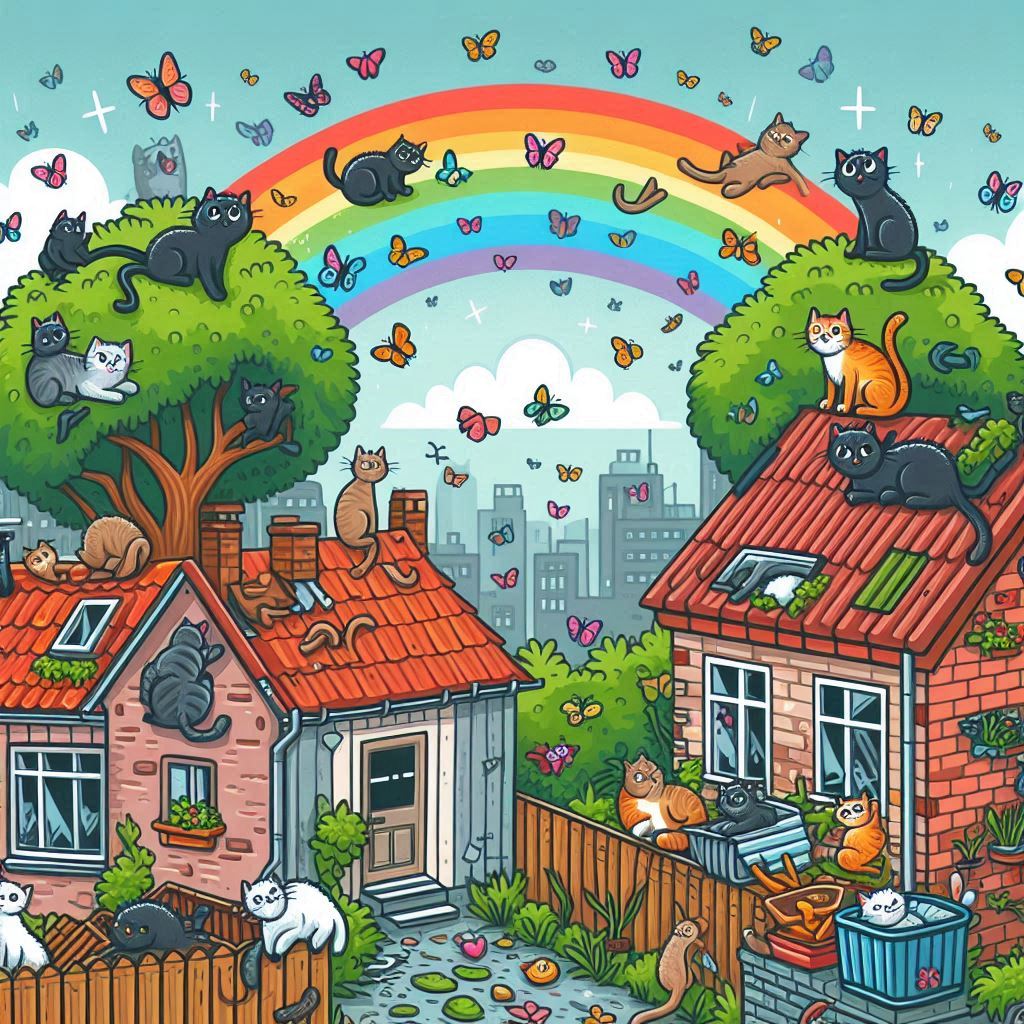
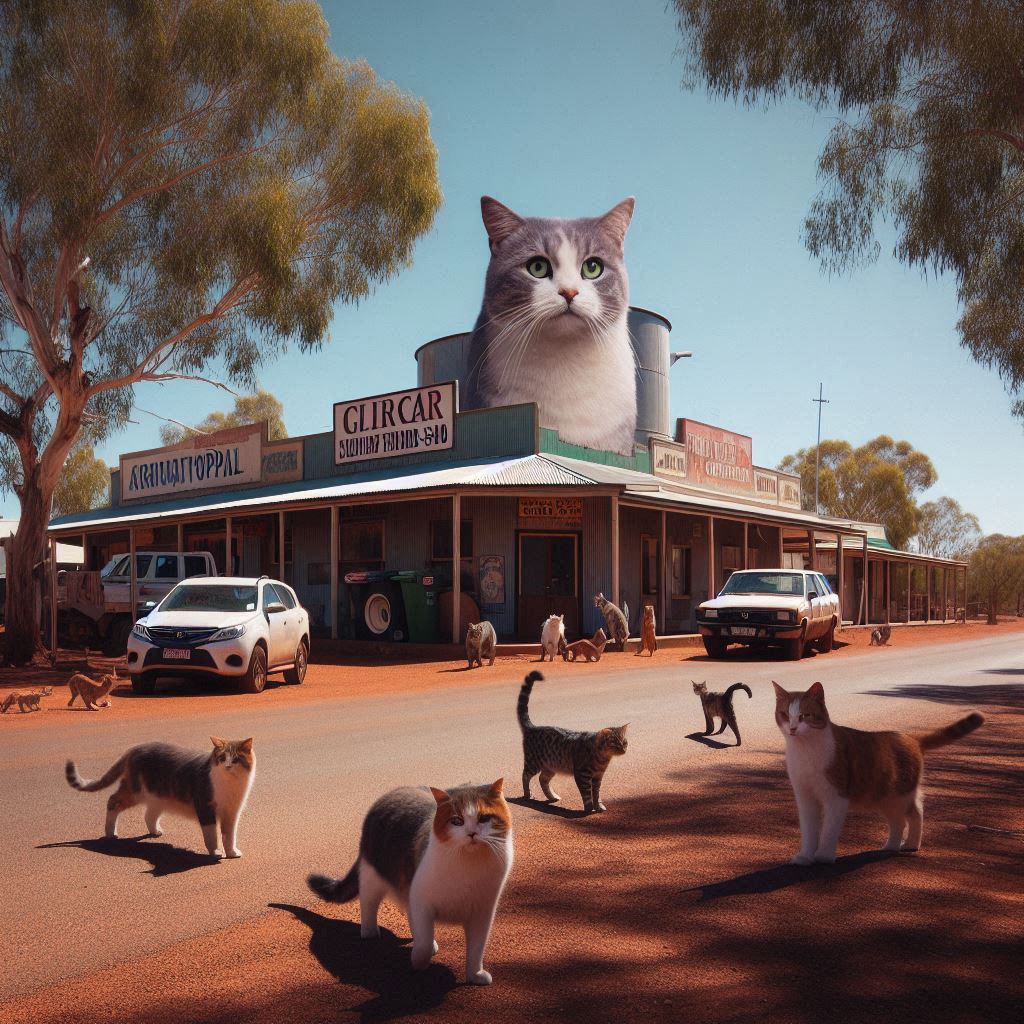
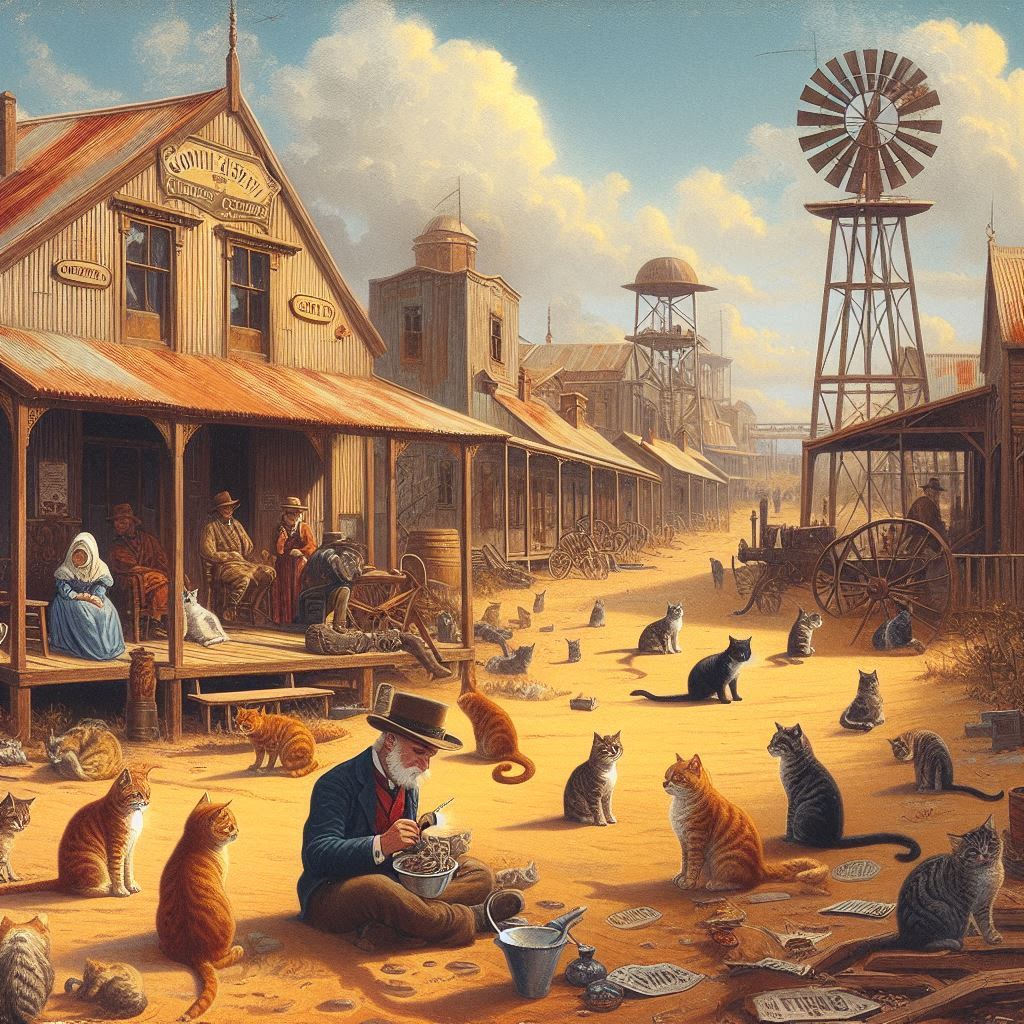
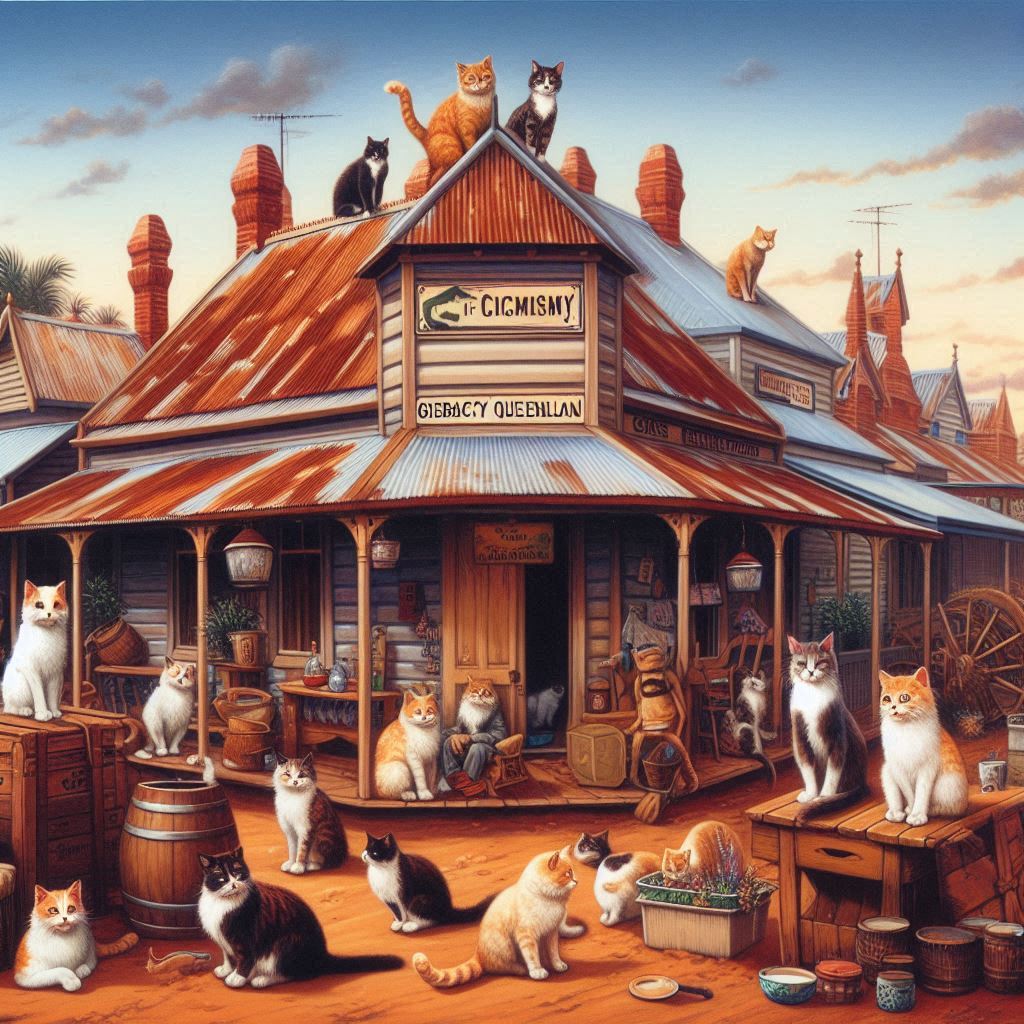
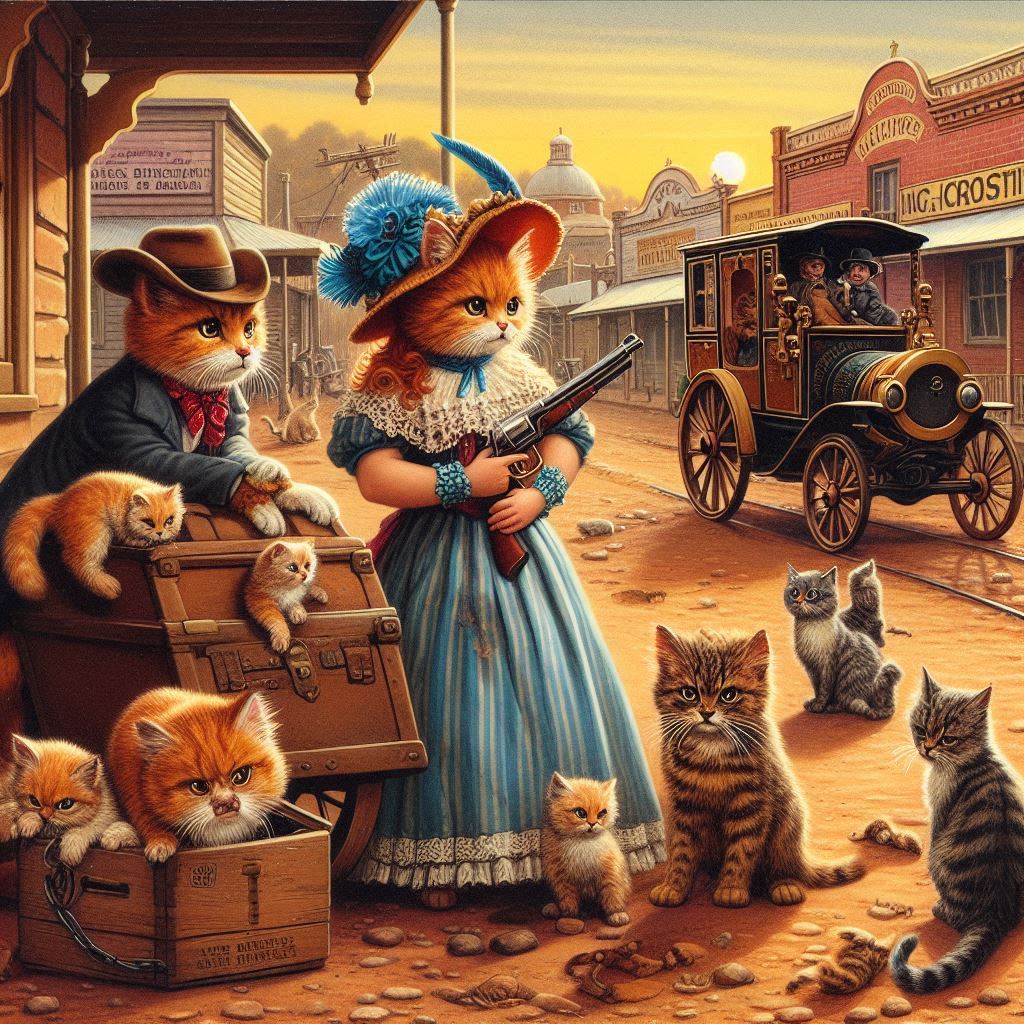
And this is what AI produces when asked to depict a plague of cats in a 19th century outback Queensland Town.
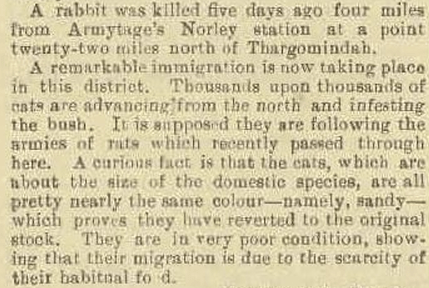
I wasn’t game to ask AI for this.

 Moreton Bay and More