
William Grady
A Regency crime in Hanover Square.
William Grady was a Londoner, born just after the turn of the 19th century. This was the Regency period, and William Grady committed the most Regency crime in the most Regency place in 1821.
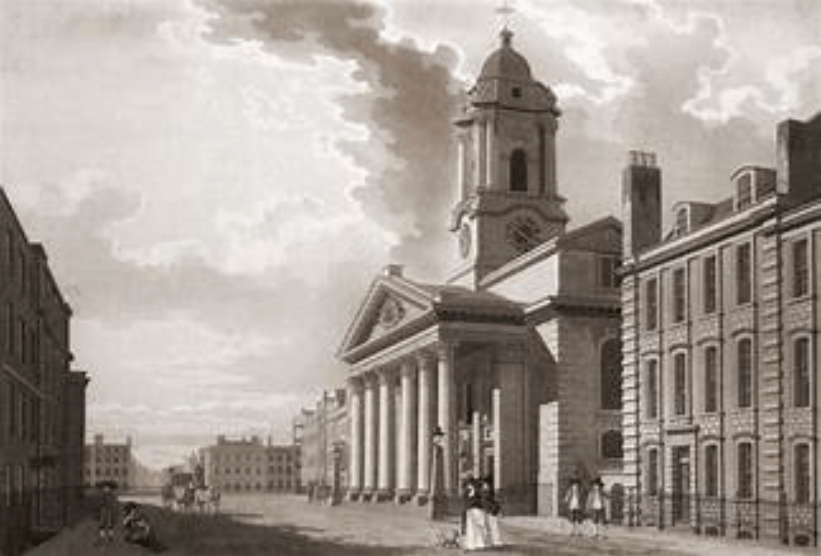
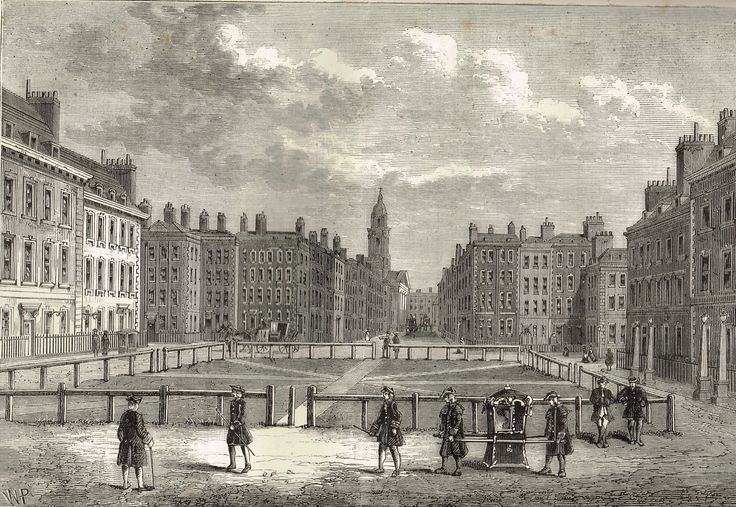
Two contemporary views of Hanover Square. Pickpockets not pictured.
William Grady was charged with feloniously assaulting Josiah Walden on the King’s Highway, on the 6th October 121 at St. George, Hanover-square, putting him in fear and taking a watch, key, seal and one piece of ribbon.
William didn’t get too far, and dropped the watch before his pursuers grabbed him. The watch was not damaged, and was returned to Walden by a nice lady in Grosvenor Market.
This was a serious enough crime to inflict the death penalty, and that’s what 17 year old William Grady was given on 24 October 1821 at the Old Bailey.
William had to wait a month to hear that his sentence was respited, and that he was about to be sent to Botany Bay.
In July 1822, he arrived on the Asia, a shipmate of James Byrne/John Burns. Grady was 5 feet 4, with a fair ruddy complexion brown hair and grey eyes. His trade was at that time a whitewasher, although he also laboured, and eventually became a wheelwright. He was put to work at Carter’s Barracks in Sydney.
In August 1824, William Grady was boarded on the Amity, and joined the first group of convicts at Moreton Bay. Grady was employed there as a carpenter “preparing work for the erection and finishing of buildings etc,” a task he had to do twice – once at Redcliffe, and then downriver at the Brisbane site. He returned to Sydney after 2 years, and worked out of Hyde Park Barracks, before earning his first Ticket of Leave in 1830, followed by a conditional Pardon in 1837. These documents are notable for two changes from his convict indents – his complexion had gone from fair, ruddy to sallow and slightly pock-pitted, and he was recorded as sporting a few tattoos – a crucifix and WG, heart and darts on his right arm, and MC and a mermaid on his left.
He found himself briefly in Darlinghurst Gaol on 24 December 1824, where he was confined for 24 hours and discharged. Probably too much Christmas cheer. The next we hear of him is his passing, at the age of 84, at Tumut.
William Green
The perils of poaching.
William Green also committed a very Regency crime – he was part of a group of five Hertfordshire men who in January 1820, armed themselves and crept into the Juniper Wood late at night to poach some game the property of Thomas Villiers, second Earl Clarendon.
The poachers were caught by four of Clarendon’s gamekeepers, and a scuffle ensued. Green was severely wounded in the fight, and had to be taken to an accomplice’s brother’s house to be treated. Despite some stout defence to the effect that they were resisting the attacks of the gamekeepers, the men were pronounced guilty and given seven years’ transportation.
William Green was transported to New South Wales on the Dick, and on arrival in 1822, he was 26 years old, 5 feet 4 with dark hair, complexion and eyes. His trade was bricklaying, and he was put to use in the Government Brickmaking works in Sydney, before taking his useful skills to the Moreton Bay settlement on the Amity.
Green did his two years at Moreton Bay, and returned to Sydney, and a Certificate of Freedom in 1827. He was issued a replacement Certificate in 1836 after his original became damaged.
Matthew Sellars
The pickpocket and the Queen Consort’s address.
Martin Sellers, sometimes recorded as Matthew Sellers, picked a pocket at a fascinating time in history.
It was 22 January 1821, and John Skaites was waiting in the Strand as “an address was going to Brandenburgh-house.” Skaites stood up respectfully until the procession passed. And someone nicked his watch.
Brandenburgh House was the residence of Caroline of Brunswick, Queen Consort and despised (by her husband) wife of George IV, who had ascended the throne a year prior.
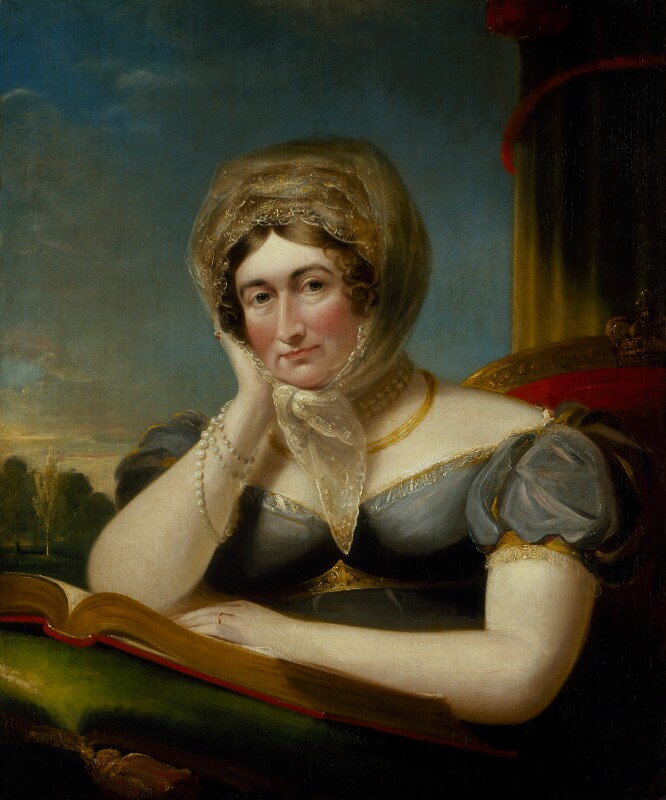
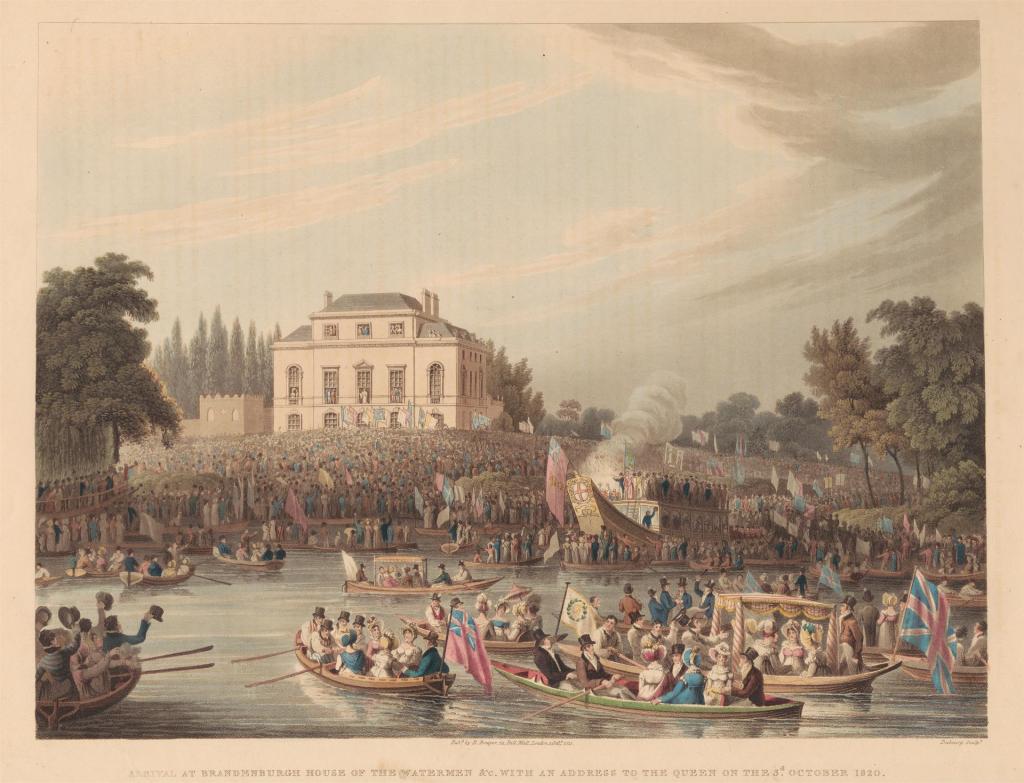
(L): Queen Caroline, 1820. (R): Watermen gather for Queen Caroline at Brandenburgh House, 1820.
Caroline of Brunswick had returned to England from exile in 1820, and had been tried by her husband, who desperately wanted to divorce her.
In the process, Caroline had become a sympathetic figure in England, and the focus of a move to reform the monarchy. At the time of John Skaites’ watch being removed from his pocket, George IV had not been crowned, and Caroline had attracted petitions with over a million signatures to her cause. No wonder Skaites stood and stared at the address as it passed by.
In the scuffle that followed Martin Sellers robbing Skaites of his watch, Skaites hit him on the face, leaving a mark. This helped identify the culprit when the coppers inevitably got him – a mere moment or two later. Martin Sellers’ defence was that he was looking at the procession of brass-founders going to give their respects to the unhappy Queen. The mark on his face and the evidence of Skaites were more believable.
Sellers was ordered to be transported to New South Wales for life. He arrived in 1822 per the Mary. Martin Sellers worked as a brickmaker for the Government in Liverpool, New South Wales, until he volunteered to Moreton Bay per the Amity in 1824. There he was employed in making bricks for the buildings of the settlement, and was returned to Sydney after two years, in October 1826.
In 1829, he was granted his first ticket of leave, followed by another ticket in 1833, allowing him to remain in the district of Sydney. Martin Sellers died at Liverpool Hospital two years later, in 1836.
 Moreton Bay and More