
Lewis Lazarus.
There were two young men named Lewis Lazarus who were sent to Moreton Bay in its early years. Lewis Lazarus 1 (1803-1843) came per the Amity on 14 September 1824.[i]
Lewis Lazarus had a short but action-packed life. On 2 December 1817, aged fourteen, he was found guilty of picking the fob-watch out of the pocket of John Mason (Lewis ran up to the man, grabbed the watch, and turned straight into the waiting arms of James Gaskill, who secured him. And the watch.)
At the age of fifteen, Lazarus was transported to New South Wales on the Isabella. Lazarus was 4 feet 10 inches, with hazel eyes, brown hair and a florid complexion. He was a tailor (or at the very least, a tailor’s apprentice) by trade.

In the years between his arrival in 1818 and his arrival in Moreton Bay in 1824, Lewis Lazarus was sent to Newcastle (twice), Emu Plains and Port Macquarie. He absconded on three occasions, and was in Sydney Gaol in August 1824 when he was chosen to go to Moreton Bay on the Amity. Lewis Lazarus, unsurprisingly, absconded on 12 January 1826, along with Hartlan and co.
He would have been astonished to hear that he was already dead, having been reported to have drowned in a murderous, boat-hijacking mass escape as related to the appalled Commandant at Port Macquarie by runaway John Longbottom. [ii]
Miraculously undrowned, the apply-named Lazarus, and his fellow escapees, turned up at Port Macquarie, from where they were sent to Sydney Gaol. All but Hartlan (who had been a volunteer) were sent back to Moreton Bay before year’s end.
Lewis Lazarus 1 remained at Moreton Bay until 4 February 1833. He finally earned a ticket of Leave in 1843[iii], just before passing away in New England, New South Wales on 1 July.
Michael Marley (Dominic Marley).
There was no Michael Marley on board the Tyne in 1818. No convict named Michael Marley appears in any record, except the Moreton Bay Register. The only Marley was a Dominic Marley (or Marlow), who was convicted of burglary and assault at Mayo in August 1817 and given a life sentence. Perhaps he went by Mick, short for Dominic, and somehow this became Michael.
Dominic Marley was born at Killala in 1875, well before any European settlement had taken place in Australia. He was 45 when he arrived at Moreton Bay on the Amity in September 1824.
Marley must have volunteered to Moreton Bay, and he would have been a valuable recruit – he was a quarryman by trade.
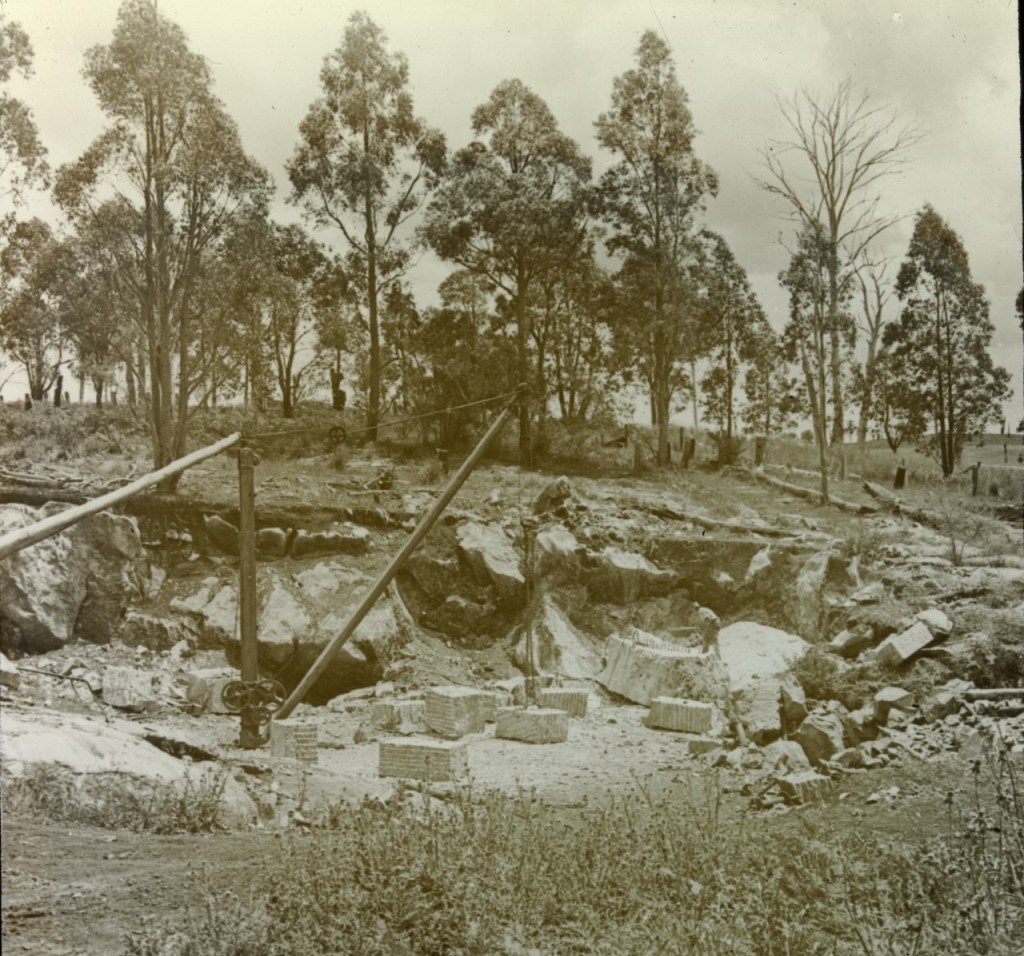

Marley worked out his time as a storeman in the Commissariat when not labouring. He returned to Sydney in October 1826, and received a Ticket of Leave, which recorded that he had a dark, ruddy complexion, light hazel eyes, greying brown hair and had a scar and a dimple on his chin.
Over the years, Marley received and lost a lot of Tickets. In 1836, he had his ticket cancelled for “attending muster in a state of intoxication.” It’s hard to imagine that a convict muster would be entertaining, so perhaps Marley pre-loaded for that one. Bad idea.
In August 1838, he did something that caused him to be admitted to Parramatta Gaol for 14 days in solitary confinement. Finally, in 1846, Marley received a Conditional Pardon.
[i] Lewis Lazarus (2) (c. 1795-1837) arrived at Moreton Bay per the Lalla Rookh on 10 August 1825.
[ii] A group of runaways left the settlement on 23 October 1825, arriving at Port Macquarie the following month. The Commandant took depositions and sent them on to the Colonial Secretary, but it seems that the truth was quickly established. The story then changed to a wonderful overland adventure, and could they please have credit for discovering several great rivers? That would be a “no.”
[iii] Another larger-than-life Lewis Lazarus story involves the remains of Captain Logan (who was murdered in the bush in October 1830). In “These are the Names,” by John Levi, Lazarus is supposed to have been offered a Conditional Pardon if he could find Logan, which he did, and brought the body back to Brisbane, after which he got his pardon and went back to Sydney. Great story, but it was a search party organised by Captain Clunie, and including Dr Henry Cowper, who located Captain Logan’s body. And Lewis Lazarus did not return to Sydney until February 1832 and was not granted any Conditional Pardon.
 Moreton Bay and More