
George Gunningham – stonemason.
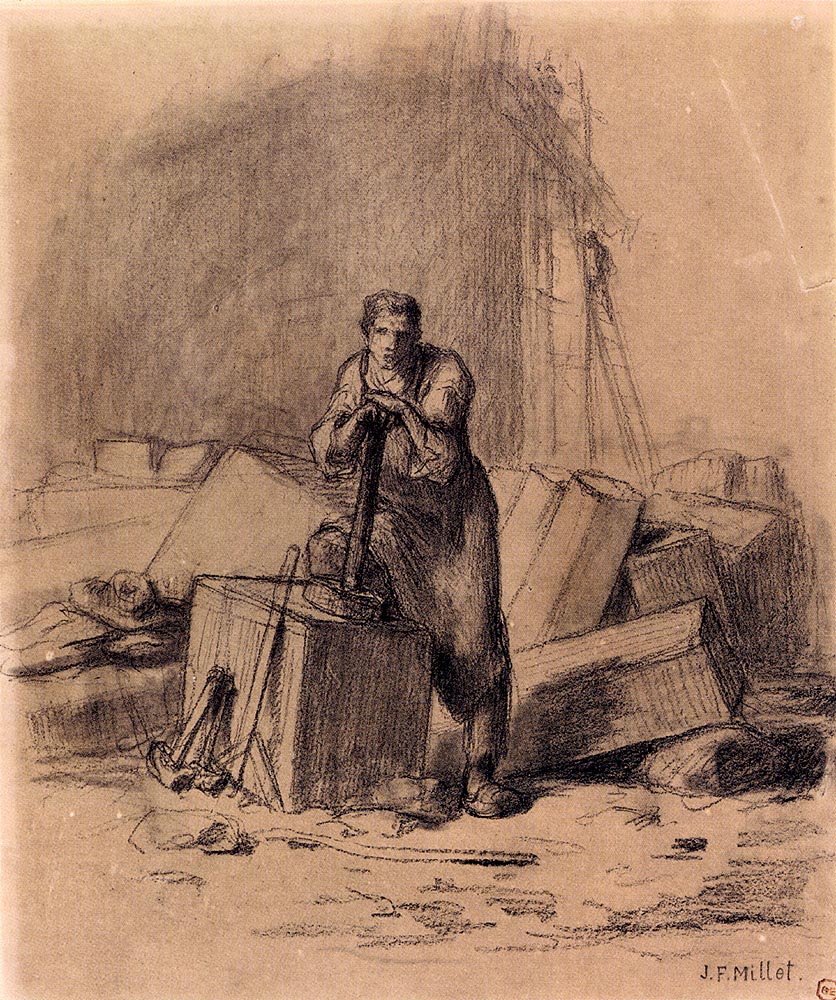
George Gunningham was a tall, fair-haired stonemason from Taunton, born at the turn of the 19th century. George made two mistakes in his life. Both earned him transportation to a penal colony.
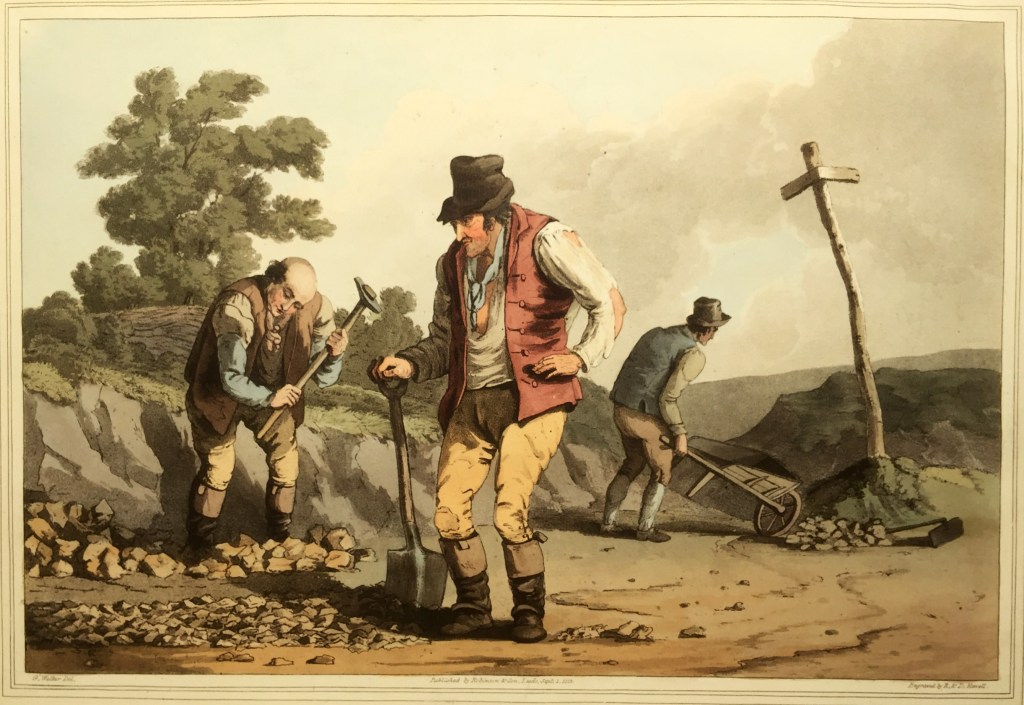
At the Somerset Lent Assizes of 1823, George Gunningham was convicted of larceny, and given fourteen years’ transportation to Australia. Gunningham kept his head down once in Australia, and worked at his exhausting trade. He volunteered, or had his services kindly volunteered, to Moreton Bay per the Amity, and remained there for two years.
In 1834, he was granted a Ticket of Leave, which he lost quite spectacularly the same year, when he was convicted of robbing from the person and was ordered to be sent to Norfolk Island for fourteen years.
How he managed this is a strange tale of drunken singing and domestic violence, coupled with opportunistic theft.
George Gunningham and John Richardson were boarding in the house of William Harvey. One night, when they were all quite drunk, someone decided to sing a sentimental ditty. William Harvey’s de facto partner, Lydia Sharpe, became emotional over the song, and Harvey decided that the best course of action would be to hit her. (He claimed he did this because he was jealous that one of his lodgers could so move the emotions of his lady friend.)
Richardson and Gunningham fell upon Harvey, and in the process, robbed him of some money in his pockets. Gunningham was found guilty of robbery from the person, and sent to Norfolk Island. (Miss Sharpe didn’t fare much better – she was given six months in the Female Factory for “prevaricating” in her evidence.)
George Gunningham spent ten years at Norfolk Island before his remaining sentence was remitted according to statute. He was given his Certificate of Freedom on 9 January 1845. His certificate noted that he had lost his right thumb and the hair on the crown of his head.
William Hartland – wheelwright.
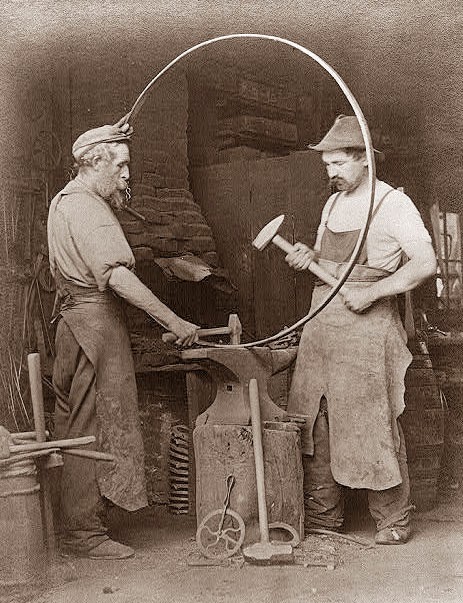
William Hartland was a teenaged wheelwright when he was convicted of stealing two boxes of books from Henry Colbourn and Simon Saunders at Piccadilly in April 1821. Harlan claimed that he was taking up Saunders’ offer of a carting job, “I said I wanted a job, he gave me the box to carry, then struck me, and charged me with stealing it.”
It’s hard to know what Harlan would have done with two boxes of books, given his age and station in life, but the judge was convinced he made away with them, and William Hartlan was given a seven year sentence and a new place of residence – Botany Bay, Australia.
He arrived per the Mary 2 in Sydney on 23 January 1822. He volunteered to go to Moreton Bay, where his skills were in demand. Hartlan was one of four convicts who absconded from the settlement on 12 January 1826. Two other convicts from the Amity party had been returned to Sydney a few days earlier (Butler and Byrne), and this might have been the impetus for the group to cut and run.
The runaway convicts arrived at Port Macquarie on 23 February 1826, and the Commandant there wrote to the Colonial Secretary, asking how they should be disposed of.
Six months later, the Commandant was obliged to ask again, having had four extra prisoners in his charge for quite some time. It was decided that all but Hartlan should return to the Bay. Hartlan was sent to Sydney Gaol instead because he’d volunteered to Moreton Bay, and had not been sent there as a punishment. Hartlan was given a Ticket of Leave in 1828.
Robert Humphries – sawyer.
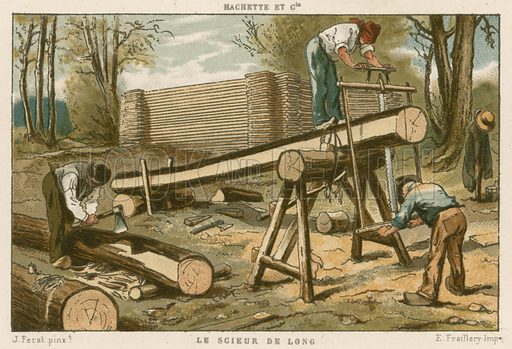
Robert Humphries was a native of Withington who was tried at Gloucester in March 1819, and sentenced to seven years’ transportation. His occupation was as a sawyer, and he worked at the Longbottom establishment on arrival His skills were useful, so he went to Moreton Bay as a volunteer in 1824.
Robert Humphries died at Moreton Bay on 05 November 1825. His death, along with several others in the early days of Moreton Bay, was registered in the Burial Register of St Phillip’s Anglican Church in Sydney on 07 July 1827 by order of the Archdeacon. He was buried at Moreton Bay.
Unlike many of his fellow Amity convicts, the records of Robert Humphries are pitifully few. He is mentioned twice in the Colonial Secretary’s correspondence, his skill as a sawyer leading to a settler requesting his services. The other record that survives is the description of his miserable condition in the Surgeon’s journal for the Recovery. He had been suffering dysentery for weeks before boarding, and had gum disease so acute that his entire face was swollen. It’s tempting to wonder if his health overall had been weakened by those illnesses in 1819, but he worked for the next five years in a very physical job, so perhaps not.
James Hazel – plasterer.
James Hazel (also spelled Hazell, Hazle) was born in London in 1801. He was convicted at Westminster in 1818 for picking pockets, and received a seven year transportation sentence. His convict indent taken on his arrival shows that he was a plasterer and labourer, quite short at 5 feet 1 ¾, fair, with brown hair and dark eyes. Hazel was assigned as a labourer in Sydney and Newcastle.
In April 1824, James Hazel was sent to Port Macquarie.
In July 1824, James Hazel was in Sydney Gaol for running away from Port Macquarie.
Darcy Wentworth decided that Hazel could serve out his original sentence at Macquarie Harbour, Van Diemen’s Land. This destination was changed to the rather more tropical climes of Moreton Bay.
Hazel was a plasterer (or, wonderfully, “plaisterer”) by trade, and his skill would be welcome at the distant settlement. But just how long he was there, and how he left, is a mystery.
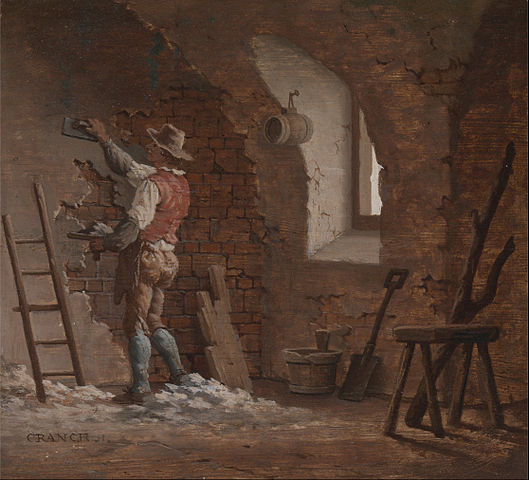
A Certificate of Freedom was issued for James Hazell of Prince Regent (1), and advertised in the Sydney Gazette on 9 June 1825. At the time, Hazel was listed as being a labourer at Windsor. This certificate was replaced in January 1826 in lieu of the 1825 one that was deposed to be lost.
Hazel is shown as “to Sydney” in the Chronological Register at Moreton Bay, but with no date. (Something has been written and erased next to that entry – it may have been to do with absconding.)
He next appears in the record of Sydney Gaol on 13 May 1826, charged with larceny, and ordered to perform 6 months’ hard labour.
On 18 January 1830, James Hazel was convicted of larceny and ordered to a penal settlement for seven years – Moreton Bay.
Hazel absconded for four months in 1831, and five days the following year. He returned to Sydney on 10 April 1836, a little shy of the seven years, and was discharged to Hyde Park Barracks. He was given a further Certificate of Freedom the following year.
Charles Hubbard – lime burner.
Charles Hubbard was convicted of theft at the Old Bailey in 1818, and received seven years’ transportation. Hubbard seems to have been a well-behaved convict artisan, and he volunteered to Moreton Bay.
Charles Hubbard was employed as a Limeburner at Moreton Bay. This work involved burning lime (and sometimes shells) at high temperatures in brick kilns to make quicklime for use in mortar. This would have been a very hot, hazardous job, particularly in the sub-tropical climate of Brisbane. His work can still be seen today in the mortar between the bricks at the retaining wall near Queen’s Wharf.
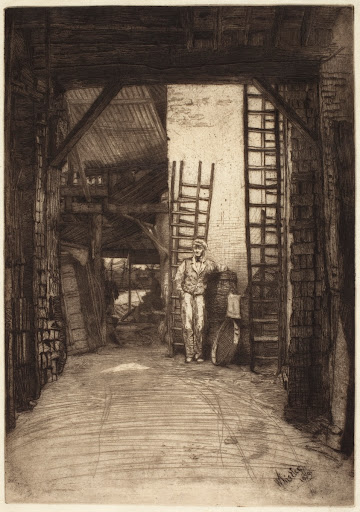
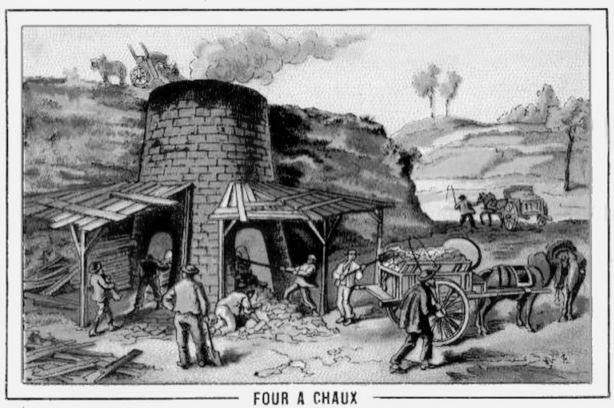
Charles Hubbard returned to Sydney on 13 March 1826, and was granted his Certificate of Freedom on 28 March 1826.
 Moreton Bay and More