
Page 1. Classified Advertising.
James Swan, of the Courier Office, was selling off a small library of incredibly dull books. The works on offer included The Christian in Palestine, Brown’s Family Bible, Partington’s History and Views of London, D’Aubigne’s History of the Reformation, Fleming on the Papacy, Simpson’s Plea for Religion, Book for Mothers and, in order to cater for all levels of brow, “a variety of cheap Novels, Romances, and Song Books &c. &c.”
Thomas Alford advertised a well-appointed four horse coach service between Ipswich and Drayton on Mondays and Fridays. He further added that he had “made arrangements for Stabling at the different Stages on the Road, and the whole affair will be under his own management, parties may rely upon Punctuality and Dispatch.” The Drayton Coach left that town at 7:00 am on the appointed days, and the journey to Ipswich took eleven hours.[i]
James Stevens, Cooper, advised the public that he was relocating his business from Kangaroo Point to Edward Street, facing the Gaol, “and hopes, by making Good Articles, to merit a share of their patronage.” Location, location, location!
Thomas Brett & Co, of Ipswich, had just received a selection of fancy goods from Sydney. The goods included a lot of puzzling things, presumably intended for women to wear: “Zephyr Crape Handkerchiefs, ‘Jetty Tuffy’ Caps[ii], Coutille Stays and Lace Chemizettes.”
Ambrose Eldridge, who ran a “Drug, Grocery and Oilman’s Store” in Brisbane offered a truly revolting-sounding collection of medicines and chemicals in his drug department. In his grocery department, he offered the usual pantry items of the time – patent groats (what?), dried fish, arrowroot, salad oil, capers, pickles, soap and blue. His oil and colour department offered wicks of every description, white lead, litharge, lamp-black, pitch and whiting. A regular Bunnings.
Not to be outdone, Jas Meadows of North Brisbane offered bottled fruits, French dried apples, confectionary, gold leaf, sperm and black oils, copal varnish and tinfoil.
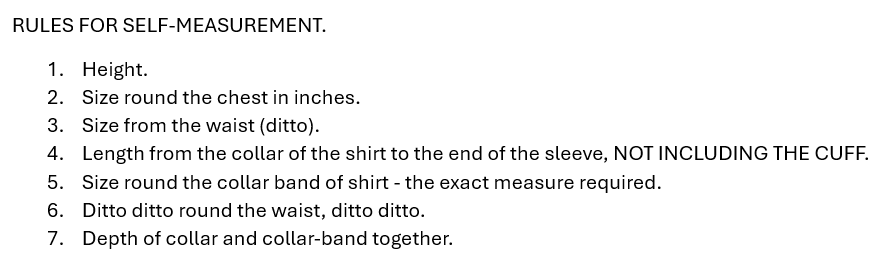
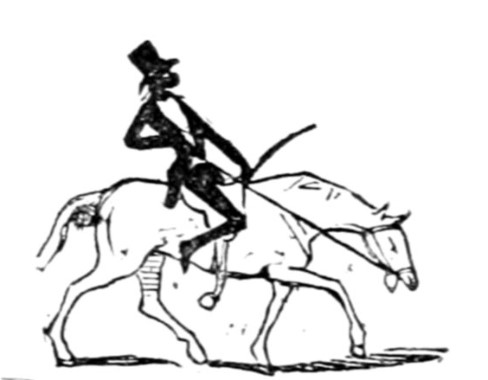
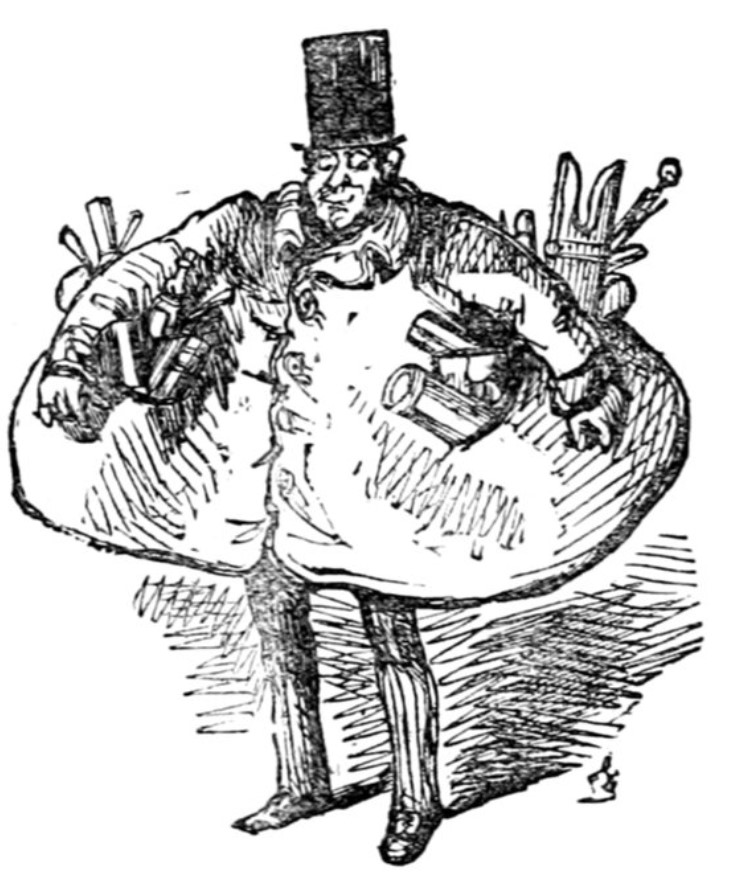
Smiths’ Colonial Shirt Manufactory (of Sydney, mind) was aware that “At this season of the year it is usual for gentlemen to replenish their Winter Wardrobe.” They offered instructions for gentlemen in far-flung parts of the colony to measure themselves for a shirt. “If the instructions for measurement are strictly complied with, Messrs JT and W Smith undertake to produce a Shirt to fit any figure that Nature in her wisdom has given to man.”[iii] A gentleman would record his measurements thus:
Page 2. Editorials, Fear of Migrants, and Housing Insecurity.
The post-election editorials were a heady mixture of housing/land non-affordability and fear of immigrants. The more things change…
The housing/land issues were by blamed on the slow trickle of land sales, and the benefit from those sales not being given to locals.
The fear of immigrants – and I missed this editorial in my research on Kimboo and others – was directed at Chinese workers. Whoever it was that wrote this editorial – Mr Swan? Mr Wilkes? – did not hold their opinions back.
“The blood thrills at the contemplation of this beautiful country being colonized by, and our children exposed to the contamination of, beings so grossly debased and wicked. It would scarcely be expected that such people would be acceptable in the sight of the free British labourers, with whom they are brought hither to compete.”
In other news, a “very numerously and respectably signed” petition sent to the Governor-General asked for an inspection of geology of Moreton Bay, to find out what earthly riches the area might have. Including the enticing notion that there might be gold in them thar hills (there wasn’t).
A load of Moreton Bay cotton was being sent to Sydney. Mr Poole had intended to separate the cotton from the seed and send it off to his London contacts, but found he lacked the machinery necessary to do so. Something he might have thought about earlier. He sold the cotton to a chap in Sydney, who had better equipment.
The Moreton Bay Amateur Musical Society, having formed and met and so on, adjourned their meeting because it was decided that they needed to purchase a pianoforte in order to produce music. Something they might have thought about earlier.
Page 3 – Prospecting, a Mississippi Lynching and the Duke of Wellington’s Habits.
Some Brisbane residents had been heard discussing a trip to Summerhill Creek to try their luck in the goldfields. But they’d probably come back: “Most of those, however, who leave Moreton Bay will be sure to return, if they live.”
“A man named Brown, called after his country “the Spaniard” having escaped from the pursuit the Port Phillip police.” Fair enough. I’m sure there are lots of Spanish people named Brown.
In Glasgow, a ship had been built quite quickly.
There was a horrible rape and murder of a white woman in Mississippi, attributed to a Black man. The Courier reprinted a long and graphic local account of the crime and its aftermath. The aftermath was no trial and a lynching.
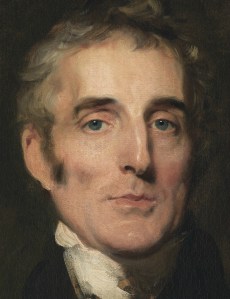
The Duke of Wellington’s habits were detailed. “He suffers nothing to disturb the even tenour (sic) of his course, either in official or household existence. The equilibrium of his health is rigidly preserved through the uniformity of his regimen, the unvarying durations of his rest, and the punctuality of his hours of equitation.” The venerable Duke passed away the following year, possibly bored to death by his unshakeable schedule.
A poem of inordinate length and wretchedness was published, which appears to be a dig at pastoralist Arthur Leslie and transportation advocate Earl Grey.
More Classified Ads followed, including one from Panton & Co of Ipswich, which offered delicacies unheard of in stodgy Brisbane – lime juice, Java rice, fresh apples and ginger. Fresh fruit!
Mr Richard Jones, a merchant who had started his career in Sydney in the 1810s, thanked his electors in Stanley Boroughs, and gently chided the Moreton Bay Free Press for publishing a letter “evidently intended to create religious animosity and bitter feeling on the part of the Roman Catholics against me.” More on Catholic tensions on page 4.
Page 4 – India, Giant Fossil Eggs, Handwriting, Joan of Arc and Mr Hook and Mr Crook.
The India situation was probed at length in a reprint from a Launceston paper. The article shows an unconquerable belief that the English should (a) be in places like India (or Australia for that matter), and (b) would improve the countries beyond measure by their mere presence. Once they’d imposed their laws, religion, language, institutions and customs. By force if necessary.
There had been “wholesale murders in Somersetshire,” where several children’s bodies had been found in a chimney. The blame was placed on a young woman who had lived there previously, and who had borne illegitimate children that had disappeared. She was deaf and unable to speak. At the time of publication, she hadn’t been lynched, thankfully.
A gent who went by the modest handle of Isidore Geoffroy St. Hilaire advised that three giant fossil eggs had been forwarded to Paris from Madagascar. The eggs were estimated to have a volume of 136 hen’s eggs.
Holy War was imminent, if a French article quoted at length was to be believed. There was concern about the “whole progress of the Papal Aggression movement.” For those who do not study Catholic doctrine, the movement was Ultramontanism[iv], a belief in the Pope’s temporal supremacy, and those who supported it were “the devoted acolytes of papal tyranny.”
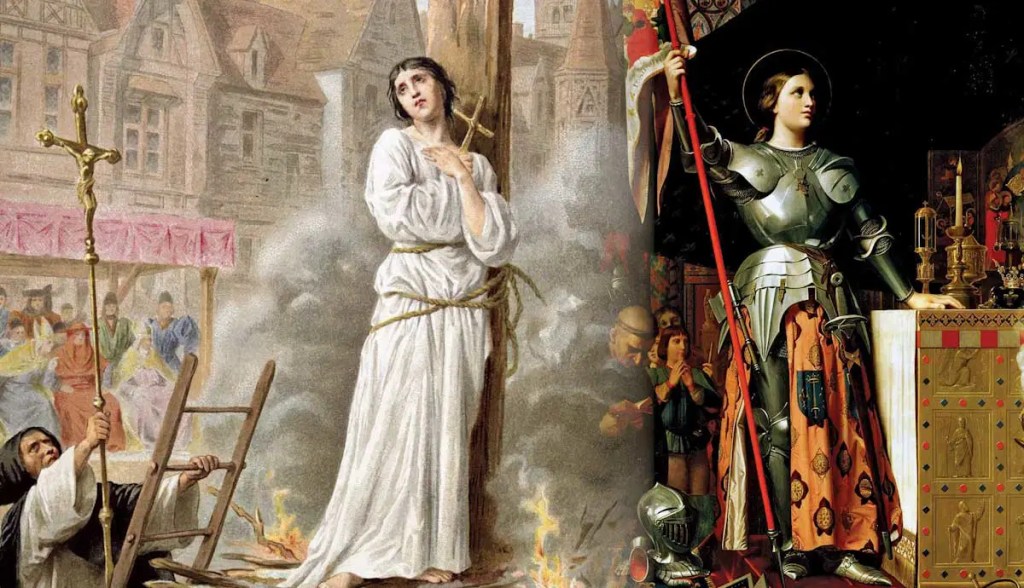
The vexed question of English culpability in the death of Joan of Arc 420 years prior was the next topic addressed, and the conclusion reached after a lot of scholarly research was that, “The English had no more to do with her trial than with the condemnation of Socrates.” The fact that this declaration was made by a French author made it all rather gratifying for the English.
The handwriting of eminent persons had been analysed by an expert, and the findings were mixed for the big figures of European history.
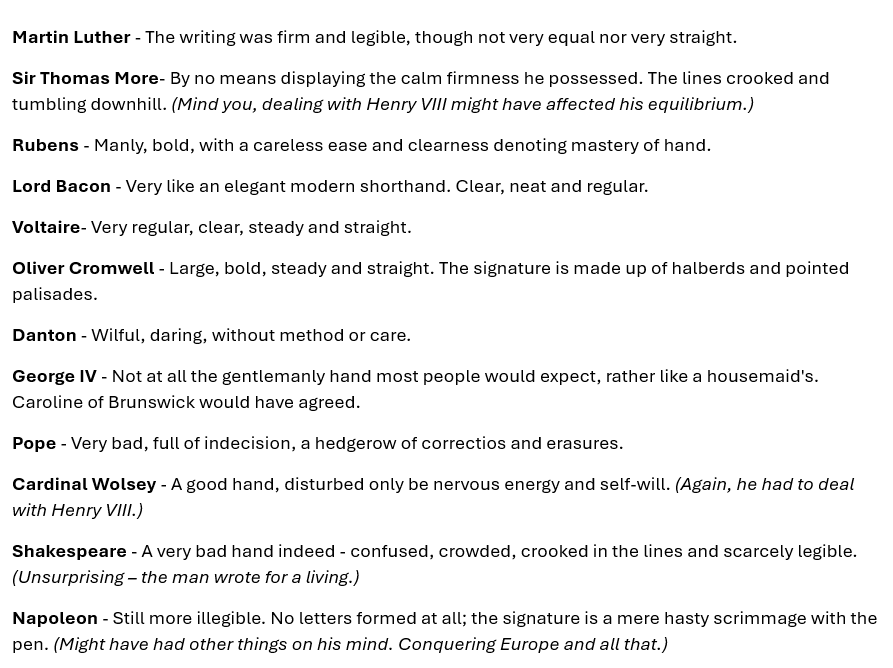
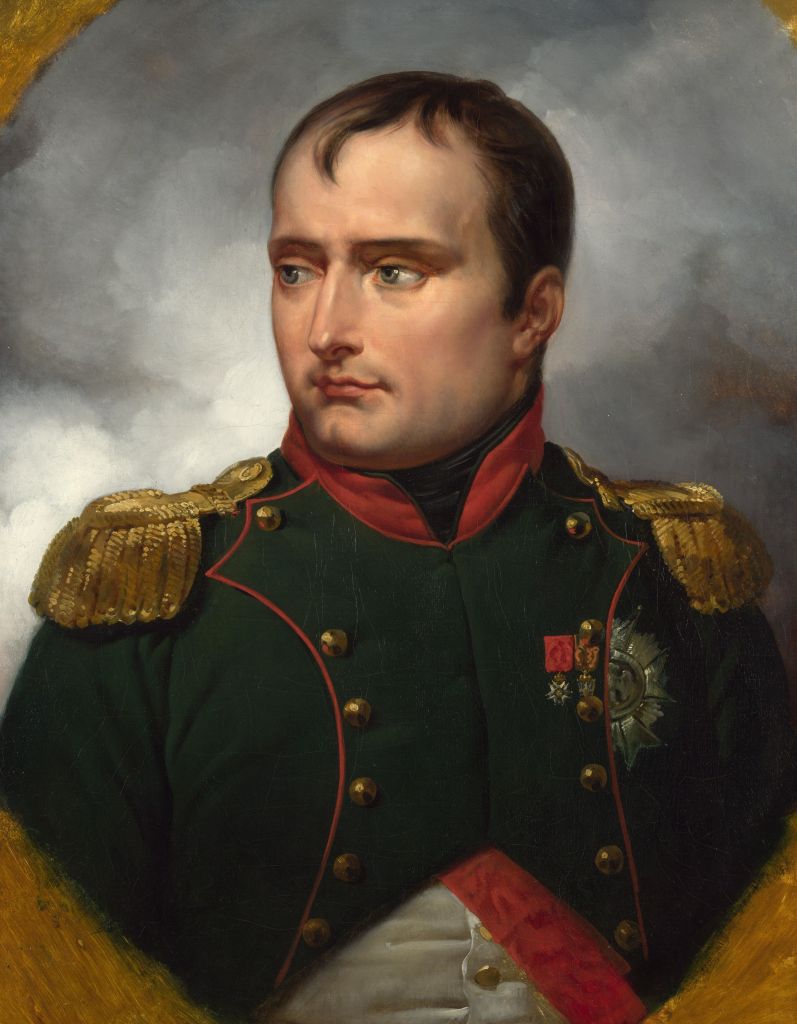
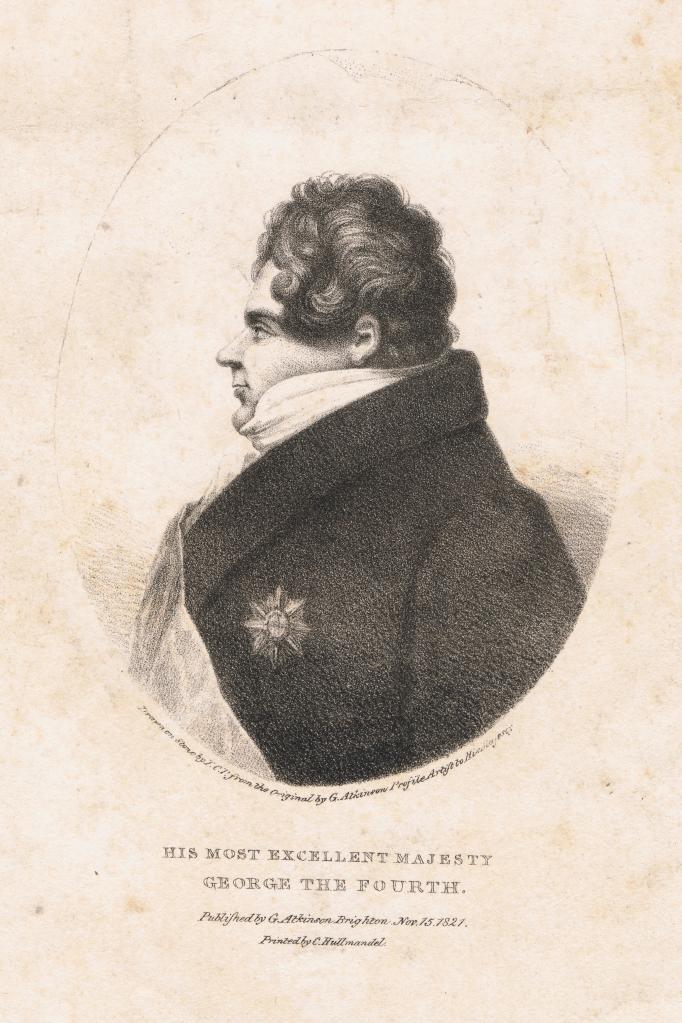
Napoleon’s writing was illegible. George IV wrote like a housemaid (and was fortunate to have tailors on hand to fit garments to the figure that Nature in her wisdom had bestowed on him).
The story of the expression “by hook or by crook” finished off the edition. After the great fire of London, the burned buildings were cleared away, leaving a legal puzzle that would have spent years before the courts – determining the legal property boundaries of claimants. To avoid delay in rebuilding, two surveyors were appointed, whose decisions would be prompt, final and binding. They were Mr Hook and Mr Crook. Hook and Crook acted quickly and apparently quite fairly. After that, you would get out of difficulty by Hook or by Crook.
[i] For those longing for the old days of slow, quiet travel, the distance between those places is 96 kilometres (approximately 60 miles). Using one’s horseless carriage, the journey takes roughly one hour and twelve minutes.
[ii] No modern search engine can explain this item, but in the process of trying I learned a lot about Tom and Jerry fandom. And jetties.
[iii] Meanwhile a gentleman’s wife is obliged to wear stays and wide petticoats to produce the figure that Nature in her wisdom had not given to her.
[iv] A clerical political conception within the catholic church that places along emphasis on the prerogatives and powers of the Pope. It contrasts with Gallicanism, the belief that popular civil authority – often represented by the state’s authority – over the Church is comparable to that of the Pope.” Thank you, Wikipedia.
 Moreton Bay and More