
How ‘Melbourne Football’ found a home in Brisbane in the 1880s.
As the Brisbane and Sydney teams prepare to play the AFL grand final next weekend, Melbourne footy followers have sensibly aligned themselves into South Melbourne Football Club and Fitzroy Football Club supporters. (After all, they argue, both clubs were proudly Melbourne clubs before expansion.)
In the colonial era, the very problems that dog the modern football codes were well and truly present. The Melbourne game was in the process of expansion to the north, gambling was a concern, stadiums (well, sports grounds) needed to be built, and on-field violence and injury were fretted over.
In May 1883, a person using the nom de plume “Bamboos” penned a letter to the Editor of the Telegraph, suggesting that Rugby was simply too rough and should be discontinued in favour of Melbourne football:

Within days, a correspondent of the Darling Downs Gazette begged to differ.
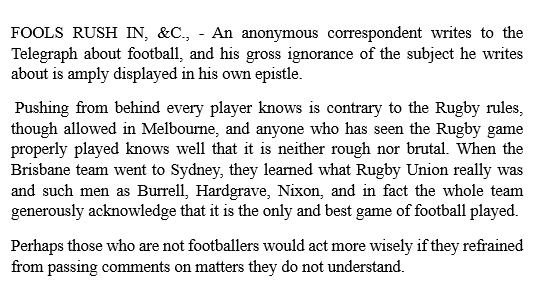
So there. The only and best game! (Rugby League had yet to be invented, and soccer was popular, but seemed content to keep in its lane, not in the market for the hearts and minds of Queenslanders.)
Growing the Code – the Intercolonial Matches.
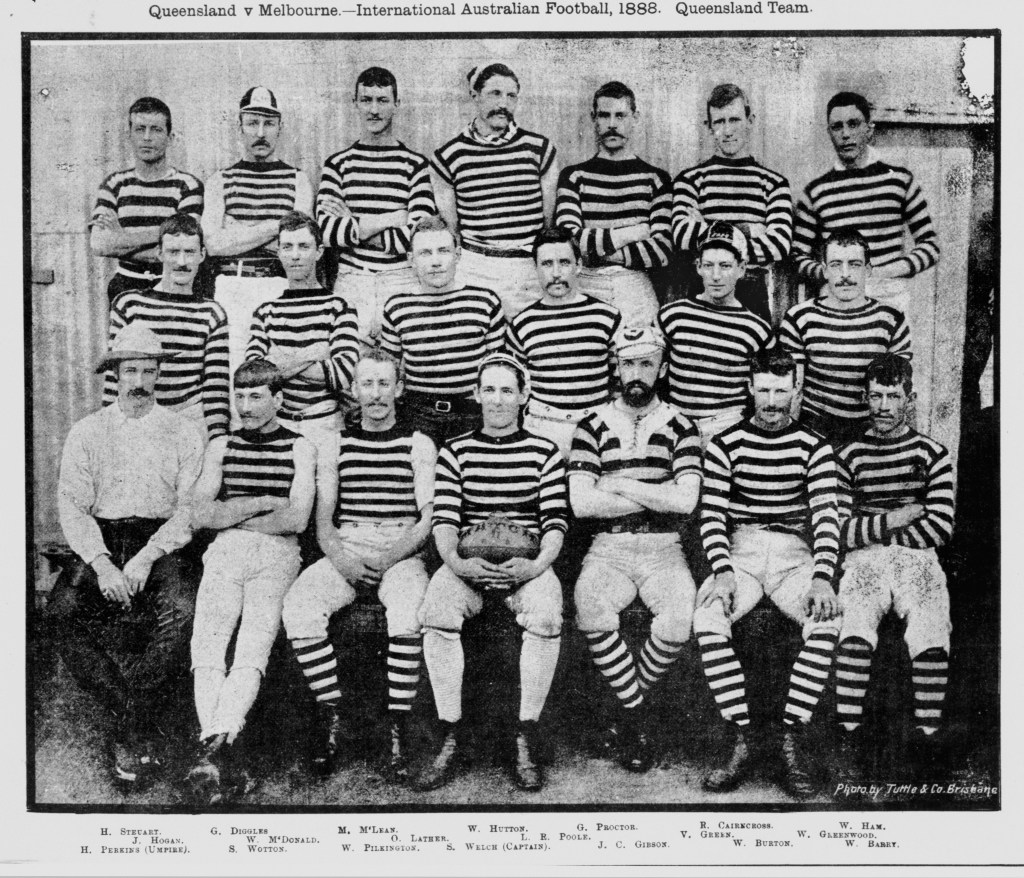
By 1888, Australian Football was growing in popularity in Queensland, and Melbourne teams regularly made the long steamer journey north to teach the locals a lesson or two.
The Intercolonial Australian Football Match in 1888 was a show-stopper. A Victorian team came to Queensland, and played a representative match.
At 9:15 pm on Thursday 14 June 1888, a steamer pulled in to Howard Smith Wharf at Petrie Bight in Brisbane, carrying the Victorian team. A crowd of over 500 locals waited patiently for hours to see the visiting heroes land, cheering loudly the minute the steamer appeared on the horizon. Their cheers were returned by the visitors, who were given an official reception at the Grand Hotel.
The Rugby Association, in a show of cross-code grace, turned up in force to welcome the Melbourne Players, and rescheduled their matches to avoid drawing crowds from the visitors.
At the reception, Mr W Smith, MLA, managed the expectations of Queensland fans by admitting that their team was “not first-class,” but he was sure that the game would be conducted in a sporting spirit and that Queensland’s Australian Football future would be the real winner.
“Nothing could be better than to inculcate into a people a love of manly sports, for if it did nothing else, it kept them from loafing about the streets.”
Mr Smith.
Smith went on to sing the praises of amateurism in cricket and football. He deplored that other sports were being made the medium of betting. He was sorry to say that there weren’t good sporting facilities in Queensland, and the Government seemed to have no interest in providing them.
(So – growing the code, the menace of betting, and no serious input from Government in terms of sporting venues – was this 1888 or 2024?)
And the Intercolonial Match? There is a two-page analysis in the Queenslander of 23 June 1888, that goes into every play of the ball over the four quarters. It’s exhausting to read, but instructive for modern footy obsessives. The result was unsurprising. Victoria: 6 goals, 16 behinds. Queensland: 3 goals, 5 behinds.
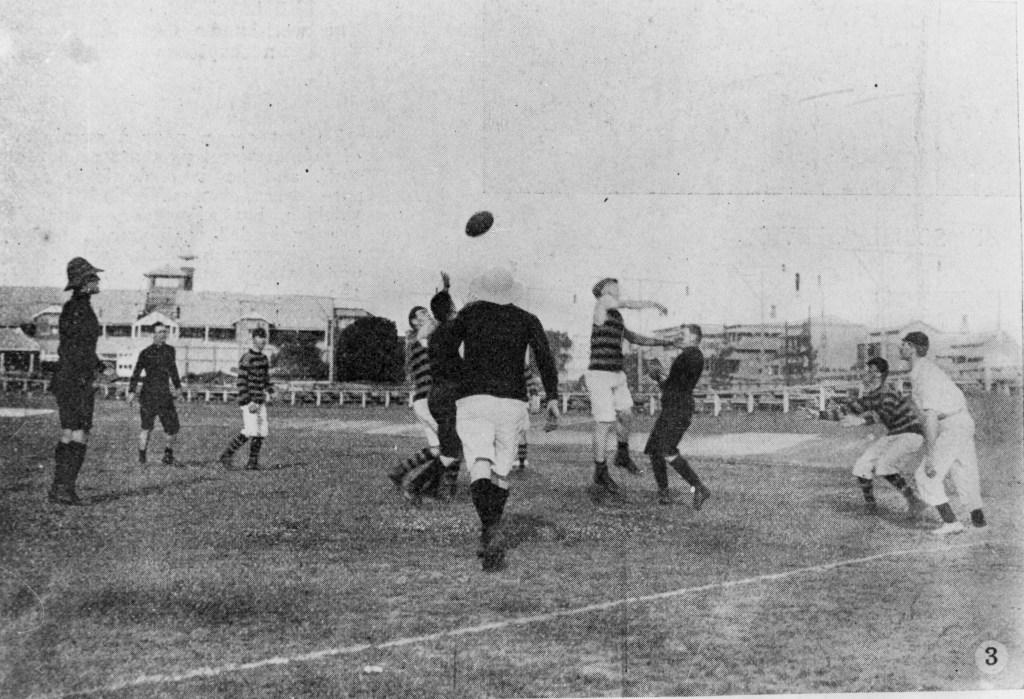
After the intercolonial match, the Victorians headed to Ipswich, where they inspired quite a bit of festivity (and absolutely walloped the local lads):
On Monday we had the Melbourne footballers here, and most of the business places closed at one o’clock. The boys seemed to be having a jolly old time of it as they were driven around town in a four-in-hand by Mr. H. S. Cribb, before proceeding to the football grounds at North Ipswich.
The public mustered in great numbers to see the manly sport, but our boys stood no show with the Southern chaps, although they played a plucky game. The weather during the afternoon was all that could be desired, making a splendid opportunity for the ladies to show their handsome dresses, pretty figures, and charming faces, which they did to perfection.
Figaro, 1888
At least the ladies looked nice. And aside from the dresses, football was the winner on the day.
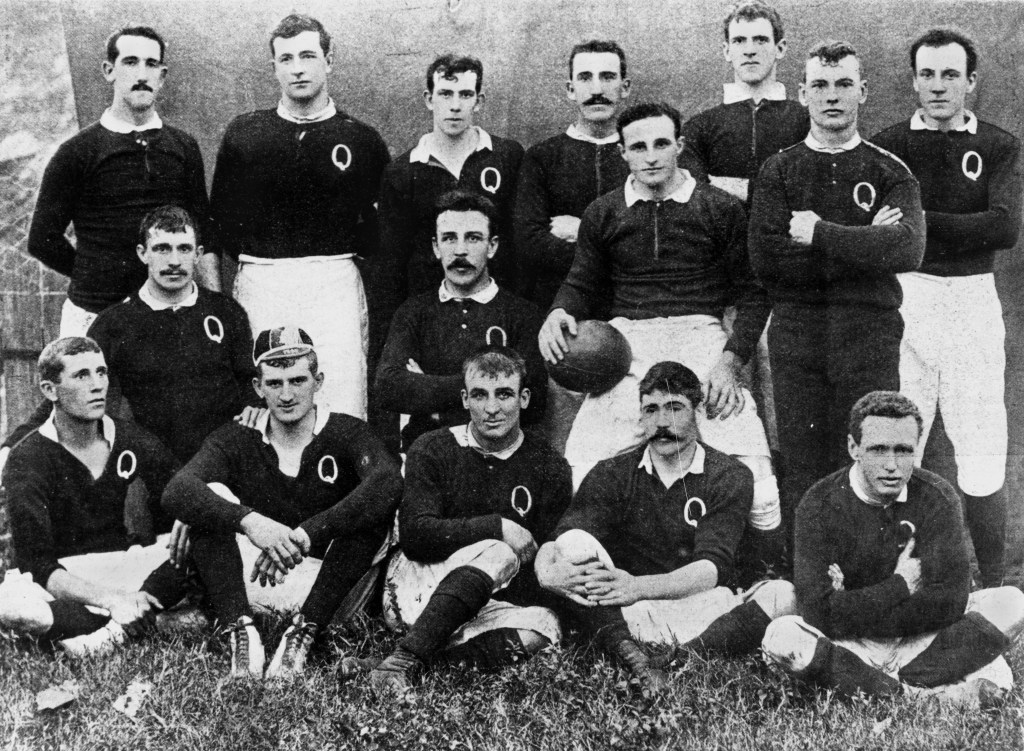
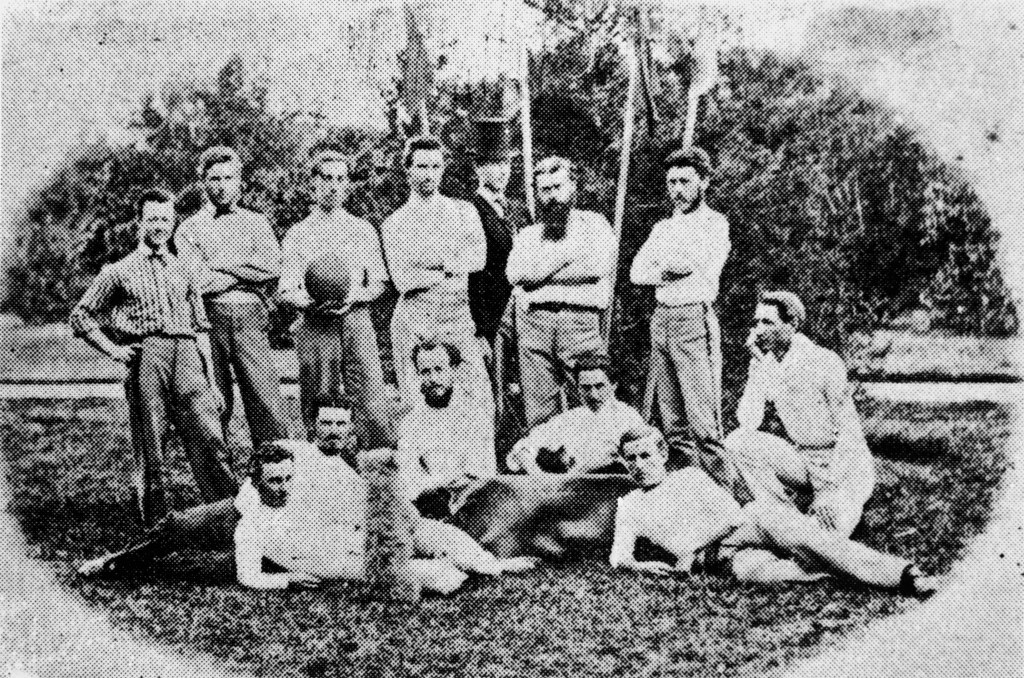
The rival codes: The Queensland Rugby Team, after a bruising match in 1899, and the Brisbane Soccer Team in 1870 (don’t know how their football game was, but their lounging game was on point).
 Moreton Bay and More