
In the 19th century, the first page of a newspaper tended to be devoted to classified advertising. After all, this was where the money was. And it could contain some unexpected gems.
Notices to the Public.
Don’t tamper with your gas meter.
The Brisbane Gas Company was fed up with people disconnecting their meters with a view to a bit of free gas. Mr Walker was prepared to rigidly enforce the rule about disconnection without “due intimation.” “Giving notice” to the company would have been clearer, but, you know, we have to be a bit Victorian about these things. (Fiddling with gas meters would bring down “Professor Russell” in Sydney a few years later. Had he not fiddled with his gas supply for a freebie, his criminal enterprise might not have been exposed. At least not then.)

The Estate of Patrick Mayne.
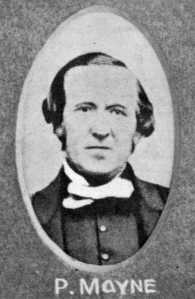
Over a year after her husband’s death, Mrs Mary Mayne was still sorting out his estate. Mayne had been ill for some time before his demise, and had died owing a lot of money. Mrs Mayne sorted things out – running the business, paying the debts and making canny investments, to the point that the family was able to purchase and donate land to establish the University of Queensland at St Lucia. And no, there’s no evidence anywhere that Patrick (a) murdered anyone, or (b) made an “overheard” deathbed confession to that effect.

Wait – the Crusades are back on?

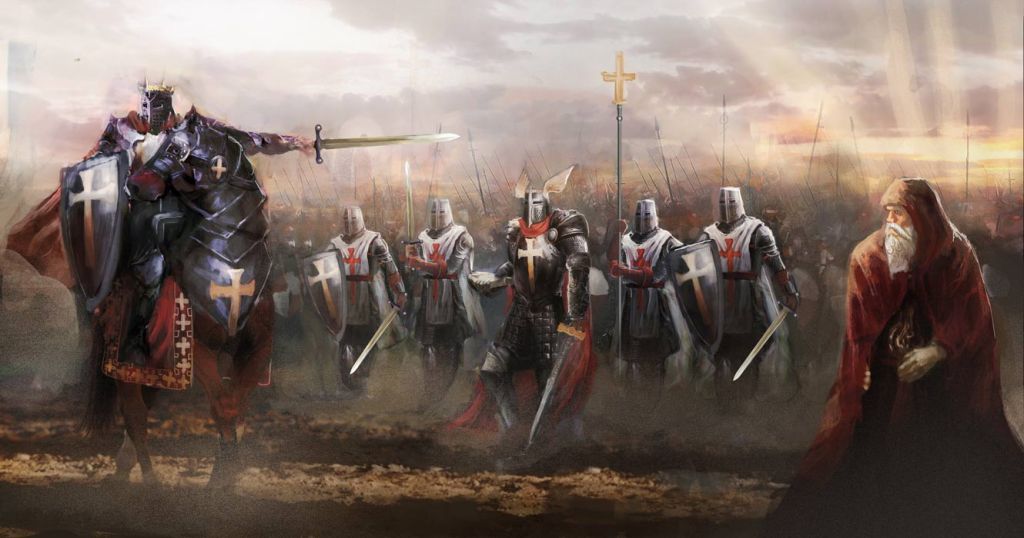

Wow – imagine this lot turning up at 4 o’clock on a Friday afternoon in old Brisbane Town! (I know, it was a sort of fancified Oddfellows, but still..)
Services and Products.
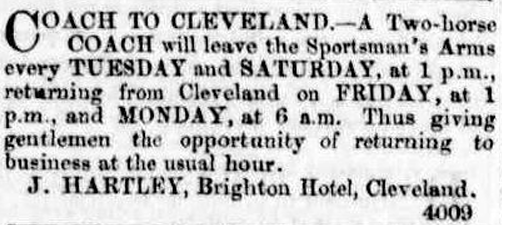
Fancy a weekend away?
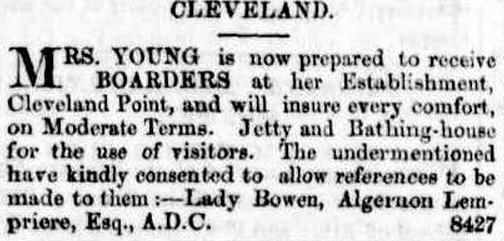
Mrs Young had really the best referees of any boarding establishment in Moreton Bay. Lady Bowen (Diamantina, Countess di Roma to her friends, of which there were many) and her husband’s aide-de-camp, a member of the distinguished Lempriere family. Mrs Young’s terms might have been moderate, but she was clearly expecting a certain kind of boarder. The best kind.
Having survived the crushing social expectations that came with boarding at Mrs Young’s, one could amble down to the Brighton Hotel and catch the return journey of Hartley’s coach on Monday morning. After all, gentlemen were not expected to return to business any earlier than nine.

Looking to update one’s wardrobe, ladies?
Ah, Victorian clothing. Particularly the exacting nature of female attire. Stewart & Hemmant’s Criterion had a department for everything.

An entire department devoted to mantles? What was a mantle? Apparently, it was a loose over-garment. There were many, many types of mantle available to the discerning lady.
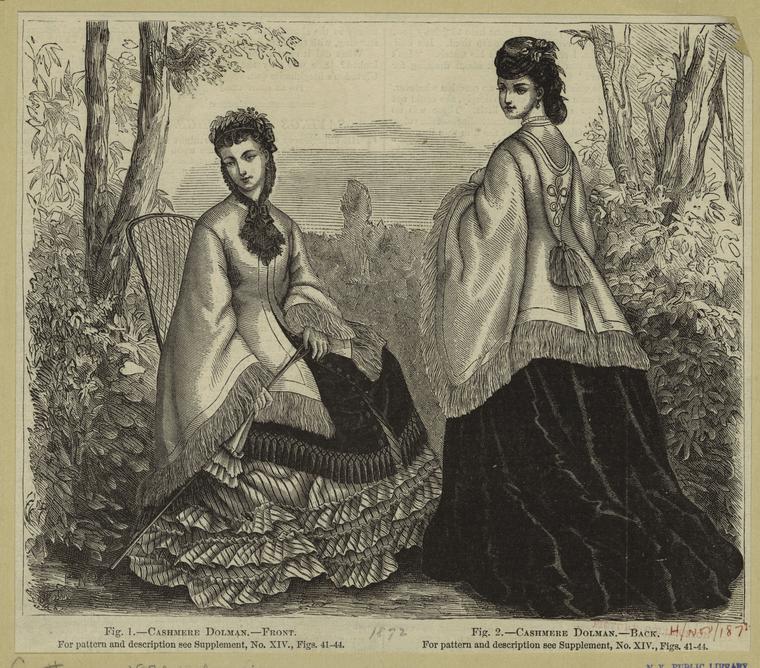
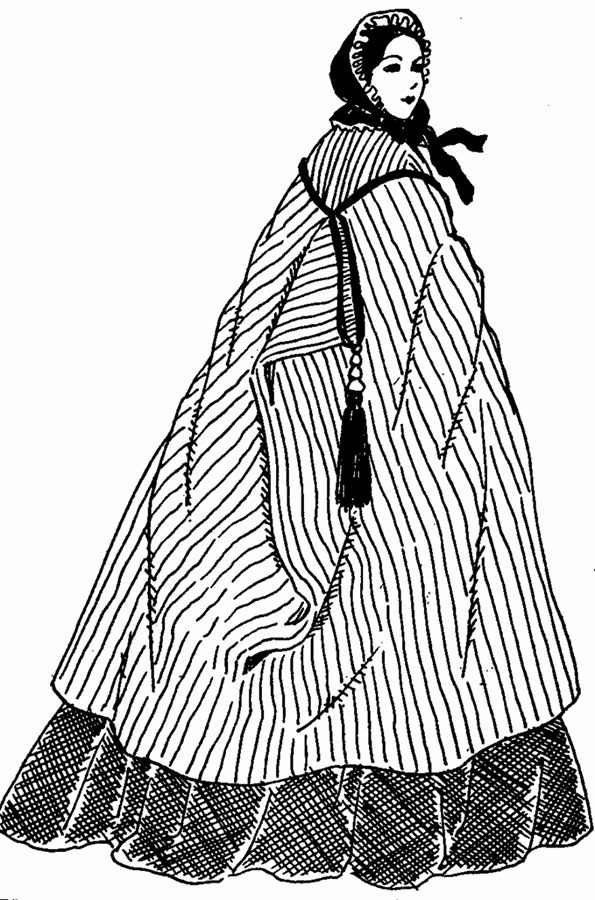
Stewart & Hemmant sold the burnous mantle, a cape/duster garment, designed to shield ladies, and their dresses, from dust and wind (for example, when taking the Hartley coach to stay with Mrs Young at Cleveland).

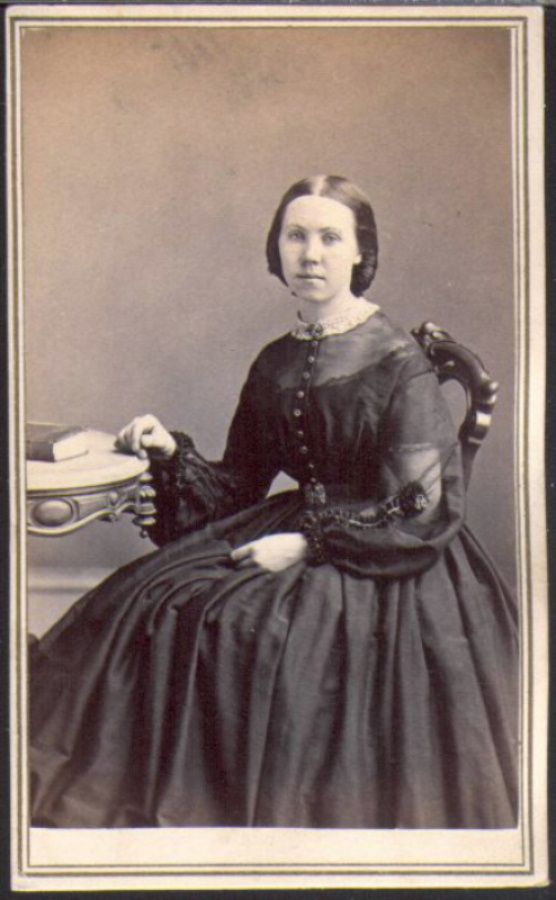
These two ladies are wearing barege on their shoulders and sleeves – it’s a sheer material, but worn in the most steadfastly respectable manner. A barege mantel, I believe, would resemble the dolman garment in cut, only worn as a light covering garment. Because one can never wear too many layers.
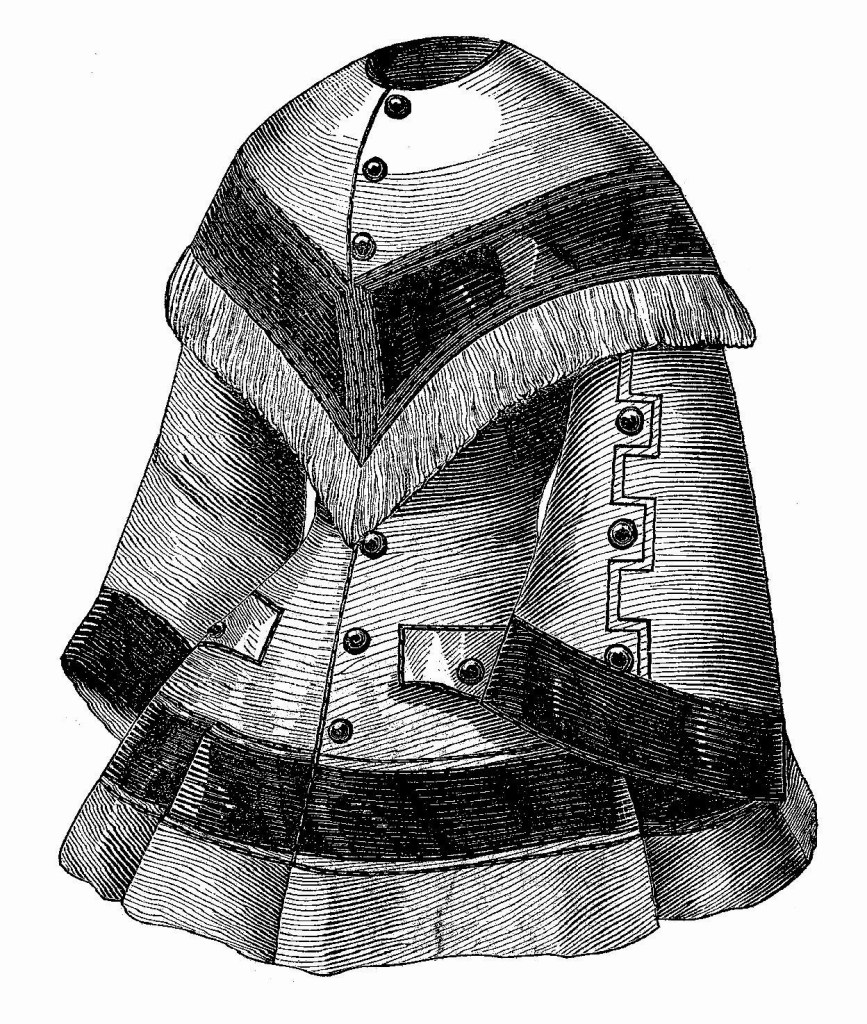
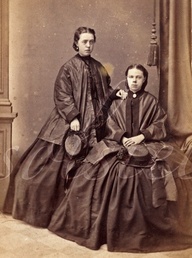
Paletots were made for ladies and gentleman, but were by no means unisex. They were a hip-length overgarment of a slightly boxy design. Perhaps a less flowing mantle, or a sturdier barege. Not as long as a burnous. God, this is confusing.
Then, we have grenadine. Wikipedia informs me that it’s a “light, open, gauze-like cloth” and is produced on jacquard looms. Right. I did come across a sublime article on grenadine, which you can view at this link, or just enjoy the following paragraph:
However, everyone knows original grenadine is produced exclusively in Como, a small town in northern Italy you may have heard of because rich celebrities do love a mansion overlooking a beautiful lake.
Clearly, I’m way behind on my grenadine facts. I didn’t know what it was, or where it came from.
I’ll leave Stewart & Hemmant’s Hat Department to your imagination:

Looking to update one’s wardrobe, gentlemen?
Of course, if one doesn’t feel like going to one’s tailor, Stewart & Hemmant had a department for ready-made clothing.

The basic clothing for gentlemen has not altered radically – shirt, trousers, jacket, tie, socks. The cut and fabric have evolved over time. There were, however, a couple of items that seemed unfamiliar.

Crimean shirts were loose, long, smock-like shirts intended for those who had to perform manual or skilled labour. Crimean shirts were worn by miners on the diggings, navvies on worksites, and bushrangers waiting to relieve the postman of his satchel. It is unlikely that Mrs Young would be prepared to receive a boarder dressed in a Crimean shirt.

Gambroon (see boys’ trousers) sounds like a sensible fabric choice for the subtropics, from what I can discern of it. It was a twilled linen cloth generally for lining. Thank you, Wiki.
Now, to Duck Trousers. They’re still made today. I hadn’t heard of them, so I opened my Canva Dream Lab account and asked it nicely what they might look like.
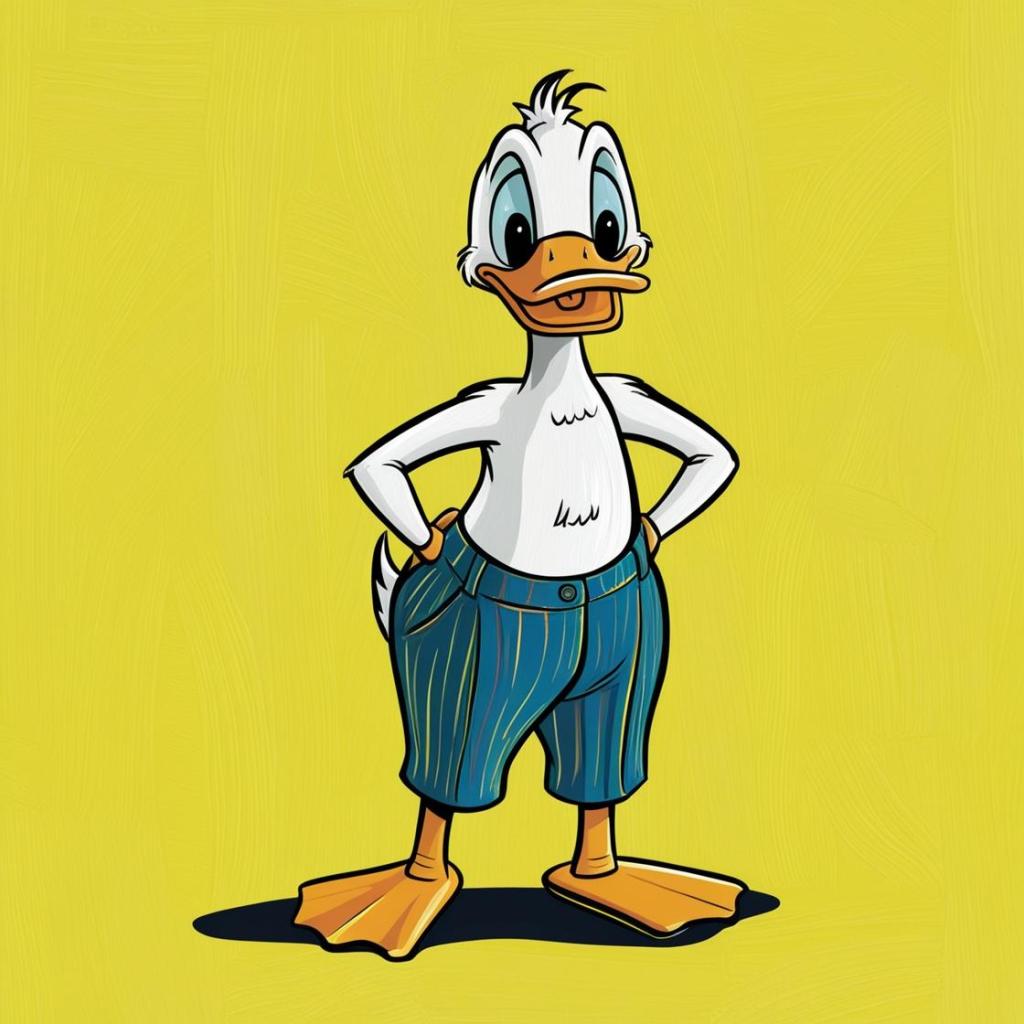

I suspect that to be received by Mrs Young, a gentleman would choose the tweed trousers, vest and jacket, perhaps with the pith hat. But be prepared for Mrs Young to discern that you bought them from the ready-to-wear section of Stewart & Hemmant’s.
Finally, To Let.
For those who didn’t want to come under Mrs Young’s scrutiny, no matter how moderate her terms, one could always lease a cottage down by the sea.

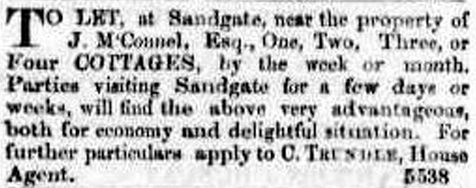
I bags the one with the verandah and flower garden.

 Moreton Bay and More