
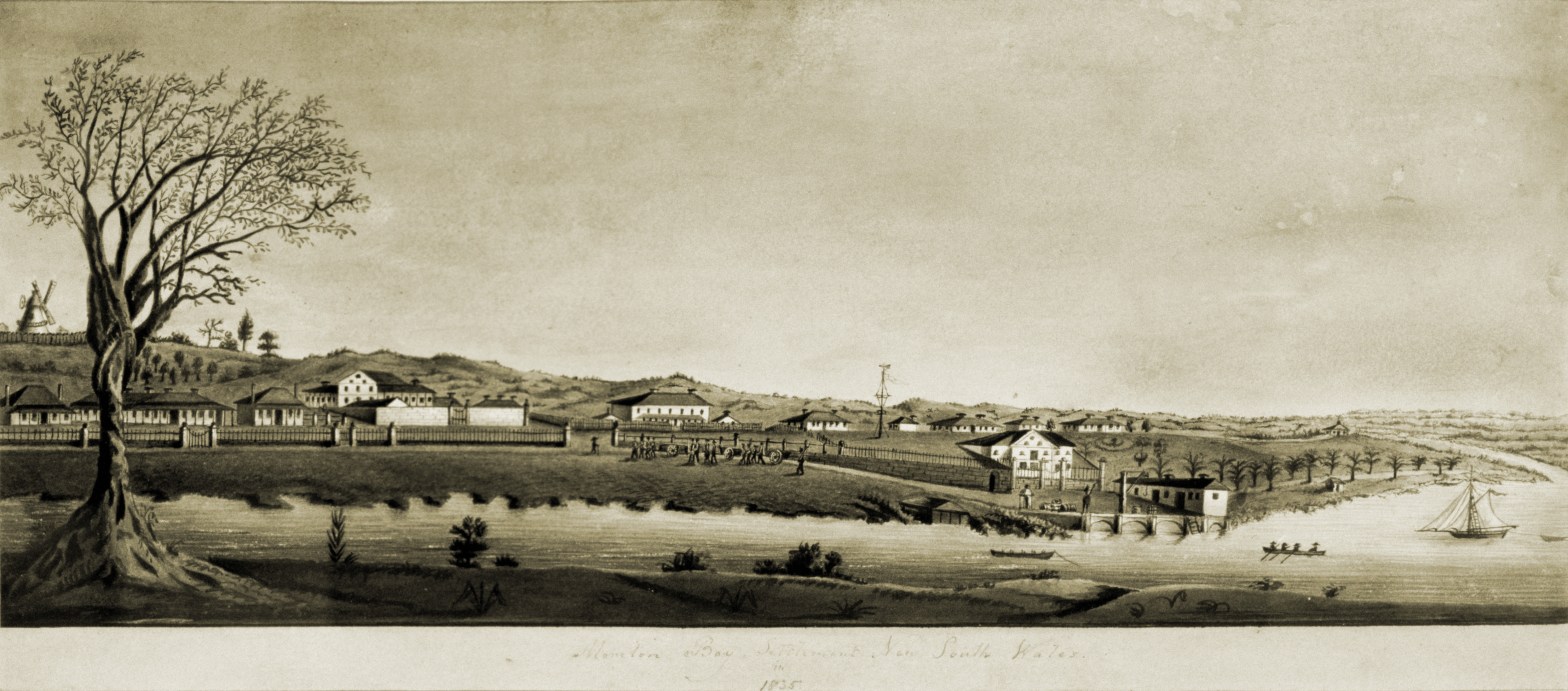
The Painting.
It is the earliest image of Brisbane that isn’t an architectural drawing. I’ve used it extensively, and it’s beloved by local historians.
It’s May 1835, the 3rd to be precise, and a civil servant named Henry Bowerman is standing on the south bank of the Brisbane River, sketching the convict settlement on the other side. The sketches he made became the watercolour “Brisbane Town.”
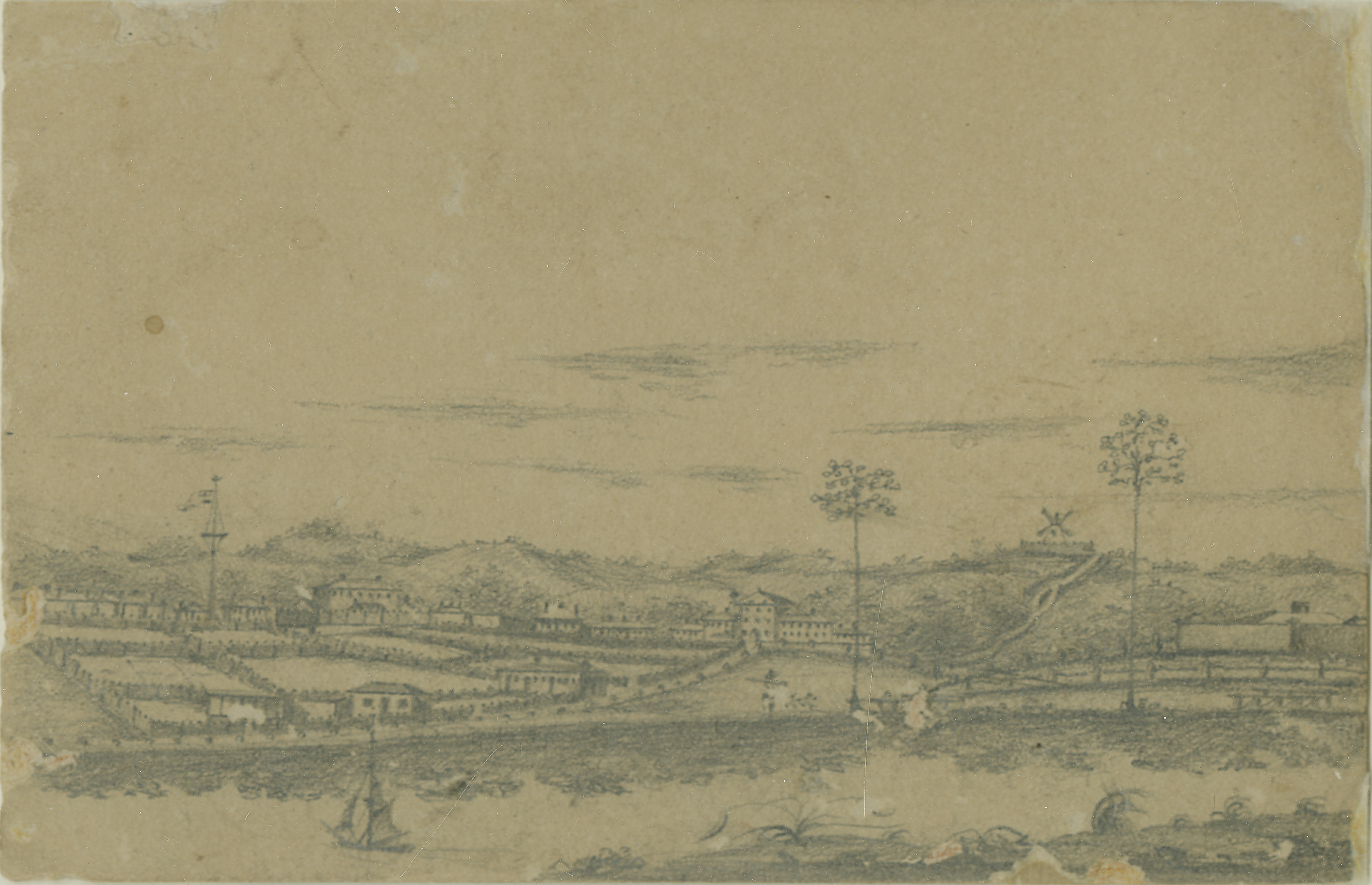
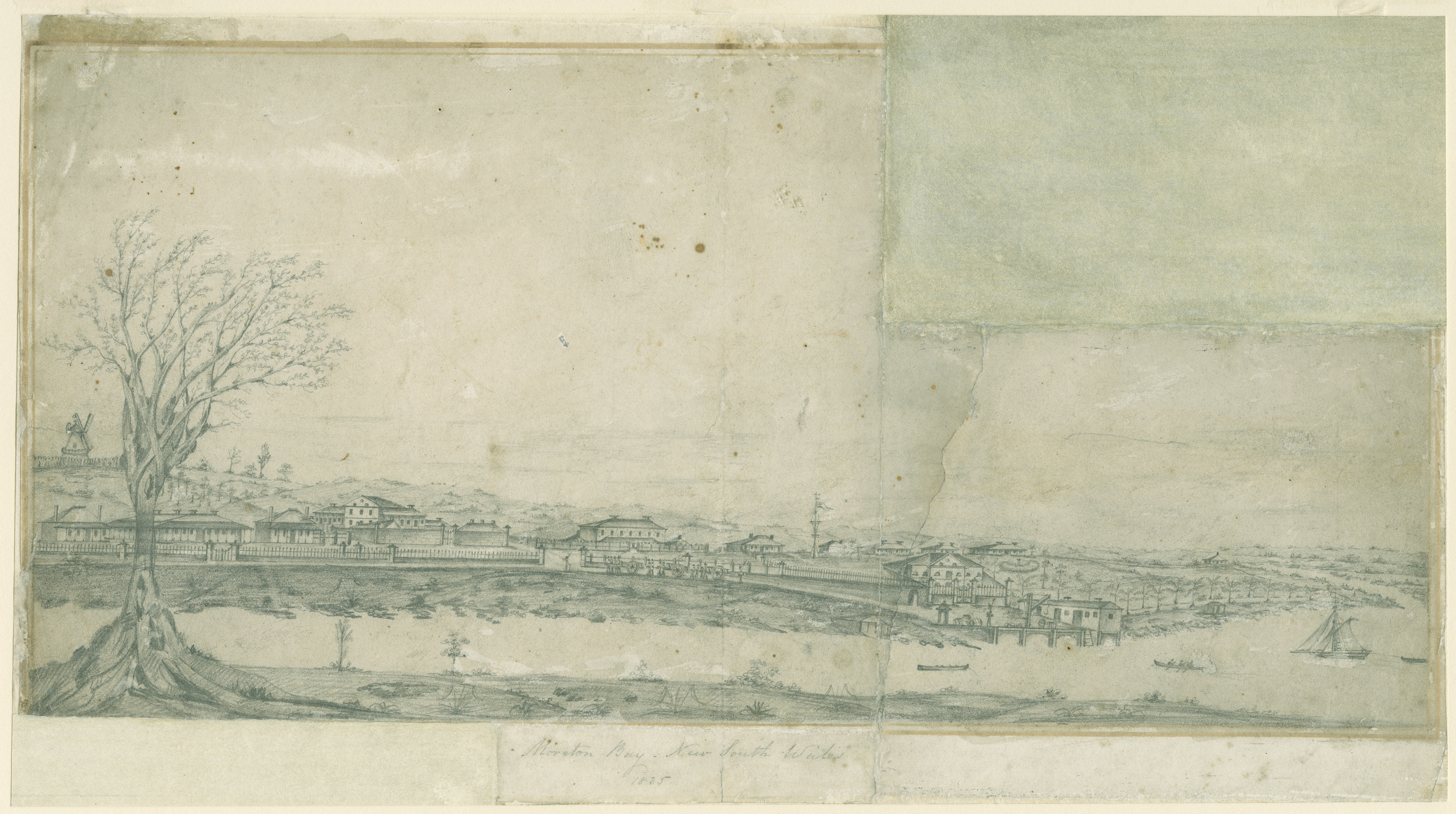
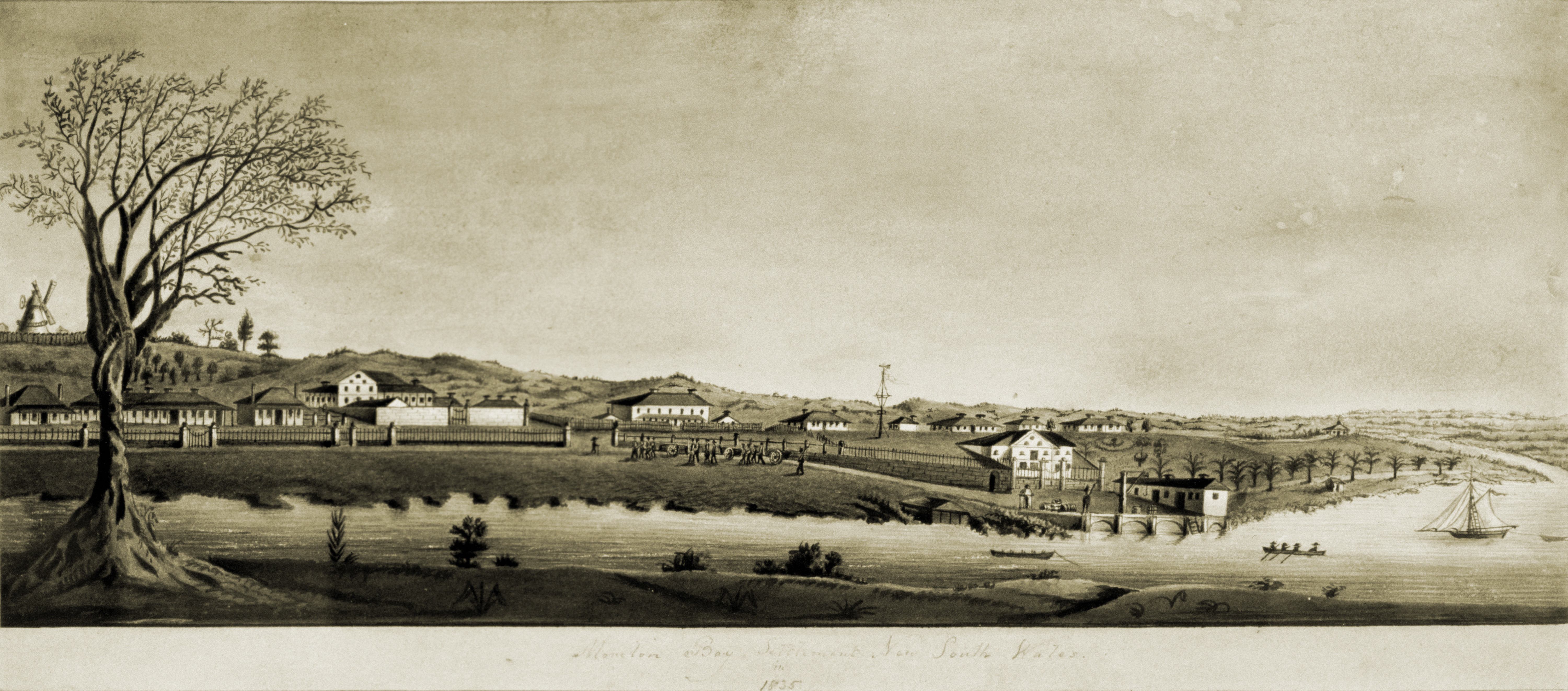
Slideshow – the sketches and the finished watercolour.
At the top left stands the Windmill, with its malfunctioning sails intact. A Moreton Bay fig tree dominates the left foreground. Rowboats ply the river to and from the Regent Bird cutter, moored downstream. Convict buildings shown include the hospital, barracks, commissariat, and cottages.
There are soldiers in a rowboat, while another soldier supervises a miserable group of convicts who are pulling carts (horses were for the officers). A man lounges at the wharf in front of the Commissariat Store, waiting for supplies.
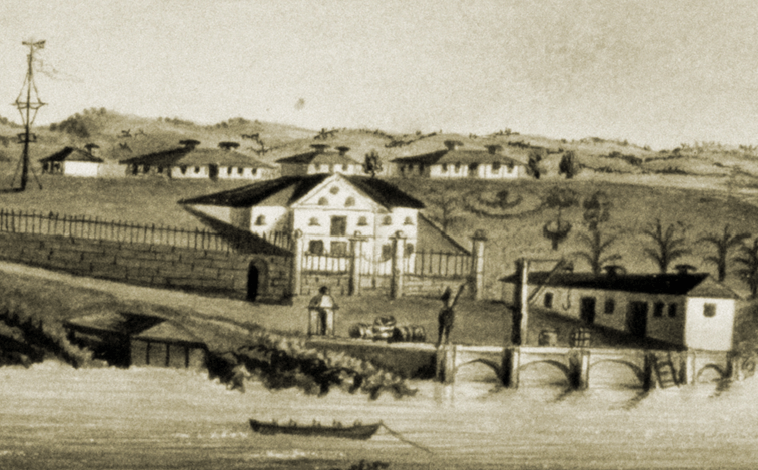
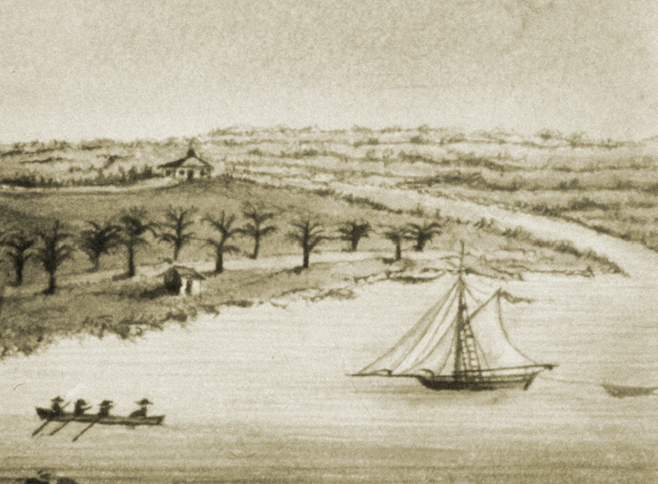
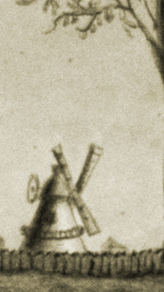
Slideshow: Familiar sights to modern Queenslanders – the Commissariat Store, the Gardens Point bend in the river, the Old Windmill.
War and World Travel.
The artist who gave us the first picture of our town was one Henry Boucher Bowerman, an Englishman attached to the Commissariat. He was about 46 years old by that time, and had been a Commissariat officer since the Napoleonic Wars.
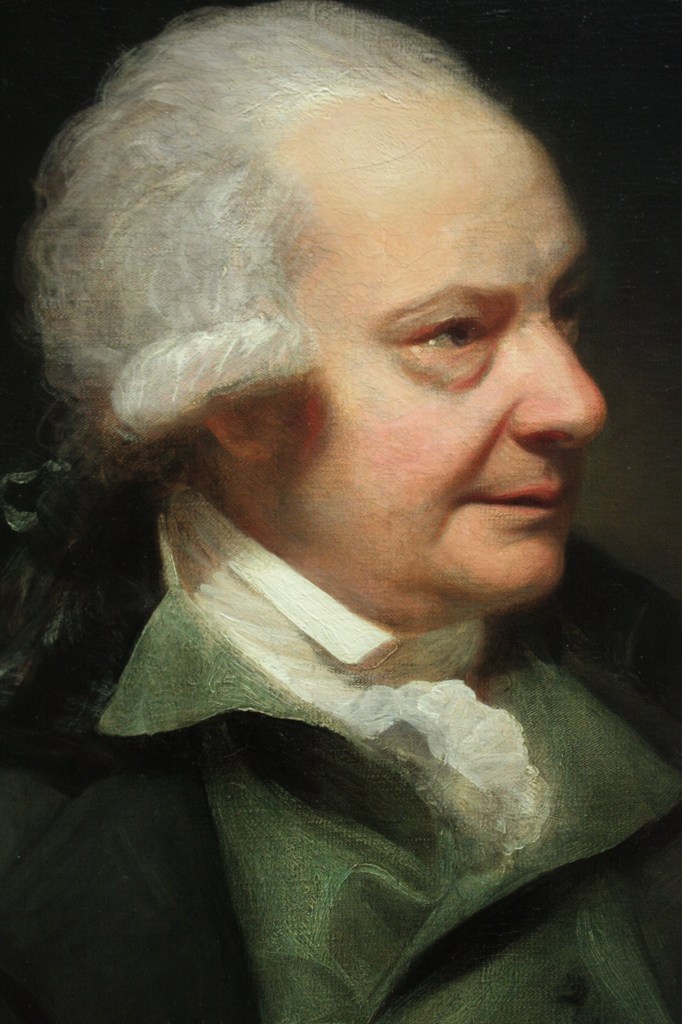
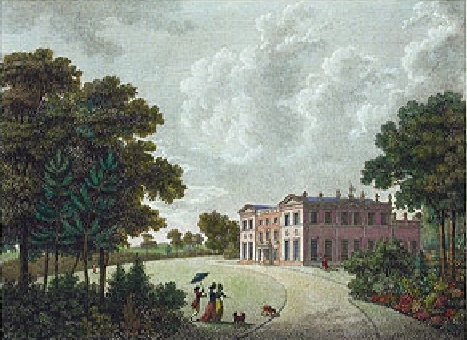
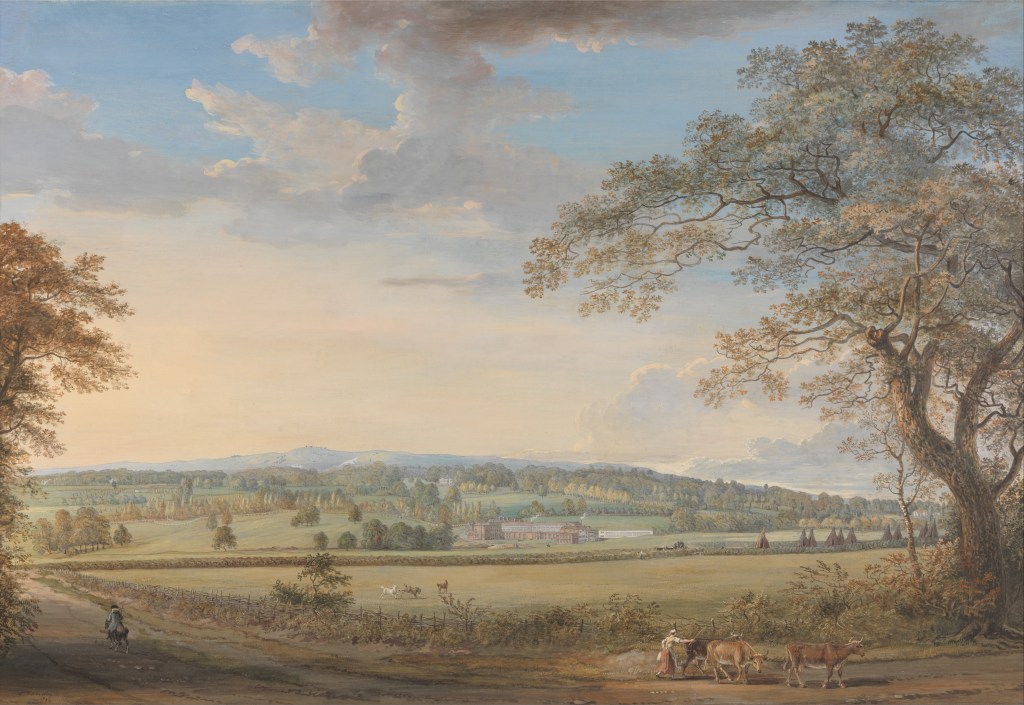
Paul Sandby, and a selection of his works.
Bowerman had been instructed in drawing and watercolour techniques while at the Royal Military Academy at Woolwich. Biographical sketches of Henry Bowerman cite Thomas Sandby as his tutor; however Thomas Sandby did not teach at the Woolwich Academy, and died when Bowerman would have been about nine years old. Sandby’s younger brother, Paul Sandby, was an instructor at Woolwich, and is the more likely candidate.
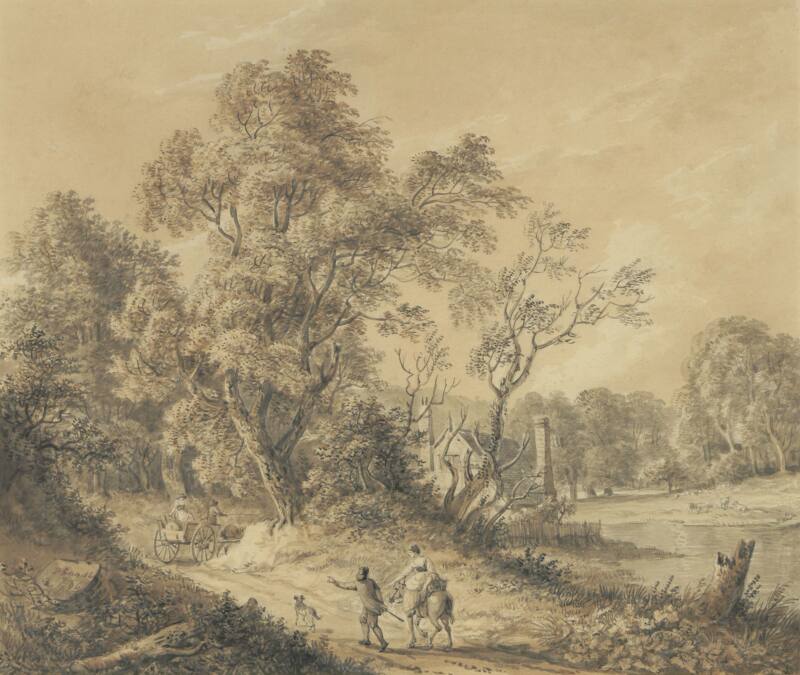
Landscape by Paul Sandby. The style adopted by Bowerman can be seen here.
Paul Sandby was a superb artist in his own right and co-founded the Royal Academy with his older brother. A distinct Paul Sandby influence can be seen in Bowerman’s depiction of the fig tree, and the precision of his rendering of the buildings.
New South Wales.
After helping the British Army march on its stomach during the European wars, Bowerman took Commissary postings in Canada, Corfu, and the Bahamas. He was on leave in England when he was ordered to the colony of New South Wales in late 1824.
The Bowerman family – Henry, his wife Mary Ann, and children Henry and Mona, arrived in Sydney on the Grenada in January 1825. The family were cabin passengers, and their journey would have been made rather interesting by the presence of 82 female convicts in the hold – mostly quite young women transported for theft.
Henry Bowerman spent the years 1825-1830 in Port Macquarie and Parramatta. The Bowermans added three Australian-born children to their family – Catherine, Francis and Harriet. Henry Sr speculated – successfully – in land. Bowerman was posted to the Commissary in Moreton Bay from 1830-1835.
An interest in Port Phillip.
Returning to Sydney, Bowerman purchased more land in the Field of Mars and Parramatta. He had quite appalling luck with assigned convict servants, as several court cases in the late 1830s made clear.
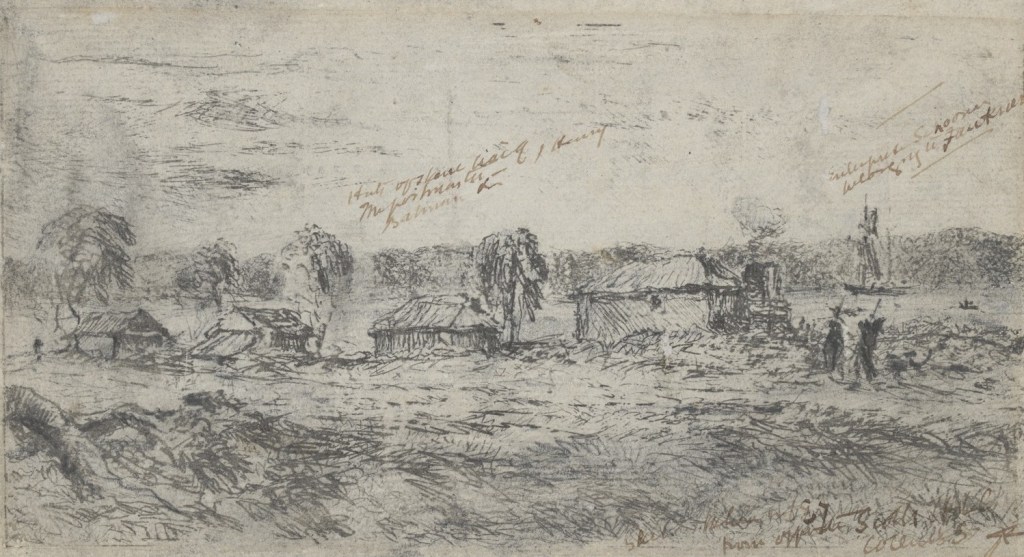
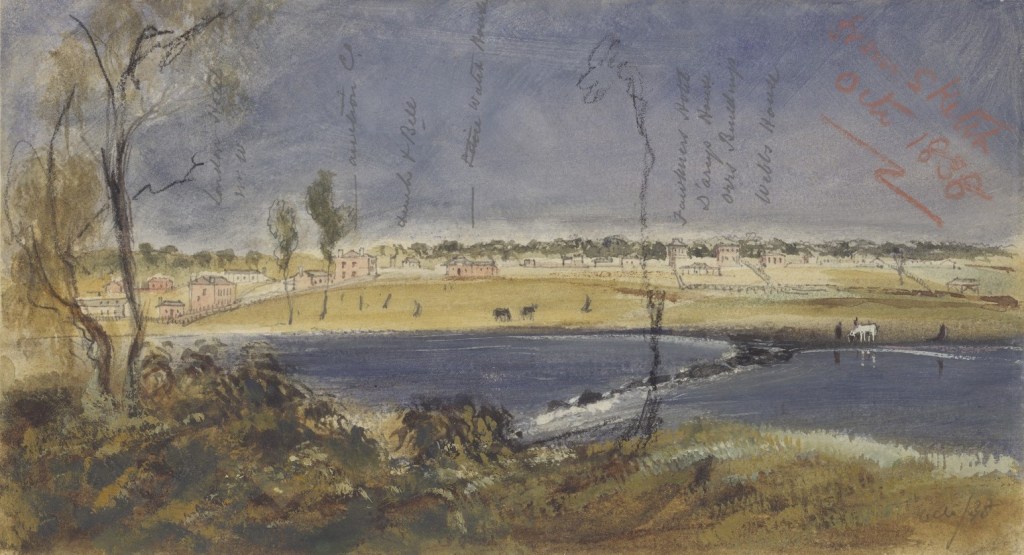
Slideshow – Views of Melbourne and Port Philip between 1838 and 1840 by Robert Russell.
As the 1830s drew to a close, Henry Bowerman turned his attention to the promising new colony growing up around Port Phillip. He decided to travel overland from Sydney with stock, following the trails of early explorers. He set up a station at what is now known as Mount Mitchell, but suffered heavy stock losses in the 1838-9 drought.
Undeterred, Bowerman decided to source more grazing stock in Sydney, and have another try in Port Phillip. In November 1839, he took a passage in the brig Britannia, sailing from Port Phillip to Sydney Town.
The boat took to the open water and utterly vanished.
The Disappearance.
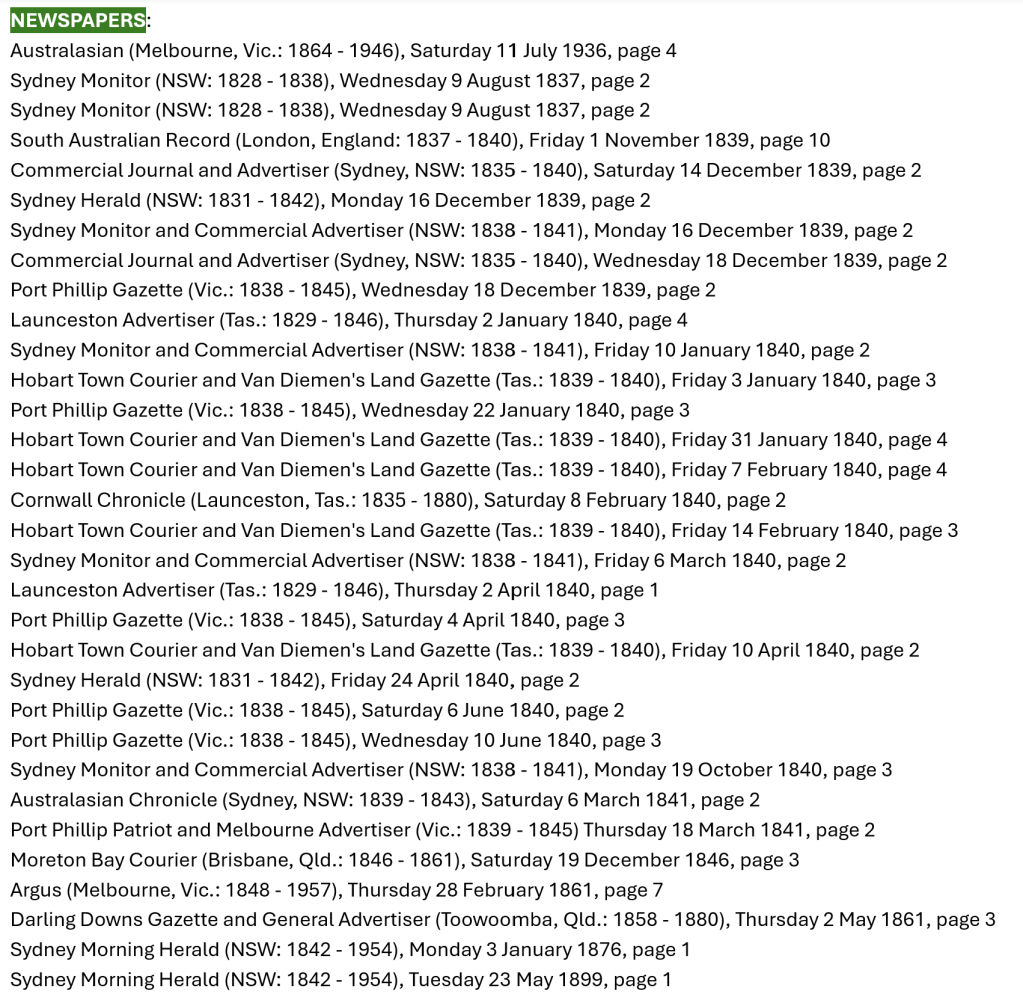
“Great fears are entertained for the safety of the brig Britannia, from Port Phillip, she having left for this port more than six weeks ago, and has not since been heard of.”
Sydney Commercial Journal and Advertiser, 14 December 1839.
The families of the Britannia’s passengers and crew waited for news. Hope was raised briefly by an erroneous report that Britannia had arrived in port. That hope was dashed with a terse correction. There were by now three missing vessels from Port Phillip – the Agnes, the Britannia and the Britomart.
Hope gradually faded, as newspaper reports told of the Curlew and Prince George searching in places as far apart as Cockle Bay and the Preservation Islands. Wreckage was seen. There were stories about a campfire on the shore. There were stories about “the print of white men’s feet in the sand.”
In April 1840, the Captain of a revenue cutter located the Britannia’s longboat south of Twofold Bay, with no evidence of survivors. A mast belonging to the Britomart was found in the Preservation Islands, close to Tasmania.
Finally, on 4 August 1840, Henry Boucher Bowerman was declared legally dead, having been lost at sea. His family’s devastating wait was over. The only positive aspect of the declaration of his death was that Mary Anne Bowerman could now secure the education and care of her children through his estate (fortunately, he had left a proper will).
Thus Mary Anne Bowerman spent a good deal of 1841 fighting to ensure that her children’s interests were taken care of, asserting the rights of the heirs-at-law (still minors) to property in two colonies. She must have been a force of nature. Mrs Bowerman survived her husband by 37 years, passing away in Sydney in 1876.
The “White Woman.”
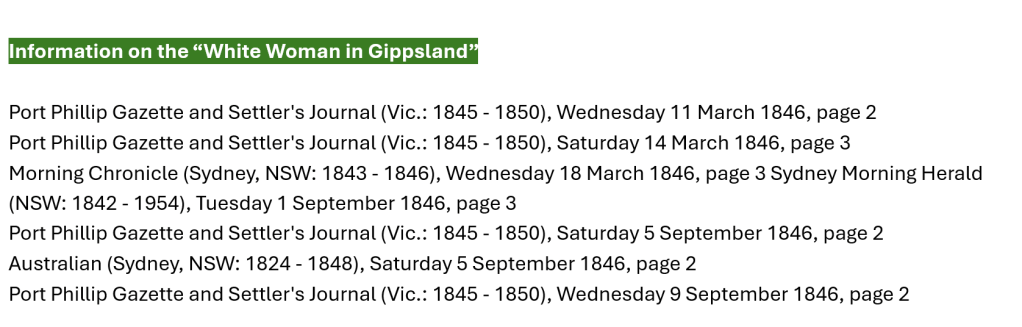
A bizarre postscript to the loss of the Britannia (and the Britomart and others of that time) was the belief amongst white settlers tin the mid-1840s that a white woman had survived one of these disasters and had been taken captive by the indigenous people of Gippsland.
The rumours became accepted as fact, despite no-one who claimed to have seen the lady being prepared to go on the record. Everyone had an acquaintance or friend who swore it was a true story. The candidates for the “White Woman” seemed to be either a Miss Lord, and a Miss McPherson, passengers on the Britomart, or a Mrs Capel, said to have been a passenger on the Britannia. (Just how Miss Lord and/or Miss McPherson had washed up hundreds of miles from the Preservation Islands, where the Britomart had been wrecked, was not made clear.)
Mrs Capel was then settled on as the most likely candidate. It was claimed that she had been heavily pregnant at the time of the voyage, and that a white woman had been seen with a European child. Or between two and four mixed-race children. All of whom were dead. Or some of whom were dead. Someone had carved a name, or initials on a tree. There were said to be two white women at one point. Then, the white woman had supposedly been killed. There would be an inquest. Well, if and when a body was found.
Heavily armed rescue parties of white men and Native Police went tearing through the Gippsland bush in search of her. The newspapers stirred up the most primal, racist fears of the white settlers, and during the various missions, many indigenous people lost their lives or were dispersed from their country.
By 1847, the consensus was that the White Woman was a hoax. The only evidence of the white woman is not evidence of her existence at all, but evidence of the belief in her existence at the time. A photograph in the State Library of Victoria shows a handkerchief with a message in English and Gaelic, to the White Woman, giving her hints as to how to escape. Quite a few of these handkerchiefs were left out in the hope that this mysterious figure would recognise it, read the message, and know that she was being sought.
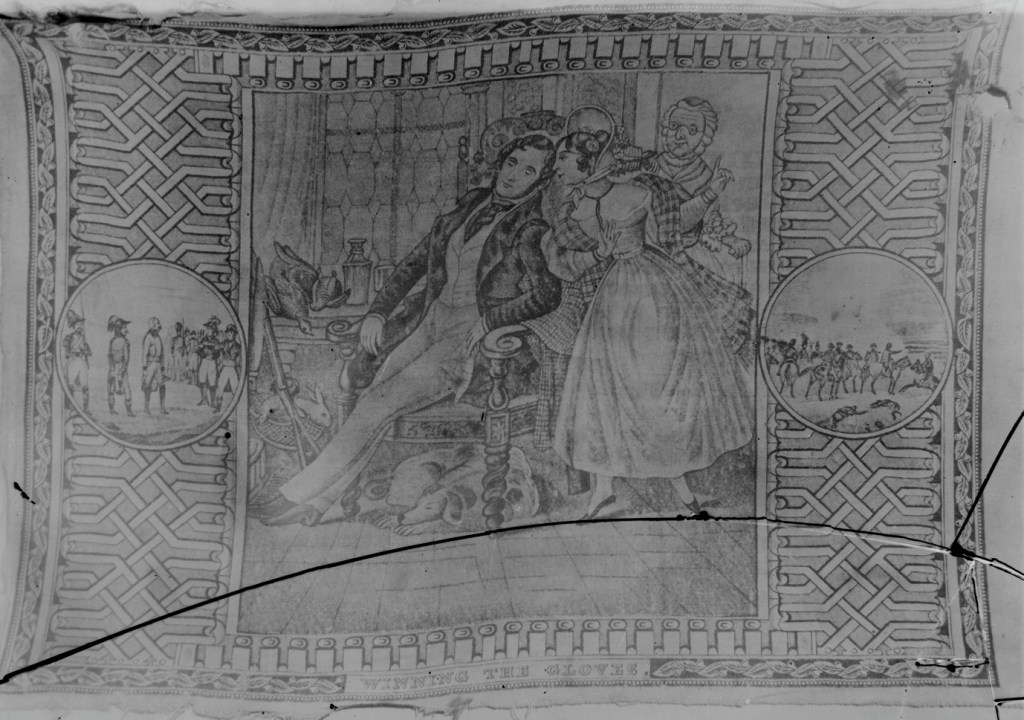
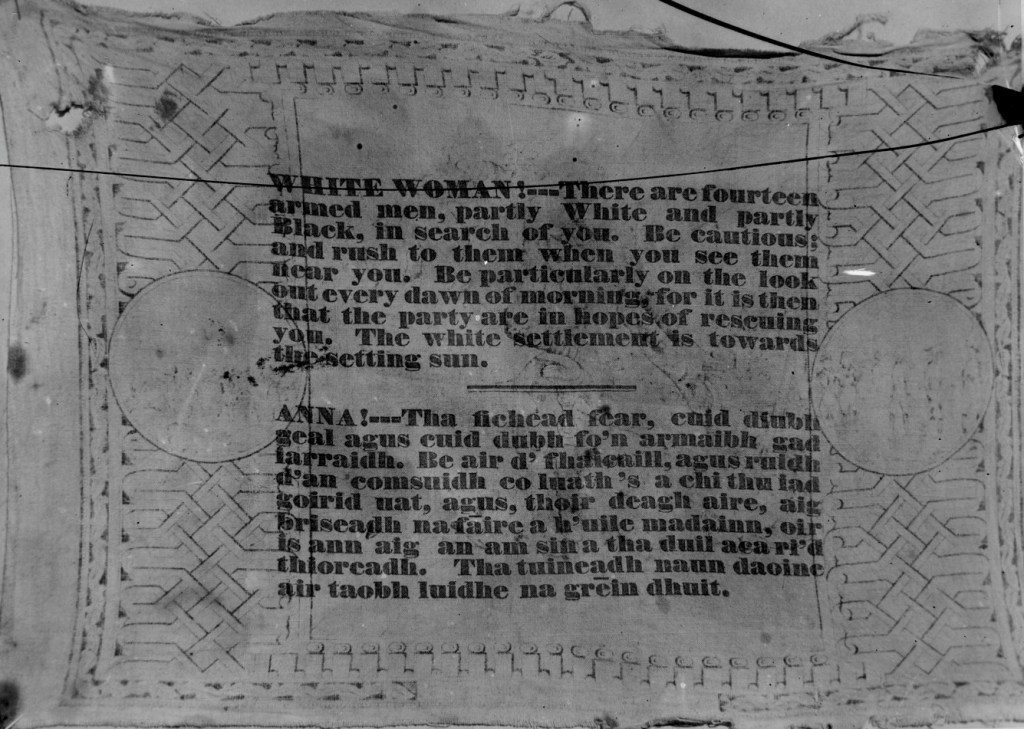
The “White Woman” handkerchief, c 1840-1850.
 Moreton Bay and More