
Coopers Plains
Coopers Plains is one of the oldest European settlements in Queensland. It began its existence as a rural outpost of the Moreton Bay Penal Settlement around 1828, and was named Cowper’s Plains after the Assistant Surgeon, Dr Henry Cowper.
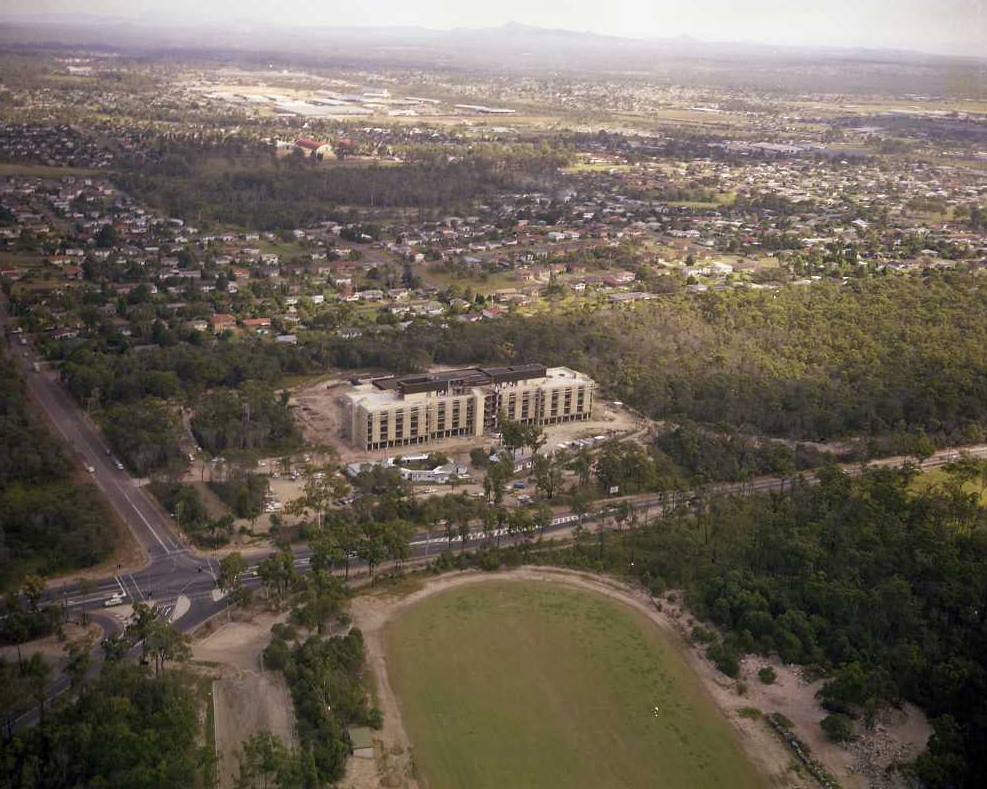
Henry Cowper was the lone physician at the Settlement for five years from 1825, and oversaw the treatment of more than 1000 convicts in that time, during outbreaks of dysentery, ophthalmia and “intermittent fever” (probably malaria). It seems fitting that the Queensland Health Forensic and Scientific Services campus (John Tonge Centre) and the QEII Hospital are located in the suburb named after Cowper. (Over the years, the name altered through use to Coopers Plains – Cowper was pronounced Cooper.)


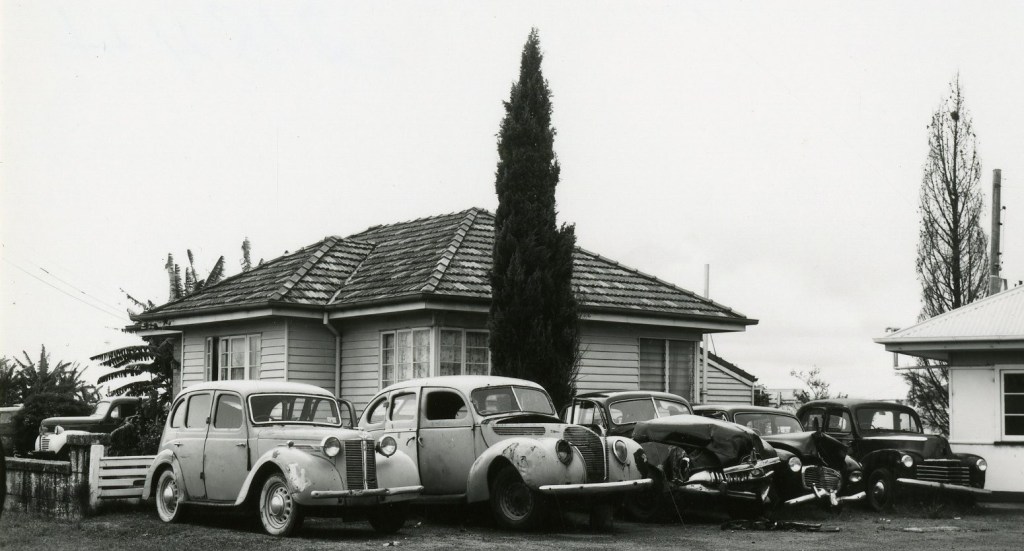
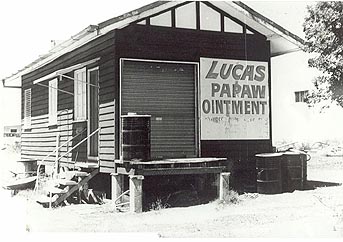
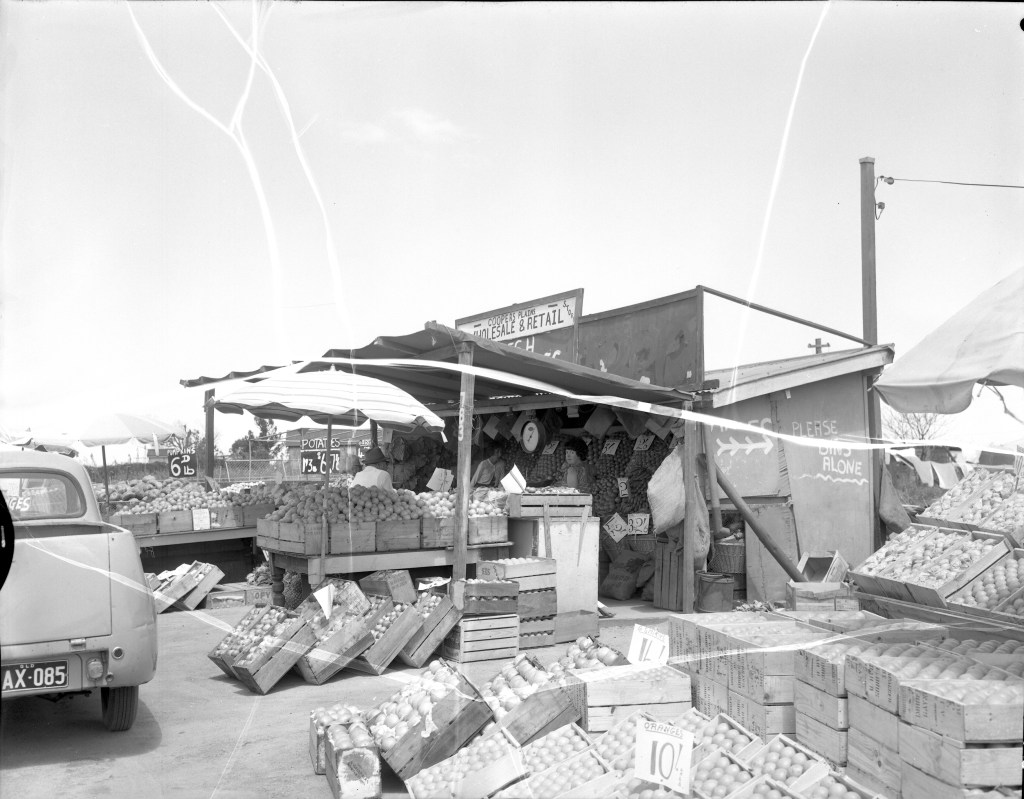
A billboard for pawpaw (papaya) oil ointment, and a roadside fruit and vegetable stall. Coopers Plains, 1960s. (BCC.)
Coorparoo
Very close to the city, and established as a district in the 1870s, Coorparoo is an indigenous name, probably related to the wildlife around Norman Creek. Land there had been put up for sale as early as the mid-1850s, and the bridging of Norman Creek had a lot to do with the growth of its population. An electric tram service was introduced at the turn of the 20th century, and served the area until the 1960s.


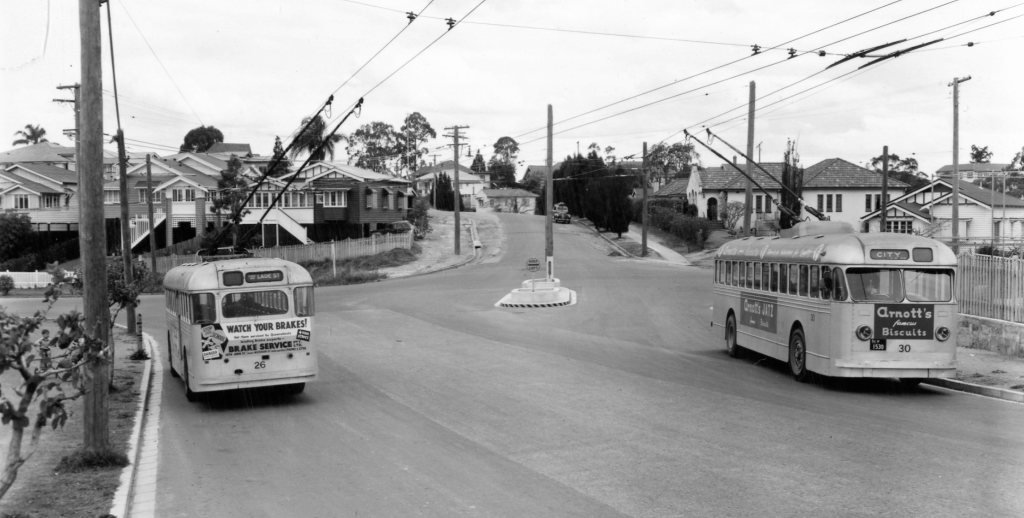

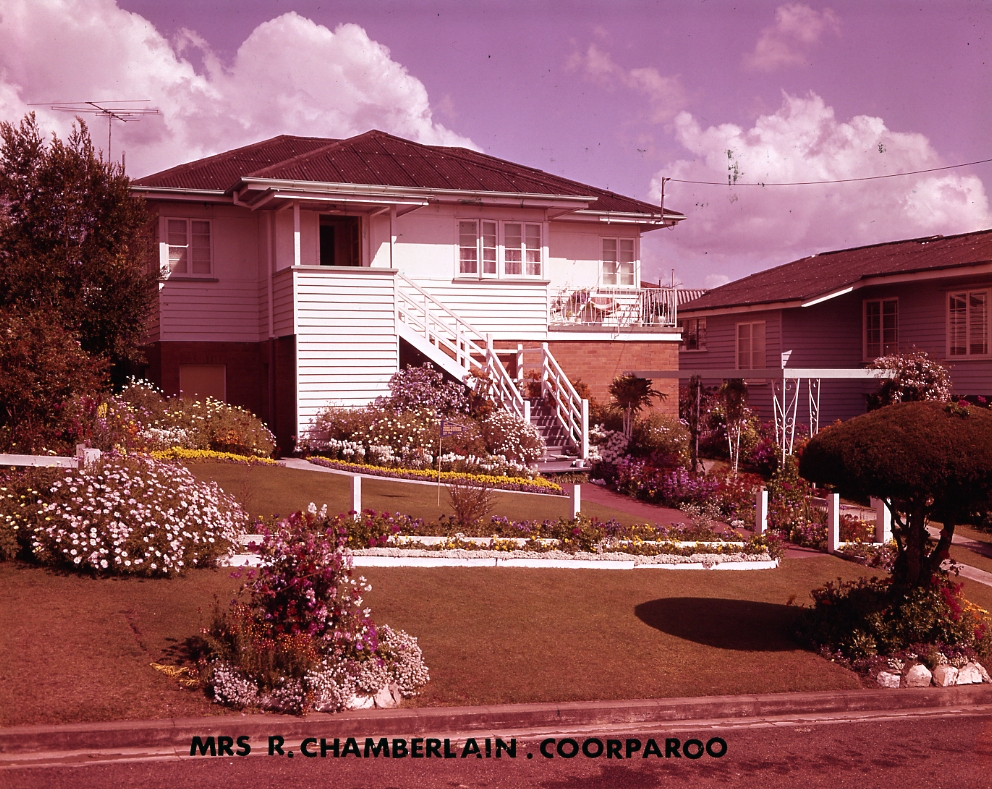
Left: Alexandra House in the 1990s (BCC). Right: An entrant in the Courier-Mail Gardens Competition in 1967 – I don’t think that Mrs Harvey of Clayfield would have lost any sleep over this.
Corinda
Corinda began life in the late 19th century as home to some grand spreads owned by graziers. It’s probable that the suburb was named after Corinda, the home of Arthur Palmer, who had a grazing spread of the same name at Aramac.
Corinda Station was the impetus for the area to become a suburb, mainly in the 20th century. Some beautiful old properties still grace its streets.
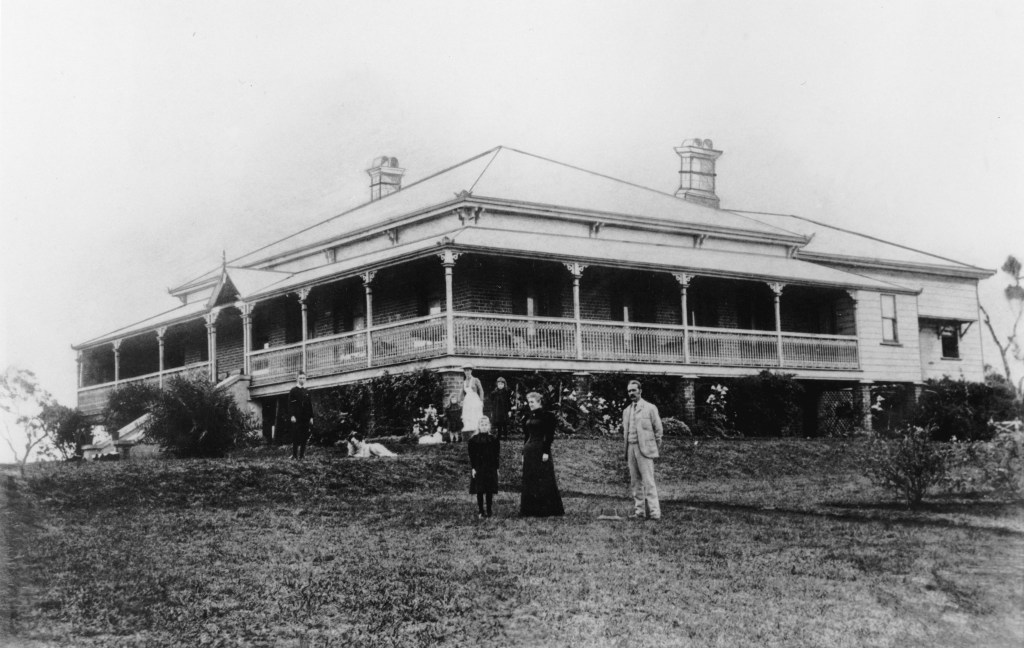

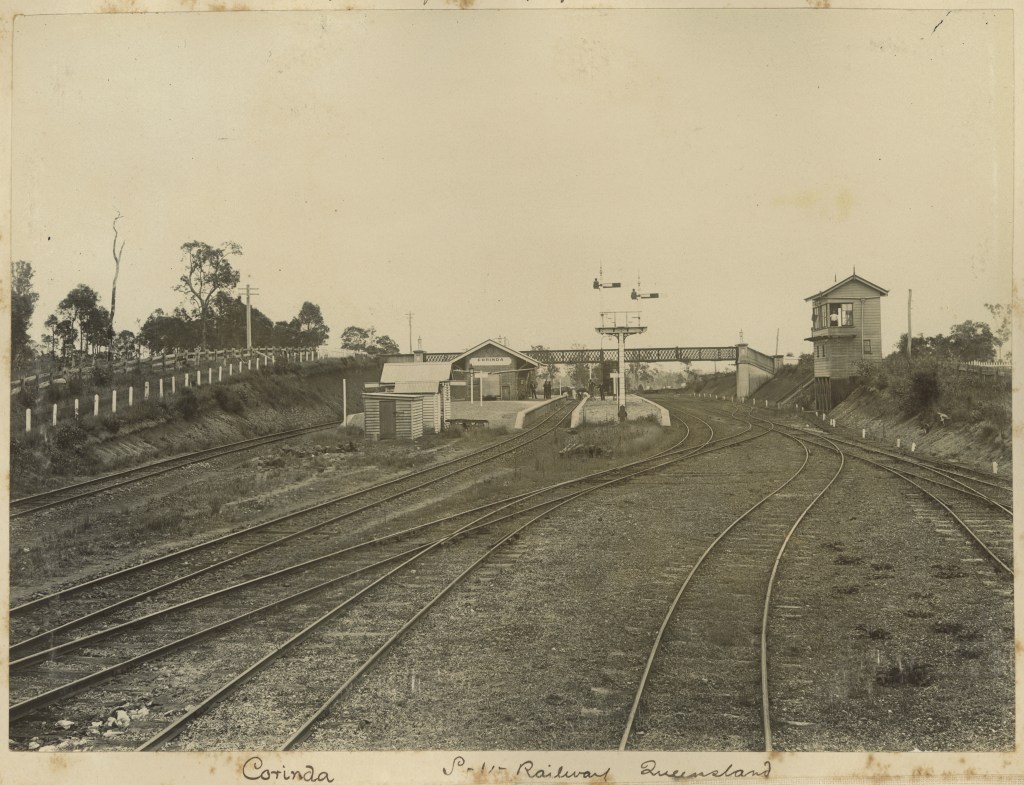
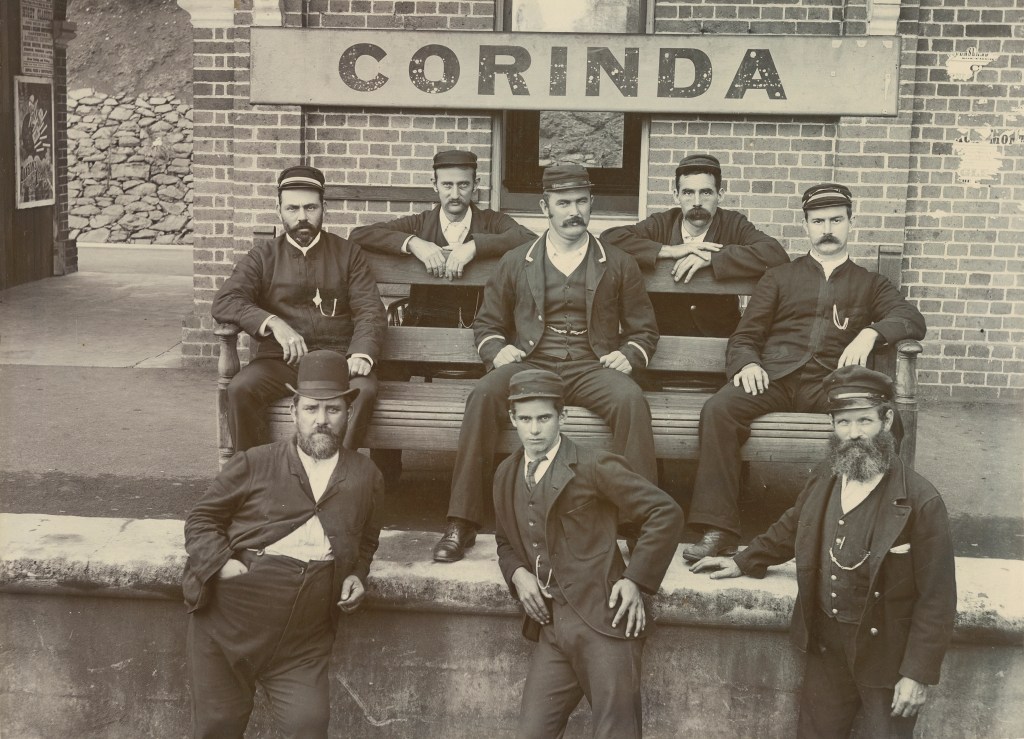
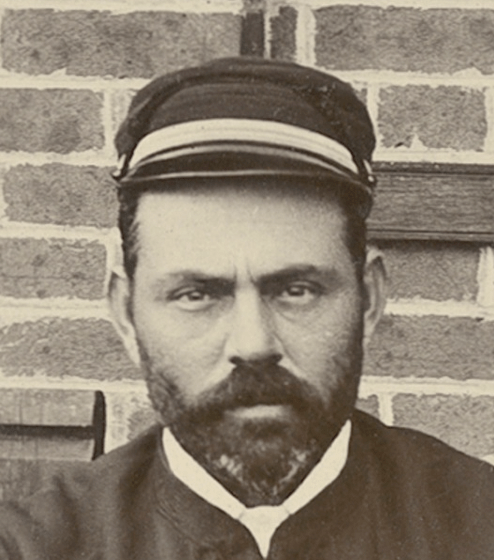
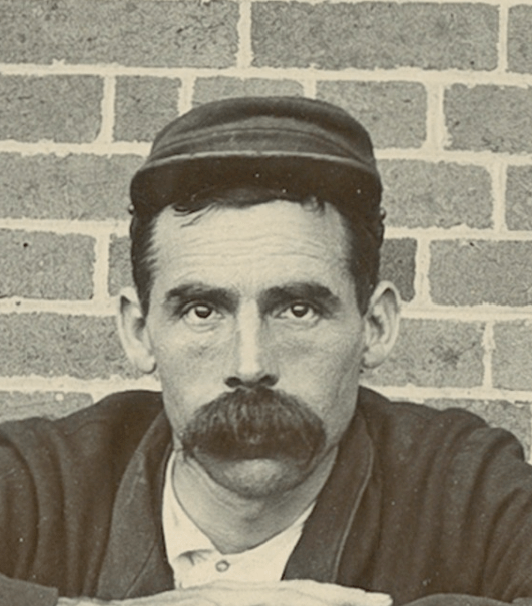


All photographs are from the State Library of Queensland’s Digital Collection and are out of copyright. Where stated, other images are taken from Brisbane Images, part of the Brisbane City Council (BCC) collection.
 Moreton Bay and More