
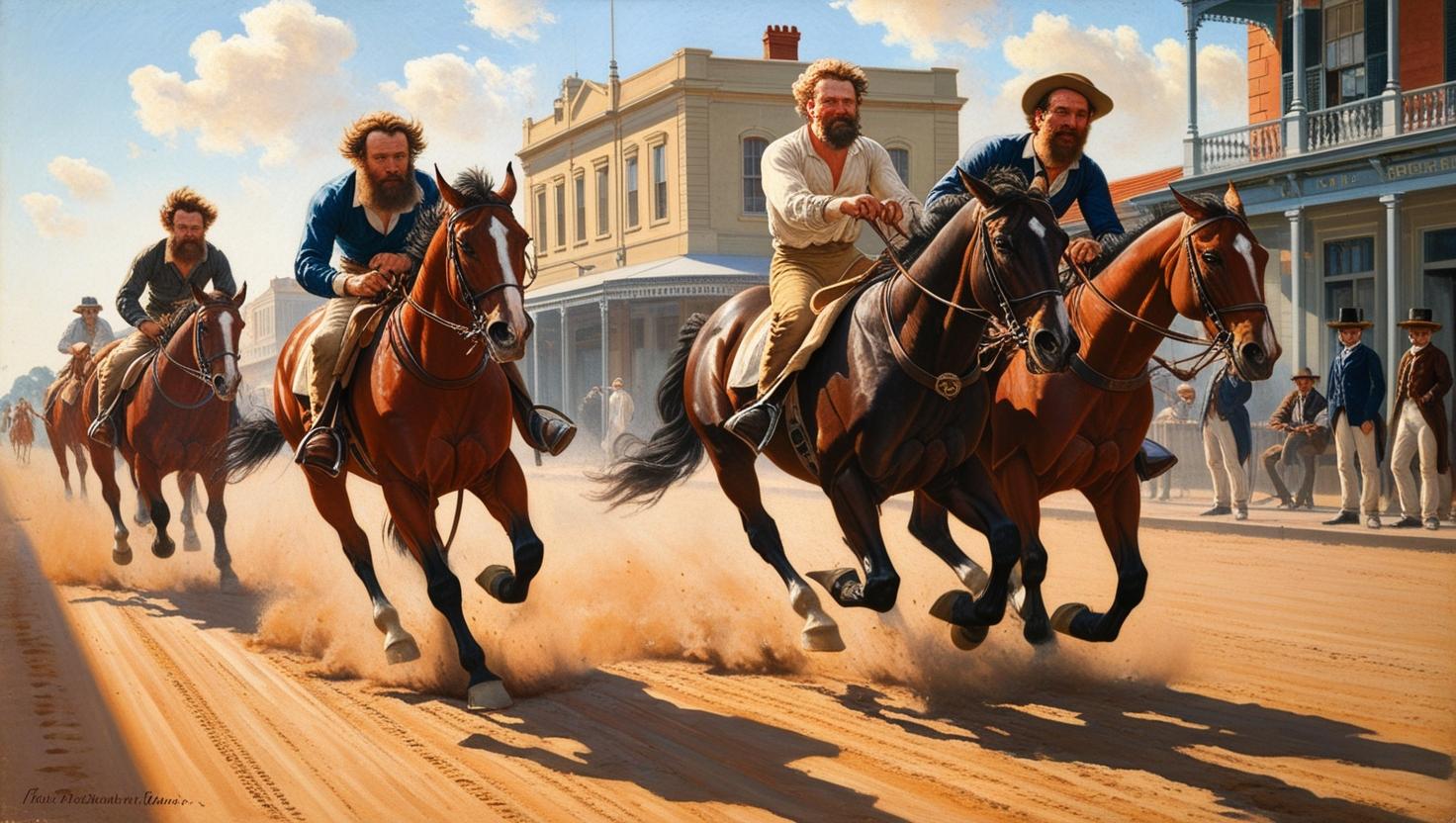
The beginning of 1850 was a time of much excitement in Brisbane Town. The Commissariat Office was seeking tenders for purchase of the “Old Windmill,” a venerable structure of some twenty-two years’ standing, and if no-one bought it, the Government was inclined to knock it down. The post office had received a small supply of penny and threepenny stamps – a commodity so rare that the Courier felt it necessary to describe their appearance. And a man who could ride a horse could score himself a fine new saddle.

For Patrick Condron, originally of Limerick, and now of Brisbane, New South Wales, things were looking up. He’d just married a young widow named Hannah Sands, and now he was in the running for a brand-new saddle. All he had to do was win the horse race – and there were only three men up against him.
The race was being held on Friday 11 January, on what passed for a road just outside the gaol. He believed it was called Queen Street.


Above: two images of the old Brisbane Gaol in Queen Street.

Racing was set to start at 4 pm, because of the blast furnace weather the place suffered in January. Nothing like Limerick. Apart from hearing familiar accents spoken amongst the Irish expatriate population, this hot, upside-down place was nothing like Limerick.
Patrick lined up with the other three lads and waited for the start. When it came, his horse bolted, and Patrick felt his foot come loose from one of the stirrups. A sickening moment of flying through the air, then a bone-crunching collision – first with Mr Hayes’ house, then with the ground.
Dr David Ballow was working at the Moreton Bay Hospital, just up the road in George Street, when he heard a lot of commotion. A man had been badly hurt in a horse race down near the gaol. In his Magisterial capacity, he ordered the hijinks to be stopped. In his medical capacity, he set to work trying to save the injured man.
Patrick didn’t know where he was, or who the people around him were. His head was exploding with pain. When he came to, he lashed out.
11th: There is a large wound of the skull over the posterior inferior surface of the right parietal bone. He was nearly senseless when brought to the Hospital and had a profuse haemorrhage from the right ear. In about an hour however he became quite furious at times, and required to be secured to the bed by means of the strait waistcoat. He was bled, then the wound of the scalp dressed.
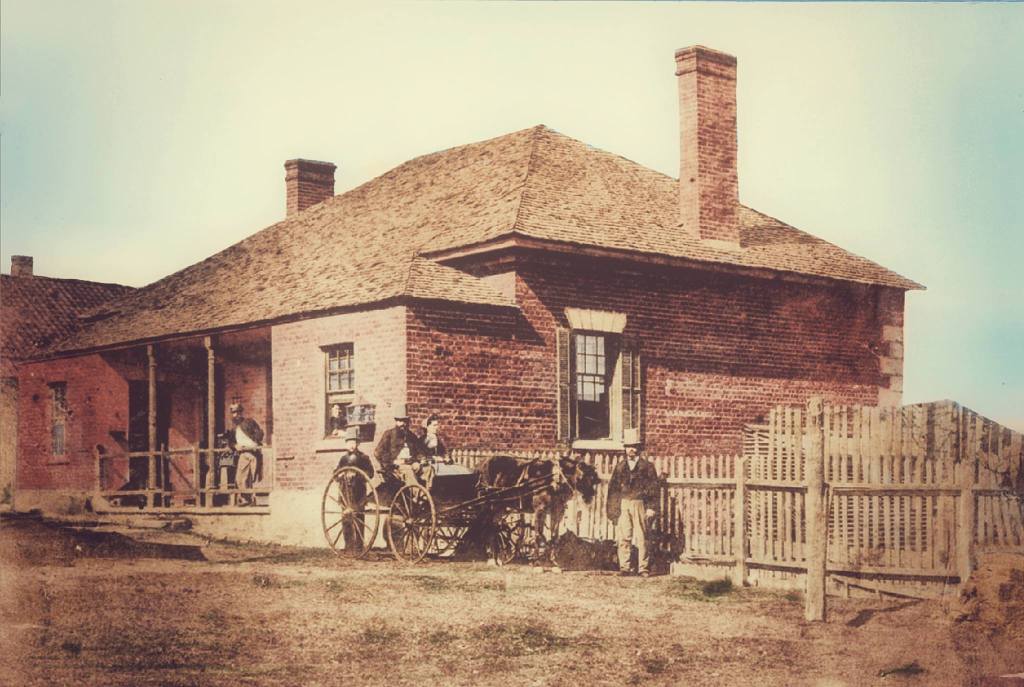
Patrick woke up occasionally. People spoke to him. He still wasn’t sure what was going on.
12th: Was very violent during the night but is in a comatose state this morning and does not know anyone – speaks on being roused. Pulse thin and labouring. Breathing quiet – haemorrhage from the ear ceased this morning.
People came and went. He felt weak. The pain in his head was unbearable.
13th: Appears rather better today – walked to the water closed yesterday with assistance and asks for water occasionally but does not recognise any person. Lies in a state of stupor generally.
Sleeping helped. The pain roared at him. He felt a little stronger and was able to talk to the Scots doctor who was looking after him. Hannah came to see him. She’d been before, but he hadn’t known her. He felt terrible for worrying her so. He could remember the horse race. God, his head hurt.
16th: Is much better – now knows those about him and where he is. Remembers the accident which befell him – complains of pain of head. Pupils rather dilated.
Dr Ballow dressed his wound. He slept. When he could think clearly, he wondered if he would live or die.
18th: complains of pain of head. Is still semi-comatose.
The pain, the pain. He couldn’t sleep. He couldn’t stay awake.
19th: Was very violent all night – is asleep this morning. There is a discharge from the right ear. Complains much of his head.
He knew he was sinking. All he could do was sleep.
20th: Very low. pulse wiry – great discharge of pus from right ear. Died at 10pm.
Patrick had lived for nine days after receiving a massive wound to his head. Drs Ballow and Cannan couldn’t scan or x-ray him, and surgery on the brain was unheard-of. There were no antibiotics. Dr Kearsey Cannan performed the post-mortem.
The right temporal bone was found to be fractured, extending from the junction with the parietal and occipital bones downwards through the petrous portion – a cavity in the brain corresponding to the seat of facture, containing pus and blood.
Dr. Cannan, having made a postmortem examination, reported that he had found the right temporal bone severely fractured, and that death had resulted from that injury. The persons who saw the accident having been examined, the jury gave a verdict of “Accidental Death.” Considering the extent of the injury, it was remarkable that the unfortunate man survived so long. We regret to add that he had only been married a few days previous to the accident.
The Moreton Bay Courier, 26 January 1850.
Post-script. The Windmill survived, through a mixture of good luck and indifference. Miraculously, it stands today. The penny stamps were red, and the three-penny a faint green.

 Moreton Bay and More