
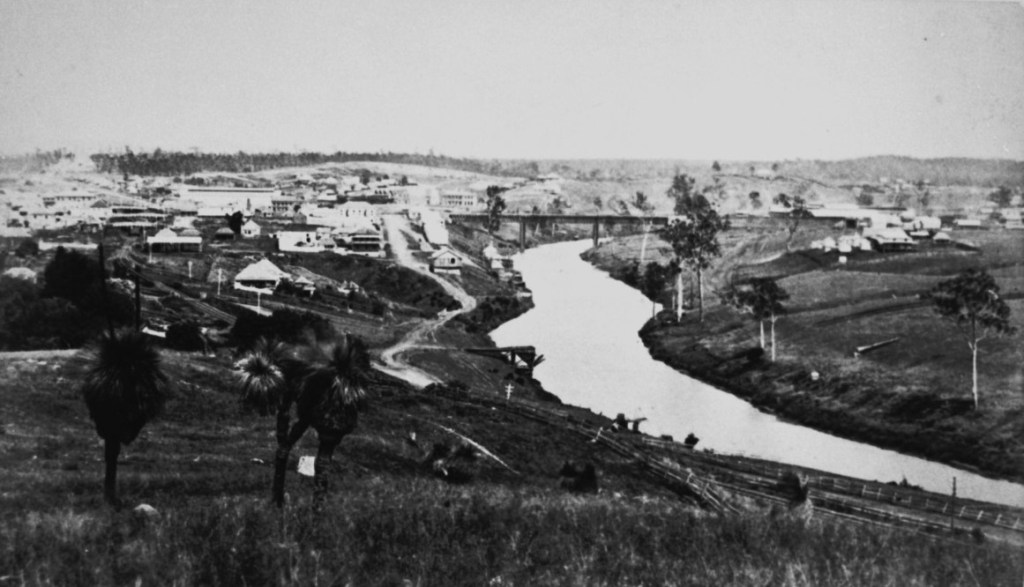
Two children are playing on a bridge. A driver, who has had a couple of drinks, gets out of his vehicle and tries to throw one of the children into the water below, tearing her jacket. He turns his attention to the younger child, a five year old boy, and throws him from the bridge.
The little boy falls 32 feet into shallow water, head first. Miraculously, he isn’t killed or even badly injured. Passers-by help the boy from the water and go to pursue the driver, who has returned to his vehicle and driven away as if nothing had happened. When the police stop the driver, he says, “what in the name of ——-came over me.”
At his trial for attempted murder, the driver pleads guilty to a downgraded charge of common assault. He states that he was intoxicated, and “in an unconscious moment committed the act.” He didn’t know what he was doing at the time, and he was sorry. He claims to have suffered a great deal in the aftermath of the event. The man gets one year in jail.
The father of the children only receives compensation for his daughter’s torn jacket. The public doesn’t react at all. There is one brief, critical paragraph in one of the daily papers.
That is exactly what happened at the One-Mile bridge at Little Ipswich in 1866. Charles Threlfo, a carrier, was starting a journey when he saw Caroline and Charles Beck playing on the bridge. He scuffled with Caroline, who was about seven years old, and tore her jacket. He picked up Charles and pitched him bodily into the water from a height of over 30 feet.
Charles Threlfo, the son of a former convict, was born in New South Wales in 1842. He was a strapping young man who had come to Queensland a few years earlier, and he worked as a carrier on the dusty rural roads. Charles had married Mary Ann Lovell the year before, and started a family. Their first child, a boy named Henry James Threlfo, had died in April 1866 at barely nine months of age.
At the time of his attack on the Beck children, Charles and Mary Ann had just learned that they were expecting another baby. Perhaps it was the death of their first child, combined with hard, lonely work, that led him to drink before he started on the journey. Perhaps he saw two healthy children larking about and getting in his way, and just snapped. He claimed not to have been conscious of his actions.

Justice moved swiftly in those days, and Charles Threlfo found himself before the Ipswich Assizes of the Supreme Court of Queensland just over a fortnight later. He was going to be tried on a number of charges, the most serious being attempted murder. Chief Justice Lutwyche presided, and the two foremost legal practitioners of the time, Charles Lilley and Ratcliffe Pring, stood on opposite ends of the bar table.
The two men maneuvered over the charges, and Threlfo pled guilty to common assault. Chief Justice Lutwyche wrestled with his conscience, and the limitations of a new statute, overnight. He returned with this:
Depend upon it, if that child had come by his death, as he might easily have done, by falling upon one of the many stones or logs which abound there, you would probably have expiated the offence on the scaffold. The utmost you could have hoped for would have been a verdict of manslaughter, and a sentence of penal servitude for life. As it is, the child escaped, through God’s mercy, without a scratch, or only one or two bruises. The nature of your offence must be taken into consideration, and the law, in its altered state, provides no punishment adequate for it. The highest sentence allowed by the new criminal law is one year’s imprisonment with hard labour.
Chief Justice Lutwyche
Charles Threlfo spent his year in custody aboard the Proserpine Hulk in the Bay. He returned to Ipswich to greet his infant son, Albert. The Threlfos had two more children in Queensland, before they moved back to New South Wales. Charles became a prosperous farmer, a Board of Education member, and an Alderman. When Charles passed away in 1912, 46 years after the assault on the Beck children, he had fathered 15 children (no multiple births, either), of whom 14 were still living.
It is worth noting that Charles Threlfo was not the only beneficiary of the doubt in the 1866 Ipswich Assizes. William Domane was also given a 12-month sentence for throwing William Sewell over the side of the Ipswich Steamer, the Settler. Sewell drowned.
William Domane, the man charged with murdering William B. Sewell, by throwing him from the deck of the steamer Settler, during the passage from Ipswich to Brisbane, on the 27th of August, was convicted of manslaughter at the Brisbane assizes on Monday, and, on the following day, he was sentenced by Judge Lutwyche to twelve months’ imprisonment, with hard labour. The Guardian devotes a leading article to the case, commenting on the extraordinary leniency of the sentence, in which comments we entirely concur. It may be that there was no deliberate intention to drown Sewell, but drowning was the natural consequence of the act.
The same judge the other day congratulated Threlfo that no harm had come to the child which he threw from the Little Ipswich bridge, observing, “depend upon it, if that child had come by his death you would probably have expiated the offence on the scaffold. The utmost you could have hoped for would have been a verdict of manslaughter, and a sentence of penal servitude for life.” We are perfectly at a loss, after this, to account for his Honour’s conduct. Were the remarks which he addressed to Threlfo simply “bounce?”
Queensland Times, November 1866

And if it all happened today, I think there would have been much more outrage. There would be harrowing dashcam, cellphone or traffic camera footage of the act. The laws against operating a vehicle under the influence of alcohol are strict. Social media would be in uproar. And there would be better understanding of the effects on the physical and mental health of the Beck children.

 Moreton Bay and More