
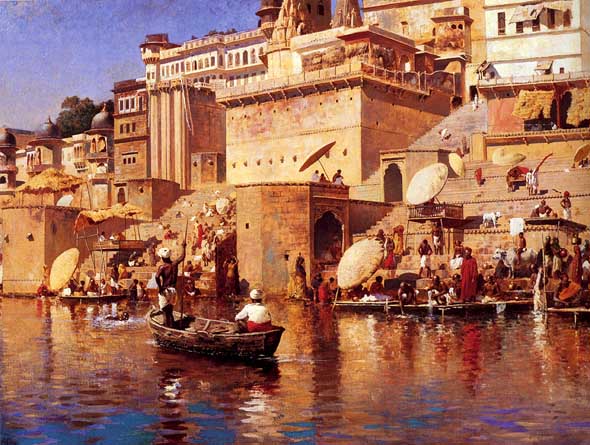
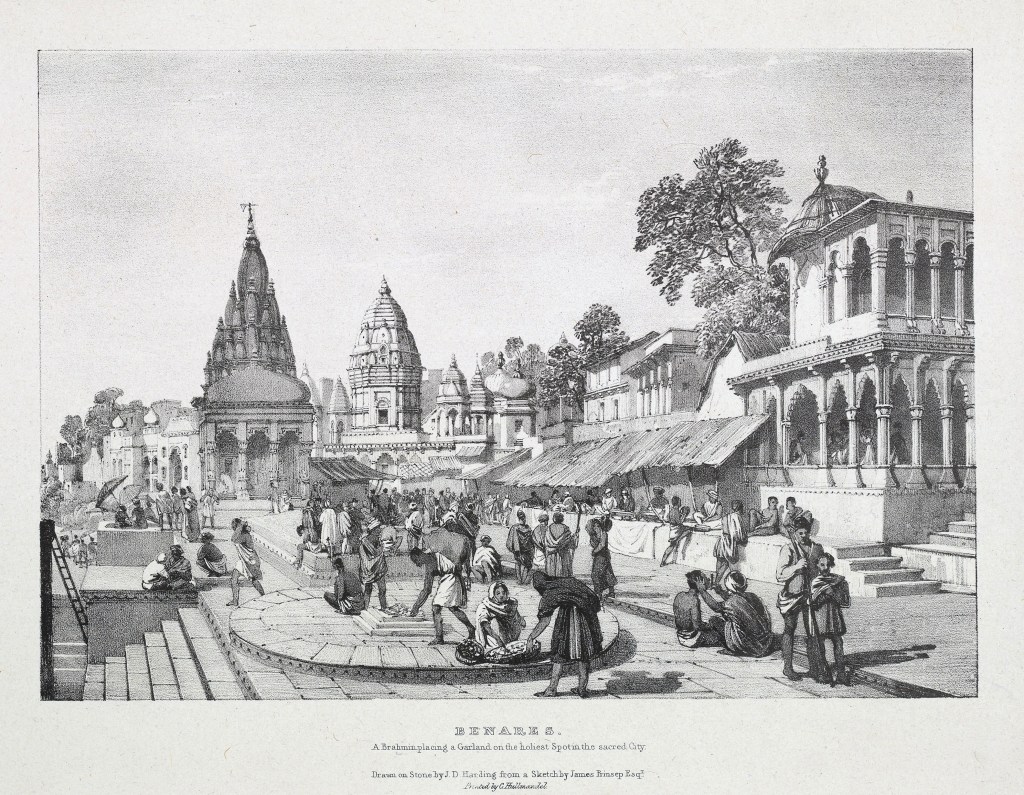
One of Brisbane’s notable early townsfolk was a man who set up a thriving business and raised a well-known family. He bought and sold a fortune in property, and when he passed away he was remembered as a pioneer of Old Brisbane. And he wasn’t English or Irish. His name was Dabee Singh, and he came from Varanasi, on the Ganges River.
Just how much the Dabee Singh and his family had to overcome, in terms of racial stereotyping, in Brisbane from the 1850s is evident in the reporting of his life. It wasn’t until he was in late middle age that people accepted him as something other than a “coolie.”
Hired servant on the Downs.
Accustomed to tropical labour from childhood; he is, I consider, cheaper than the Polynesian, and can be obtained in any numbers, seeing the population of India is estimated at over 140 million.
CW Maclean, 1872, who was writing in favour of Indian workers.
Australia first heard of Dabee Singh in January 1847, when he and Belbuddha[i] Singh faced prosecution in Brisbane under the Hired Servants Act for trying to negotiate their way out of their work contracts on the Darling Downs. The Bench offered the alternatives of returning to their station or going to gaol in faraway Sydney.
The men were described as “coolies,” a derogatory term then much in use to describe Indian workers who travelled overseas to work in the hope of a better life. What so many of these workers found was a system of indentured labour that was just barely above slavery. If “coolie” wasn’t intended by the people of that era to be derogatory, it was at best dismissive.
During two years in Mauritius, I was surrounded by them on all sides and never found them in the least unpleasant; far from this, they were very docile, obedient, and cleanly.
Mauricienne, 1872, adding his view of the benefits of Indian workers. (Both writers cited Dabee Singh as a shining example of Indian-worker-made-good.)
Just don’t get them wet or feed them after midnight, presumably.
Carter and townsman.
In 1848, freed from servitude, Dabee Singh moved to Brisbane, and began a family. I suspect – without any evidence beyond the sudden development of that family – that he sent for his wife from India once he was finished with his contracts. In 1848, the first of his three sons, Pooran Dabee Singh[ii] was born, followed by Betcheu Dabee[iii] in 1849 and Gooran Dabee[iv] in 1851.
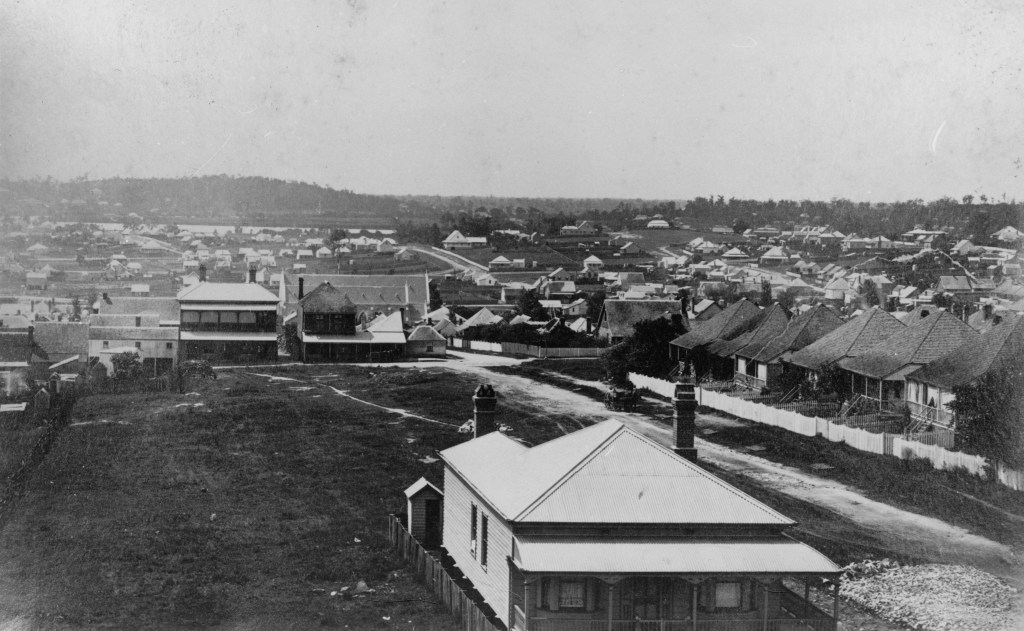
The family lived in Fortitude Valley – in Bowen Street, which is now Spring Hill – for decades. Belbuddha and his family lived next door, and the two men set about working as carters and carriers.
The servant problem.
Although most of Brisbane’s European population viewed people of Dabee Singh’s colour as servants, by 1853 he was able to employ household servants of his own. White servants.
A servant he probably fervently wished that he had not hired was Ann Clickard,[v] an Irish laundress who had arrived on the America in early January 1853. A few months into her employ, Ann was at the Police Court and in the papers for, well, it’s better just to quote the article really:
John Callaghan[vi] appeared on summons at the Police Office, yesterday, being charged by Ann Clickard, a damsel of venerable appearance[vii], with making violent love to her on the previous Thursday evening. It appeared that the parties lived at Fortitude Valley, the complainant residing with a Coolie settler[viii], as his servant, and the defendant being a married man. On the night mentioned he introduced himself to the house where she was, and after sundry invitations to meet him by moonlight alone, he proceeded to further freedoms, which constituted the assault complained of. The complainant stated that she was married to a person named “Anthony,”[ix] but did not know his other name. A witness was produced for the defence, who deposed that complainant had offered to forego this charge if Callaghan would give up a claim which he had against her employer, for fencing work. The Bench, however, considered an assault proved, and fined Mister Callaghan, 6s 10d. and 13s. 2d. costs, which was paid.
In September, Ann tried to stab Dabee Singh, which, understandably, he took as a breach of her employment agreement. The Courier retells the case vividly, particularly Belbuddha’s view of the afterlife (taking evidence from people who were not Christian boggled the magisterial mind):
Ann Clickard, a most dilapidated looking woman, was charged with having attempted to stab one Davee Singh, residing at Fortitude Valley. The witnesses called were Davee Singh, a countryman of his named Belbudda, and Constable Downes. Mr. Belbudda being a Brahmin and expressing some heterodox doubts respecting a future state of rewards and punishments, his evidence was dispensed with, and the case rested upon the testimony of the other two. From this it appeared that the woman was employed to take care of the prosecutor’s children, but was a drunken and disorderly character, and on Tuesday evening was near being taken to the watch-house by Downes.
Subsequently she returned home, and had a quarrel with her employer, whom she taxed with having caused her to be taken into custody, and whose life she then threatened to take before morning. Davee Singh having afterwards gone to sleep with his children, was awakened by somebody withdrawing the blanket, and found prisoner, whom he had left in the kitchen, now standing over him, with one hand on his breast and the other grasping a clasp knife, with which she threatened to kill him. After a struggle, he, with the assistance of Belbudda, disarmed her, and she was conveyed by the Police to the lock-up. The Bench sentenced her to find two sureties in £10 each to keep the peace for three months, or to go to gaol for that period. The latter alternative was necessarily accepted.
Ann wasn’t quite finished with Dabee Singh yet. She felt that she had a paternity claim against him in January 1854.
Ann Clickard, a woman whose name is familiar in the annals of the Police Office, charged Davee Singh, with whom she had lately been residing as housekeeper, with the paternal responsibility arising from an interesting event that had lately occurred to her, and the innocent proof of which she exhibited in a baby[x] that was quite white, while Davee Singh was “dusk as India.” This was not exactly corroborative evidence, and as none other was forthcoming, the case was dismissed.
Counting on one’s fingers, Mr Callaghan (or Gleeson) would have been a more likely candidate.
Horses and courts.
Throughout the 1850s and 1860s, Dabee Singh spent a lot of time in Small Debts Court, as the pursuer or the pursued over employment and services. He usually lost. When not engaged in civil litigation, he was prosecuted for breaches of various local regulations about his horses and drays.
Horses were a passion for the Singh family, as well as a means of earning their livelihoods. Despite having stables and paddocks to enclose them, Dabee’s horses weren’t always popular with his fellow-townsmen, and two fairly heated court cases resulted.
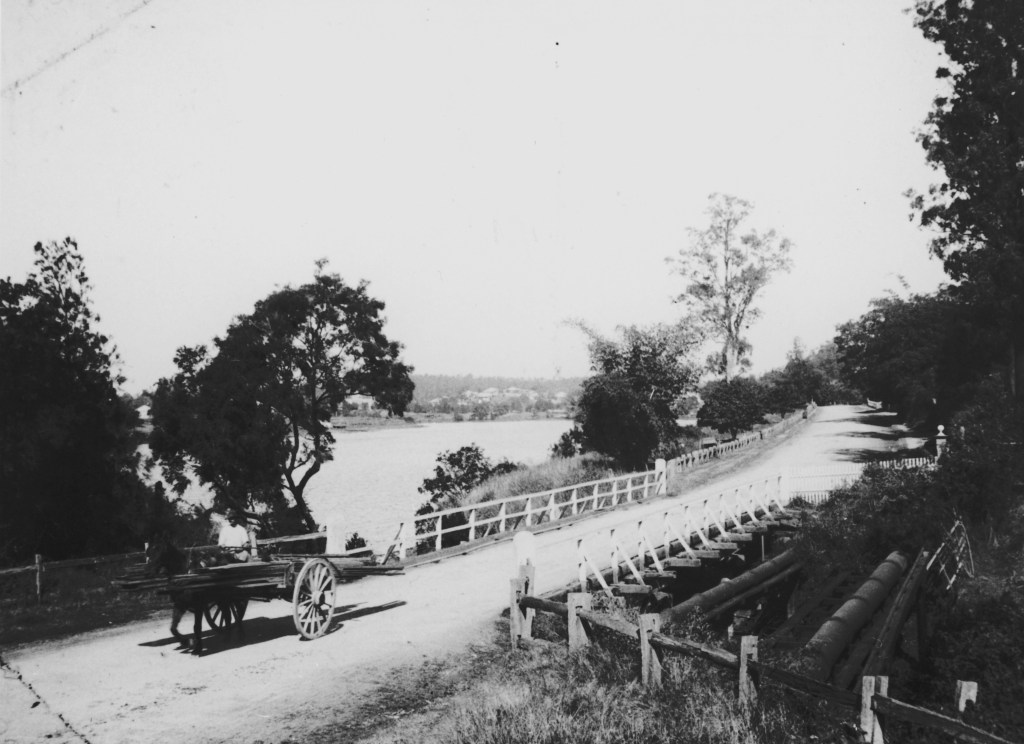
The first occurred in 1859, when Dabee accused a neighbour, James Mann, of cutting the hindquarter of one of his horses. It became known, not very delicately, as “the horse stabbing case,” and consumed two days of court business. Witnesses were called to testify about James Mann’s movements, the injuries to the horse, and whether Dabee Singh was consistent in his accusations against Mann.
The case was a minor sensation by its very nature – a non-white person accusing a white person of a crime – but it became even more sensational when Mann’s lawyer, one Charles Lilley,[xi] demanded that the Bench charge Dabee Singh with perjury when the criminal case was dismissed. The Bench declined to do so, and Mr Lilley referred the matter to the Attorney-General for a decision on whether to prosecute. To Mr Lilley’s disappointment, the Attorney-General took only three days to decide against prosecuting Dabee Singh.
In 1862, one of Dabee’s ponies decided to help itself to the peaches in James Brennan’s garden. Mr Brennan declared his intention to take the pony to the pound. The Singh family gathered at Brennan’s doorstep, high words were exchanged, and the pony was restored to Dabee. If one believed Mr Brennan and his 14-year-old daughter, Dabee had beaten Brennan with a “great long pole.” If one believed three other independent witnesses, there was no physical violence. The Bench inspected Mr Brennan’s head, pored over the statements and dismissed the whole case as unreliable. And no, Mr Singh, they were not awarding costs.
Family business.
Queensland became a separate colony in 1859, and by 1860, Dabee Sing and Belbuddha were officially on the list of voters for North Brisbane. They each had valuable contracts with the new Brisbane Town council, as well as their private cartage and carrier work.
Dabee Singh began to acquire a large property portfolio, buying two parcels of farmland at Ithaca Creek, and others on Sandgate Road and at South Brisbane. These properties were in addition to the Bowen Street home base, which had two separate cottages, stables, a coach-house and a cab-shed. The 1860s, the Singh family decided, would be the decade of the cab.
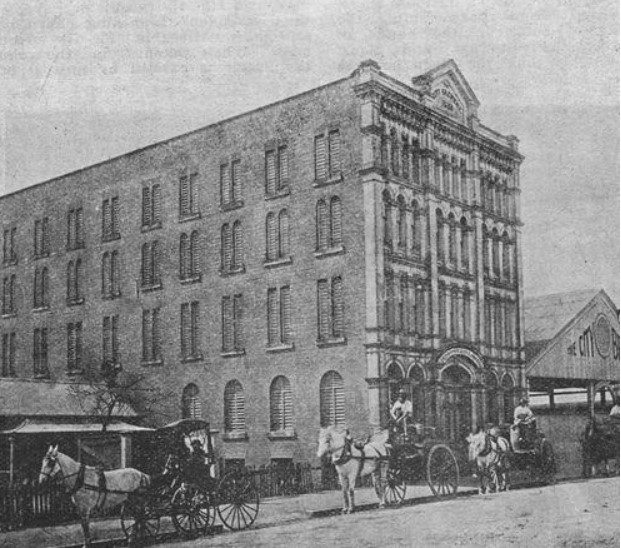
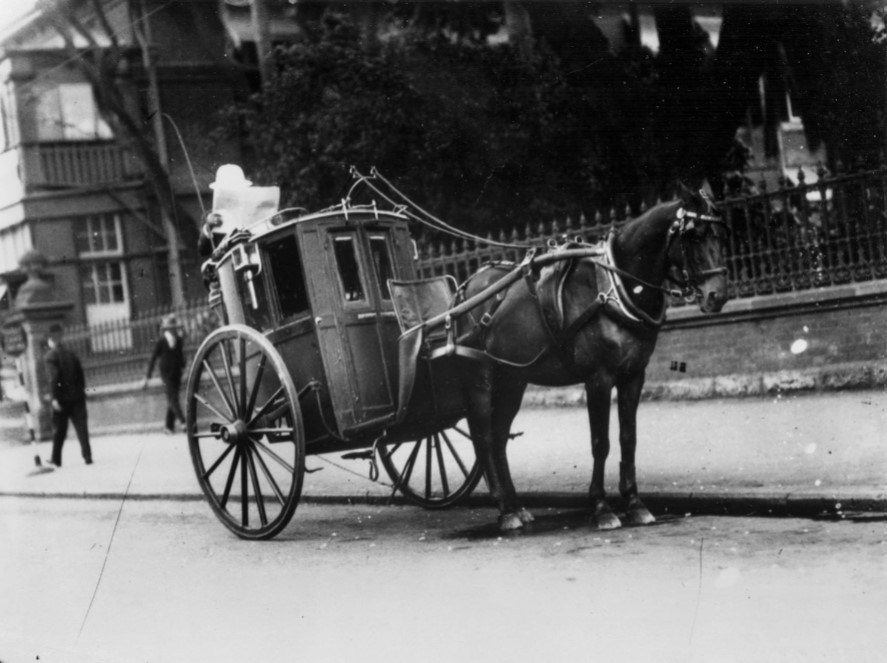
Dabee was winning prizes at exhibitions for his ponies, and the Singh sons were involved in the family business from the moment they could hold a set of reins. Pooran and Gooran took to the cab business with a will. Betcheu tended to work the drays.
Betcheu married Alice Evans in 1872, and they had two children. Gooran was next, and married Ellen Sartain in 1874, but the couple did not have children. The oldest son, Pooran, married Elizabeth Goodall in 1879 and fathered two sons and two daughters.
Betcheu began having troubles early in life. When barely 10 years old, he took a neighbour to Court for assault, saying, “I’ll tell my father you are always beating me, you b—- wretch.” As usual, the presence of Hindu witnesses confused the Brisbane bench, and his case was dismissed.
In 1873, Betcheu was involved in what would today be called a road rage incident. A Mrs Linden and her son were riding a goat-cart on Waterworks Road and drove past Betcheu’s rather inconveniently parked dray. Betcheu was furious that his horse could have been spooked by the goat, and made verbal threats. Then, a chase along the road began, with the shaft of the dray striking Mrs Linden’s cart, pushing it out of his way. Mrs Linden had given evidence of bloodcurdling threats of violence that were not substantiated by either her son or an independent witness. Betcheu was fined a small sum.
In December 1873, a more serious matter came before the Court. Betcheu was put into custody for assaulting his wife Alice so badly that she was taken to hospital. When she was well enough to attend Court, she carried a small olive branch with her. Betcheu pleaded guilty and paid the fine.
At some point, Betcheu stopped working for the family carting business, and found jobs on farms around Brisbane. He was at the Gap Farm when his employer Timothy Daniels told him to clear out, as he was going to be away from home for a while. When Daniels returned home, he was missing a saddle and a watch. Betcheu pleaded guilty and received a year in gaol – six months for the watch and six for the saddle. He spent most of that year at St Helena Island.
In 1880, Betcheu was back before the Courts for stealing, and was sentenced to three years’ gaol. His brothers took out an advertisement refusing to be responsible for any debts he might incur.
Sadness and success.
Dabee Singh died in December 1882, at the age of eighty. He had arrived in the colony as a hired servant and left it as a respectable businessman. He is buried in Toowong Cemetery.
Betcheu died a few years after his long stint at St Helena, on 18 August 1886. He’d been in hospital since that February with intestinal pain. He was 38 years old.
Gooran took his life at Stradbroke Island on 2 November 1897. Ellen, his widow, died of “exhaustion and malnutrition” in September 1898, at her home on North Quay.
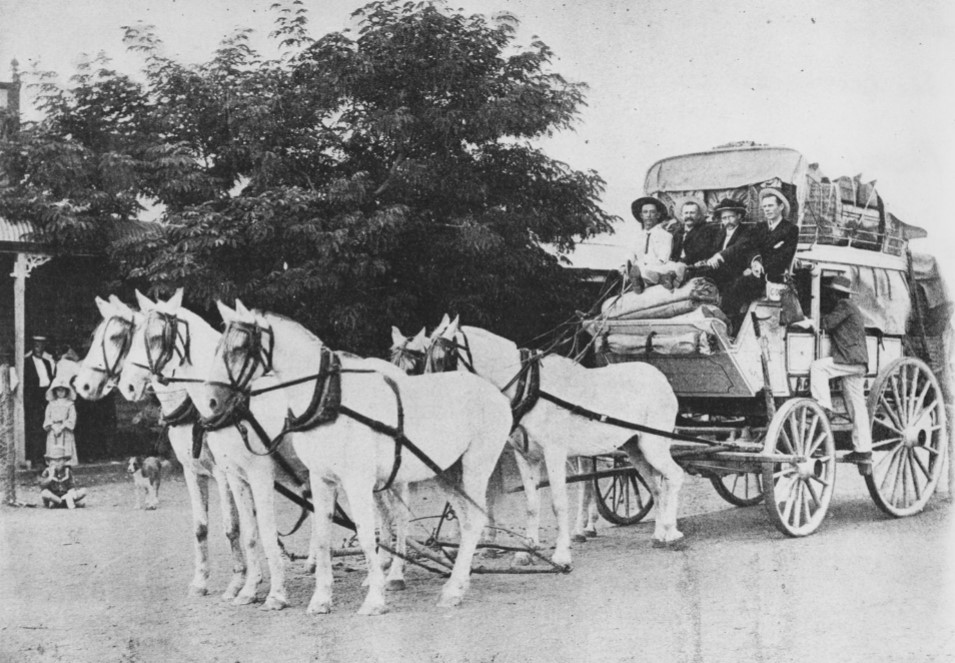
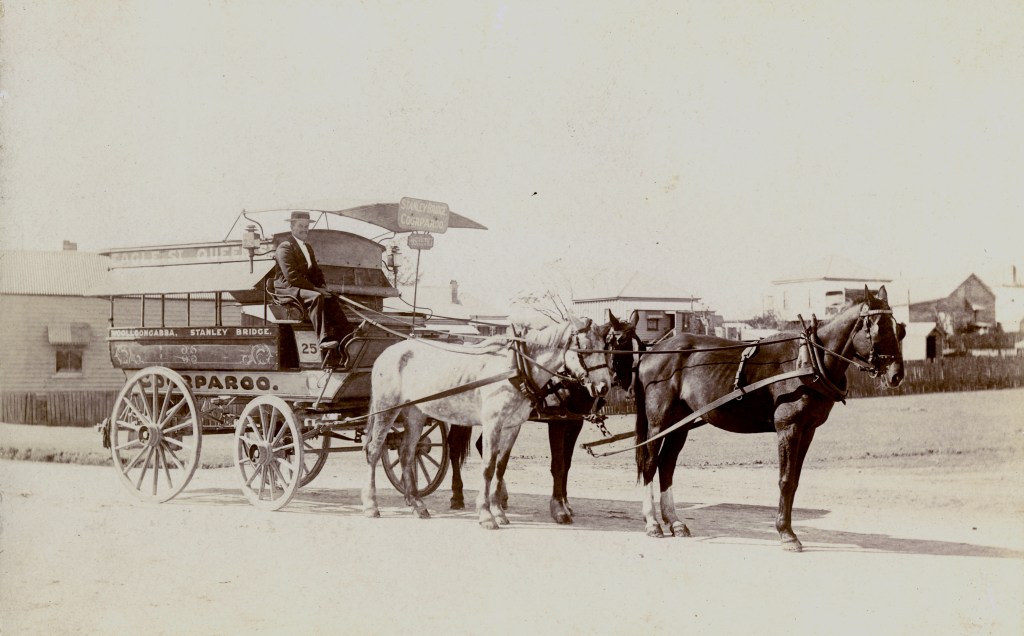
Pooran Dabee Singh founded a coach service to Cleveland and made it a roaring success. He started with the mail run, and graduated to passenger coaches. Pooran was every bit as entrepreneurial as his father, and just as litigious.
He did well enough to purchase the Grand Hotel at Cleveland, although he chose not to be the licensee. He never touched a drop of alcohol in his life.
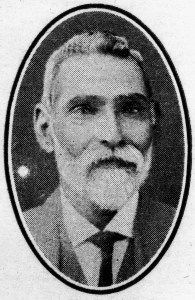
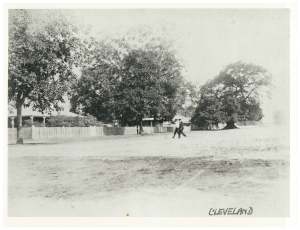
Pooran gave an entertaining interview in 1926, telling stories of old Brisbane Town, his education, and his love of horses. The interview focused not on his colour, but on his character and achievements. He passed away in 1927.
The Singh family had come a long way.
[i] I have come across half a dozen spelling variations for Belbuddha. I can’t be sure which rendition is accurate.
[ii] Pooran: 1848-1927
[iii] Betcheu: 1849-1886
[iv] Gooran: 1851-1898
[v] Also spelled Crickard.
[vi] Captain Wickham recorded the man’s name as Gleeson in his bench book.
[vii] She was only 29, according to her immigration paperwork. Presumably, the bloom of youth fled early.
[viii] That would be Dabee Singh.
[ix] Ann had indeed married a gentleman named Emmanuel Antoni at Brisbane shortly after the America landed. Easy to forget these little details in the heat of the moment, I suppose.
[x] William Macombe Clickard, born on 16 January 1854.
[xi] Future Chief Justice Lilley.
 Moreton Bay and More