
The Fine Arts.
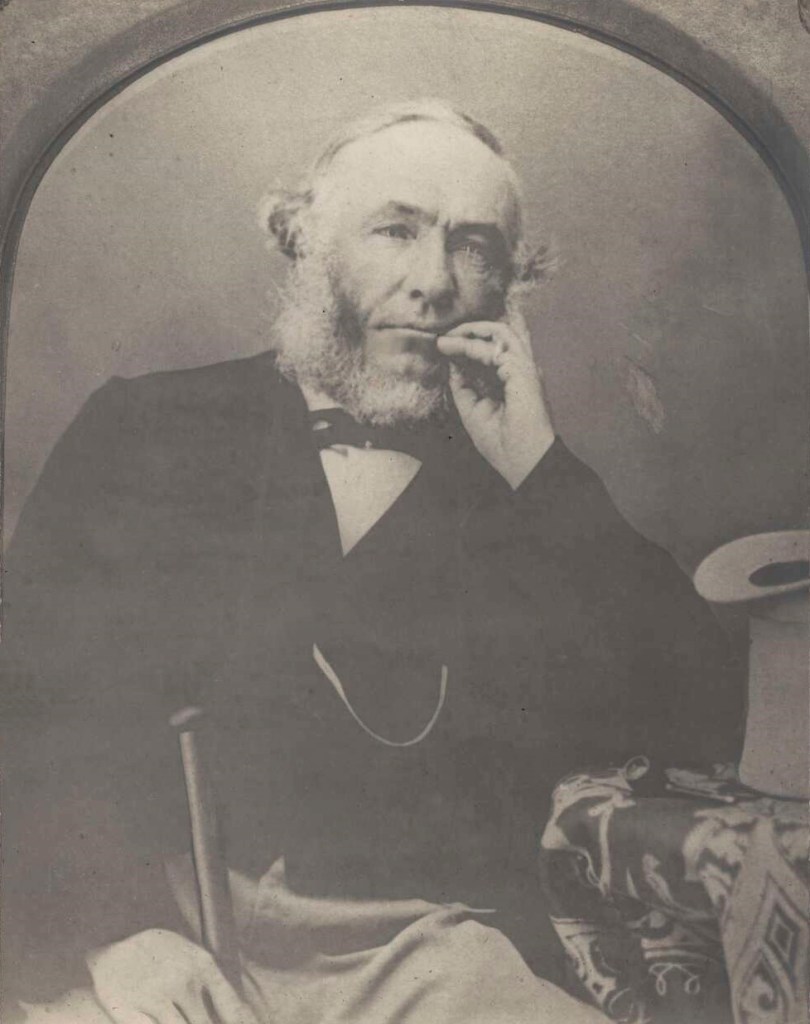
Mr Silvester Diggles, piano tuner, music teacher and artist, first came to Brisbane via the steamer Boomerang in November 1854. On board, Silvester was in interesting and distinguished company. The legal profession was represented by Mr Justice Therry, Mr Perry, Mr Purefoy and Mr Pring – all on their way to hold Circuit Court at Brisbane Town.
The world of music was also well-represented: Mr Frederick Dicker, Mr Edward Hancock and a young singer, newly arrived from London, Miss Flora Harris. As well as piano tuning, Mr Diggles would be accompanying the singers in a series of concerts in Brisbane and Ipswich.
Miss Harris was the darling of Moreton Bay in November and December 1854, and Mr Diggles accompanied her on the pianoforte. Her rendition of “I Should Like to Marry,” was a particular hit.
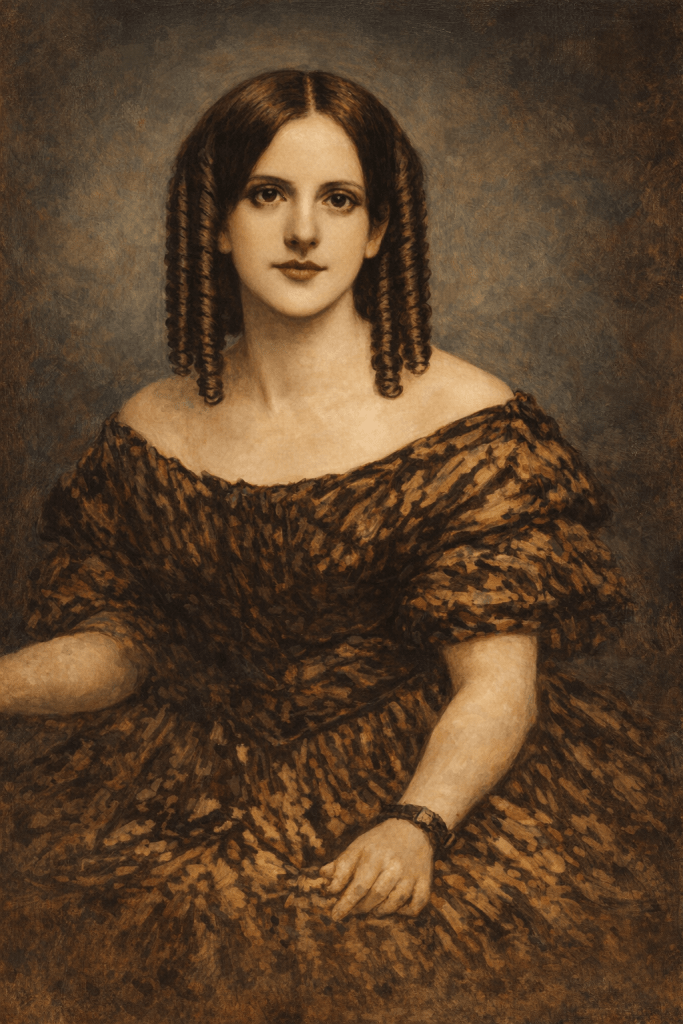
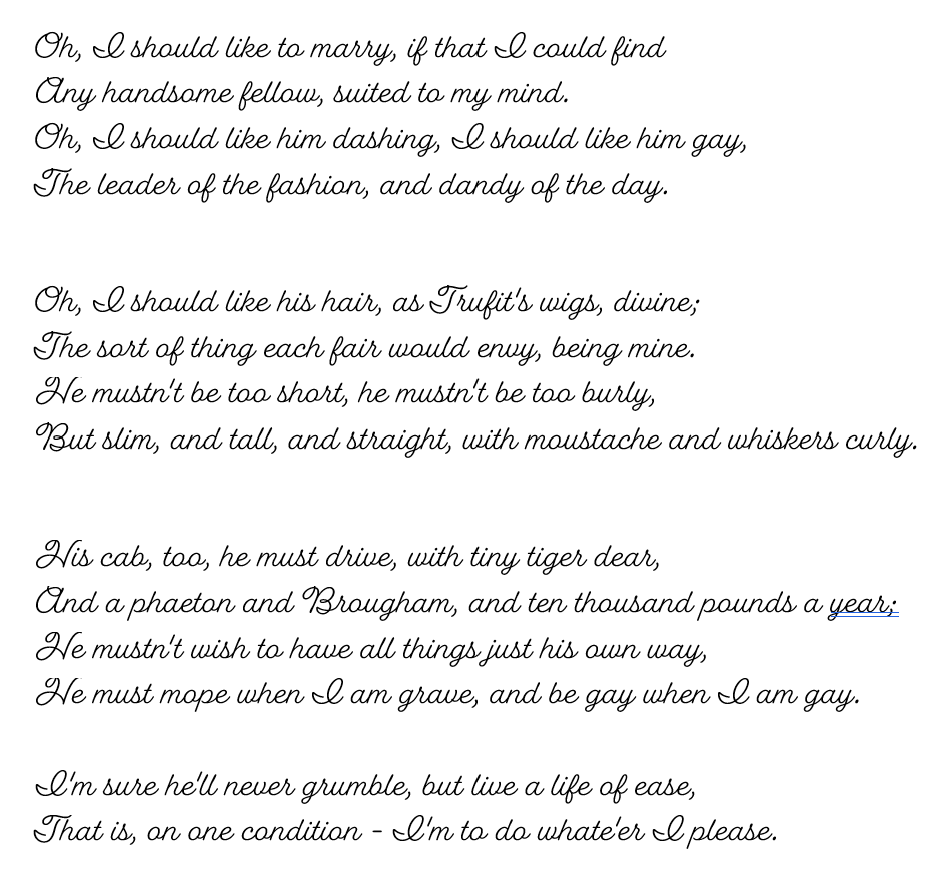
“Loudly applauded by all the married men in the room, and also responded to by the not altogether secret sympathy of a more interesting part of the audience. But alas! These tall and handsome fellows, with the curly whiskers and the stamp of fashion are scarce in Ipswich.”
Moreton Bay Courier, 9 December 1854
Silvester Diggles noticed, as he surveyed the music-starved audiences crammed into billiards halls, an opportunity to foster a local music community. He moved his family to Brisbane.
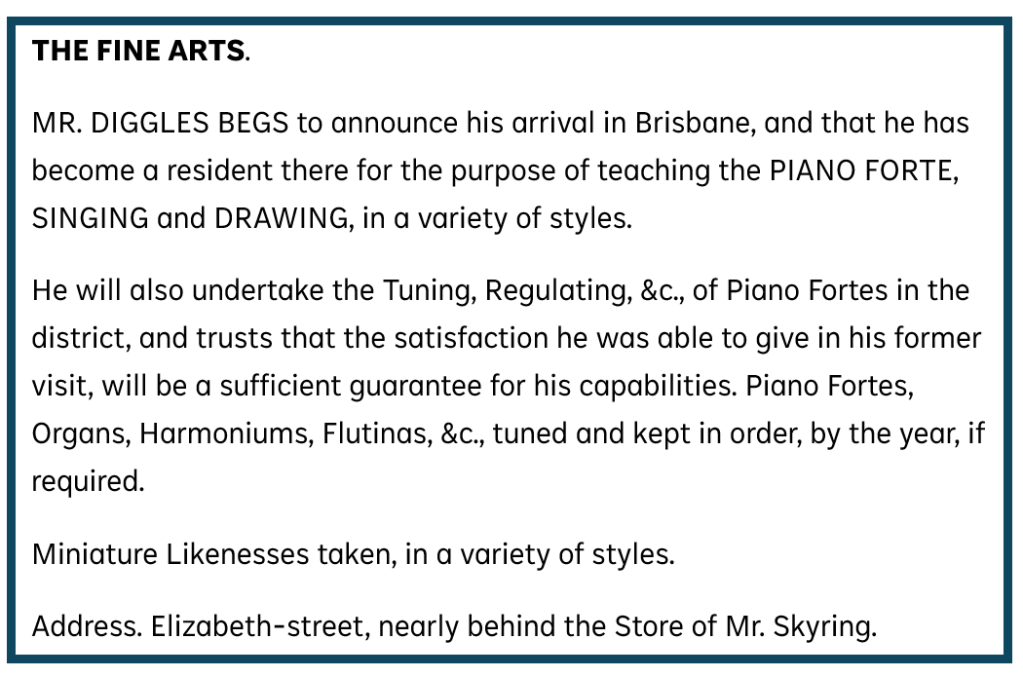
In March 1855, the celebrated Austrian violinist, Miska Hauser, held a series of grand concerts in Brisbane. Hauser was probably the most distinguished musician to visit the town thus far, and mercifully was not obliged to perform in a billiard hall. At the School of Arts, Miska Hauser shared the bill with Flora Harris, Mr Packer and Silvester Diggles.
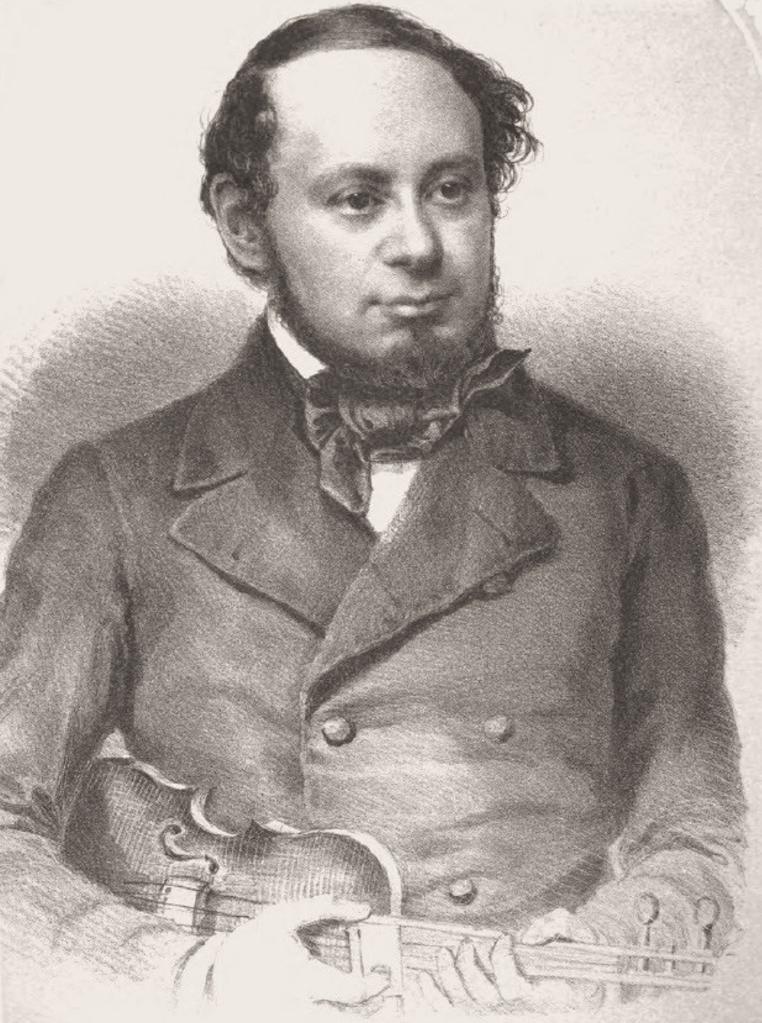
Several months later, in June 1855, Silvester Diggles took part in a series of concerts for Mr John Cooling at the School of Arts. A visiting circus elsewhere in town thinned the audiences to emaciation, but those few that attended apparently enjoyed the “Ethopian Serenaders” – yes, a group of entertainers in blackface. I will spare you the names of the songs they performed.
“We must be allowed to express our candid belief that when these serenaders were engaged, sufficient allowance was not made for the advanced musical taste of the people of Moreton Bay,” sniffed the Free Press. (Never mind that everyone else in town was watching jugglers and clowns that week.)
Whatever Moreton Bay’s level of sophistication in music actually was, Silvester Diggles was determined to improve the community’s access to it. In December 1855, Diggles began advertising singing classes using the Hullah System, which had informed generations of singing teachers, that is until the Tonic Sol-fa system came along and made things a bit easier. (Had to do with the fixed vs floating ‘do,’ apparently.)
In May 1856, the School of Arts met, and a committee was formed for the advancement of a choral society in Brisbane. Mr Diggles was appointed leader and instructor of this enterprise. Some of the rehearsals were attended by the Courier, who reported some encouraging progress.
Personal and scientific matters intervened for 1857 and 1858. Silvester Diggles lost his first wife, Eliza in August 1857 after a “long and painful illness.” He had a young family to take care of, and undertook more paid stage work – playing the musical accompaniment to “dissolving views” in Ipswich, and appearing on stage once more with Miska Hauser on his triumphant 1858 tour. When not performing music, he was giving learned talks on entomology at the School of Arts.
In 1858, Silvester Diggles married Albina Birkett, and the couple would enjoy a long and happy marriage at their home at Kangaroo Point. Secure and happy at home once again, Silvester was able to return to his mission of creating a competent and functioning choral society.
The Brisbane Choral Society.
The Courier looked in at the new group in its first rehearsal, and decided that “the body of tone gave promise of something really good being produced.” In February 1859, the School of Arts formally named it the Brisbane Choral Society, “for the cultivation of Sacred and Secular music.” The aim was to have a proper first performance at their April annual general meeting. (It would make a pleasant change from the speeches and arguments that usually featured at these events.)
Dr Cannan was so moved by this object that he quoted the Bard:
This in turn, so moved the attendees that, in the words of the Courier:
At the close of the meeting “God save the Queen” was sang by those present con spirito, if not exactly a tempo.
As 1859 progressed, so did the choral society. Although the School of Arts was better than a billiard hall for musical performers, the acoustics were muffled by bookshelves, and practice sessions often annoyed those in the reading room.
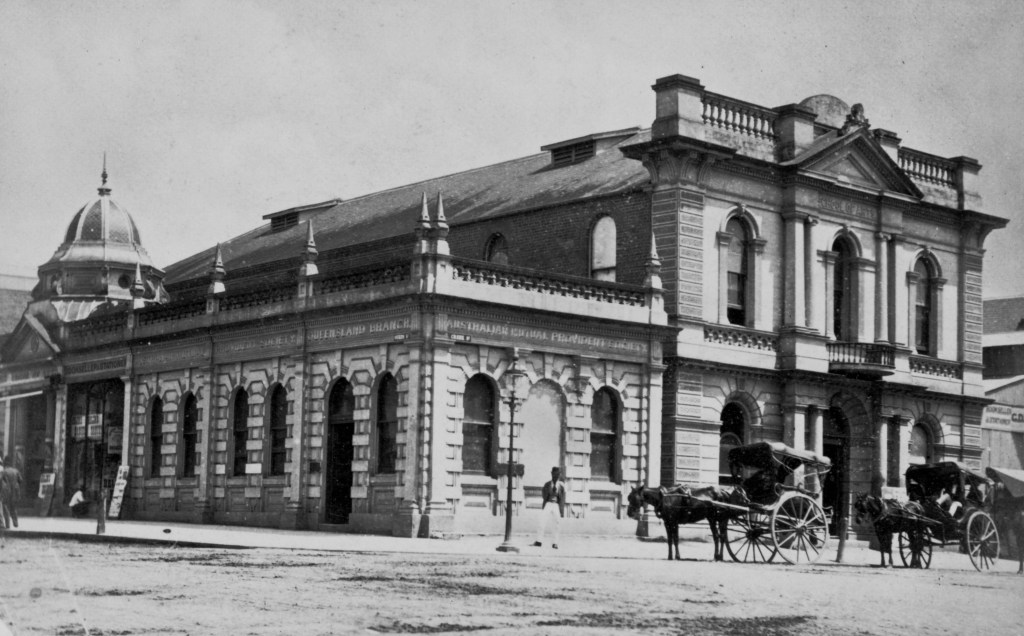
Annoyances aside, by December 1859, the Brisbane Choral Society was competent enough to give a successful gala welcoming concert for Queensland’s new Governor, Sir George Bowen, and his aristocratic wife, the Countess di Roma.
Further concerts throughout 1860 and 1861 were well-attended and well-reviewed. The singers, under the direction of Silvester Diggles, were able to navigate new and complex works, and bring down the house with old favourites.
Sadly, the Brisbane Choral Society made an enemy in one Mr John Innes, Secretary to the School of Arts. The conflict between Innes and the Choral Society would fester over the course of 1861.
Breaking into a Primitive Methodist Chapel with intent to sing.
In January 1861, the singers arrived for their scheduled practice at the School of Arts, only to find the Acrobatic Company had also been booked for rehearsal space. Finding themselves unable to “cultivate Sacred and Secular music” in the presence of persons in tights, the singers were assured by Mr Innes that he could find them a suitable alternative.
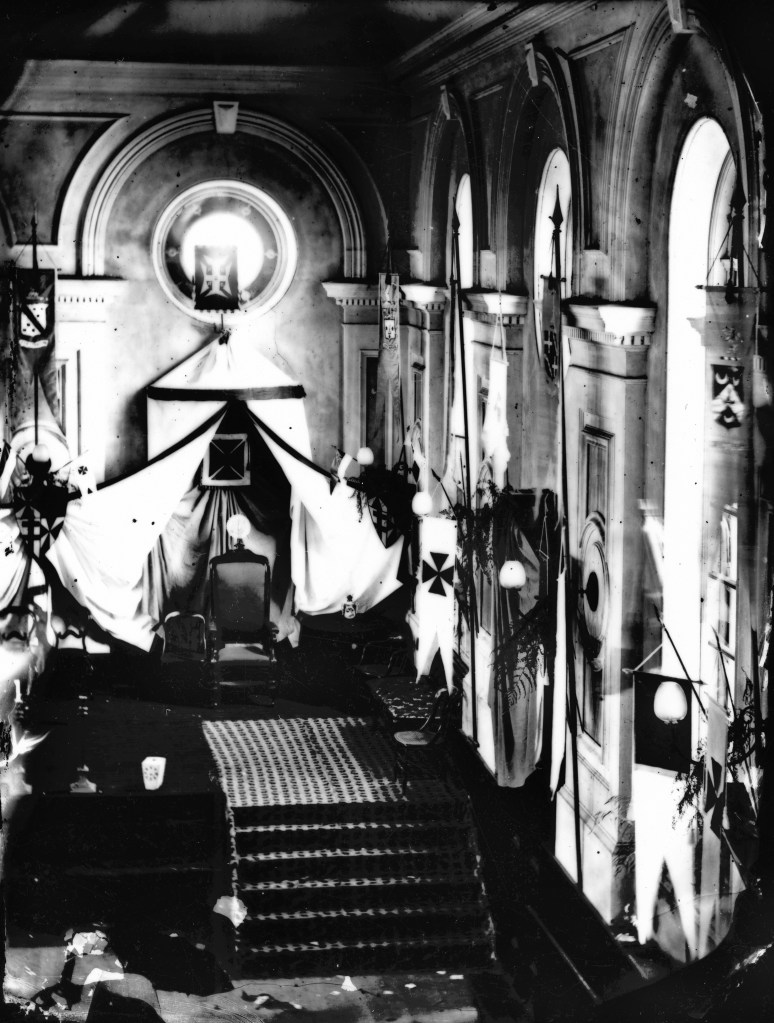
Mr Innes decided to use the Primitive Methodist Chapel next door, but found it locked. Not one to be deterred, Mr Innes had two of the younger and more limber choristers shimmy in through a window to open the chapel up from inside. Well, Innes reasoned, they had used the Chapel before. He had the right. In filed the singers, a bewildered Mr Diggles, his harmonium, and Mr Innes.
This guerilla performance art was interrupted by Rev Mr Moseley, who demanded to know why there were several dozen trespassers in his chapel. Mr Innes demanded to know who had made that remark, and had stated that he had “a very good mind” to give the Reverend a thrashing.
When reality dawned on Mr Innes, he said he thought he had the right to use the chapel – after all he’d done it before. Well, with permission, of course. But he vociferously denied encouraging the break-in. After quite an impasse, someone mentioned the magic word “police,” and all parties hastily abandoned the chapel. Presumably the harmonium went, too.
Insults and meetings.
In September 1861, the society’s practice sessions were still annoying the habitues of the reading room at the School of Arts. One gentleman was moved to Say Something officially to Mr Innes, who fancied himself as a local lion. Mr Innes had attended a wedding that afternoon, and was feeling feisty and (allegedly) rather drunk. He turned on Mr Diggles and his choristers, insulted them, and then held the floor on just about every other topic that annoyed him. There had been quite a few annoyances, apparently.
One Mr Hockings, also a Brisbane lion (not in the capital L sense), decided that the musicians had endured enough insults from Mr Innes, and proposed turning Innes out of the building. This was done, but with a little too much enthusiasm. Mr Innes tripped and landed on his face. He declared that he would press an assault charge.
The Choral Society, together with the new Philharmonic Society, decided that the inconvenience of the School of Arts rehearsals should be dispensed with, and nice Justice Lutwyche let them practice in the Supreme Court. When not in session of course.
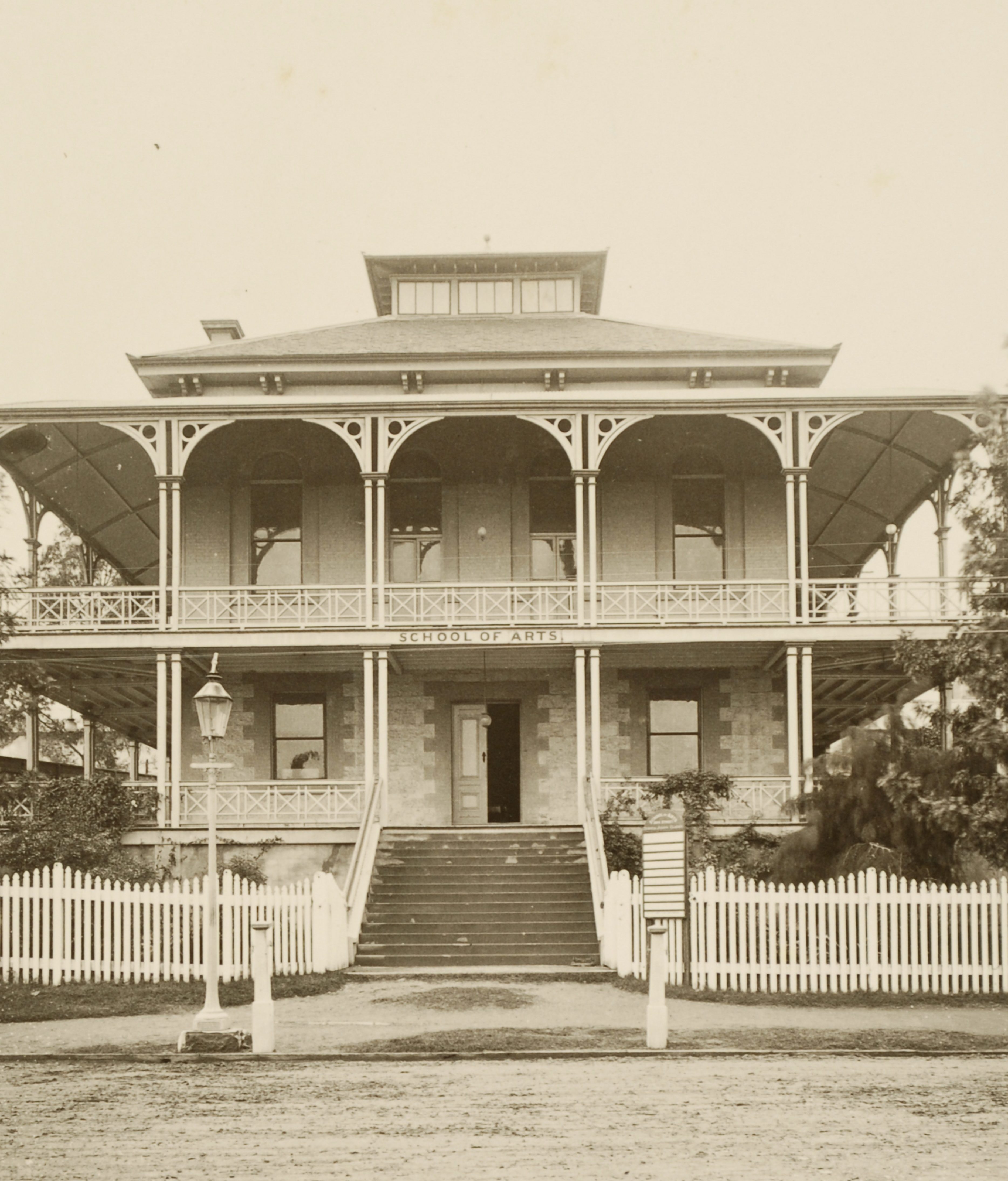
The criminal case against Mr Hockings was dismissed in the police court, after hearing from several witnesses who described Mr Innes’ condition on the day, and several unusually heated meetings of the School of Arts took place. Mr Innes had been drinking heavily of late, managing the committee haphazardly, and had insulted every Brisbane worthy he could find. It took several meetings, and a great deal of agog press coverage, but by April 1862, he was out of the School of Arts, and by May 1862, out of the colony.
Silvester Diggles continued to support the Philharmonic Society as it was now called, and the Society performed to acclaim, but he was less active in the running of the choral group. Perhaps the drunken insults of Innes, followed by the highly charged meetings, cooled his enthusiasm.
A change in focus.
The formation of the Brisbane Philosophical Society, and the advancement towards creating a Queensland Museum, caught his interest more sharply.
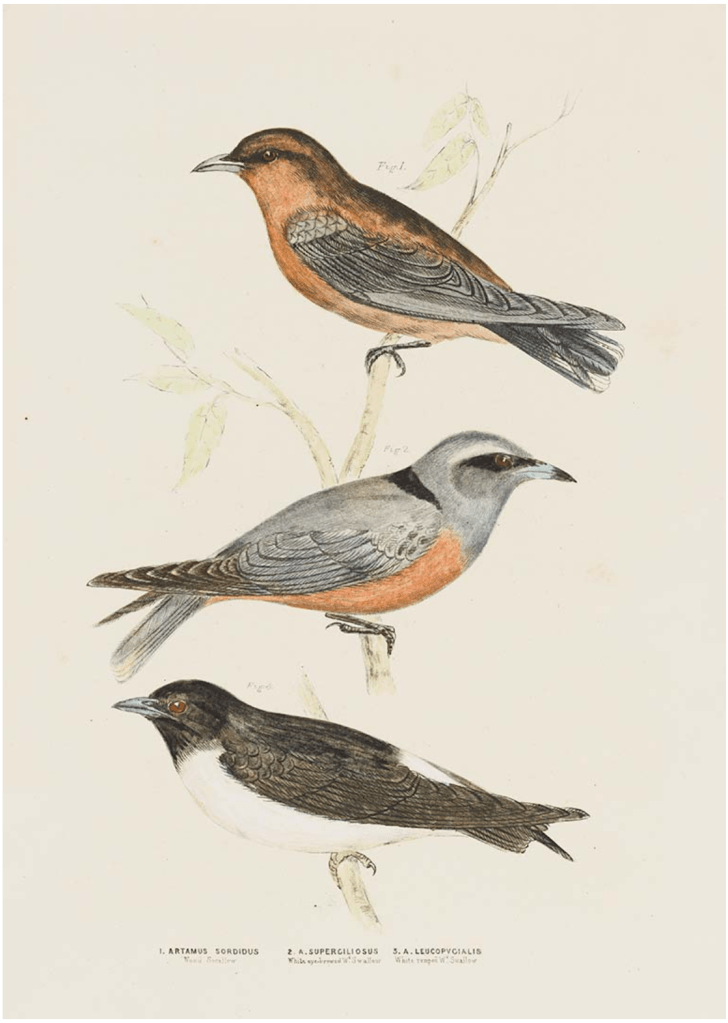
Silvester had begun submitting his insect sketches to publishers, and in 1862, began his great project. He would create a the “Birds of Australia,” documenting every indigenous bird in the country. Hundreds of sketches, watercolours, and hours of writing and research followed. Diggles demonstrated that high-quality and affordable volumes of his work could be produced in partnership with Theophilis Pugh’s printing press. Sadly, an economic depression reduced the public’s discretionary spending ability, and more of the financial burden fell to Diggles. He was unable to see the project to fulfilment, but left behind a store of beautiful artworks for generations to admire.
Sources for all three Silvester Diggles Posts are listed here:
“Oh! I should like to marry.” H. De Marsan, Publisher, 60 Chatham Street, NY. Public Domain, Library of Congress.
 Moreton Bay and More