
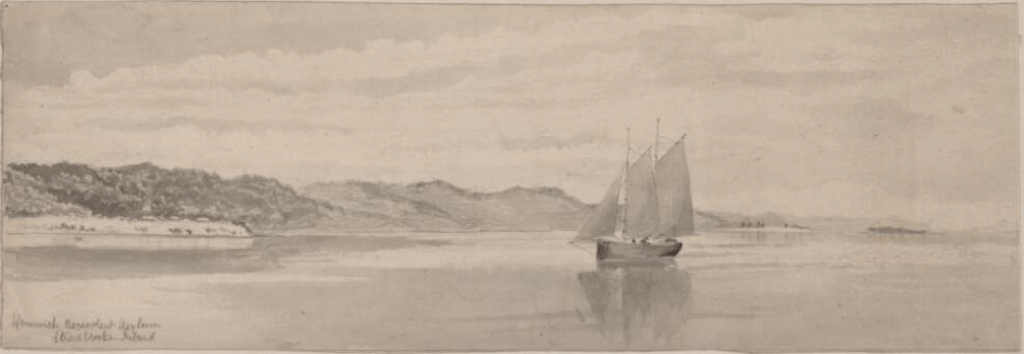
On 6 October 1873, a frail old man suffering from dementia was transferred to Dunwich Benevolent Asylum from the Brisbane Hospital. The hospital couldn’t do much for him – he was old, he was wandering in his mind, but he wasn’t really sick enough to take up a valuable hospital bed. He had been sent to Brisbane Hospital by the Magistrates at Brisbane after he’d travelled from Sydney by steamer without a ticket in March 1873. After more than six months as an in-patient, the hospital sent him to the Benevolent Asylum.
The Superintendent at Dunwich didn’t really know what to do with him, either. No history could be taken of him, and only the bare details of the man’s existence could be recorded – Cornelius Hughes, around 82 years old, from Dublin and Roman Catholic. He was fed, housed, and then released back into society on 17 November 1873. Despite being elderly and advanced in his dementia, he was neither close to death nor cured. The Asylum felt that he could manage out in the world.
Two days afterwards, Cornelius Hughes was arrested for vagrancy in Brisbane. Police Magistrate Rawlins looked at the frail old man who was guilty of the crime of being old and poor, and decided that he didn’t want to punish him. The best he could do was to send him to Brisbane Gaol for three months for “protection and medical care.” What the hospital and the asylum couldn’t or wouldn’t do was left to the prison.
Once his sentence was done, Cornelius went back to the Brisbane Hospital and died there on February 8, 1874. This was the final chapter in a long, hard life.
Cornelius Hughes was a man who sinned, paid his debt to society, went on to live a decent life, and then destroyed a quarter of a century’s hard work in a few seconds of madness. His life after those rash actions was spent in misery and penury. When he was old, confused and frail, he found his way back to the scene of his greatest mistake. Brisbane.
The Tailor’s Progress.
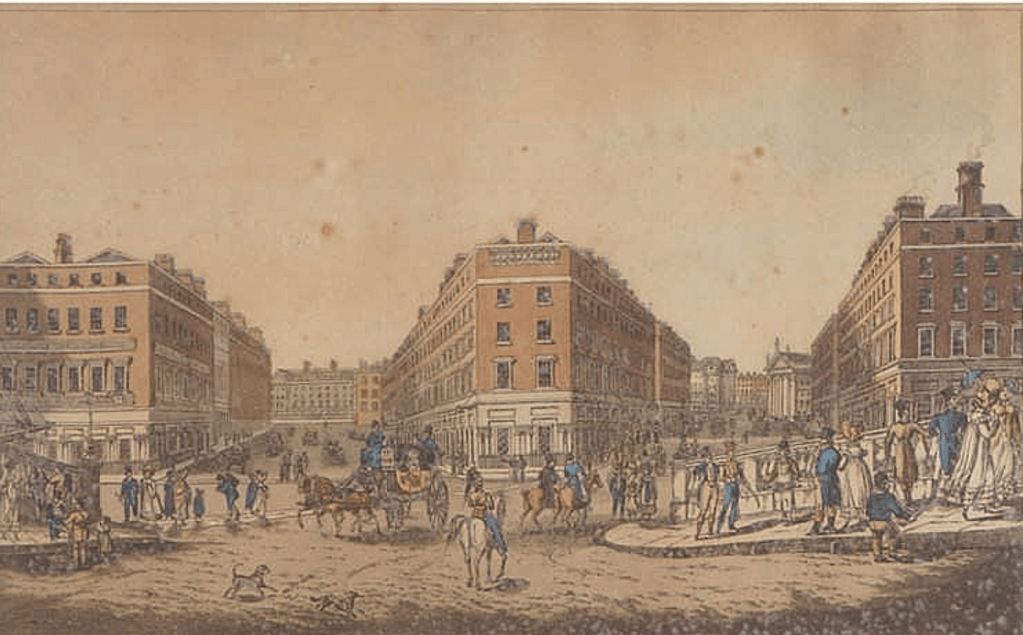
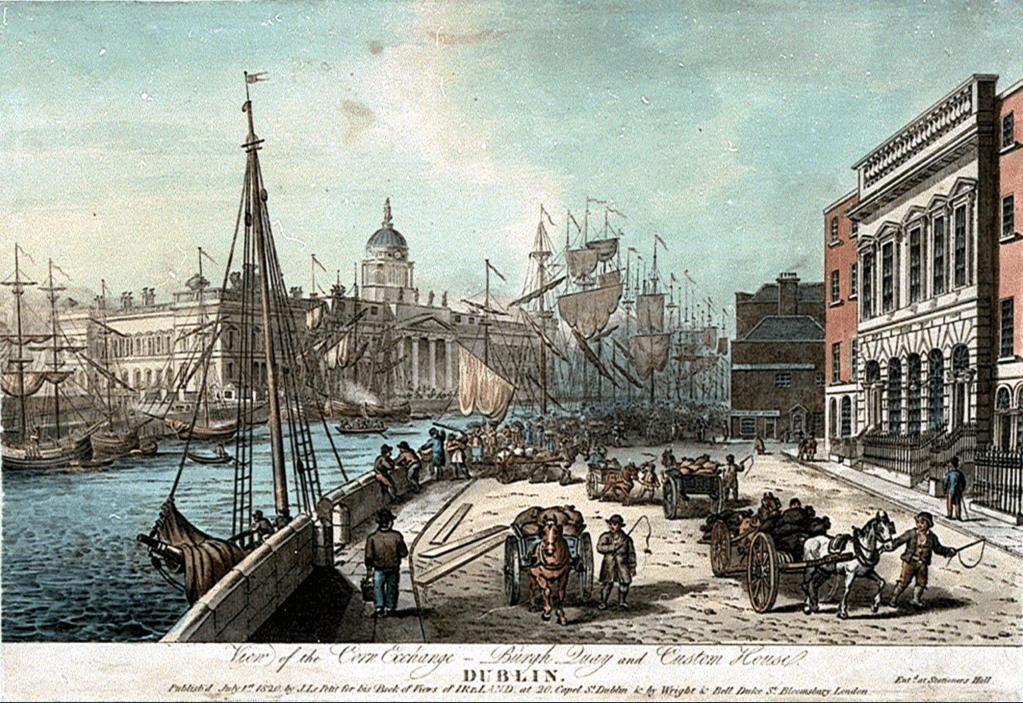
Old Dublin, as Cornelius would have known it.
Cornelius Hughes (alias Madden) was born in Dublin, somewhere around 1800[i]. He was about 19 when he was transported to New South Wales on the Tyne in 1819. A tailor by trade, he could read and write, had dark brown hair and hazel eyes, and stood nearly 5 feet 5 inches.
Hughes sent out to work and finish out the seven-year sentence he’d been given in January 1818. He stayed out of trouble throughout the early 1820s, and on 30 June 1823, he was married by publication of banns to Sarah Gardener per Lord Sidmouth, who had arrived in the colony a scant four months earlier[ii].
Sarah Hughes, as she would henceforth be known, was parted from her new husband in March 1825, when she stole a piece of printed cloth from a marketplace, and earned herself 12 months in the Factory at Parramatta. The couple reunited in an unusual way – in the cells of Sydney Gaol, where both were facing charges.
Getting away with it.
Shortly after Sarah went into the Factory, Cornelius received his Certificate of Freedom, and very nearly threw it away. To quote the Australian of 23 June 1825:
“On Thursday last a genteelly attired man presented a check for payment at the Bank, purporting to be drawn by Dr. Bowman, for 180 dollars. Mr. John Robson suspecting the instrument to be forged, detained him until an inquiry was made. Dr. B. on being applied to, declared it a forgery. A constable was procured, and the man who gave his name, Cornelius Hughes, free, being taken to the Police Office, and having undergone an examination before the sitting magistrates, was fully committed for trial.”
That was June 1825. Cornelius would not have the charge adjudicated until February 1827. In the meantime, he was charged with “divers felonies,” remanded, bailed and acquitted of those. Cornelius was found guilty of forging and uttering an order in Bowman’s name, but the prosecution moved for an arrest of judgment in the matter. The reasons were complex, and involved a poorly drafted indictment, statute law, and the indeterminate value of foreign currency in the eyes of the English law. In a case that probably tormented law students for decades, Cornelius was discharged by proclamation from the bar on a technicality. He was a free man.
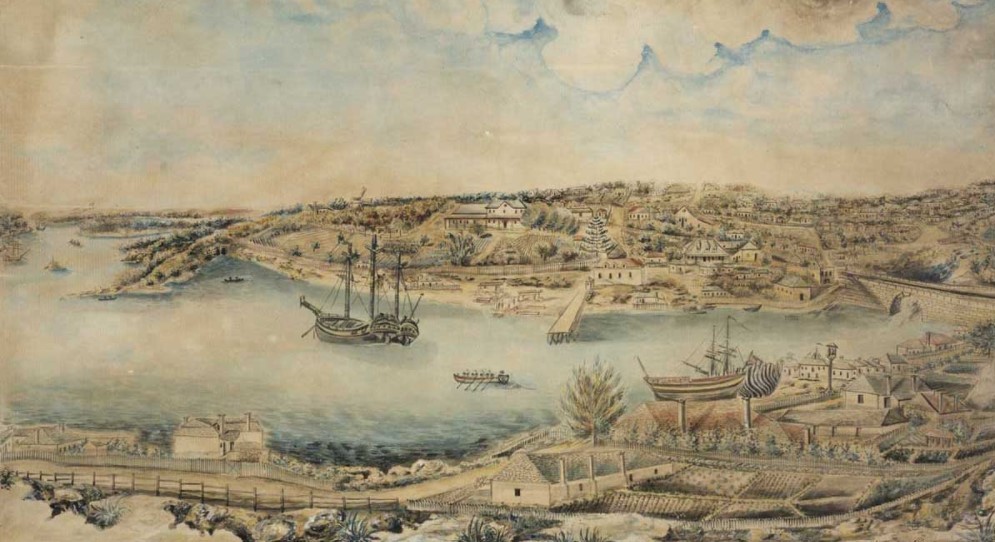
In a turn of events bizarrely similar to those of 1825, another Certificate of Freedom was given to Cornelius in March 1830, and in July 1830, he was committed for trial for robbery.
The complainant in this case was one Simeon Lord, a former convict made good – made very good indeed. Lord was now a respected figure in Sydney society, and Mrs Lord had employed Cornelius Hughes as a tailor to make a pair of waistcoats for her children.
The crime was said to have been uncovered after an argument between Cornelius Hughes and another tailor in Lord’s employ, Henry Williams. Henry Williams’ wife took some alcohol with Cornelius Hughes while Henry was out, there was a fight[iii], and Mrs Williams told the police that she had two pieces of cloth at her house that belonged to Mr Lord, and that Cornelius Hughes had offered them to her for a rupee.[iv]
Cornelius was able to cast enough doubt on the stories of Mr and Mrs Williams in cross-examination. Furthermore, he was able to get the Lords to admit that Williams had been left alone in the workroom with the goods at times when Cornelius Hughes was at his meals. The jury found Cornelius not guilty, and his Certificate of Freedom remained in force.
The Road to Respectability.
As Cornelius Hughes navigated the Courts, and worked to make sure his free status remained, Sarah Hughes, described as “a free woman of decent appearance,” was imprisoned for shoplifting in almost identical circumstances to her 1825 conviction. She had waited for three months in pre-trial custody, which meant that she was gaoled for only one week after sentencing.
Sarah disappears from the records about Cornelius in the 1830s. She may have remained with Cornelius and stayed out of trouble, or she may have passed away. There are two women of that name listed as dying in the late 1830s in New South Wales.
Cornelius, as a free man who had no recent convictions, found himself a new career. No longer employed as a tailor to bumptious fellow emancipists, he was employed by the Government. As a constable.
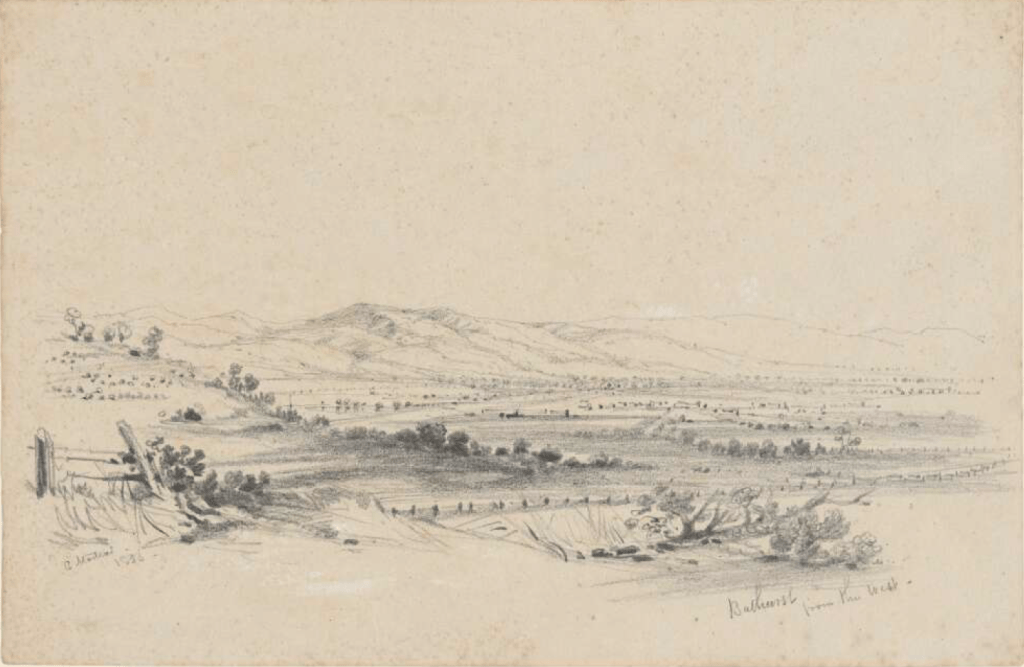
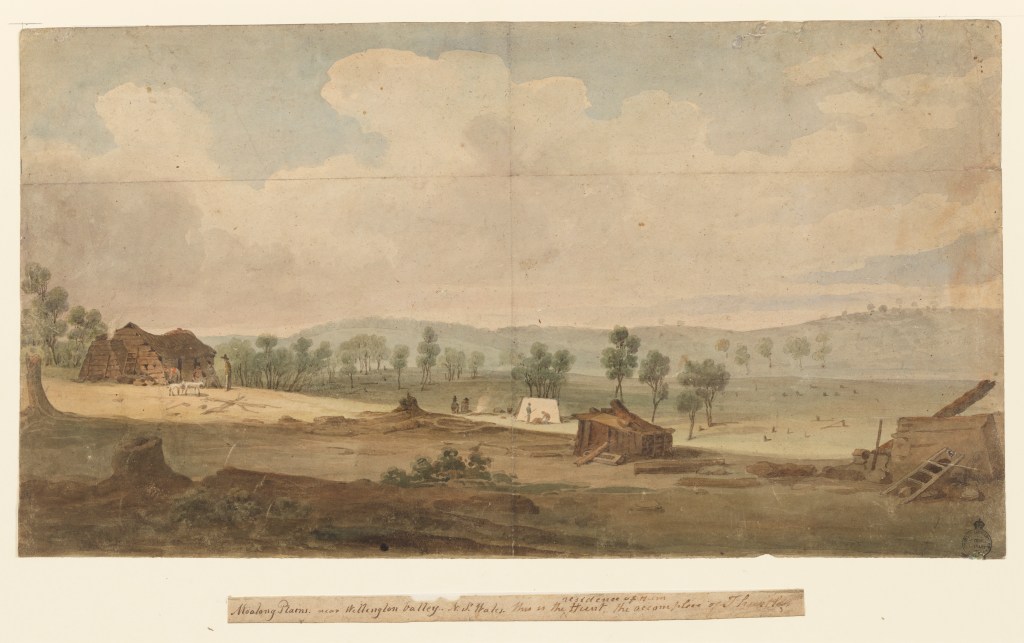
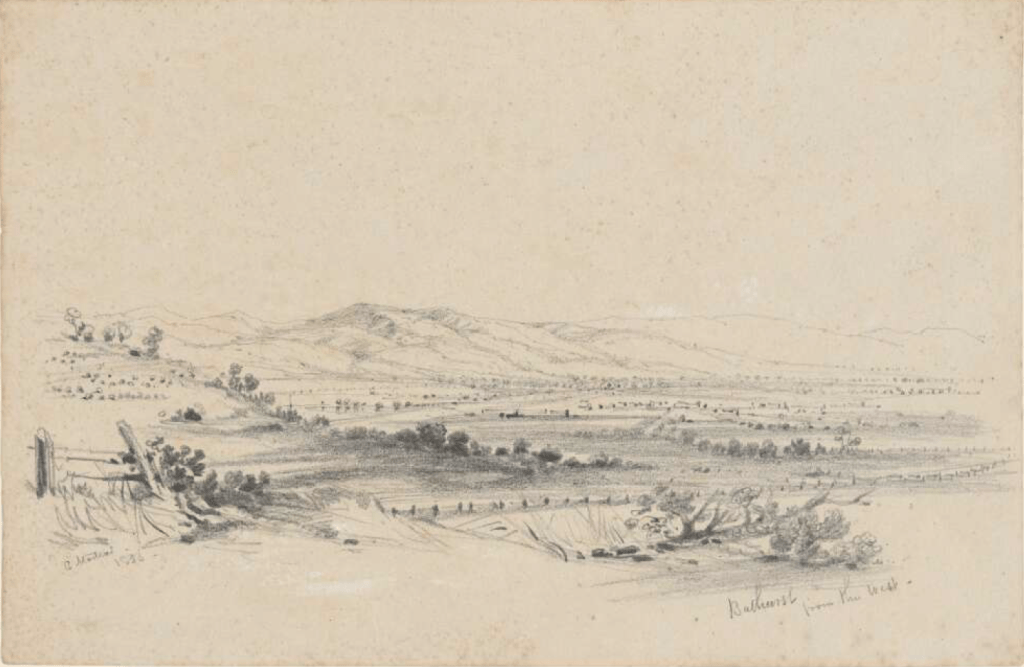
Bathurst Plains and the plains near Wellington Valley, where Cornelius worked as a constable and poundkeeper.
Constable Hughes was appointed to work at Bathurst in 1838, then transferred to Wellington the same year. He remained there until his resignation in May 1839. He later enjoyed a busy couple of years as the Poundkeeper at Wellington, seizing and detaining errant livestock all over the region. He engaged in civil litigation and donated to worthy causes, particularly those related to the building of churches.
In 1842, he was removed from the Poundkeeper position (too zealous, perhaps?), and married one Frances Tait at Scone, New South Wales. Presumably, Sarah had passed away, divorce being such an expensive and complicated undertaking in those days. Of Frances Tait, I could find little information, beyond the entry in the Australian Marriage Index.
That year, Cornelius also contributed to a testimonial for William Augustine Duncan, the editor of the Australasian Chronicle. Duncan was a man with Views, and those views had clashed with those of William Wentworth. As a result, Duncan’s editorship of the Chronicle was concluded. WA Duncan would go to Moreton Bay in May 1846 to become the Collector of Customs. His presence in Moreton Bay might explain Cornelius’ decision to move there.
Big trouble in Little Brisbane.
On Thursday 2 July 1846, a shooting occurred in South Brisbane. The Moreton Bay Courier, in its third ever issue, had never had breaking local news to deal with before. It began with:
“On Thursday afternoon the inhabitants of South Brisbane were thrown into a state of the greatest alarm and excitement, in consequence of a person named Cornelius Hughes, a tailor, having fired a loaded pistol at a shoemaker named William Darker.”
Why the dispute took place was a little complicated, made more so by the Courier’s excited reporting.
Cornelius Hughes had been acting as agent for a lessor and had taken over an unwritten agreement with the lessor, occupying a house with Darker then as his tenant. On Darker’s failing to pay rent on time, Cornelius had seized his shoemaking tools and detained them under a civil warrant for distress. Mr Darker needed his tools to earn his living and pay the rent, and Hughes refused to give them over. A fight ensued. Hughes was armed with a pistol, and in a struggle, delivered William Darker a serious, but non-fatal chest wound.
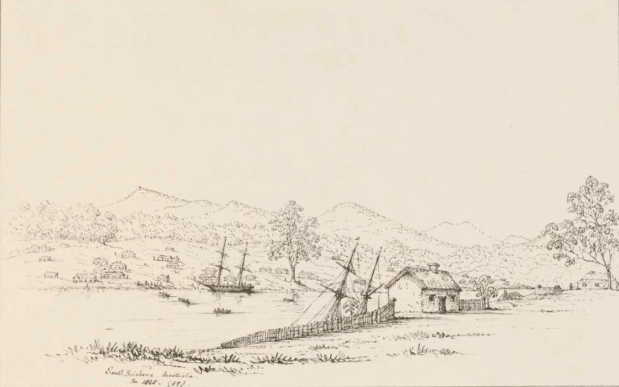
It is probable that Cornelius Hughes was using his pound-keeper instincts with regard to Darker’s goods, but it’s one thing to seize some horses loose in the bush, and quite another to detain goods in lieu of rent, and then try to hold on to them by force of arms. After a couple of brief hearings at Brisbane, Cornelius Hughes was sent to Sydney to be tried for shooting with intent to kill.
At his trial, Darker’s wound was described as slight, but the facts give out were the same. A jury found Cornelius Hughes guilty, and the judge sentenced him to 15 years’ transportation to a penal colony.
Cornelius Hughes had lost everything by this rash action. Norfolk Island or Cockatoo Island loomed as possible destinations. He was middle-aged, and now blind in his left eye. In his late forties, the prospect of hard labour for 15 years must have seemed like a death sentence. But, as he said in a letter to the Courier at the time, the shooting was an action “I sincerely regret, and for which I am ready to make every atonement in my power.”
What had happened to the second Mrs Hughes is not recorded (although a woman with a similar name to her maiden name lived to be an old and respected resident of the northern districts of New South Wales).
The other end of the continent.
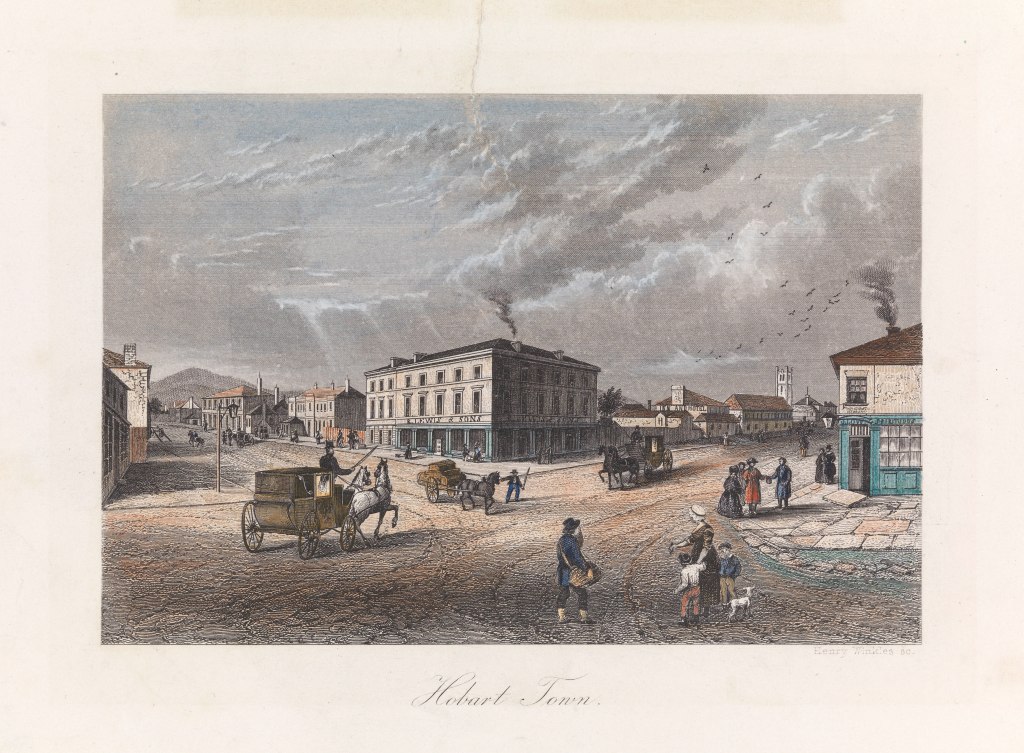
In early 1847, Cornelius Hughes found himself on a steamer named Waterlily, headed for Van Diemen’s Land. He was assigned to work at the Coal Mines Station. He was a well-conducted servant, and his employers were genuinely interested in helping him to obtain remissions and tickets of leave. Cornelius Hughes stated that he had received a remission of five years from the Governor of New South Wales, but the Tasmanian authorities had trouble verifying that at first. (Hughes was correct.)
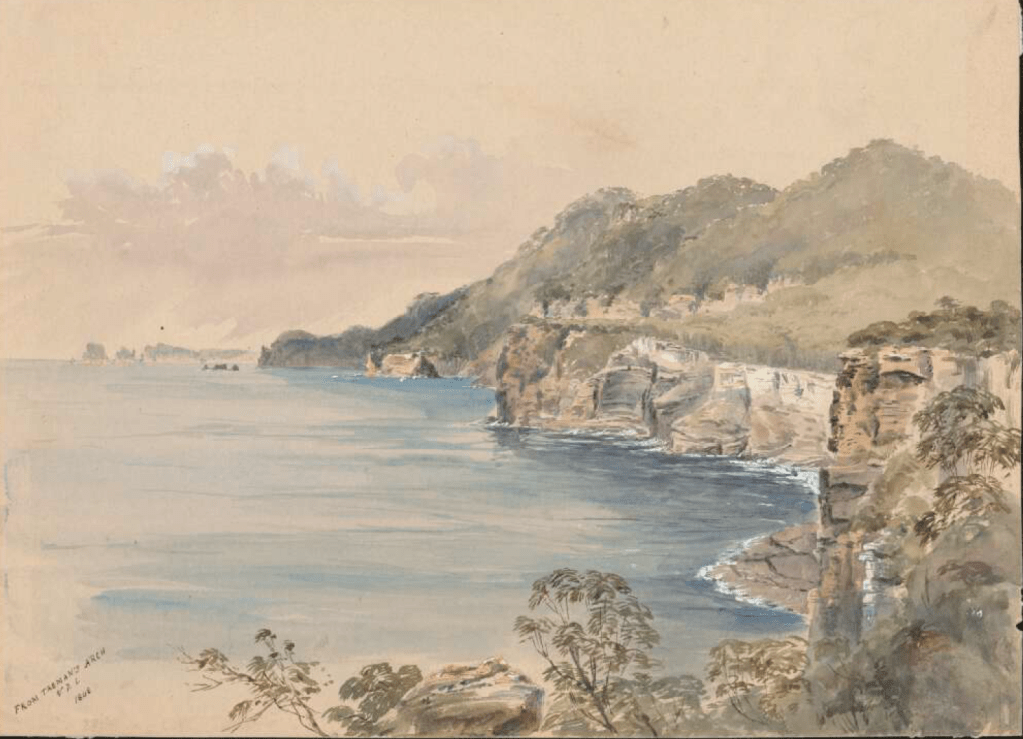
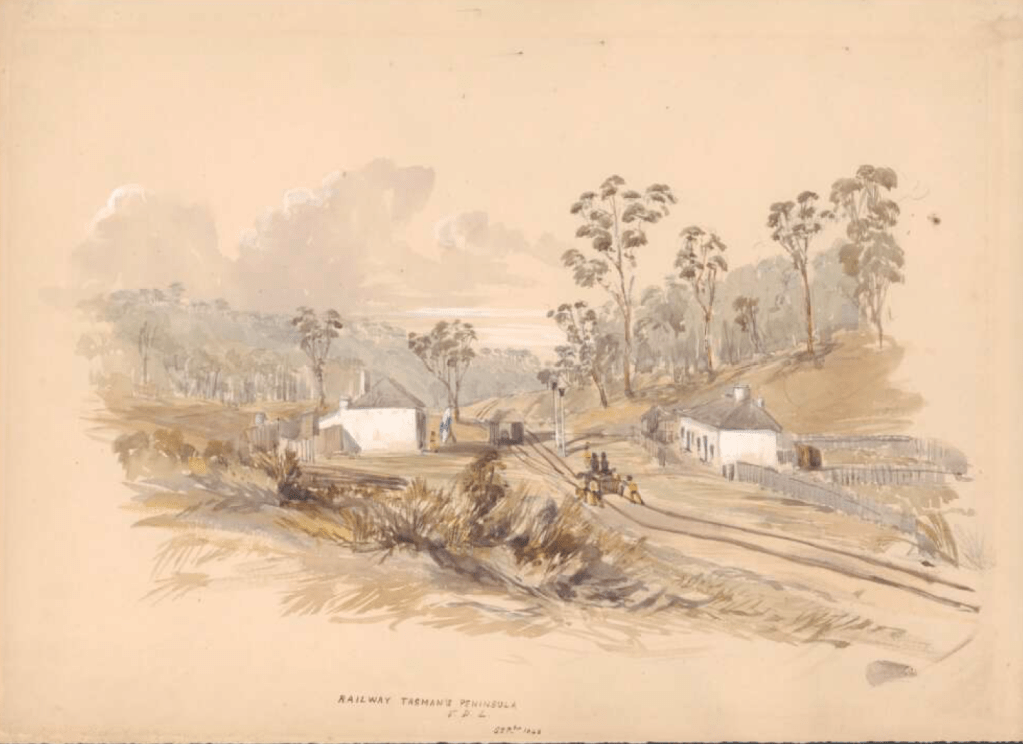
Tasman’s Arch, Tasman’s Peninsula and the Railway at Tasman’s Peninsula. Cornelius worked at the Coal Mines Station in the region.
Here is Cornelius Hughes’ account of his situation in his own words, and in his own writing, in 1848.
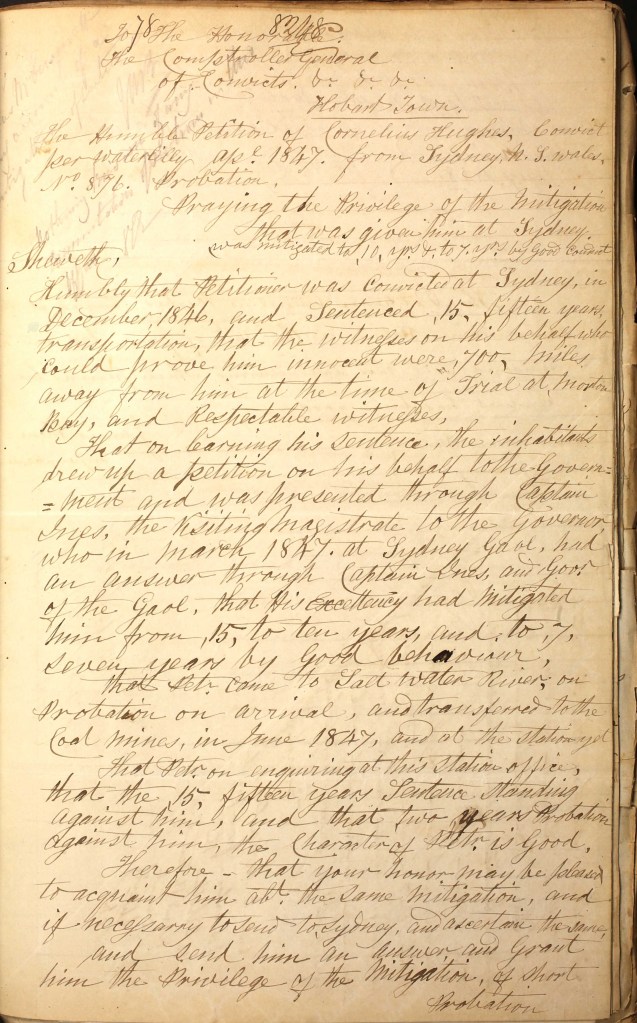
After a lot of investigating, the remission was found, and a Ticket of Leave was granted in 1850. A Conditional Pardon followed, and in 1854, after eight years, Cornelius was granted a Certificate of Freedom, based on his circumstances, health, and good conduct. He sailed to Melbourne on the Yarra Yarra in January 1854.
Hardship.
Cornelius Hughes had no powerful or respectable to help him back into his second life as a free man. He was no longer young, and not in robust health. He took shepherding jobs that offered only basic compensation and even had to take an employer to court for his proper wages. In 1861, he was beaten up by another labourer who thought Hughes and his sheep were trespassing on another run. Hughes claimed to be about 69 years old at the time, and after 40 years of trouble, he probably felt nearly 70.
A decade later, he boarded a steamer for Brisbane without a paid ticket. He had been suffering from ill-health, and it was clear that he was starting to suffer from dementia. When he arrived in the town he’d shocked 30 years previously, the Magistrate sent him to the hospital. He wouldn’t have recognised Brisbane from the collection of cottages and decayed public buildings he’d left in 1846, but perhaps he barely remembered those bad old days.
[i] I say somewhere around 1800, because his stated age at death suggested he may have been born in the mid-late 1790s. Although, by the time he came back to Brisbane, he was suffering from dementia and couldn’t give an account of his life.
[ii] She had been listed as a married woman on her convict indents – she was transported as “Mrs Sarah Gardener, the wife of Alexander Gardener.” Perhaps Mr Gardener went to his reward sometime between her shoplifting conviction in 1822, and her transportation in 1823.
[iii] The fight must have been severe. Cornelius’ left eye was “damaged by a blow,” according to the gaol description book. Ten years later, he was completely blind in that eye.
[iv] Currency in old Sydney was a flexible commodity in the early 1800s. Currency from all over the world was used, and in most places accepted. It was not unusual for transactions to be made in dollars.
Citations:
 Moreton Bay and More