

One of the more plaintive entries in the Dunwich Benevolent Asylum Admission Book reads: “I can’t remember anything about my early history – I was put in Diamantina Orphanage when an infant. I was there 11 years. Then was employed by Thomas Allen, Greenmount, 4 years. Then put in Toowoomba Hospital 3 years. Last 2Continue reading “Alas, poor Hamlet.”
Author Archives: Karen B
Amateur historian and writer.
Homes, Decor and Gardens in the 19th Century.

How did people live in a certain time and place? What were their homes and lives like? Thanks to the invention of photography, we can see some of colonial Queensland, from the slab and bark huts built by Europeans as they started their lives on the land they had claimed, to the substantial and class-definedContinue reading “Homes, Decor and Gardens in the 19th Century.”
Holidays Ahoy!
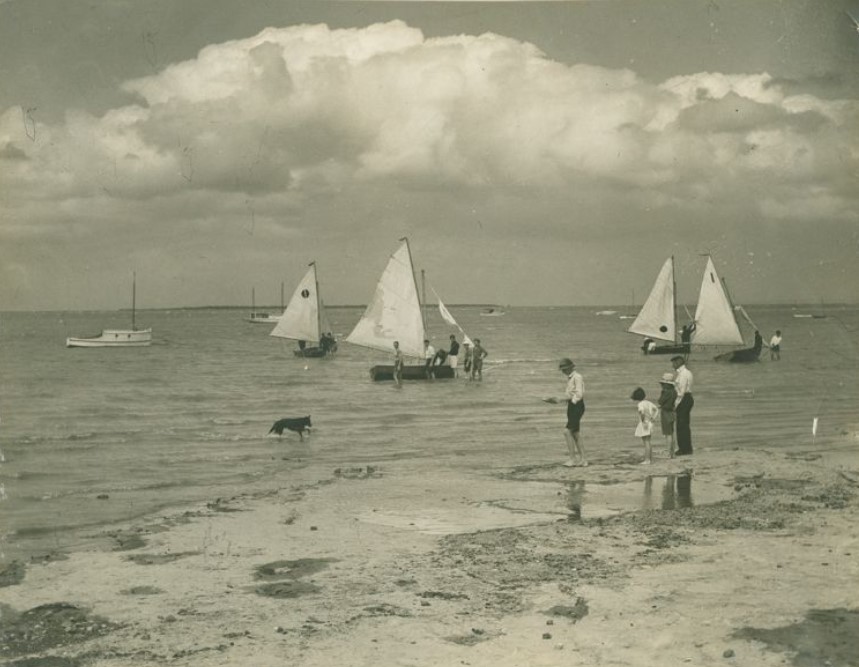
Two weeks of sweet Spring freedom are drawing near for the State’s schoolchildren. Let Colonial Queenslanders be your guide to recreation and getaway ideas. So, let’s make sure we’re dressed as formally as possible, and remember to bring your paints and brushes or your new-fangled camera. In and Around Brisbane A Trip to the GardensContinue reading “Holidays Ahoy!”
The Murder of a French Hermit at Sandgate

“An extremely painful sensation pervaded the quiet little community at Sandgate when it became known that Germain Dubrocca, a French recluse of industrious habits and inoffensive disposition, had been done to death in the most violent, brutal, and cowardly manner within a distance of less than three miles of the township. A survey party workingContinue reading “The Murder of a French Hermit at Sandgate”
A Law to Control the Poor
Mug Shots 1875 – Vagrancy Until 2005, Queensland had an antiquated statue on the books called Vagrants, Gaming And Other Offences Act 1931. It was a gloriously haphazard collection of offences, including, but not limited to: The Act’s purpose was “to make better provision for the prevention and punishment of offences by vagrants and disorderlyContinue reading “A Law to Control the Poor”
The Man Who Invented His Life
In December 1865, a man named James Keane recorded his history in the Register of Admissions to Dunwich Benevolent Asylum.[1] It was certainly impressive: “Arrived in Sydney by the Shamrock from Liverpool A.D. 1845. Employed by Messrs. Stenhouse and Hardy Solicitors, Elizabeth Street, Sydney. Was for a considerable time Editor of the “Moreton Bay Courier”Continue reading “The Man Who Invented His Life”
Prisoners in Brisbane Gaol, 1875: Fighting and Destroying Police Uniforms.

Oh, what a night! Police uniforms certainly took a beating in the 1870s. They looked sturdy enough. Heavy-looking tunics, trousers and forage caps were the order of the day. Yet at least four of the men featured in this post managed to “destroy” a police uniform in the course of their arrests. Restitution was alwaysContinue reading “Prisoners in Brisbane Gaol, 1875: Fighting and Destroying Police Uniforms.”
Prisoners in Brisbane Gaol, 1875: Family Violence.

Domestic and family violence in the 19th century was tried and punished in a society that took a dim view of wives leaving their husbands, and of children who misbehaved. Divorce was only an option for the well-to-do, and women were seen as the property of their husbands. There were no dedicated laws preventing stalkingContinue reading “Prisoners in Brisbane Gaol, 1875: Family Violence.”
Prisoners in Brisbane Gaol, 1875: Serious Assaults.

The 1875 prison photograph series contains a lot of men who committed serious assaults – near murders in some cases. Looking at the prisoners’ photos, it’s hard to overlook the number of Chinese men serving time for assaults. The accounts of their court hearings are notable for what they do not disclose – motive. AnythingContinue reading “Prisoners in Brisbane Gaol, 1875: Serious Assaults.”
Prisoners in Brisbane Gaol,1875: Murder and Manslaughter
The earliest surviving prison photography in Queensland seems to have been the 1875-6 images of inmates of the Brisbane Gaol. The photographs are a haunting record of the offenders and their crimes. The series contains several hundred pictures, and I have endeavoured to discover the stories behind the inmates and their offences. Kelah Kelah couldContinue reading “Prisoners in Brisbane Gaol,1875: Murder and Manslaughter”
 Moreton Bay and More