
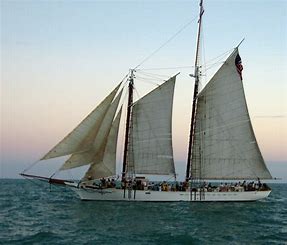
When the Caledonia sailed out of Moreton Bay into open water, Captain George Browning remained under the close watch of the leader of the Caledonia pirates, William Evans, and his deputies Hugh Hastings and William Smith. They were determined to head to the island of Rotumah to hopefully get aboard a whaler or trading ship. Captain Browning had secured a promise to be treated well if he got the men to the islands.
The Caledonia was provisioned for four months, and her new crew made enthusiastic use of the spirits on board. Inevitably, as the pirates achieved their path to freedom, they began to lose their common purpose.
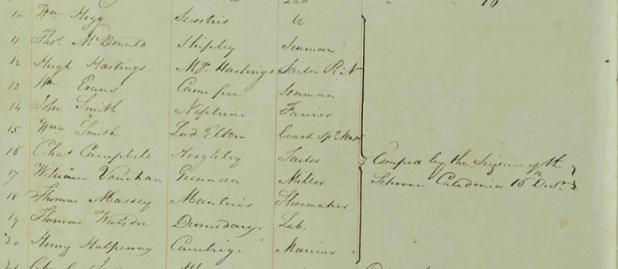
They were a disparate group of men, brought together by circumstance. William Evans, Hugh Hastings, Thomas McDonald, Henry Halfpenny were experienced seamen, which is why they were employed at Amity Point. The other convicts were at the Bay by virtue of being in the same gang. Charles Campbell was a tailor, Thomas Watson was a labourer, William Smith was a coach-maker, William Vaughan was a miller, John Smith and William Hogg were farmers and Thomas Massey was a shoemaker. All were Englishmen except Irish Henry Halfpenny and Scottish Thomas McDonald.
Browning observed the tensions between the pirates as the Caledonia headed in the direction of Rotumah. The captain wisely abandoned his original resistance and played up to the pirate convicts, making loud statements about the right of man to be free and the cruelty of sending young men from their home country for life.
In the early hours of 22 December 1831, Evans ordered Captain Browning and William Smith to go aft and control the vessel. The arms, other than those borne by the ringleaders, had been locked away. Something was afoot.
At about 4 am, Thomas McDonald was brought on deck before Evans and Hastings. Evans asked McDonald, “Are you as good a man as you were last night?” to which the unsuspecting McDonald replied, “Yes”. Evans shot him in the head at close range, killing him instantly. McDonald fell half on the deck, half hanging over the edge.
William Vaughan was the next. He had to be subdued by Hastings, who shot him as he was raising his hands. The shot took of two of Vaughan’s fingers and he fell to the deck. The pirates kicked the ferociously struggling man overboard, but Vaughan on his way down grabbed the reef line for dear life. Hastings cut it loose and Vaughan disappeared into the ocean.
Another frightened man, Charles Campbell, knew what was coming and told them not to shoot, he would jump overboard himself. As Campbell stripped naked and prepared to jump, he told the pirates, “God have mercy on you all”, then launched himself into the ocean, swimming strongly in the opposite direction to the Caledonia. The vessel was a long way from any land, and it can only be supposed that Campbell eventually drowned, along with Vaughan.
The next victim chosen was John Smith. Smith pleaded piteously for his life, and Browning, though still in fear of his own, bravely intervened with the ringleaders and Smith was spared. After that, John Smith pretended loyalty to Evans and his crew, but devoted much of his time to helping Captain Browning.
After ordering the remaining pirates to wash the blood off Caledonia’s deck, Evans and his two deputies set about attacking a cask of rum in the cabin.
For a few weeks, nothing further happened. Browning steered the Caledonia to Port St Vincent in New Caledonia to take on water. Shortly before she was to leave port, Evans and William Smith had a fight with Hugh Hastings, and they gave Hastings the option of being killed on the spot or being put ashore to take his chances. Unsurprisingly, he chose the latter option, and Browning noted that Hastings was landed with a bag of bread and a pistol with no cork to it. Nothing further is known of Hugh Hastings’ fate, although Port St Vincent would be a good place to hide out and find another ship, or to get some work and settle down. Hastings was, after all, an incorrigible character.
Finally, after long days at the wheel – the seven remaining pirates could not steer the schooner – Browning and the Caledonia struggled into Rotumah. Evans commended him for his feat of navigation with out of date maps and said that Browning should be made an admiral. Underwhelmed by this flattery, Browning observed the comings and goings closely. A friendly Rotumah chief and his entourage rowed out to the Caledonia and pleasantries ensued. Three Rotumah women were thoughtfully left on board with the pirates, and Henry Halfpenny, the last non-Englishman left on board, saw the chance to escape the ship and take his chances on the island.
Evans and Smith decided that their next port of call would be Wallis Island, and as Browning steered them on the way, he noticed a sinister change in the atmosphere on the Caledonia. Whether it was the rum or the presence of those poor Rotumah women who had been ‘gifted’ to the pirates, things were getting dangerous again. Evans swore that the pirates would go ashore on Wallis Island, and Browning could take the Caledonia and the three women with him. John Smith, Thomas Watson and William Hogg had become close to Browning and confided Evans’ true plans. The pirates would leave but would scuttle the Caledonia with Browning and the three women in it. Their own fate, they expected, would be the same as Thomas McDonald’s.
Browning managed to steer past the contentious Wallis Island in the night, and the island-hopping journey reached the Samoan islands on 29 February 1832. John Smith and three Rotumah women were put ashore, to their no doubt great relief. Watson and Hogg also perceived that their time might be up with far less merciful treatment and got into a canoe and headed for shore. What became of John Smith, Watson, Hogg and the Rotumah women is also unknown. It’s tempting to think that they made their lives in the South Pacific or found work on a passing whaler.
Back at the Caledonia, which was standing out to sea, Browning was still under the watchful eye of Evans, whose pirate crew now consisted of only William Smith and Thomas Massey – a coach-maker and a shoemaker respectively. Times were getting desperate. As they neared the island of Savaii in Samoa, Evans decided it was time to scuttle the Caledonia, and Browning was quite sure that he would be going down with the ship. He was surprised when Evans ordered him and the other men to pack belongings and get in the lifeboat.
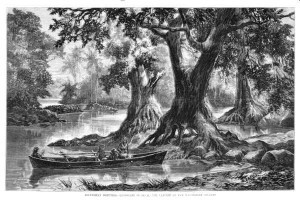
As they reached land, Browning and Thomas Massey were taken in by one of the island chiefs, Tangaloa, Evans and Smith by another. Treated well, and feeling emboldened, Browning refused to go back out to scuttle the Caledonia with Evans, Smith, Massey and some of the native men.
Browning remained with Tangaloa for about eight days, when an English whaler, the Oldham, arrived bearing the news of the Caledonia’s sinking. Oldham’s captain took Browning on board and asked him why he was claiming to be the captain of the Caledonia when there was a chap on board named Evans, who said he was the captain? Browning told his tale and was backed up by enquiries made amongst the people of the island.
Evans was put in chains, to be dropped off at the nearest penal settlement. Smith and Massey, it seemed, had escaped by the Caledonia lifeboat for parts unknown. Later, during a wild storm, Evans jumped overboard from the Oldham, rather than face a judge with a black cap.
Shortly afterwards, the Oldham rendezvoused with an American whaler the Milo, which was headed to Sydney. Captain Browning was anxious to return home and to give his account of the Caledonia, so he gladly transferred to the Milo.
During his journey to Sydney, Browning became ill, to the extent that he felt that the attentions paid by the Milo’s crew saved his life. He was still quite weak on Monday 14 May 1832 when the Milo arrived at Sydney Cove.
His arrival was greeted with joy and amazement, and an official who was promptly despatched by the Governor to take Browning’s account of the Caledonia voyage. The document survives to this day in the State Archives of New South Wales.
On 17 May 1832, Captain Browning placed an advertisement in the Sydney Herald, thanking Captain West of the Milo for his safe and healthy return.
Postscript:
While the individual fates of John Smith, Thomas Massey, Hugh Hastings, Henry Halfpenny, William Smith and William Hogg are unknown beyond their appearance in the account given by Captain Browning on his return to Australia, it is not quite the end of the story.
In June 1832, Captain George Browning, restored to health, was announced as the Captain of a vessel being constructed at Five Islands.
The HMS Zebra made a voyage through New Zealand and the South Pacific Islands, looking for runaways and trying to find news of the Caledonia. She returned to Sydney in early July, confirming the loss of the Caledonia, as well as that of the Oldham, which was lying empty off Wallis Island, the crew missing presumed murdered, and every portable item stripped from her.
It appeared the Oldham had fallen victim to hostilities on Wallis Island. A local man named George Manini had become partners with American traders in the area and had come to assume a near-dictatorship of most of Wallis Island. The islanders detested Manini and his friends and had murdered him shortly before Browning had so fortuitously steered the Caledonia away from Wallis. The islanders feared an invasion of vengeful Americans, and when the Oldham, with Browning no longer on board, appeared in their waters, they assumed she was from America and attacked, killing the crew. One 17-year-old cabin boy, the splendidly-named Craven Nicholson, survived, and was handed to the Zebra’s crew by the islanders.
The Zebra’s crew reported hearing a rumour that most of the Caledonia pirates had travelled for the Navigator Islands to rendezvous with a ship there.
In July 1832, the Supreme Court of New South Wales heard and deferred judgment on a case brought by the owners of the Caledonia and the wreck of the America against the estate of the late Captain David of the Nelson whaler. The Nelson had taken away the salvaged America a year prior, while the Caledonia sailed northward, stopping for water at Moreton Bay.
The Court deferred the matter for twelve months, allowing the Registrar to write to Captain David’s next of kin in England, to give them an opportunity to have their case stated. However, the Bench feared that the action was outside its jurisdiction.
Captain George Browning lived a long and productive life, passing away in 1887. Some years were spent in Fiji, where he informally married a Fijian princess and worked as a ship-builder. His descendants, most of whom are living in Australia, can claim chieftan status as a result of her lineage.
A note on the sources and identities of the pirates.
There are some discrepancies in the Caledonia stories – I have tried to stick to official sources to identify the pirates. There was no Connor or O’Connor on the Caledonia. By a process of elimination using all the stories, the Connor mentioned in some accounts is Charles Campbell. Decades later, authors used the name Ingram instead of Hugh Hastings, and there is one heavily romanticised account in the Queenslander in 1894 that puts prisoners named Cheetham and Young on the vessel.
The pirates were:-
- William Evans, prisoner number 1006 at Moreton Bay. Drowned February/March 1832.
- Hugh Hastings, prisoner number 1037 at Moreton Bay. Put ashore at Port St Vincent February 1832.
- Charles Campbell, prisoner number 1361 at Moreton Bay. Jumped overboard, December 1831.
- Thomas Watson, prisoner number 1374 at Moreton Bay. Went ashore February 1832.
- Thomas McDonald, prisoner number 1627 at Moreton Bay. Murdered December 1831.
- William Smith, prisoner number 1614 at Moreton Bay. Last seen on Caledonia lifeboat March 1832.
- John Smith, prisoner number 1776 at Moreton Bay. Put ashore February 1832.
- Henry Halfpenny, prisoner number 1984 at Moreton Bay. Escaped to Rotumah Island, January 1832.
- William Vaughan, prisoner number 2022 at Moreton Bay. Murdered December 1831.
- William Hogg, prisoner number 2323 at Moreton Bay. Went ashore February 1831.
- Thomas Massey, prisoner number 55 at Moreton Bay. Last seen on Caledonia lifeboat March 1832.
The Monthly Return of Prisoners Held at Moreton Bay has these names, as does the Colonial Secretary’s correspondence to Commandant Clunie at Moreton Bay.
Sources:
Australian (Sydney, NSW : 1824 – 1848), Friday 21 October 1831, page 3
Sydney Herald (NSW: 1831 – 1842), Monday 5 December 1831, page 4
Sydney Gazette and New South Wales Advertiser (NSW: 1803 – 1842), Tuesday 6 December 1831, page 3
Sydney Gazette and New South Wales Advertiser (NSW: 1803 – 1842), Tuesday 6 December 1831, page 2
Sydney Monitor (NSW: 1828 – 1838), Wednesday 7 December 1831, page 4
Sydney Herald (NSW : 1831 – 1842), Monday 12 December 1831, page 4
Sydney Herald (NSW: 1831 – 1842), Monday 12 December 1831, page 4
Sydney Monitor (NSW: 1828 – 1838), Wednesday 14 December 1831, page 2
Australian (Sydney, NSW: 1824 – 1848), Friday 16 December 1831, page 4
Sydney Gazette and New South Wales Advertiser (NSW: 1803 – 1842), Saturday 17 December 1831, page 2
Sydney Monitor (NSW: 1828 – 1838), Wednesday 15 February 1832, page 3
Sydney Gazette and New South Wales Advertiser (NSW : 1803 – 1842), Thursday 16 February 1832, page 2
Sydney Gazette and New South Wales Advertiser (NSW: 1803 – 1842), Thursday 16 February 1832, page 2
Sydney Monitor (NSW: 1828 – 1838), Saturday 18 February 1832, page 4
Sydney Monitor (NSW: 1828 – 1838), Saturday 18 February 1832, page 4
Sydney Herald (NSW: 1831 – 1842), Monday 20 February 1832, page 3
Sydney Gazette and New South Wales Advertiser (NSW : 1803 – 1842), Saturday 3 March 1832, page 3
Sydney Gazette and New South Wales Advertiser (NSW : 1803 – 1842), Tuesday 6 March 1832, page 3
Sydney Gazette and New South Wales Advertiser (NSW: 1803 – 1842), Saturday 10 March 1832, page 3
Launceston Advertiser (Tas.: 1829 – 1846), Wednesday 14 March 1832, page 86
Hobart Town Courier (Tas.: 1827 – 1839), Saturday 17 March 1832, page 2
Sydney Gazette and New South Wales Advertiser (NSW: 1803 – 1842), Thursday 3 May 1832, page 2
Sydney Gazette and New South Wales Advertiser (NSW : 1803 – 1842), Tuesday 15 May 1832, page 2
Sydney Herald (NSW: 1831 – 1842), Thursday 17 May 1832, page 1
Sydney Gazette and New South Wales Advertiser (NSW: 1803 – 1842), Thursday 17 May 1832, page 3
Sydney Herald (NSW : 1831 – 1842), Thursday 17 May 1832, page 2
Australian (Sydney, NSW : 1824 – 1848), Friday 18 May 1832, page 4
Sydney Herald (NSW: 1831 – 1842), Monday 2 July 1832, page 2
Sydney Gazette and New South Wales Advertiser (NSW : 1803 – 1842), Thursday 19 July 1832, page 3
Hill’s Life in New South Wales (Sydney, NSW : 1832), Friday 20 July 1832, page 2
Sydney Herald (NSW : 1831 – 1842), Monday 23 July 1832, page 2
Launceston Advertiser (Tas. : 1829 – 1846), Tuesday 24 July 1832, page 239
Sydney Monitor (NSW : 1828 – 1838), Wednesday 18 July 1832, page 2
Landscape in Savaii, 1876, State Library of Victoria, image no: mp002552
Book of Monthly Returns of Prisoners Maintained, 1829-1837. Item ID: 869688, Part 2, State Archives of Queensland.
“In the wake of the Caledonia”, ABC radio transcript, Sunday 09 May 2004, 2 pm.
Schooner image: Wikipedia.

