
Separation from New South Wales occurred in 1859, and the new Colony of Queensland was proclaimed. It was a time of rapid social and economic change, and intrepid photography enthusiasts set about capturing and preserving daily life with an authenticity never seen before.
Go west!
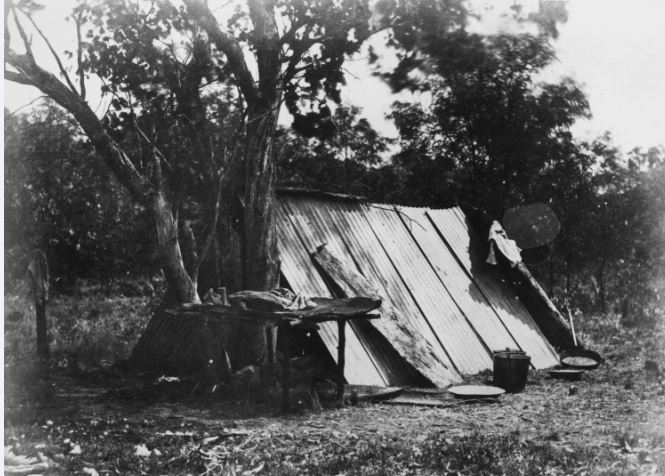
Goondiwindi, on the border with New South Wales, was where this hopeful settler set up camp. Perhaps they had a selection and this humpy was the first structure on it.

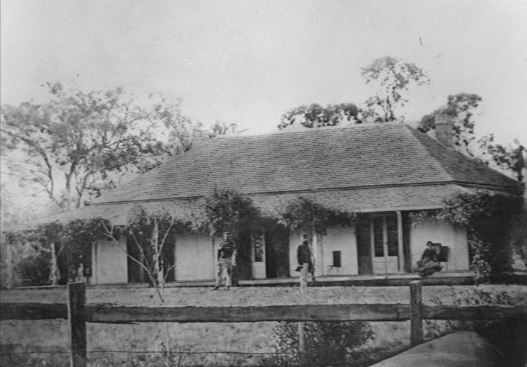
Further north in Roma, this family has a timber hut with a verandah. The dwelling might be small, but it’s permanent, and there are other indicators that they are starting to prosper. There are horses about, and farm equipment, the family is well-dressed – and clearly growing.
life on the station
The oldest station in Queensland was Canning Downs, built in 1840 and still running today. The photograph of the wool transport leaving shows how successful Canning Downs was – there would be permanent and seasonal workers among all the men lined up in front of the shed.

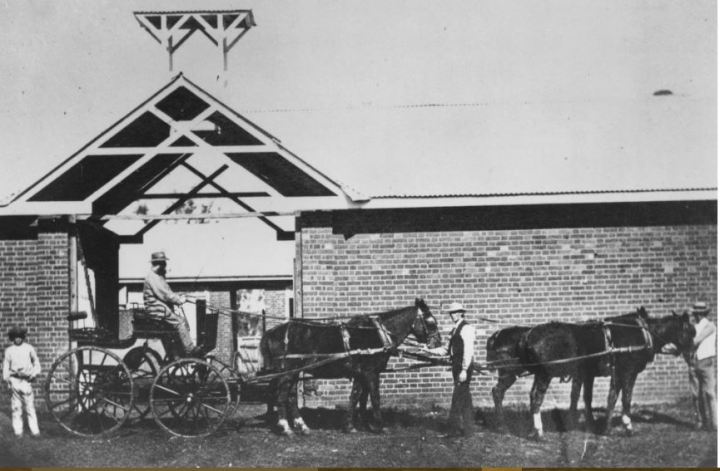
Canning Downs was an example of the larger station. There were other runs at which photographers stopped to record a moment of life.

Kinnoull, several hundred miles to the north, was prosperous, but on a smaller scale. It has the wrap-around verandah so essential to survival in the tropics. This common-sense approach to design – naturally – did not extend to clothing, particularly for the women.
hard work and hoped-for reward

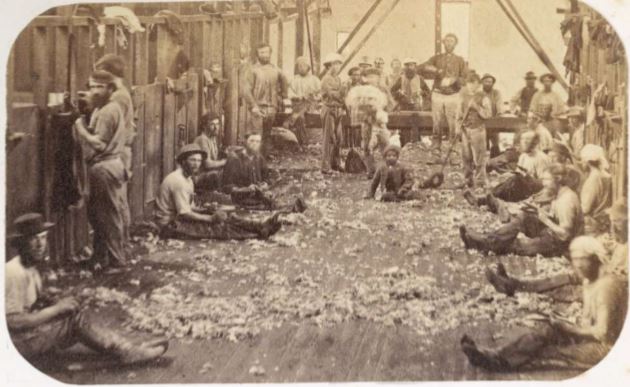
Sheep were shorn manually with wool clippers or shears. Men were paid by their output, and an extraordinary amount of physical strength and stamina was required to put in this work in a hot, crowded woolshed.
The photograph below is unusual for the time – the workers were seen and in situ. They’re people, whose faces we can see, not a line of stiff figures in the distance behind the master. The slight blurring here and there means that while they were told to remain as still as they could, they were not posed in a formal sense.

Building infrastructure in 1864. The Enoggera Dam was surveyed, the land cleared and the dam built by people and horses. It still stands today.
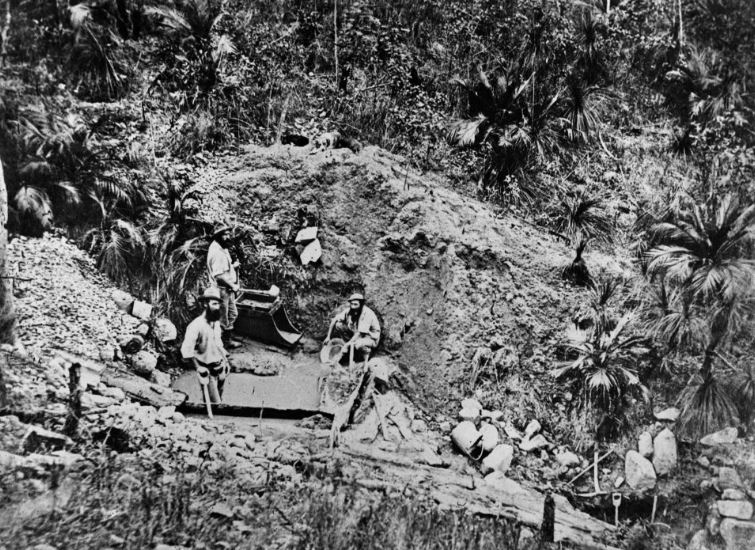
A belief that hard work would be rewarded drove many men to travel thousands of miles, on horseback or by shanks’ pony, to places they could have barely imagined before – gold mining in the tropics, shearing out west and digging out a dam for a growing population in a place that twenty years before had only held about sixty convicts.

The painted photo above depicts the hoped-for outcome of all that slaving in the heat – a sale of gold. The various gold diggings opened up regional Queensland from the 1860s.

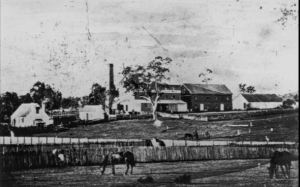
Warwick 1865
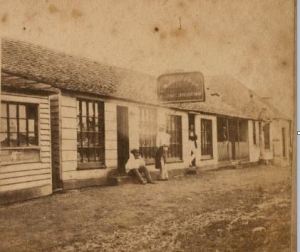
transport

(Your Brisbane Past and Present)

Bigge’s Camp railroad 1865


c 1865 Workers gathered around
the engine Lady Bowen. Yet another unlikely thing named
after Diamantina, Lady Bowen.
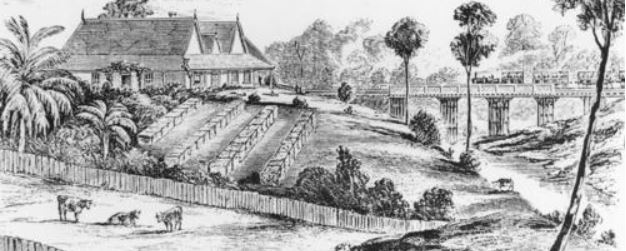
Queensland is a famously vast place. Before the railways made their way out from the capital, there were two ways of moving goods about – by water or overland by bullock train.
family and leisure
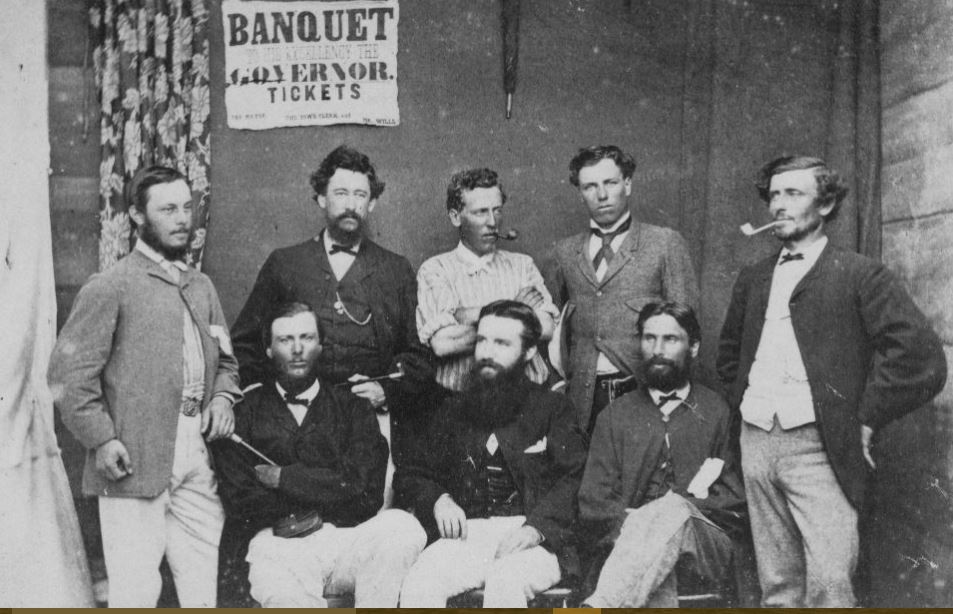
I wonder how the Governor’s Banquet went after this little lot turned up. There are a couple of mild-mannered looking chaps (at left and seated), but at the centre back is a fellow in his shirtsleeves, shoulders and arms clenched, who looks like he wants to thump the exceedingly smooth chappie on the right.

I found this picture of an unnamed group of men at Ipswich in 1860 quite appealing, because it actually depicts Victorians enjoying themselves.
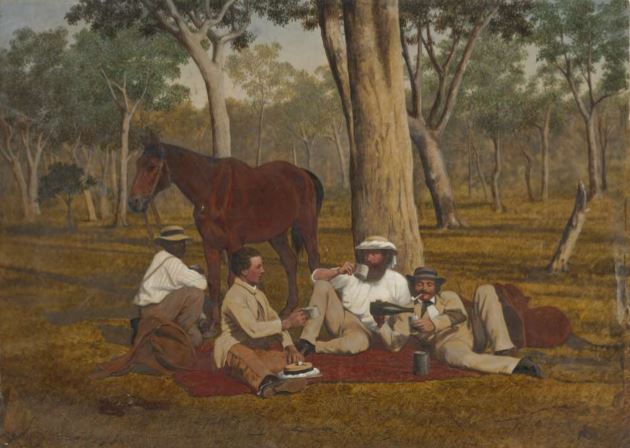
Richard Daintree’s painting on photograph “Bush Travellers” shows just how restful a break in the travels could be if you had a nice blanket, a cup of something refreshing and an indigenous man to watch the horses and make sure a chap didn’t get too lost.

Home to surgeons including Cowper, Ballow and Robertson, the cottage and its shady verandah was a good place to relax after a hard day dealing with sickness and death, not to mention under-resourced facilities.

House, Ipswich 1860
In the foreground of the last two photographs are some of the children of the era – these energetic country children show up in many of the photos from that time – a little blurred occasionally because they were doing something. Unlike the serious moppets placed in front of a city photographer’s lens and told not to move under any circumstance, these little ones push carts along and keep themselves entertained while Mother shops or visits.
Coming up: Life and work from 1865-1875. All photos are in the Queensland State Library Collections, except the Bullock Train picture.
 Moreton Bay and More