
Les Cartes des visite
A carte de visit was a calling card with one’s photograph on it. This novel alternative to embossed cards became hugely popular with the middle classes. After one went to the big ‘at home’ in the sky, it seemed a pity to throw them out, so they were kept by loving families, who lovingly stuck them in an album somewhere and forgot to label and date them. Generations later, these by now largely anonymous curiosities found their way into the collections of Libraries and archives.
Spread across the collections of the National, Queensland and Victorian libraries are a collection of cartes made in Queensland between 1870 and 1880, generally sorted by photographic studio.
Queensland’s matrons and lasses, gentlemen and lads put on their least comfortable clothes, martyring themselves to fashion, and posed glumly against hideous backdrops and props. In these fashions and surroundings, it was almost impossible to create a good photographic impression.
full-length and seated portraits of men
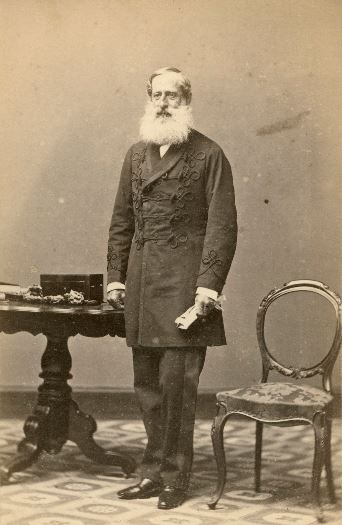
A full-length portrait in a faux parlour. Often the dress, props and pose are clues to a subject’s status. A serious looking gentleman with an impressive snowy beard, wearing a distinctive embroidered jacket. He holds a scrolled document, and on the desk is a wooden box. Perhaps an architect or a surveyor.
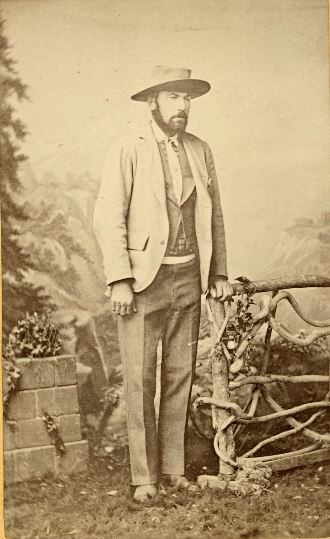
You can see the despair in this man’s face and posture. Hat, jacket, waistcoat indoors in the heat, while that wretched photographer fellow makes him stand still for ages next to a faux brick wall and a gate made to look “rustic”. He is visibly hoping that his friends don’t see him like this. Perhaps he is a rural landholder, if the props are anything to go by.
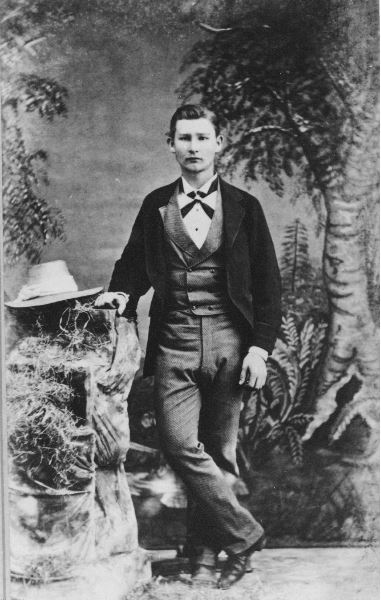
Just as serious, but much less miserable, is this young man posing against a painted background next to some sort of straw-decorated contraption meant to imply the great outdoors. He is heavily dressed, indeed his ensemble seems a little snug. A cabbage-tree hat adorns whatever that decoration is meant to be.
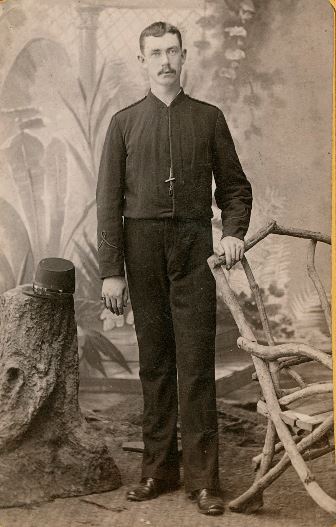
Not only did this studio have faux-rustic gates, it had tree stumps and a chair that does not look as if it was made to house a fully-grown human being. At least not in comfort. This young man appears to be in uniform, possibly that of a trooper, judging by the cap resting atop the black stump.
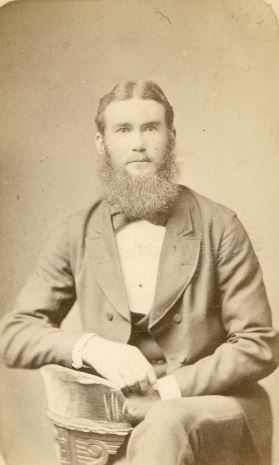
This alert young gentleman lacks the poker-faced gloom of his contemporaries, possibly because the photographer had the decency to let him sit down. And in a proper chair. This is one of the very few cartes that conveyed an active mind and a degree of personality.
the ladies’ full length studio portraits
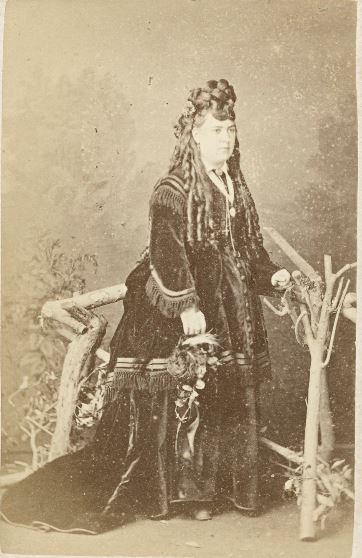
This poor woman deserves a medal for what she endured in the name of posterity. Her hair, possibly partly a hairpiece, is styled in the Empress Elizabeth of Austria fashion, a confection that would have taken hours to create. Her unflattering clothes are heavy and heavily fringed, the entire presentation makes her visibly uncomfortable. She is then asked to stand near a “rustic” fence prop with a vague forest scene painted on the background in a studio in the sub-tropics before the invention of air conditioning. I know it wouldn’t have happened, but part of me hopes she gave the photographer a piece of her mind, or better still, a piece of that fence.
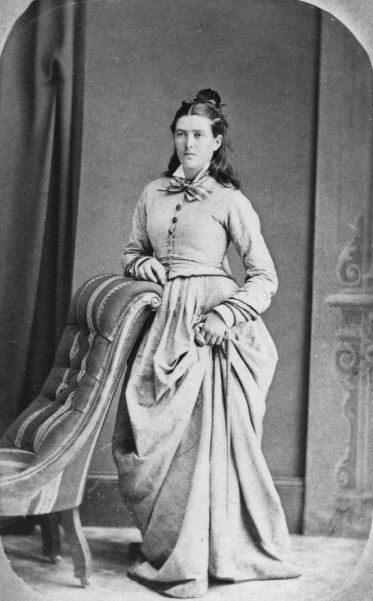
Spared the indignity of wearing the clothes and hairdressing of at least three women at once, this young lady is nonetheless uncomfortable in a tight bodice that would have required some stern corsetry to underpin it. However young and lively she may have been in real life, she is posed to look earnest and serious. The draping of the caught-up skirt is flattering though.
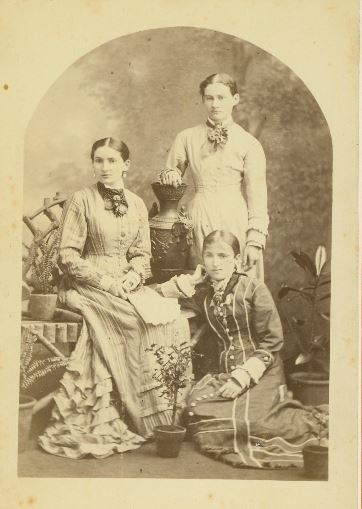
A group of sitters, presumably sisters, posed graduating from the floor to standing up, punctuated by potted plants and an urn. These ladies have the tight waists and simpler skirts of the 1880s.
leaning gracefully forwards
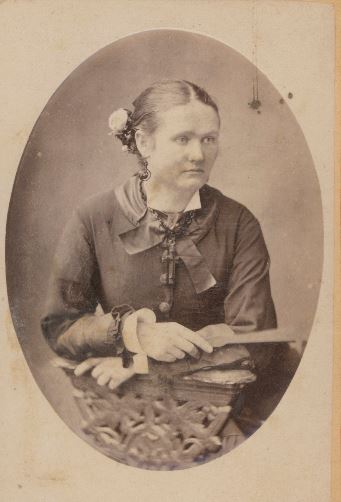
This lady leans forward on a faux balcony, a fan in her hand. She looks only moderately uncomfortable. Her clothing suggests that she is a young matron, although there is no discernible wedding band.
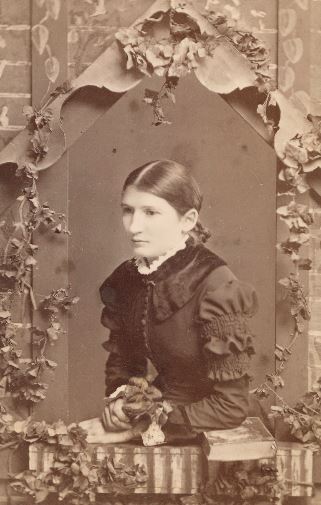
This young woman is resembles the seated lady on the left of the sisterly group above. She is photogenic, and is posed against a rose covered “window” with a rose in her hand and a book under her elbow. The photographer might have instructed her to look wistful. However her downcast stare and the dark clothing suggest mourning.
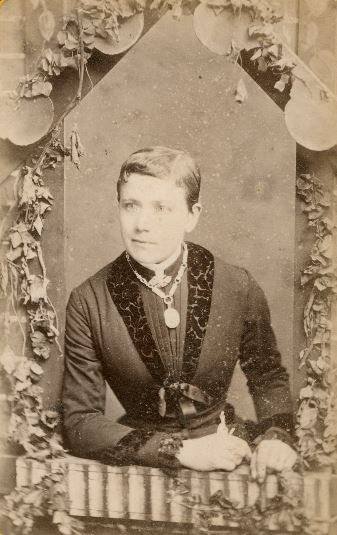
This lady is leaning out of the same “window” as the previous sitter. Again, she is photogenic enough for the image to capture intelligence and interest. Unusually, her hair appears to be short – unheard of at the time. It may be out of sight in a bun, but it looks like short hair. Although she has no obvious props to suggest a love of reading, or intellect, the photograph conveys a lively spirit, which is astonishing considering the unforgiving corsetry required to create the “wasp waist” of the era.
 Moreton Bay and More