
(State Library of Queensland)
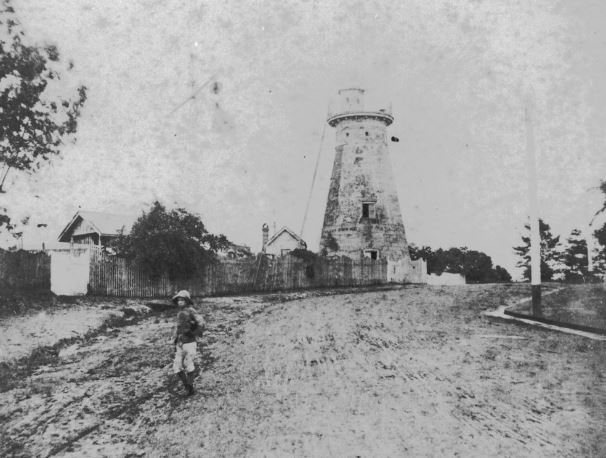
1885: A young boy stands in an unpaved street, in front of a sail-less stone windmill and the Spring Hill Reservoir buildings. The Windmill was built in 1828-9 with convict labour to grind maize (via a treadmill also employing convict labour, the sails having proved unreliable). Damage caused by lightning in 1836, and the closure of the penal settlement in 1842 made the windmill redundant by the mid-1840s. It was used (once) for an execution, and was variously a museum, signalling station, time-keeping guide, radio and television research and broadcast centre, then as a heritage tourist site. The Windmill was under threat of demolition from 1850 onwards, and was repaired sporadically before a comprehensive restoration in the 1990s. The site was Heritage Listed in 1992.
(Google Street View)
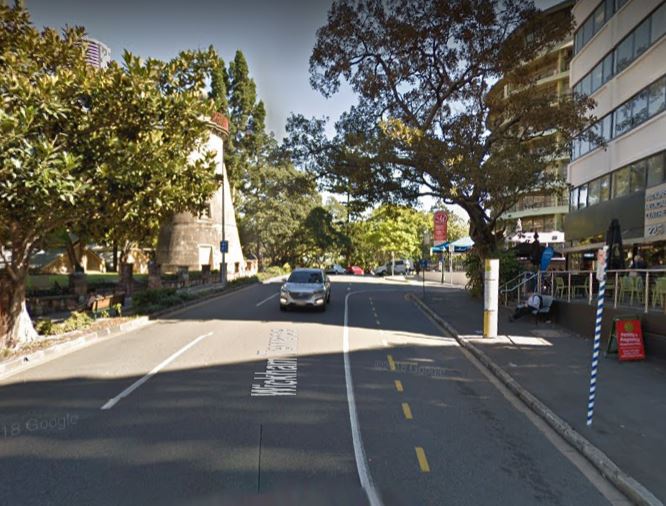
In the 21st century, more by happy accident than design, the Windmill and reservoir buildings have survived, and the left part of the original picture is easily recognisable in today’s street view.
(State Library of Queensland)
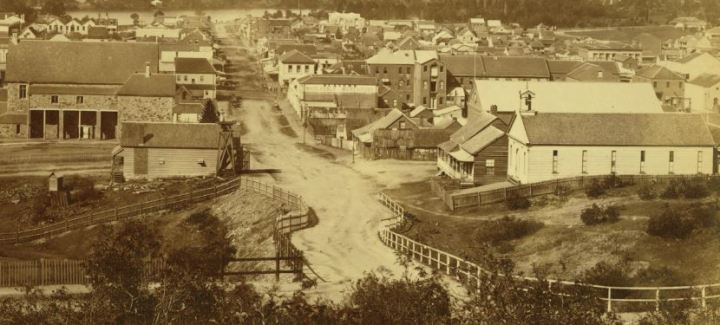
From Spring Hill, a long and at times winding road leads down to the river. The Normal School is visible on the left, there are shops, churches and houses on the right.
Google Street View
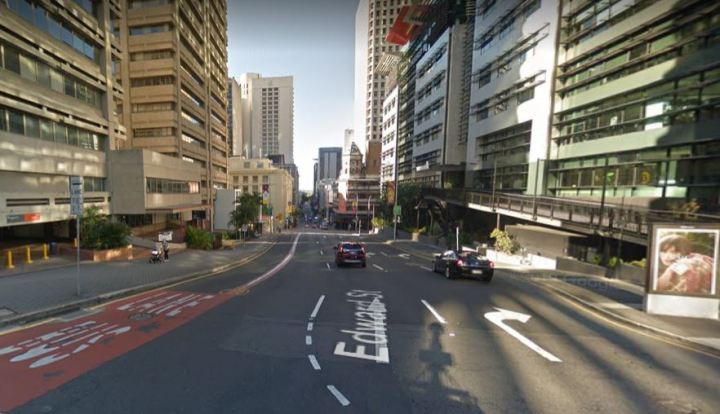
The road still leads downhill to the river, but the buildings have changed. From the exuberant Federation style of the People’s Palace (centre right) to the brutalist style of the buildings on the left, it is Brisbane architecture in close-up – for better or worse.
(National Library of Australia)
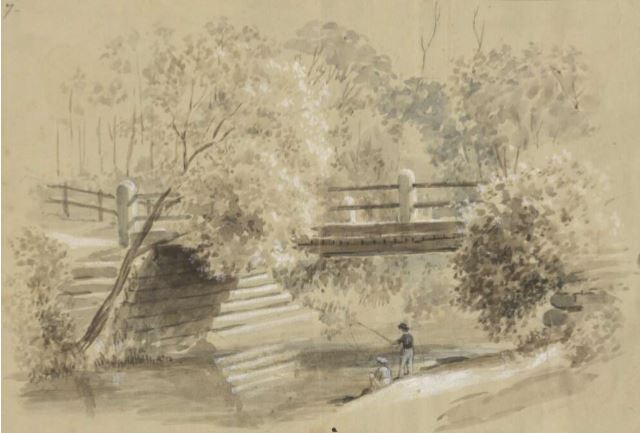
Boys fishing from a creek, below a bridge on Waterworks Road. A rustic, peaceful scene. Something about it seemed very familiar.
(Google Street View)
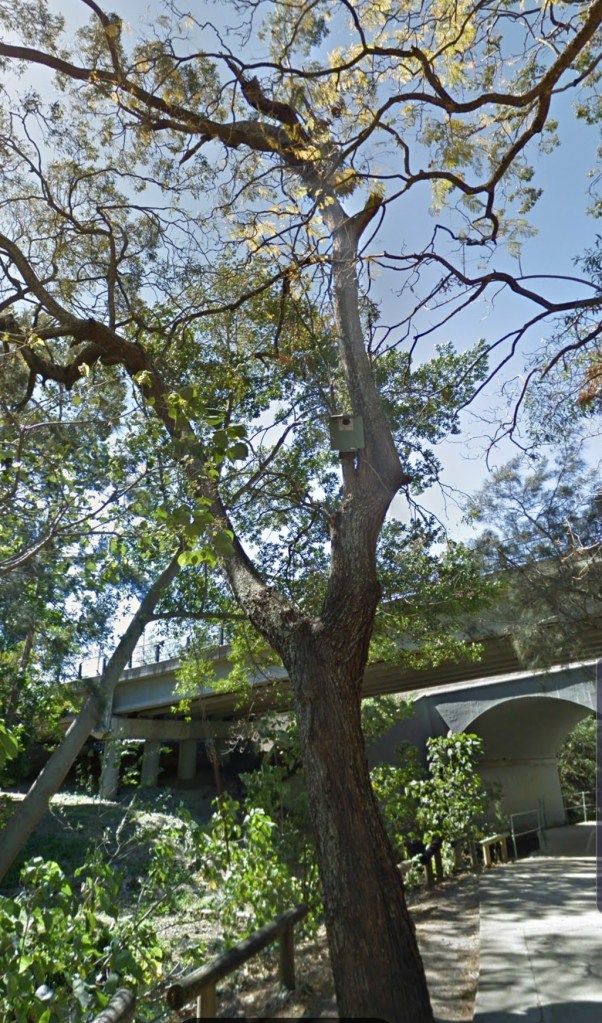
160 years later, there is still a bridge over Ithaca Creek, and the two boys could still cast a line into the creek. I doubt that they’d be able to catch dinner. Their movements would be tracked by the security camera high on a tree, cyclists would whizz past at an alarming rate, and their peace would be disturbed somewhat by the four lanes of traffic on Waterworks Road above.
Still, it is comforting that these scenes are so similar nearly two centuries later. It shows that some respect for the past – the State’s oldest building, a road to the river and a quiet spot of bushland by a creek – has survived town planners and years of indifference.
 Moreton Bay and More