
Football
Australian Rules

The more things change… The great difference between these teams over the years is professionalism. The early teams played in their spare time for the sheer fun of it. Their uniforms lacked coherence and they weren’t as fit as the teams today, but the people and their relaxed attitude are pretty much the same.
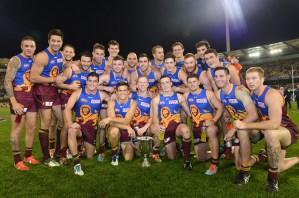
Queensland was an early adopter of the Australian (Aussie Rules) brand of football, ironically, given the difficulty the AFL has in “growing the brand” here in the 21st century. Here is the team that played Victoria in 1888, and their heirs and successors, the Brisbane Lions. The advent of Rugby League in the early 1900s meant that Aussie Rules would struggle for attention.
Soccer

(what is that top-hatted man doing in the background?)
Soccer started early, and was kept alive by generations of European immigrants. The ill-assorted group in the first photograph gave way to the Brisbane Roar in the 21st century. The Roar wear an orange jersey that celebrates the Dutch footballers who kept the game alive for all of those decades. Sadly, I doubt that the 1870 squad would have considered players from other races or cultures.

no to top-hatted lurkers.
SPOT OF TENNIS?
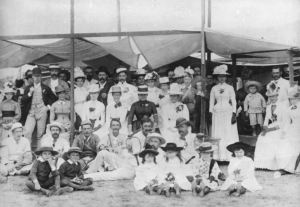
under a marquee, Charters Towers, 1880
Colonial Queensland took to tennis in a big way, or at least the class of people who could afford leisure did. It was a social game – ladies could play it wearing the most confining corsetry in the middle of the tropics (see the wasp-waisted young lady in the Atherton photo). It lent itself to the picturesque, as long as one was not photographed actually playing it.

Herbert River District, 1880
The regatta

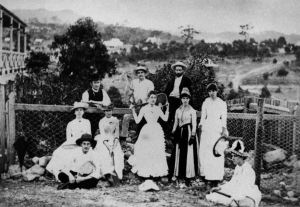
An abundance of wide, calm waterways meant that rowing would become a popular sport. The first Toowong Regatta (pictured) took place in front of the first generation of riverside homes. As early as the 1840s, settlers would gather on the Brisbane to watch races on Boxing Day. Rockhampton held its first Regatta in 1866, with the winning skiff crew pictured looking slightly pleased with themselves.

pastimes and obsessions
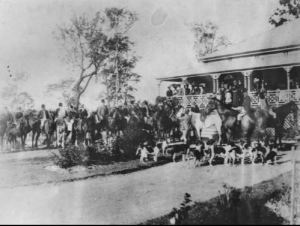


Along with cricket, tennis and the various footballs, immigrants brought other pastimes from ‘home’. Picturesque archery that must have puzzled the indigenous people watching heavily gowned white women aiming an arrow at a painted target and not dinner. Fox hunting – an occupation for which one had to import one’s own foxes – to the detriment of the local wildlife. Chasing an animal about for sport, and then not eating it would have similarly puzzled any passing Aborigine. Then there were the people who kept very exotic pets. The picture of Charles Higgins and his tiger menagerie is marked by the photographer as “bad”, and it is out of focus in places, particularly the places where the tiger, or the plainly terrified young women, failed to cooperate in the standing still and watching the birdie business. Strangely, it says more about Mr Higgins and his behaviour than a “good” photo would have. Mr Higgins packed up his menagerie and moved it to the corner of George and Turbot Streets where he became involved in a number of causes celebre. They included The Tiger Incident, the Menagerie Matter, the Lead-Stealing Case, the Toombul Shooting Case and lastly, Thrown from a Dog Cart. He deserves his own post.
 Moreton Bay and More