
Mrs Esther Roberts was Queensland’s first schoolteacher, brought up to the Moreton Bay Penal Settlement in 1826 to instruct the children of the 57th Regiment under Captain Logan’s command. The curriculum is lost to time, but it is safe to assume the children (8 boys and 8 girls) were taught reading and writing, some mathematics, geography and history. The girls would have some needlework and perhaps other domestic arts. Specific activities for the boys could have revolved around military skills with their fathers, not something a gentlewoman was expected to know or instruct in.
Mrs Roberts was housed and paid £20 per year. There was no society beyond the Regimental families, and everything one required had to come through the Commissariat Store. Teachers would have hard lives for many years to come.
Once the settlement was declared open for free settlers in 1842, families gradually moved into Brisbane Town and then north and west. A demand for schooling grew. The problem of providing a reasonable standard of education for children in far-flung places troubled the legislators in Sydney.
The solution was the 1848 National School system, which provided secular education, with clergy of the various denominations attending to provide religious education. The National Schools were fee-paying, the basis of the parents’ capacity to pay. The other alternatives were local parish schools or private tutoring, both of which required payment, meaning that a lot of the children of poor families did not receive any education.
Separation from New South Wales in 1859 gave Queensland its own Board of Public Education, and the chances of poor children receiving an education increased greatly when the National Schools abolished fees in 1870, and when primary schooling became compulsory in 1875.
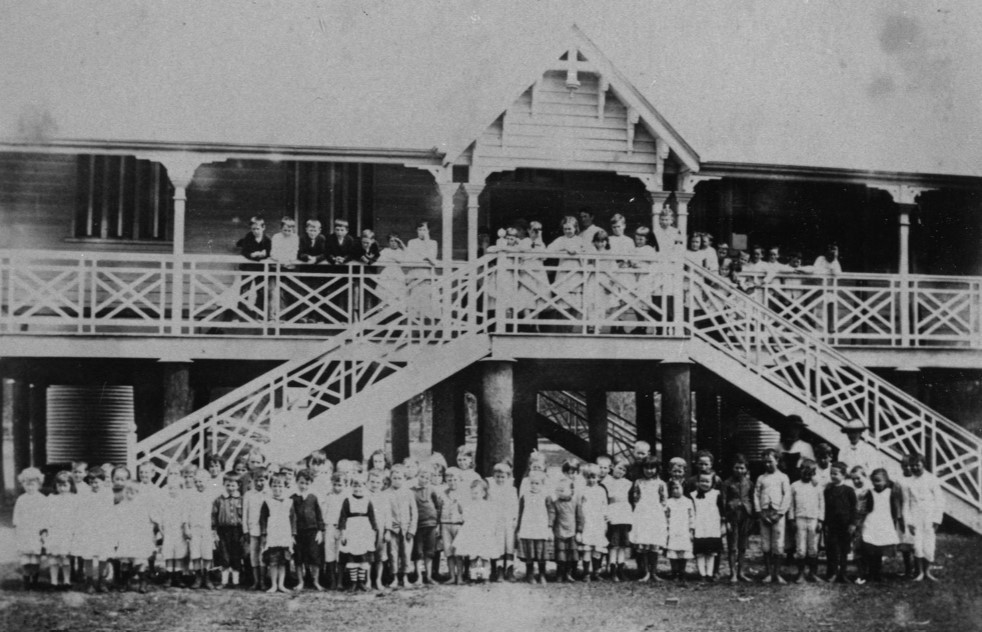
Here then is a look at the schools of Queensland from the 1850s to the 1890s (and just slightly beyond).
A photographic tour of Queensland schools from 1860 to 1900.

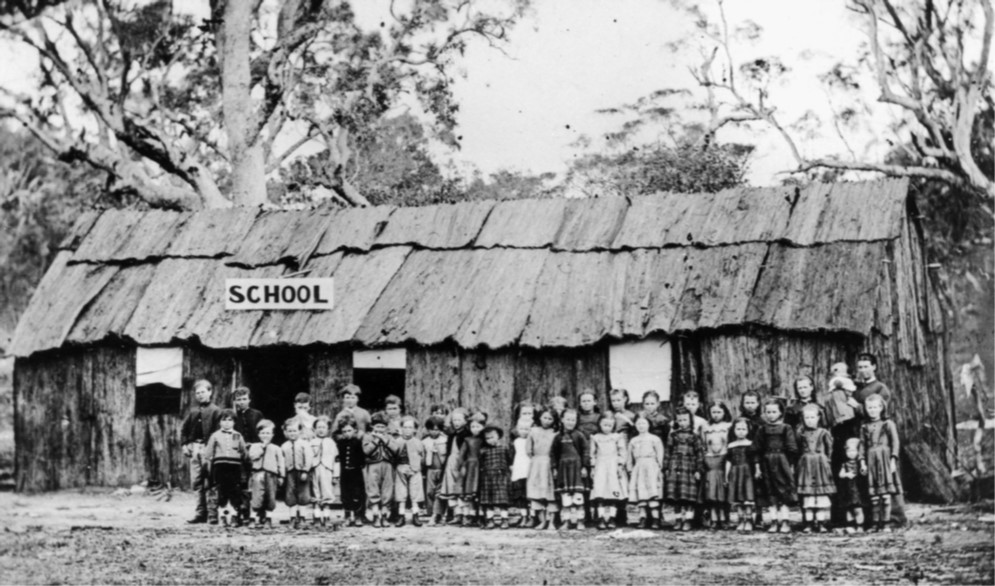
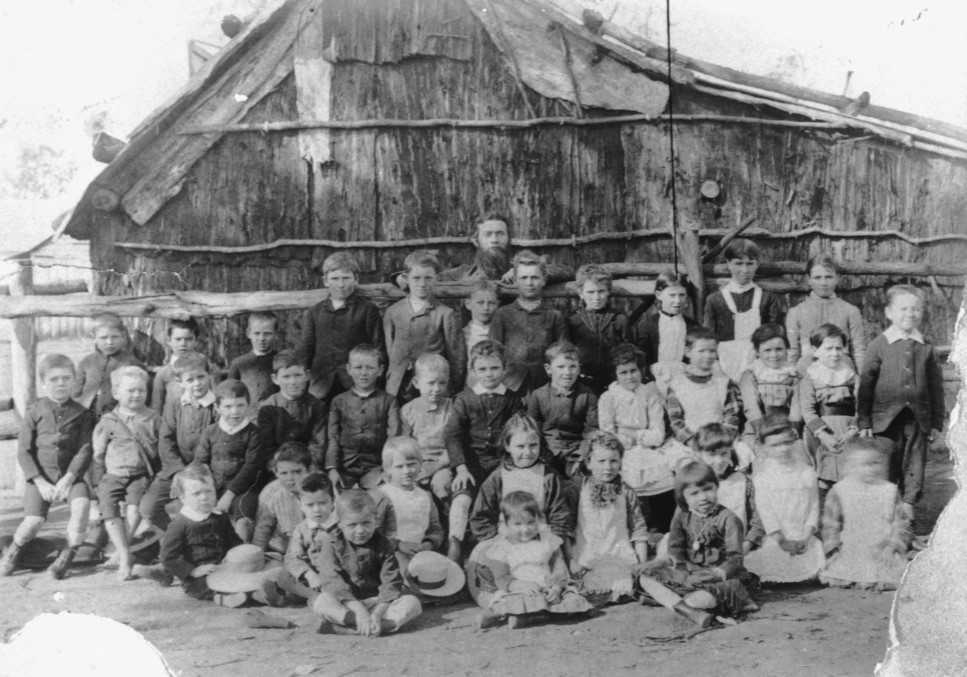
The first schools, especially in rural areas, were very rustic indeed. Interestingly, the children attending this educational shack/barn arrangement are properly dressed and shod, unlike most of their peers throughout the Colony.




And finally, if you lived in the far outback, an itinerant teacher may visit for a time to instill some lessons. Itinerant teachers were replaced by Correspondence School and the School of the Air in remote places.

Images: State Library of Queensland, State Archives of Queensland, Education Queensland.
 Moreton Bay and More