
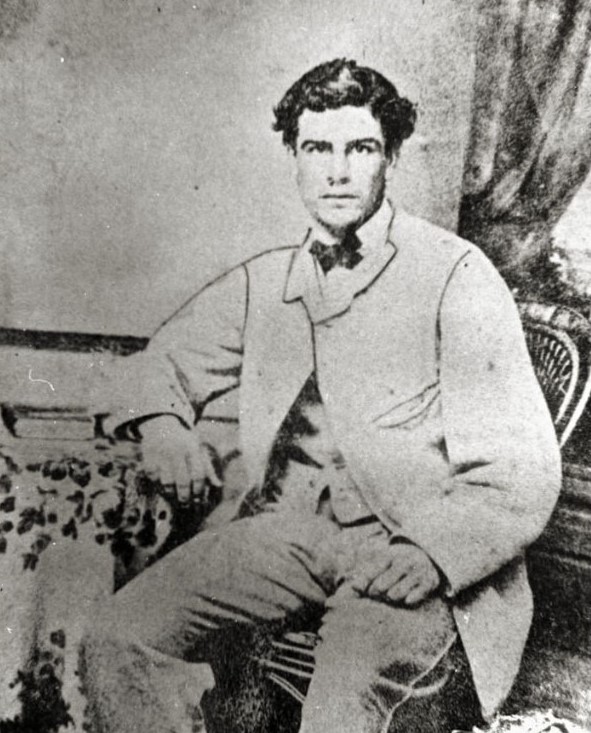
A young man poses for a formal photographic portrait. He appears to be in a drawing room, although it may be a mock-up in a photographer’s studio. He sits on a wicker chair, one arm resting on a table, near some books. The tablecloth has a floral design and a curtain can be seen behind the chair. This could be any well to do young man in a drawing room.
He is wearing a light-coloured suit. The pale colour of the coat may have blended into the background, because the lines around the lapels and sleeve seams appear painted or drawn on. His hair is dark, and tousled. He has a piercing gaze, handsome features. He seems to be about to say something or rise from the chair. Despite the length of time it took to capture a photographic image in the 1860s, there is an air of energy about the man in the image.
This is the image we have of George Frederick Palmer, who was hanged for murder on 24 November 1869 at Rockhampton, Queensland. It is the lasting impression that illustrates all of the thousands of words written about Palmer in the last year of his life.
Palmer was born in New South Wales to an old settler family and moved to Queensland as a young man. He was a gifted horseman who could ride anything. He was married, but his wife remained in Gympie as Palmer worked and, frankly, thieved on the lonely bush roads. He was known to have stolen a couple of very good horses, including a prized grey named Bobby.
Palmer became involved with John “Old Jack” Williams, Charles Taylor and Alick Archibald, and a plan to rob popular local gold-buyer Patrick Halligan was formed. During the robbery, Halligan was killed (by Palmer, during a tussle), and although Palmer wanted to call a medical man, his accomplices told him to leave it. The man’s wound was fatal.
The newspapers bayed for the scoundrel Palmer’s blood while the manhunt was on, but on seeing the captured bushranger, sympathy began to develop for him. It’s tempting to interpret this as a reaction to his appearance – respectable, handsome – particularly when his co-accused are discussed.
“Palmer got permission to sit down, being in a bad state of health. He took copious notes of the proceedings, which he appeared to watch very keenly. He looks by no means a formidable customer, his sufferings from exposure and long watching having evidently told on him. He has no beard or moustache; his left hand, by its frequent wandering to his lip, would seem to indicate that the hairy glory is not long departed. Palmer looks thin and pale, his forehead corrugating into many wrinkles at questions of importance. The expression of his countenance is rather pleasing and winning than otherwise. His wife, a pretty looking young woman, stood at the corner of the dock, and the sight of her evidently unnerved Palmer, for he left the court with a quivering lip and a deeper paleness.“
“It appears some two or three years ago he fell into the company of very low companions, and being, as I believe, a youth of a soft — at the same time, by no means a bad nature — was easily led into vicious habits, which by degrees, led him from bad to worse, and leaves him in the unhappy position he now is — a position which, I think, he fully and painfully feels, not only for himself, I think, but those with whom he is connected, and more especially his poor father.“
The coverage of Palmer’s co-accused, men of lesser rank and education, and of decidedly ordinary appearance, was marked by contempt.
Taylor was deemed “an ordinary looking young man, of horsey type. His vacuous face and sensuous mouth, would stem to show but little moral power.” “He was one of those men that did not improve with acquaintance, and even among men of his own class he was generally disliked.”
“Old Jack (Williams), presented a remarkable contrast to the other two. His appearance is, if anything, prepossessing. A grave solid face, free from any, even the slightest spark of passion or cruelty, his head partially bald, with a long flowing brown beard, he looks the picture of respectable innocence.” “That he was a man who could conceal his emotions was amply proved before he was done with.”
Archibald had “dark complexion, with whiskers all around the face, and deeply pitted with smallpox. Archibald was always a reckless, harum-scarum sort of man, who rather delighted in taking a “point” on a man, and in that way got himself disliked by some people.”
Taylor gave evidence to the Crown and received a custodial sentence, but Archibald, Palmer and Williams were condemned to death.
Williams and Palmer were hung at Rockhampton Gaol on the morning of 24 November 1869, during a wild tropical thunderstorm.
Palmer, gaunt and weak, wore a mixture of resignation and terror on his features as he went to the gallows. He had written a two-sentence confession to the murder whilst in his cell and had nothing to say before dying. This was seen as gentlemanly by the press.
Williams, on the other hand, had a lot to say. And although the press was delighted to report it, they professed themselves horrified by his conduct.
“Palmer remaining still and passive beside him, his left foot a little advanced, and no word or sign escaping him. The rain continued to pour down, and amid the flashing of the lightning and the roll of the thunder — Williams, standing on the brink of eternity, hurled out his denunciations against all concerned in bringing him to his doom.”
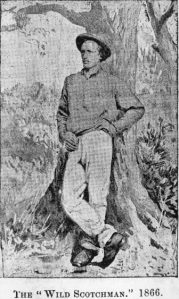
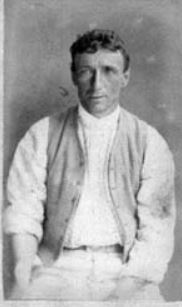
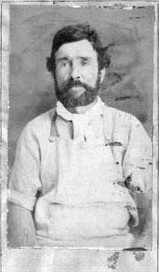
The image of the Queensland bushranger (as photographed) was set. Palmer and McPherson, educated and handsome, drawn in by bad company and a headlong streak. “Podgy” and “The Snob,” poor and ignorant, posing in their Brisbane Gaol uniforms.

 Moreton Bay and More