
In October 1851, Jane Ellis was the most despised woman in Brisbane. At her first Court appearance, crowds of angry citizens jostled for a seat in the public gallery, and when she was released on bail, Mrs Ellis had to be escorted through the hissing throng by two policemen.
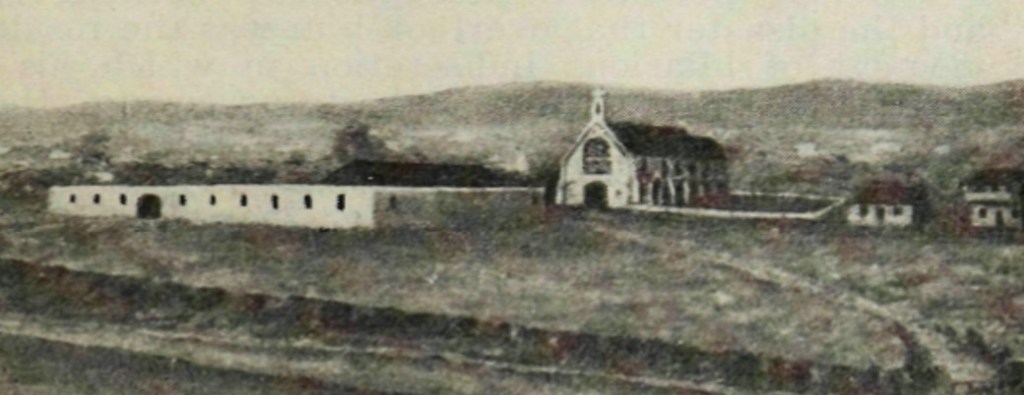
Mrs Ellis was the wife of Henry Ellis, a turnkey (warden) at the Brisbane Gaol in 1852, when the Gaol was the haphazardly upgraded Female Factory in Queen Street. She had arrived in Australia in 1836 and had lived south of Sydney prior to her husband being appointed to Moreton Bay.
Jane was an unprepossessing Irishwoman of 36 summers, short in stature, stout in build, and marked with noticeable smallpox scars, it wasn’t her appearance or her husband’s unglamorous job that drew the disdain of early Brisbane Town. It was the wretched life of Isabella McEvoy, a young girl who was basically Jane Ellis’s slave.
Isabella McEvoy didn’t know how old she was, or how long she had been working for the Ellis family. She didn’t know who her parents were, but Jane Ellis had provided Isabella with an unvarnished opinion of her mother and told the child she’d turn out that way too. Isabella knew her prayers and part of the catechism.
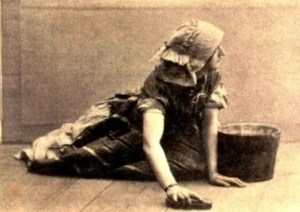
As far as Isabella knew, her aunt named Hayes brought her to the Ellis family to be hired as a servant, the alternative being the Orphanage. Mrs Ellis hired her as a servant for five years, but paid her no wages. Whilst Isabella was always fed and clothed, but her life was one of drudgery, punctuated by violent beatings.
The girl would rise at 3:30 or 4:00 am, and clean the place, paying particular attention to dusting the glasses and pewter. Failure to do this satisfactorily would result in being stripped and beaten with a ruler. Beatings were constant. Isabella had run away a couple of times, but she had nowhere to go. She was afraid to tell anyone about the abuse, because Mrs Ellis said she would “swing for her”. Once or twice, an outsider would hear or see some of the punishment when passing the house. Mrs Ellis told them that the devil was in the child and she would knock it out of her.
The situation seemed hopeless until a family fight gave Isabella a chance to get out of the house. One Friday night, as Mrs Ellis was “disciplining” her, Henry Ellis – who had usually steered clear of the servant problem – got up from the sofa to ask his wife is she was going to commit murder. A fight began between husband and wife, and Isabella took the opportunity to get out of the house.

Isabella wandered about the creek near the Government Garden, and later hid herself in the oven at Mr Crabtree’s place until the next night, when she changed her hiding spot to the crawl space under Mr Feeny’s house. By Sunday night, the girl was frightened and hungry. She emerged from her hiding space and summoned the courage to ask another neighbour, Mrs Hardgrave, for help. Mrs Hardgrave sent for Chief Constable Samuel Sneyd, who took her in, and had his housekeeper, Mrs Wright, tend to the girl.
What Mrs Wright saw was shocking: “Isabella McEvoy was brought to the house last Sunday week. Never saw her before. She was brought by Mr. Sneyd, at about ten o’clock at night. The girl lifted her clothes, and showed me the condition she was in. She was one mass of sores and congealed blood from the lower part of the back to the knees. The blood was all dried on her skin, in one piece, till she was washed. Her clothes were covered with blood. They were afterwards washed on the supposition that she was to be sent to Sydney. Mrs. Sneyd also saw her. The girl said that Mrs. Ellis had tied her up and beaten her, for leaving a frying-pan dirty, which had caused the marks. She said she had been beaten on Wednesday or Thursday. She had a scar on each knee, and she said that Mrs. Ellis had cut out the pieces of flesh, and had thrown them in front of her, saying that she could cut her in pieces in the same way. She had marks of cuts all over her head. I never knew the prisoner, Mrs. Ellis, before. The marks on the girl’s body appeared fresh. The girl seemed to enjoy good health. [By the Bench]. She had wounds and bruises all over her body. The marks on the knees appeared as if the flesh had been cut out.”
That was enough for the citizens of Brisbane Town. Those who had been reading the newspapers recalled the recent case of George Sloane, an Englishman who had starved a young servant and made her eat human excrement as a punishment. Isabella had been made to eat filth, once, as a punishment for being untidy.
A group of tradesmen’s wives took up a collection for an advocate for Isabella McEvoy, and one swore out a complaint at the Police Office. At the first mention of the case, the matter was almost thrown out, because the person making the complaint was not the victim of the assaults.
Fortunately, Isabella was present, and gave evidence sufficient for the complaint to be accepted by the Court. Mrs Ellis, who was not present, was summoned to appear at the next mention. It was on that occasion that Jane Ellis had to return to the Courthouse and seek the protection of two constables to escort her on the short walk down Queen Street to her home.
The only time Jane Ellis said anything about the charges was to acknowledge that perhaps she had beaten Isabella more harshly than she should have, but she was “provoked by the child’s filthy habits.”
Mrs Ellis was tried at the Supreme Court in Moreton Bay, and found guilty of assaulting Isabella McEvoy. The Judge recommended that her sentence be served at Parramatta Gaol, thus sparing Jane Ellis the indignity of serving time at her husband’s workplace.

In the years following her conviction, Jane Ellis would make brief appearances in the public record. In 1864, she was overlooked for the job of female turnkey at Bathurst Gaol, and at the same time was also refused permission to reside with her husband at the Gaol. The reason? “From her former conduct, her residence in the Gaol would be very objectionable.”
Isabella McEvoy, the girl who did not know her age or her parents, may have been 16 at the time of the case in Brisbane. She has a record of baptism from 15 April 1845, which records her birthdate as “supposed to be born 1835,” and her parents as unknown. She was brought in for baptism by a Mrs McEvoy, which gave her the surname.

It’s probable that the orphan girl’s name changed after her ordeal. She may have been taken in by a family at Moreton Bay, or have been sent to Sydney and the Orphanage from which Mrs Ellis so piously “saved” her so many years before.

Urchin asleep, by Antonio Mancini (1852-1930),
 Moreton Bay and More
Hi so I found your blog attempting to google information about Jane Ellis and her husband Henry, see they were the Guardians listed on my 3rd great grandmothers marriage certificate. She must have been another orphan they adopted as a servant once they moved to Bathurst. I really do hope they treated her better than the previous servant, pretty horrific if they didn’t! It’s been so hard to find out info about my ancestor at least now I know why.
LikeLike